
“A voice that warms in a cold world”: Brassens told by himself
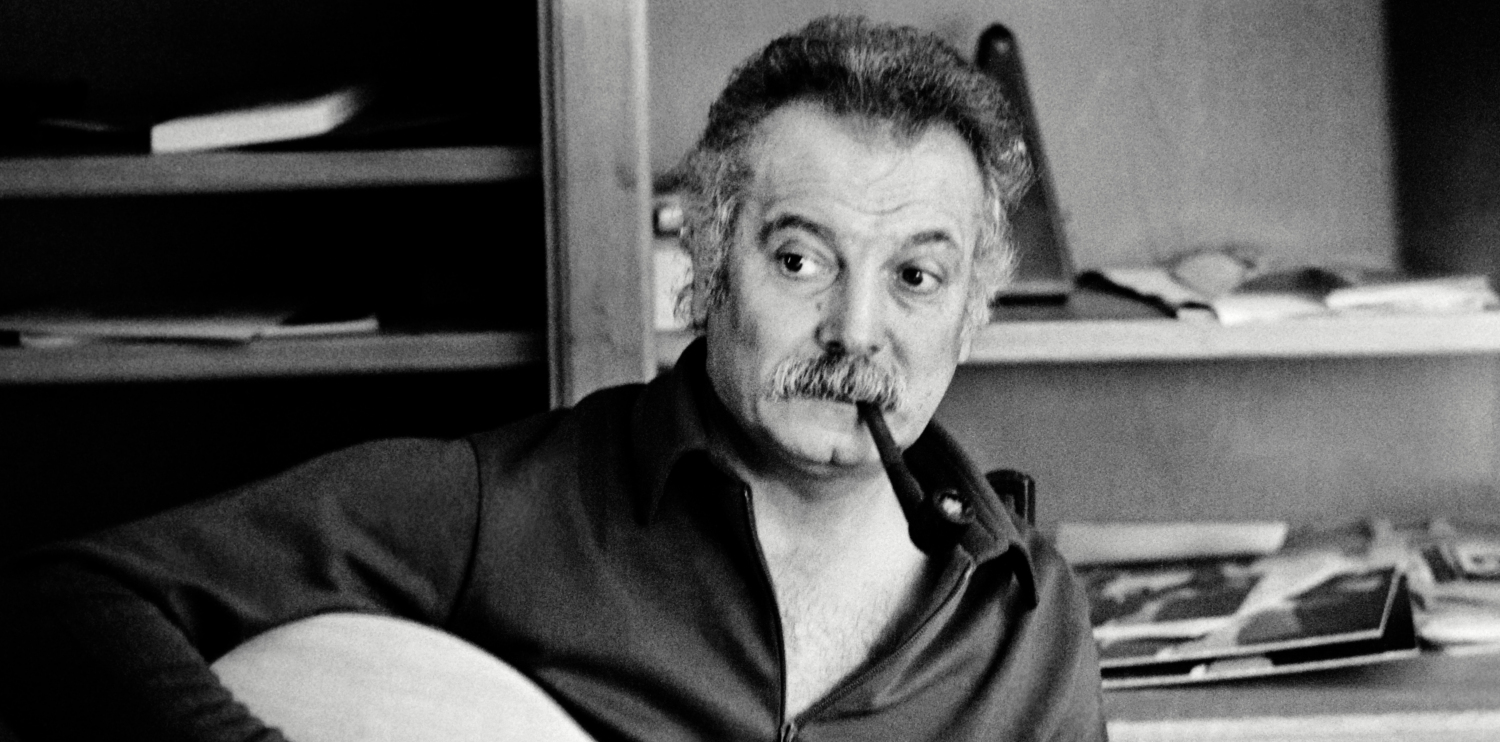
Director Philippe Kohly is devoting a documentary to Georges Brassens broadcast on France 3 on Friday, for which he has assembled a series of little-known archives. “We often think that Brassens is a silent bear, but he liked to talk about himself,” he said at the microphone of Europe 1.
“Brassens is often thought to be a silent bear, but he liked to talk about himself.” In his documentary Brassens par Brassens , broadcast Friday evening on France 3, Philippe Kholy pays tribute to one of the biggest names in French song. And for this, he gave the floor to the singer himself.
“The portrait of a man is essentially in his voice. The voice is the soul, much more than the look or the face”, explains Phillipe Kohly at the microphone of Europe 1, in Culture-Media. The director, who had already dedicated films to Jacques Brel, Jean Ferrat and Edith Piaf, this time brings together a series of archives hitherto unknown, following public appearances, and interviews with Brassens. “He has a warm voice, in a cold world,” smiles the director.
“My songs have to sound like they’re spoken”
A moving voice, and sometimes surprising words. “My songs must seem to be spoken, that those who hear me think that I cannot sing, that I make easy little music. It must not only by means of musical artifices, I divert attention from the text, ”explains Georges Brassens, for example, an accomplished musician.
“Brassens is full of personal contradictions: he also said that what counted at the beginning is the music. And he just liked the music, those of Tino Rossi for example, that his mother sang”, specifies Philippe Kohly.
“I admire you a lot”, slips Johnny
The documentary returns, with actress Sandrine Kiberlain in voiceover, on certain moments in the singer’s life. His arrest in Sète for theft when he was a teenager, the STO during the Second World War … and even a cross interview with a certain Johnny Hallyday. “I admire you a lot”, slips the very young yéyé …
Listen to the Interview at: “A voice that warms in a cold world”: Brassens told by himself
Yann Tiersen “The Jetty”
The Jetty, taken from the album ‘Portrait’ by Yann Tiersen.
WATCH: Deauville Film Festival: The winners unveiled
“The Nest” by director Sean Durkin scooped the top prize at the Deauville American Film Festival on Saturday, September 12, and claimed two other awards with jury president Vanessa Paradis praising the direction and the acting of its leads Jude Law and Carrie Coon.
Paris to shut cafes and bars to curb Covid-19 spread as infections rise
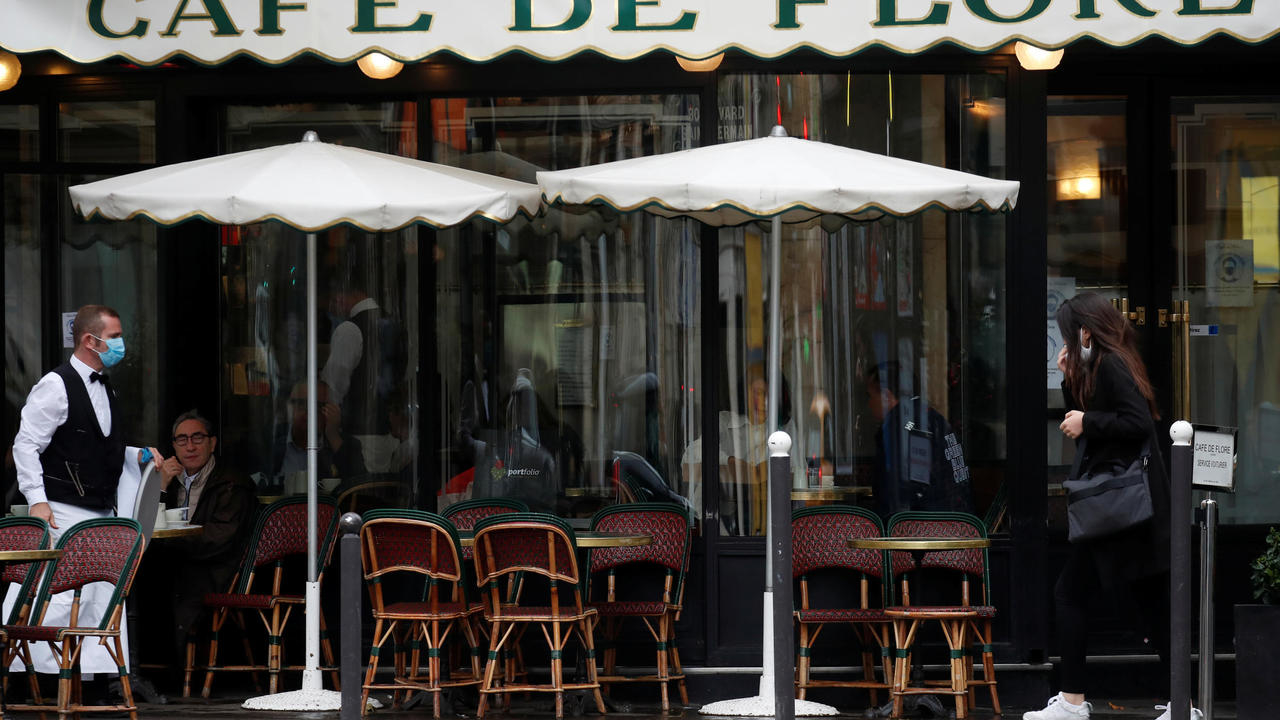
Bars and cafes in Paris, placed on maximum coronavirus alert Monday, will be shuttered for two weeks under new measures to fight the rapid spread of the epidemic
With the rate of new infections, hospitalisations and deaths accelerating months after the lifting of a nationwide lockdown, new rules on social distancing will enter into force starting Tuesday.
“These are braking measures because the epidemic is moving too fast,” Paris police chief Didier Lallement told journalists. “From tomorrow, all bars will be closed.”
Bars and cafes have continued to draw large crowds often flouting physical distancing and mask-wearing guidelines.
Health Minister Olivier Véran announced last week that only improved Covid-19 infection rates could prevent closure of the capital city’s trademark bars and cafes [ . . . ]
Continue at FRANCE24: Paris to shut cafes and bars to curb Covid-19 spread as infections rise
Vishtèn : trio de musique traditionnelle
Quand la musique de l’Île-du-Prince-Édouard rencontre celle des Îles-de-la-Madeleine, ça donne le groupe……Vishtèn

