The French Connection radio: Spéciale Bastille 2026

Mike-on-Bike

Liberté, Égalité, Fraternité

By Mike Stevenson

This Tuesday July 14, we celebrate Bastille Day, commemorating the 1789 storming of the Bastille prison, a pivotal event that dismantled the absolute monarchy and launched the French Revolution.

For modern democracies (c’est nous?) the day symbolizes the triumph of popular sovereignty over tyranny, the power of collective civic action, and the universal principles of Liberty, Equality, and Fraternity.

Marchons, marchons!
– Les enfants de la Maîtrise de Paris “La Marseillaise”
– Biréli Lagrène “Viper’s Dream” (Fletcher Allen) Gipsy Project, 2001
– Francis Cabrel “The Mighty Quinn” (Bob Dylan) Vise le Ciel 2012
– Yves Montand “À Bicyclette”(Francis Lai,Pierre Barouh) 1968
– Pomplamoose “Je Me Suis Fait Tout Petit” (Brassens) En Francaise 2019
– Georges Brassens “J’ai Connu des Vous” (Trenet) Chant Les Chansons De Sa Jeunesse 1982
– Charles Trenet “Douce France/Sweet France,” 1947

Le générique Set 1:
– Les Negresse Vertes “La Valse” Mlah 1988


L’ame de Poetes
– Alain Goraguer “Blues de Memphis”
– Serge Gainsbourg “Requiem Pour une Twisteur” Salut Les Compains
– Barbara “Ne me Quitte Pas” (Jacques Brel) Chante Brassens et Brel 1963
– Noel Harrison “L’ame de Poetes / Soul of the Poet” (Trenet) Live at McCabe’s, 2013
– Pauline Croze “Samba Saravah” Bossa Nova, 2016
– Marie Laforêt “Katy Cruelle” (traditional) Album 2, 1966
– François Hardy “Pas Gentille” (Marty Wilde) Mon Amie la Rose, 1964
– Juliette Magnevasoa  “Le Gens Qui Doutent” (Anne Sylvestre) Les Routines, 2025
– Elizabeth Shepherd “Les Amoureux Banc Publiques”/ Lovers on the Park Bench (Brassens) Rewind, 2012
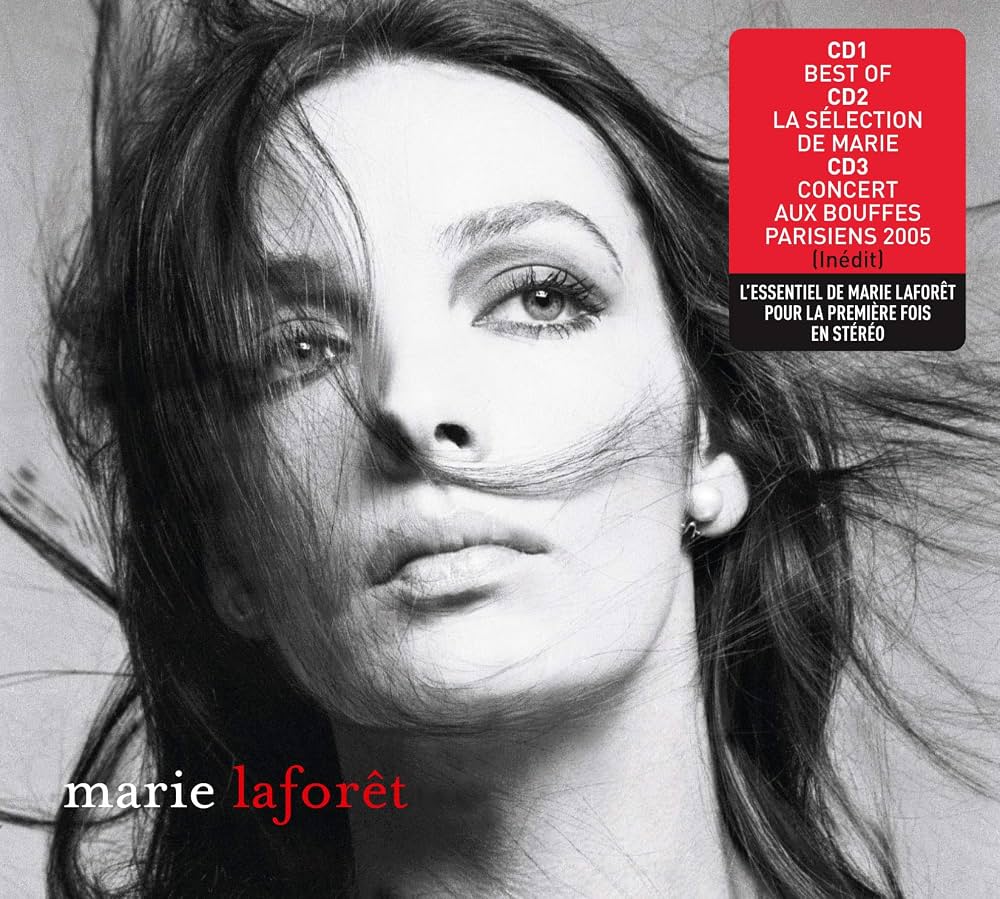
marie Laforet

By the end of the 1960s Marie Laforêt had become a rather distinctive figure in the French pop scene. Her songs offered a more mature, poetic, tender alternative to the light, teenage yé-yé tunes charting in France at the time.


Le générique Set 2:
– Toots Thielemans “Blacksmith Blues” Toots, 1961


FIN
– Humphrey Bogart, Paul Henreid “La Marseillaise” dialogue from 1943 film Casablanca
– Camille “Festin” from the Pixar animated film Ratatouille, 2007
– Django Reinhardt and the Quintet of the Hot Club of France “La Marseillaise” 1946
– Eileen “Les Buttes Sont Faites Pour Marche” / These Boots Are Made for Walkin’ (Lee Hazlewood)


PROGRAM NOTES & Links

-“La Marseillaise” is the national anthem of France. It was written in 1792 by Claude Joseph Rouget de Lisle in Strasbourg after the French Kingdom declared war against Austria, and was originally titled “Chant de Guerre pour l’Armée du Rhin” (“War Song for the Army of the Rhine”)

– In the tradition of Django Reinhardt, Biréli Lagrène is one of most highly regarded Gypsy jazz, bebop, and fusion guitarists of recent decades. He was once invited onstage to jam with Stéphan Grappelli when he was only ten years old.

Pomplamoose

– The lead singer for the indie-pop duo Pomplamoose, Nataly Dawn, co-founded the band in 2008 alongside her husband, multi-instrumentalist Jack Conte. The latest album from  the duo is Photogénique, a “lush and groovy French bossa-pop album” released in Summer 2025. Pomplamoose plays in concert August 18 at Paradise Rock Club in Boston, MA

– Following the death of Noel Harrison in 2013, his wife Lori released the excellent album Live at McCabes The English singer/actor was best known for singing  “The Windmills of Your Mind” in the 1968 film The Thomas Crown Affair. That song (composed by French musician Michel Legrand, with English lyrics by Alan and Marilyn Bergman) won the Academy Award for Best Original Song

– Actress/singer Marie Laforêt ( 5 October 1939 – 2 November 2019) originally released the Appalachian folk song “Katy Cruelle” in 1965. The most famous recording of the song is widely considered to be Karen Dalton’s haunting 1971 rendition on her album In My Own Time.
Magnevasoa


– The Franco-Malagasy artist Juliette Magnevasoa is redefining the French Chanson genre, blending intimate folk with traditional chanson. Her version of Anne Sylvestre’s “Les gens qui doutent” has 1.8 million internet views to date.

Two EPs are planned for summer 2026 and her debut full-length album is due to be released in 2027. Juliette Magnevasoa appears at the historic Les Trois Baudets in Paris on October 28

Serge Gainsbourg’s 1962 track “Requiem pour un twisteur” (Requiem for a Twist Dancer) is a darkly humorous, noir-tinged song about a charismatic playboy who dances himself to death. It is a satirical look at the early ’60s cultural craze for “the Twist”

Casablanca


– The two main female actresses who sing “La Marseillaise” in Rick’s Café in the film Casablanca are French actress Madeleine Lebeau (Rick’s jilted lover, Yvonne who famously cries out “Vive la France!” at the end of the song) and American cabaret singer and actress Corinna Mura (who played the guitar-strumming café entertainer.)

– Elizabeth Shepherd is a Montreal-based jazz pianist and singer. She has earned six JUNO Award nominations—Canada’s equivalent of the Grammys. She is performing Friday, August 14 in Charlottetown, Prince Edward Island.

– Yé-yé singer “Eileen,” who recorded the French adaptation of Nancy Sinatra’s “These Boots Are Made for Walkin’”, was actually born in New York City. Eileen Goldsen, left New York as a teenager to study French at UCLA and graduated expecting to become a French teacher. At just 22 years old, she moved to Paris and found work translating American folk songs into French. Eileen soon recorded “Les Buttes Sont Faites Pour Marche” a yé-yé hit in 1966.


Special thanks to production assistant Agneau de Présalé
“À bientôt”

The French August Vacation: A Cultural Tradition

Learn why the French take off the entire month of August for summer vacations and discover the cultural importance of this tradition.

Every August, an interesting phenomenon occurs in France: cities quiet down, shops close, and the bustling energy of daily life takes a noticeable pause. This annual exodus, known as “les grandes vacances,” sees millions of French people flocking to the coastlines, countryside, and other vacation destinations, leaving urban areas almost deserted.

Even in years when global events draw international attention — like the 2024 Summer Olympics in Paris — the tradition persists. While the world watches athletes compete and tourists flock to the capital, many Parisians and other French citizens still adhere to their deeply ingrained custom of taking the entire month off.

The tradition of the August break reflects a unique approach to work-life balance, family, and leisure that remains a cornerstone of French culture, regardless of global happenings. Read on to learn more about why the French take off the month of August.

Historical Roots of the August Vacation

The tradition of taking a full month off has historical roots that date back all the way to the Middle Ages when Pope Gregory IX granted a one-month vacation to children who attended school to help out with agricultural work. This tradition lasted centuries and was in addition to religious holidays taken throughout the year. Then in the 19th century, when Napoleon was in power, a summer vacation was extended to six weeks, simply so that the children of the privileged class could get more integrated into the sociable networks.

Over the years, the summer vacations gradually grew longer and longer, but only those who had the means and ability to travel or stop working could afford to take it. This changed in 1936, when The Popular Front, a left-wing coalition of the French government, introduced two weeks of paid vacation time for workers, which many took during the month of August. This legislative change for the working class laid the foundation for the French to embrace the idea of a prolonged summer break, allowing them to escape the daily grind and enjoy quality time with family and friends.

A Deeply Ingrained Cultural Practice

The French value their leisure time and prioritize quality of life over work. This cultural inclination is reflected in their generous vacation policies and the emphasis on savoring life’s pleasures. The concept of “joie de vivre,” or the joy of living, is a fundamental aspect of French culture. Taking time off in August allows people to reconnect with this philosophy, indulging in good food, beautiful landscapes, and meaningful relationships.

For many French families, the August vacation is a cherished tradition. It’s a time for multi-generational gatherings, where grandparents, parents, and children come together to bond and create lasting memories. The rhythm of daily life slows down, and the focus shifts to relaxation and enjoyment. Whether it’s lounging on the sandy beaches of the French Riviera, exploring picturesque villages in Provence, or hiking in the French Alps, August offers a myriad of opportunities for leisure and exploration.

The Economic and Social Impacts

The mass departure during August has a significant impact on the French economy and society. Many businesses, particularly smaller ones, close their doors for the entire month, as owners and employees take their vacations. This temporary shutdown can be inconvenient for tourists and locals alike, as they may find themselves navigating empty streets and shuttered stores. However, this break also highlights the importance of rest and work-life balance, a concept that is often overshadowed in more work-centric cultures.

Tourism, on the other hand, thrives during this period. Coastal regions, mountain resorts, and popular tourist destinations see a surge in visitors, both domestic and international. The influx of vacationers boosts the hospitality industry, with hotels, restaurants, and local attractions experiencing a busy season. The French government and businesses often prepare for this annual migration, ensuring that the tourism infrastructure can accommodate the seasonal demand.

The Changing Landscape of French Vacations

In recent years, the tradition of taking the entire month of August off has seen some changes. With the rise of flexible work arrangements and digital nomadism, some French people are opting for shorter, more frequent vacations spread throughout the year. However, August remains a symbol of rest and rejuvenation, a time when the nation collectively pauses to recharge.

Moreover, global trends and economic pressures have influenced the way French people approach their vacations. While the tradition of taking August off remains strong, there’s a growing awareness of the importance of sustainable tourism and mindful travel. Many now choose eco-friendly destinations and activities, reflecting a broader cultural shift towards environmental consciousness.

A Cultural Statement

The French tradition of taking the whole month of August off is more than just a vacation; it’s a cultural statement. It embodies the French commitment to enjoying life, valuing relationships, and maintaining a healthy work-life balance. As cities empty and the countryside fills with laughter and relaxation, the French August exodus serves as a reminder that sometimes, the best way to appreciate life is to slow down and savor each moment. Whether it’s a stroll through a sun-drenched vineyard or a leisurely meal with loved ones, the French have perfected the art of living well — and August is their time to celebrate it.

Embracing the Art of Living Well

No matter where you are in the world, get in on the French spirit and take time to indulge in the simple pleasures of life. To get you started, check out some of the items that we’ve spotted the French bringing along with them on their August vacations – available to ship anywhere in the world from the MFCH Boutique.

Source: The French August Vacation: A Cultural Tradition | My French Country Home Magazine

The myth and reality of the Parisian woman

The actor Arletty, seen here in the film Hôtel du Nord, was one of many working-class French stars of the era (Credit: Alamy)

There is now a whole literary genre devoted to her mysterious allure. So what is the true essence of the Parisienne – asks Paris born-and-bred Agnès Poirier – and how did she evolve?

By Agnes Poirier

French women – Parisiennes in particular – have no idea of the fascination they inspire in foreigners – until the day they discover in a bookshop abroad the vast amount of literature dedicated to scrutinising their every move and mood. Sometimes written by Parisian women living abroad, or by foreigners living in Paris, this literary genre and lucrative niche market aims at educating its readers in Parisianisme and its many secrets.

Among them, in just the last few years: How to be a Parisian, Wherever You Are by Caroline de Maigret, Sophie Mas, Audrey Diwan and Anne Berest; Dress Like a Parisian by Aloïs Guinut; Parisian Chic by Inès de la Fressange and Sophie Gachet; and the recently published The New Parisienne by Lindsey Tramuta.

Tramuta’s interesting hybrid work – part coffee-table book with beautiful pictures and illustrations, part political pamphlet, and part guide book with addresses and tips – makes for an alluring proposal. The author wants to “lift the veil on the mythologised Parisian woman – white, lithe, ever fashionable, and recast the women of Paris as they truly are”. To do this she profiles forty Parisiennes who “don’t fit the mould”, from Paris mayor Anne Hidalgo to cookie maker Moko Hirayama, translator Poonam Chawla and many others – including political figures, entrepreneurs, influencers, designers, artists, writers and athletes.

Continue reading “The myth and reality of the Parisian woman”

Comme une Française: Need-to-know vocabulary for your next visit to Paris

Joyeux Noël! It’s easy enough to discover the translation of “Merry Christmas” in French, but as an It’s no secret that travel (and total immersion) is one of the best ways to learn a language. You may not be able to physically travel to Paris right now, but we can go on a virtual tour of the city together! In today’s lesson, I’ll walk you through the different “arrondissements” of Paris, pointing out common landmarks and explaining why the city is arranged in this way. Repeat after me as I slowly pronounce some new vocabulary words. Then, let me know in the comments: did you learn anything new?

Géraldine

Site helps owners plan dog-friendly trips in France

As French residents are encouraged to take holidays in France this summer post-Covid-19, a website is helping dog-owners plan holidays with their pets, sharing dog-friendly listings around the country.

Emmène ton chien (Bring Your Dog), launched by Sophie Morche, has around 100,000 monthly visitors – known as “Wouafers” – who search the site find to dog-friendly places to visit in France, as approved by other members.

Ms Morche says visitors can share places that have made their dogs “really welcome” in France. Dog-friendly establishments are then given a rating from 1-4 on the website’s “Qualidog” scale, depending on how positive users’ experiences have been.

Information provided on the site includes how many dogs can be allowed into a dog-friendly establishment at once, what size dogs are welcome, and whether services – such as bowls and dog pads – are provided. It also answers questions such as which campsites allow dogs in onsite restaurants, and which holiday cottages have dog-gardens. 

Five years ago, Ms Morche adopted her own dog and quickly found: “Finding dog-friendly places wasn’t simple. Often you don’t know what the welcome will be like when you go somewhere. My dog is a member, and a full part, of my family. There are about 18 million people in the same situation [in France], and we shouldn’t apologise for wanting to go on holiday with the whole family!”

As well as accommodation and restaurants, emmenetonchien.com includes popular destinations in France, such as tourist sites and physical activity centres. It also has listings for activities specifically for dogs, such as agility courses and even dog massages. 

For places that want to improve their “Qualidog” rating, the site also offers advice on how to better welcome dog owners. 

Source: Site helps owners plan dog-friendly trips in France

Discovering Paris’s Canal Saint-Martin

Inaugurated in 1825, the Canal Saint-Martin stretches over five districts of eastern Paris. Once essential for transporting goods, it’s mainly used today by tour boats and pleasure cruises. Along its four kilometres, the canal with its nine locks lets both Parisians and tourists alike discover the French capital from a different perspective. FRANCE 24 went on board.

Source: Discovering Paris’s Canal Saint-Martin – You are here