

Liberté, Égalité, Fraternité
By Mike Stevenson
This Tuesday July 14, we celebrate Bastille Day, commemorating the 1789 storming of the Bastille prison, a pivotal event that dismantled the absolute monarchy and launched the French Revolution.
For modern democracies (c’est nous?) the day symbolizes the triumph of popular sovereignty over tyranny, the power of collective civic action, and the universal principles of Liberty, Equality, and Fraternity.
Marchons, marchons!
– Les enfants de la Maîtrise de Paris “La Marseillaise”
– Biréli Lagrène “Viper’s Dream” (Fletcher Allen) Gipsy Project, 2001
– Francis Cabrel “The Mighty Quinn” (Bob Dylan) Vise le Ciel 2012
– Yves Montand “À Bicyclette”(Francis Lai,Pierre Barouh) 1968
– Pomplamoose “Je Me Suis Fait Tout Petit” (Brassens) En Francaise 2019
– Georges Brassens “J’ai Connu des Vous” (Trenet) Chant Les Chansons De Sa Jeunesse 1982
– Charles Trenet “Douce France/Sweet France,” 1947
Le générique Set 1:
– Les Negresse Vertes “La Valse” Mlah 1988
L’ame de Poetes
– Alain Goraguer “Blues de Memphis”
– Serge Gainsbourg “Requiem Pour une Twisteur” Salut Les Compains
– Barbara “Ne me Quitte Pas” (Jacques Brel) Chante Brassens et Brel 1963
– Noel Harrison “L’ame de Poetes / Soul of the Poet” (Trenet) Live at McCabe’s, 2013
– Pauline Croze “Samba Saravah” Bossa Nova, 2016
– Marie Laforêt “Katy Cruelle” (traditional) Album 2, 1966
– François Hardy “Pas Gentille” (Marty Wilde) Mon Amie la Rose, 1964
– Juliette Magnevasoa “Le Gens Qui Doutent” (Anne Sylvestre) Les Routines, 2025
– Elizabeth Shepherd “Les Amoureux Banc Publiques”/ Lovers on the Park Bench (Brassens) Rewind, 2012
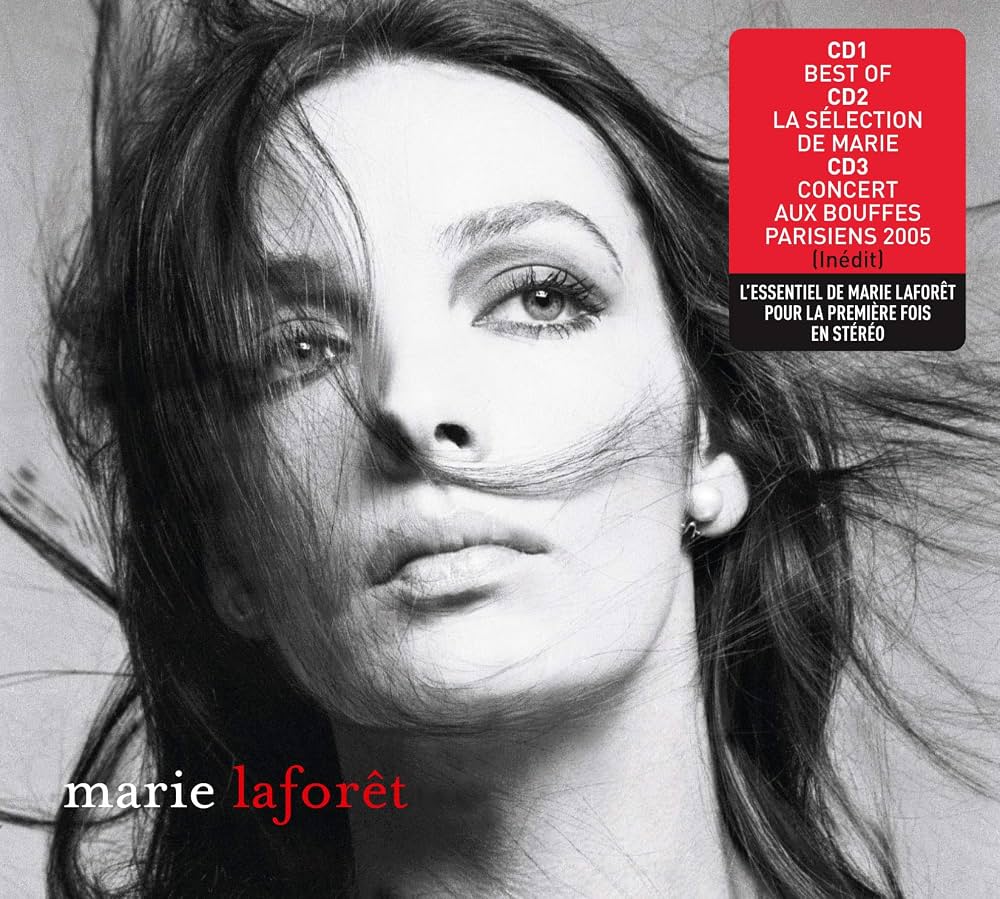
By the end of the 1960s Marie Laforêt had become a rather distinctive figure in the French pop scene. Her songs offered a more mature, poetic, tender alternative to the light, teenage yé-yé tunes charting in France at the time.
Le générique Set 2:
– Toots Thielemans “Blacksmith Blues” Toots, 1961
FIN
– Humphrey Bogart, Paul Henreid “La Marseillaise” dialogue from 1943 film Casablanca
– Camille “Festin” from the Pixar animated film Ratatouille, 2007
– Django Reinhardt and the Quintet of the Hot Club of France “La Marseillaise” 1946
– Eileen “Les Buttes Sont Faites Pour Marche” / These Boots Are Made for Walkin’ (Lee Hazlewood)
PROGRAM NOTES & Links
-“La Marseillaise” is the national anthem of France. It was written in 1792 by Claude Joseph Rouget de Lisle in Strasbourg after the French Kingdom declared war against Austria, and was originally titled “Chant de Guerre pour l’Armée du Rhin” (“War Song for the Army of the Rhine”)
– In the tradition of Django Reinhardt, Biréli Lagrène is one of most highly regarded Gypsy jazz, bebop, and fusion guitarists of recent decades. He was once invited onstage to jam with Stéphan Grappelli when he was only ten years old.

– The lead singer for the indie-pop duo Pomplamoose, Nataly Dawn, co-founded the band in 2008 alongside her husband, multi-instrumentalist Jack Conte. The latest album from the duo is Photogénique, a “lush and groovy French bossa-pop album” released in Summer 2025. Pomplamoose plays in concert August 18 at Paradise Rock Club in Boston, MA
– Following the death of Noel Harrison in 2013, his wife Lori released the excellent album Live at McCabes. The English singer/actor was best known for singing “The Windmills of Your Mind” in the 1968 film The Thomas Crown Affair. That song (composed by French musician Michel Legrand, with English lyrics by Alan and Marilyn Bergman) won the Academy Award for Best Original Song
– Actress/singer Marie Laforêt ( 5 October 1939 – 2 November 2019) originally released the Appalachian folk song “Katy Cruelle” in 1965. The most famous recording of the song is widely considered to be Karen Dalton’s haunting 1971 rendition on her album In My Own Time.
– The Franco-Malagasy artist Juliette Magnevasoa is redefining the French Chanson genre, blending intimate folk with traditional chanson. Her version of Anne Sylvestre’s “Les gens qui doutent” has 1.8 million internet views to date.
Two EPs are planned for summer 2026 and her debut full-length album is due to be released in 2027. Juliette Magnevasoa appears at the historic Les Trois Baudets in Paris on October 28
–Serge Gainsbourg’s 1962 track “Requiem pour un twisteur” (Requiem for a Twist Dancer) is a darkly humorous, noir-tinged song about a charismatic playboy who dances himself to death. It is a satirical look at the early ’60s cultural craze for “the Twist”
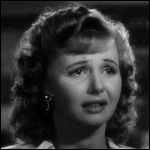
– The two main female actresses who sing “La Marseillaise” in Rick’s Café in the film Casablanca are French actress Madeleine Lebeau (Rick’s jilted lover, Yvonne who famously cries out “Vive la France!” at the end of the song) and American cabaret singer and actress Corinna Mura (who played the guitar-strumming café entertainer.)
– Elizabeth Shepherd is a Montreal-based jazz pianist and singer. She has earned six JUNO Award nominations—Canada’s equivalent of the Grammys. She is performing Friday, August 14 in Charlottetown, Prince Edward Island.
– Yé-yé singer “Eileen,” who recorded the French adaptation of Nancy Sinatra’s “These Boots Are Made for Walkin’”, was actually born in New York City. Eileen Goldsen, left New York as a teenager to study French at UCLA and graduated expecting to become a French teacher. At just 22 years old, she moved to Paris and found work translating American folk songs into French. Eileen soon recorded “Les Buttes Sont Faites Pour Marche” a yé-yé hit in 1966.
Special thanks to production assistant Agneau de Présalé
“À bientôt”


