
Clashes and fires break out as protesters rally across france
Les Rita Mitsouko: porn, drugs and French pop rock legends
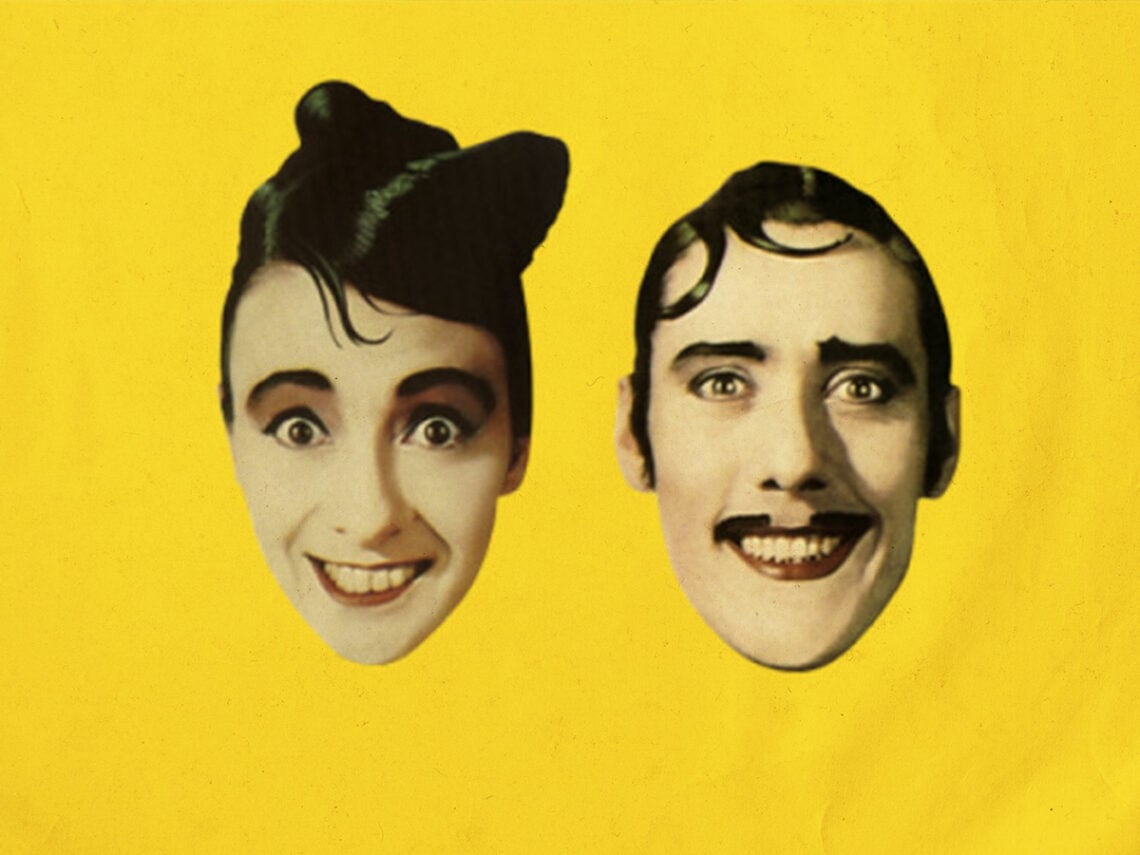
Discover Les Rita Mitsouko—a French pop duo whose frontwoman starred in underground porn at 17 and whose music embraced sex, drugs and rock & roll.
By Richard Metzger/ 19 July 2025
“When I was a lad…” well, it used to be at least moderately difficult to acquire music. Pre-internet, some stuff was genuinely hard to find – even if you lived in New York or London – and often meant paying beaucoup bucks for it. I’m frankly ashamed of some of the prices I paid back then. I cringe with embarrassment when reminded that I’ve spent $100 on a single soundtrack LP or a rare 12” dance mix. $80 for a 45 rpm single. It made sense at the time…
I mention this wistful old man shit by way of bringing up the most I ever spent on a single CD (times three): At some point in the late 1980s, I paid $43 apiece for three Les Rita Mitsouko CDs that I special ordered from Rebel Rebel on Bleecker Street. I was a huge fan of the band (I’ve seen them live twice, and I doubt they’ve played all that many shows in the US), but it was next to impossible to buy their CDs.
I was obsessed with Les Rita Mitsouko. I saw them live twice – a rarity on American soil – and somehow managed a near-complete collection of their music videos on 3/4” U-matic tapes. Couldn’t even play them. Didn’t matter. They were France’s greatest pop group, and it wasn’t even close.
Most Americans (and even a lot of Serge Gainsbourg-obsessed Francophiles) have never heard of Les Rita Mitsouko, and that’s a god damn shame. The duo, made up of Catherine Ringer and Fred Chichin, were equal parts pop genius, punk attitude, glam theatricality, and art-school spectacle. Imagine if Deee-lite and Pizzicato Five had French sex and a nihilist sense of humour, and you’re in the ballpark.
From their very first album, produced by krautrock legend Conny Plank, who is now known for his work with Kraftwerk and Neu!, they came fully formed: weird, whip-smart, and visually fearless. That debut, Rita Mitsouko, was a revelation in France. The follow-up, Les Rita Mitsouko présentent The No Comprendo, produced by Tony Visconti, is considered a high watermark in French pop.
“I never thought I would hear a French rock band rival an English or American one”.
Tony Visconti
Visually, they were stunning. Their music videos—some directed by Jean-Baptiste Mondino, with styling by Thierry Mugler, Agnès B, Jean-Paul Gaultier—were mini pop-art explosions. Fashion-forward before that was a buzzword. Art school but horny. Campy, yes, but with teeth.
Their biggest hit, Marcia Baila, was a tribute to a friend of Ringer’s who died young. The video features Catherine in full Catherine mode: striking, wild-eyed, and impossibly sexy. It’s hard to overstate how much presence she had. Her vocals were operatic, feral, taunting, tender—all within the same chorus. A truly great frontwoman.
And then there’s the past.
Years later, a French friend clued me into the lesser-known Catherine Ringer origin story. Allegedly a junkie in her teens, Ringer had appeared in several fringe porn films in the late 1970s—some while still underage—under aliases like Betty Davis, Cat Gerin, and Claudia Mutti. These weren’t typical euro-smut reels; they were the kind of films sought out by serious fetish collectors. Let’s just say they weren’t for the casual viewer.
During their rise to fame in mid-80s France, it wasn’t uncommon to hear stories of decadent Parisians holding dinner parties to screen Ringer’s old adult work. The fact that she carried that notoriety into mainstream pop stardom without blinking is a testament to her no-fucks-given charisma. It wasn’t about shame—it was survival. She’d already lived through the inferno and returned to make strange, beautiful pop music about it.
Fred Chichin, too, had a rough edge. They met in 1979, shortly after he’d gotten out of prison for a drug charge. The two instantly clicked. Their partnership—personal and artistic—lasted nearly 30 years, until Chichin’s death in 2007 from hepatitis C. Ringer has continued to record and perform as a solo artist, but nothing quite touched the manic brilliance of what they created together.
In recent years, Because Music has released L’intégrale, a career-spanning box set on CD and vinyl, along with remastered LPs and a multi-disc best-of. It’s never been easier—or cheaper—to discover this band outside of France.
Start with The No Comprendo. Then put on C’est Comme Ça. If you’re not sold by the end of that track, well… maybe we’re into different kinds of magic.
Below is the Jean-Baptiste Mondino-directed video for The No Comprendo’s ‘C’est Comme Ça‘. If you don’t fall immediately in love with this band after watching this video, I don’t know what to say to you…
Source: Les Rita Mitsouko: porn, drugs and French pop rock legends
Catherine Ringer, iconic singer of French rockers Les Rita Mitsouko, dies aged 68

The iconic singer of the French duo Les Rita Mitsouko has died from a sudden, aggressive form of cancer.
A voice, a style, an energy and a freedom that left their mark on several generations. Catherine Ringer, singer and co-founder of French pop rock group Les Rita Mitsouko, has died at the age of 68.
Her children announced her death to AFP, saying she had been taken by “a fast-acting cancer” on 14 September 2026.
Ringer was born in Suresnes in 1957. Her father, Sam Ringer, an Ashkenazi Jew born in Poland, had been deported to several concentration camps. Catherine Ringer recounted his story in the song ‘C’était un homme’, on the album ‘Cool Frénésie’.
In 1979, she met Fred Chichin, and from their artistic and personal encounter came one of the most original duos in French music. Les Rita Mitsouko would quickly create a world apart, blending rock, pop, funk, electro and chanson.
Critical and commercial success arrived in the mid-1980s with the song ‘Marcia Baïla’, which became emblematic of the French scene. The band then reeled off a string of hits, including ‘Andy’, ‘C’est comme ça’ and ‘Les Histoires d’A’.
Their music, their videos and their offbeat aesthetic turned Les Rita Mitsouko into a phenomenon that far exceeded the usual boundaries of rock.
In November 2007, the death of Fred Chichin, also taken by cancer at just 53, could have brought the adventure to an end. Instead, Catherine Ringer chose to keep their repertoire alive. She pursued a solo career and regularly returned to the stage with the songs of Les Rita Mitsouko.
Still active in 2026, she had notably performed in Paris last February. She was due to continue championing on stage the body of work born from her collaboration with Fred Chichin.
With her death, French music loses a unique figure. Catherine Ringer remains inseparable from Les Rita Mitsouko, but also from her very own way of taking to the stage: free, provocative, original and widely loved by audiences.
Source: Catherine Ringer, iconic singer of French rockers Les Rita Mitsouko, dies aged 68 | Euronews
MADAM – To the Moon
On vous a pas donné de nouvelles depuis longtemps alors on voulait revenir avec celle là. Jouer à Paris ça a toujours été impressionnant (bah ouai, c’est la capitale). Alors on vous laisse imaginer ce que ça nous fait de vous annoncer une Cigale. Ça va être une belle fête, venez danser (et faire la bagarre) avec nous
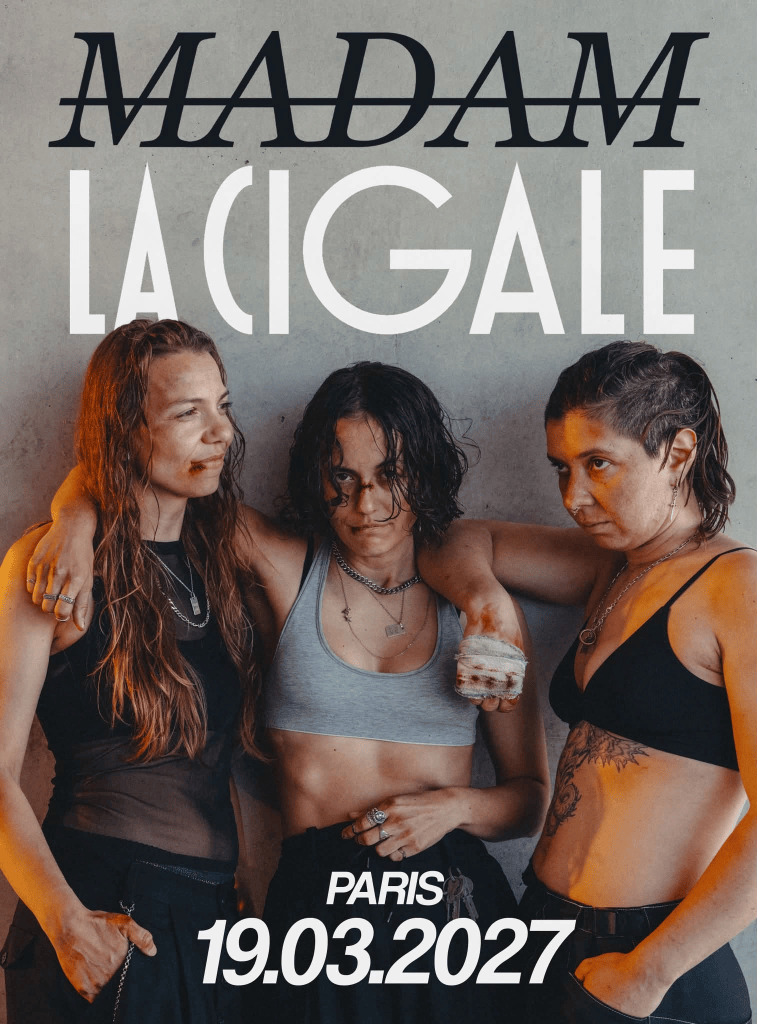
Bonjour, on fait La Cigale.
French pop star Patrick Bruel cancels 35-date tour amid sexual assault storm
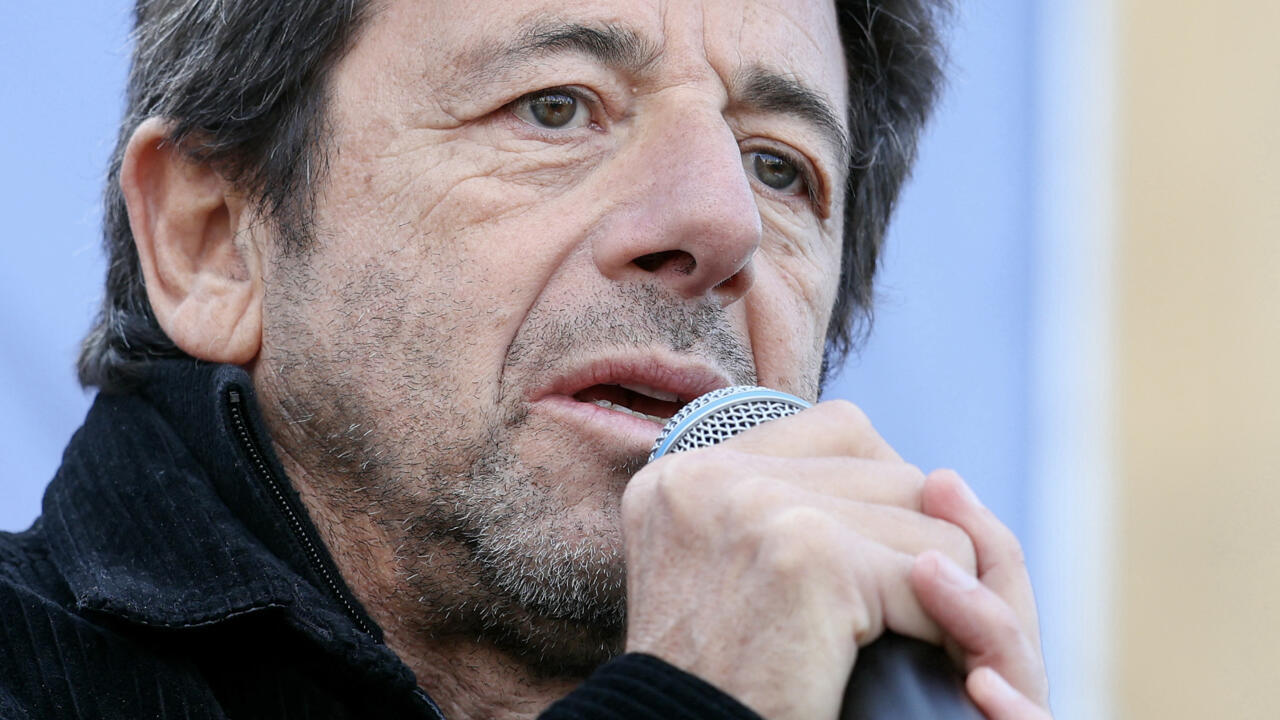
French pop and variety singer Patrick Bruel has cancelled his entire 35-date autumn tour, bowing to weeks of pressure from politicians, mayors and feminist groups following allegations of sexual assault and rape against him. Lawyers representing the accusers called the decision a “power signal” showing that women are “at last being heard.”
The 67-year-old former 1990s heartthrob announced the cancellation in an Instagram post on Tuesday, framing it as a “choice of appeasement” rather than an admission of guilt. He denies the allegations against him.
In his Instagram post, the singer insists that this decision “in no way means [he] is giving up on defending [himself].”
“But I realise that today, this tour has become something else. It has become the embodiment of a debate that goes beyond it,” he adds.
To date, Bruel has been placed under formal investigation in four cases – notably for rape and attempted rape – and has been granted the more favorable status of “assisted witness” in four others.
In May and June, as the legal net tightened around him, several of his concerts were cancelled – not only in France but also in Montreal, Canada – while Bruel himself decided against performing at the summer festivals where he had been scheduled to appear.
The final performances of the play he was starring in in Paris were also cancelled.
Although taken into police custody and placed under formal investigation in early June, the singer was not jailed; instead, he was subject to judicial supervision that did not prohibit him from performing on stage.
‘Missteps’ by the justice system
However, he has faced mounting pressure from feminist groups and public figures to cancel the rest of the performances.
Following Bruel’s announcement, lawyer Jade Dousselin, who represents several complainants, expressed her “great relief” while asserting that this cancellation did not overshadow what she regards as “missteps” by the justice system.
“It’s a powerful signal, a turning point; women’s voices are finally being heard,” another lawyer for victims Corinne Herrmann told Franceinfo on Wednesday.
She represents television presenter Flavie Flament, who filed a civil-party complaint in Paris in May accusing Bruel of raping her in 1991, when she was 16.
According to Herrmann, the victims she represents feel that “something has shifted in our society – that civil society has heard them and their fears for other women, because that was truly a matter of concern for them,” she said.
She added: “That is why most of them have stepped out of anonymity and filed complaints.”
The collective NousToutes hailed the outcome a “massive feminist mobilisation,” deeming the tour “indecent, an insult to the victims” of sexual assault.
The mayors of the cities where the artist was scheduled to perform also expressed their relief.
Strasbourg Mayor Catherine Trautmann welcomed the cancellation, adding, “Women who have had the courage to come forward must be able to count on us to listen and offer our support.”
‘Better late than never’
Nicolas Mayer-Rossignol, the mayor of Rouen said it was “better late than never.”
“Now, the justice system must be allowed to take its course calmly,” he told French news agency AFP.
“We had called for the voices of victims of sexist and sexual violence to be valued and for the justice system to be able to do its job. With the cancellation of this date, that has now been achieved,” his counterpart in Chartres, Ladislas Vergne said.
Aurore Bergé, the Minister for Gender Equality – who had called on Patrick Bruel to cancel his tour – stated that she has “taken note” of the decision.
France changes criminal code to define rape as sex without consent
Complaints and accusations have been mounting since an investigation published by website Mediapart in March, which was based on the testimony of eight women regarding events spanning the period from 1991 to 2019.
Bruel has consistently denied all of the accusations, calling them “false”.
“I will fight to have my innocence recognised,” he wrote on Instagram, insisting that he “takes what is being said seriously.”
The singer also acknowledged the support of his fans who had hoped to see him take the stage to celebrate the 35th anniversary of his hit album “Alors regarde” (Go on take a look), which sold over three million copies.
Source: French pop star Patrick Bruel cancels 35-date tour amid sexual assault storm – RFI

