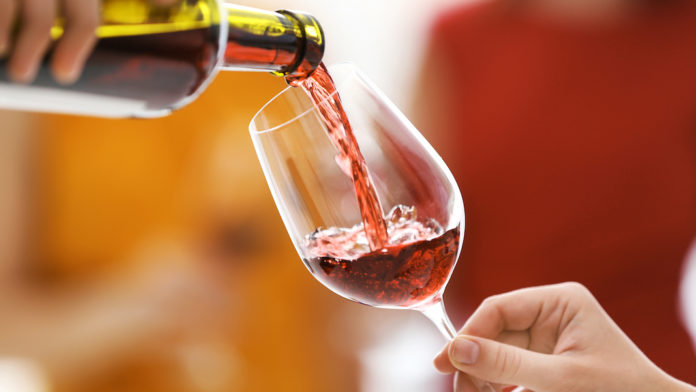
What Makes French Wine So Great?

French wine

More than 50 countries now produce quality wines that can compete with French wines.

More than 50 countries now produce quality wines that can compete with French wines. However, France is still considered the best winemaker in the world thanks to its status as a mecca of vins de terroir, affected by more than two thousand years of history.

Terroir is the land, the climate, the soil, every natural feature of the land in a particular location. Consider, for example, the vineyards of Burgundy, the diversity of these microterroirs, which are called climates, and the incredible nuances created in pinot noir grapes alone; we have to think of French wine as not only an alcoholic beverage, but a true element of culture.

The state of France until now (i.e. before global warming) — with its contrasting geology, its climate, the search for the best grape varieties and their adaptation to the soil, and the hard work of vignerons — has favored the production of fine wines more focused on elegance than power and output.

France was a pioneer in the creation of AOCs, Appellations d’Origine Contrôlée, which set the standards of good growing practices and undoubtedly enabled French viticulture to make progress in pursuit of quality. All this is now more or less being called into question and requires a profound revision of our practices and our wine-growing organization, which is struggling to adapt to new climate scenarios and commercial data. For French wine, another story can and must begin.

These terroir and AOC advantages held by France do not mean that other countries only produce soulless and uninteresting wines. Most European countries have old and historically rich vineyards, including as Italy, Portugal and Spain. The newer vineyards of North America and the so-called New World countries are simply not as old. But the newer winegrowers are in the process of integrating the notion of terroirs into production, and quality level is exploding.

In short, what has set French wine apart for so long may not put the country ahead much longer.
Source: What Makes French Wine So Great? – Frenchly

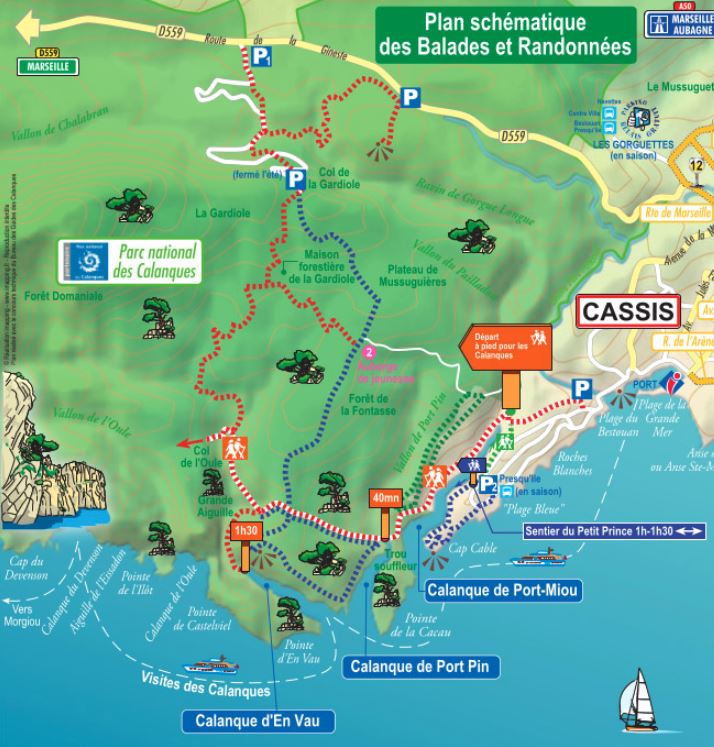
Hiking the Calanques: Port Pin and d’En-Vau 

This hike is probably the most popular and most accessible hike in the Calanques region, visiting the two closest inlets to Cassis. The first at Port Pin is relatively easy for non-hikers and families with small children. The second inlet at d’En-Vau is a bit more work with a slippery, rocky trail. Both very beautiful and give you a good taste of the region. This area is also very crowded, so expect full trails and lots of people crammed into the small beaches.Note: In summer, this area is often closed to hikers for fire risk. Check the trail status here the day before your visit. Sometimes they close the trail after a certain number of guests enter the park, so best to go early or visit in early spring or late fall. [ . . . ]

Source: Hiking the Calanques: Port Pin and d’En-Vau • Swiss Family Fun

Rare Film of Monet, Renoir, Rodin and Degas

Monet

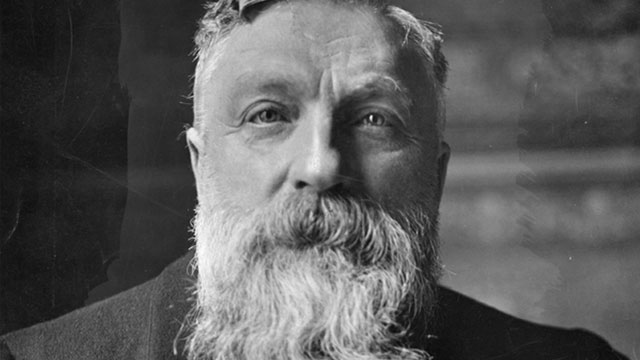
Fine art enthusiasts will appreciate these fascinating 100-year-old film clips of four of the most celebrated artists in history; Claude Monet, Pierre-Auguste Renoir, Auguste Rodin, and Edgar Degas. In 1915, with the newly innovated film camera, a young Russian-born, French actor named Sacha Guitry captured some of France’s greatest artists and authors.

View at: Rare Film of Monet, Renoir, Rodin and Degas

French nationality ranked ‘best in world’ again

passport

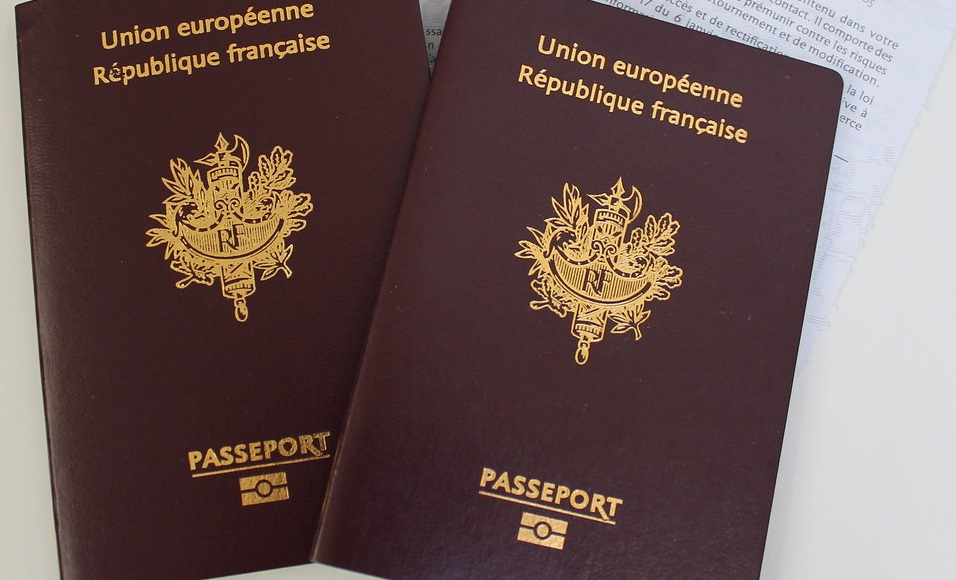
The French nationality has been ranked the best in the world for the eighth consecutive time, according to the latest ranking (2018) of the global Quality of Nationality Index.

The index defines nationality as “legal statuses of attachment to states”.

It takes into account nationality qualities such as home-country economics, peace, stability, citizens’ opportunities for development, ease of visa-free travel, and opportunities to work and live abroad.

These “make one nationality better than another in terms of a legal status through which to develop your talents and business”, the index – full name full name Kälin and Kochenov’s Quality of Nationality Index (QNI) – says.

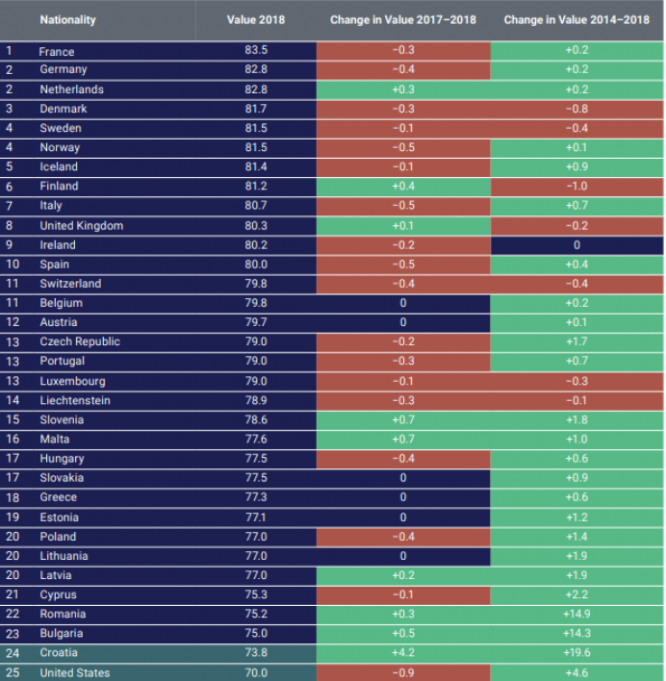
The QNI ranks the world’s nationalities by a strict set of criteria (Map: Quality of Nationality Index (QNI) / nationalityindex.com)

France came out on top of the ranking, with a score of 83.5 out of 100. This was closely followed by Germany and the Netherlands (both 82.8); Denmark (81.7); and Sweden and Norway (81.5).

France won out due to its place as the world’s sixth largest economy, but also for its place in the European Union, the list said, with all EU members listed at the top of the table due to their freedom of movement.

France was especially praised for its qualities in helping citizens to travel, live and work abroad. A French passport allows the holder to travel in almost 165 countries without a visa.

The top 10 was rounded out by Finland (81.2), Italy (80.7), the United Kingdom (80.3), Ireland (80.2) and Spain (80.0)

(Table: Quality of Nationality Index (QNI) / nationalityindex.com / LaDepeche.fr)

At the bottom of the top 25 were the United States (70.0), with Croatia (73.8), Bulgaria (75.0), Romania (75.2), Cyprus (75.3), Poland, Latvia and Lithuania (all 77.0) coming just ahead.

The bottom three nationalities were South Sudan (157th), Afghanistan (158th), and Somalia (159th), with respective scores of 15.9, 15.4, and 13.8.

Risks of a ‘hard Brexit’

But the UK could see its ranking fall to 56th globally in the next list “if it pursues a ‘hard Brexit'”, the researchers have suggested, putting it on a par with China (currently 56th) and Russia (currently 62nd).

The index is named after its creators, Dr. Christian H. Kälin and Professor Dr. Dimitry Kochenov.

Dr. Kälin is a law professor and chairman of law firm Henley & Partners, and is considered an expert in investment migration.

Prof. Kochenov is a Chair of EU Constitutional Law at the University of Groningen in the Netherlands, and writes widely on comparative and European citizenship law and migration regulation.

In a statement, Prof. Kochenov said: “The UK may be about to establish a world record in terms of profoundly undermining the quality of its nationality without going through any violent conflict.

“Depending on the still-to-be determined outcome of Brexit, the UK could see itself falling from the elite group of ‘very high quality’ nationalities into the ‘high quality’ bracket.

“A truly ‘hard’ Brexit would result in the UK having a nationality that does not grant Britons settlement or work rights in any of the EU jurisdictions or Switzerland, Norway, and Iceland: a collection of the most highly developed places on earth, greatly diminishing the quality of its own nationality in an irrevocable manner: either you have such rights, or not – and in such a scenario UK citizens won’t have them.”

Prof. Kochenov added: “The QNI is a clear illustration of the simple fact that speaking of the different nationalities of the world as equal, or even comparable, is misleading.

“We see that some nationalities offer bundles of rights, while others, quite clearly, are painful liabilities, dragging down the holders.”

Read more at source: French nationality ranked ‘best in world’ again

Violence against women: tens of thousands of people in the street, “a historic mobilization”

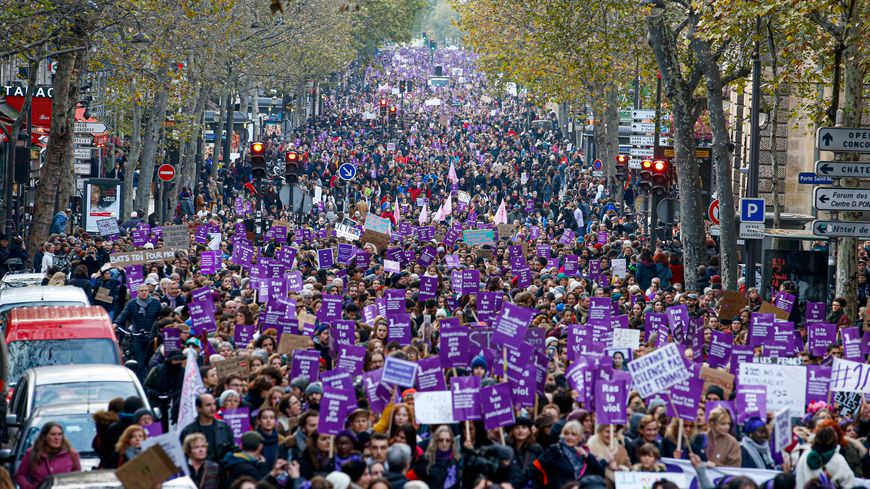
March against violence against women took place everywhere in France this Saturday. They brought together tens of thousands of people in Paris and in about thirty cities. The collective #NousToutes welcomes a historic mobilization.

The collective #NousToutes greets ” the biggest march in the history of France ” against gender-based violence. Tens of thousands of people marched this Saturday in Paris and in thirty cities in France to denounce violence against women and too many feminicides since the beginning of the year. 

Thirty or so organized marches brought together 150,000 people, according to the feminist collective #NousToutes, including 100,000 in Paris . The Occurrence cabinet counted 49,000 protesters in the capital during its count for a media collective.  Continue reading “Violence against women: tens of thousands of people in the street, “a historic mobilization””