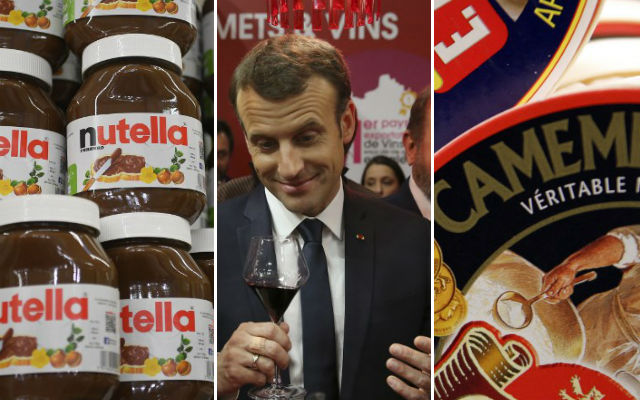
Audio: Do you have what it takes to be a wine master?
 What skills you need to apply to be a master of wine.
Listen at: Radio 4 in Four – Do you have what it takes to be a wine master? – BBC Sounds
French director controversy over ‘women aged 50’ quip

French director and writer Yann Moix has caused controversy after saying he “could not love a 50-year-old woman” and “only goes out with Asian women”.
Mr Moix, aged 50 himself, made the statements in an interview with magazine Marie-Claire, published on January 4.
He said: “I am telling you the truth. Aged 50 [myself], I am incapable of loving women aged 50. I think that’s too old. When I am 60 years old, I will be able to; 50 will then appear young to me.”
He continued: “It doesn’t disgust me, it just wouldn’t occur to me. [Women aged 50] are invisible to me. I prefer younger women’s bodies, that’s all.”
He also said that he only goes out with Asians, specifying “Koreans, Chinese, Japanese”, adding: “Many people would not admit that, as it is racial bias. Maybe that is sad for the women I go out with, but the Asian race is rich, large and infinite enough, that I do not feel embarrassed.”
His comments have caused controversy on social media.
Journalist and author Mona Chollet said: “Yann Moix is a sad man, confirmation in Marie-Claire.”
Source: French director controversy over ‘women aged 50’ quip
Cardinal’s cover-up trial puts French Catholic Church in glare of abuse scandal

The highest-profile Catholic cleric to be caught up in a paedophile scandal in France goes on trial on Monday charged with failing to report a priest who abused boy scouts in the 1980s and 90s.
Source: Cardinal’s cover-up trial puts French Catholic Church in glare of abuse scandal
France honours its most provocative author
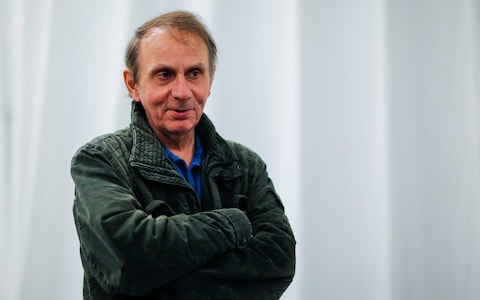
Michel Houellebecq, the enfant terrible of French literature, was awarded the Legion of Honour, France’s highest civilian distinction, in the New Year honours list on Tuesday.
A forthcoming novel by the celebrated but controversial author predicts the doom of western civilisation. Seratonin, due out on Friday, focuses on the festering rage in provincial France that has exploded into the “yellow vest” protests.
Like his previous books, it is set to become an instant bestseller and is already being hailed as the biggest literary event of 2019. It is also likely to enrage those who object to the views that have made Houellebecq, 62, an iconic figure for the nationalist, eurosceptic Right.
The title of the novel, to appear in English in the autumn, refers to the main ingredient of an anti-depressant that causes its anti-hero, Florent-Claude Labrouste, to suffer impotence and nausea. Like most of Houellebecq’s protagonists, he is a thinly disguised version of the author himself.
At 46, fed up with his Japanese girlfriend and his job, Labrouste returns to his native Normandy, where he meets suicidal farmers, prevented from making ends meet by EU dairy quotas. Out of despair and fury, they take to the streets and stop traffic in “yellow vest” style.
Houellebecq’s bleak view of France and Europe is much in evidence. “No one in the West will ever be happy again,” he writes. “This is how a civilisation dies, without danger or drama and with very little carnage.” [ . . . ]
Continue at THE TELEGRAPH: France honours its most provocative author
Only in France: Ten of the year’s most French stories