
Alice & Lewis et Beasty James aux déjeuners du Label Fargo Réalisation
Review: Boy without a father
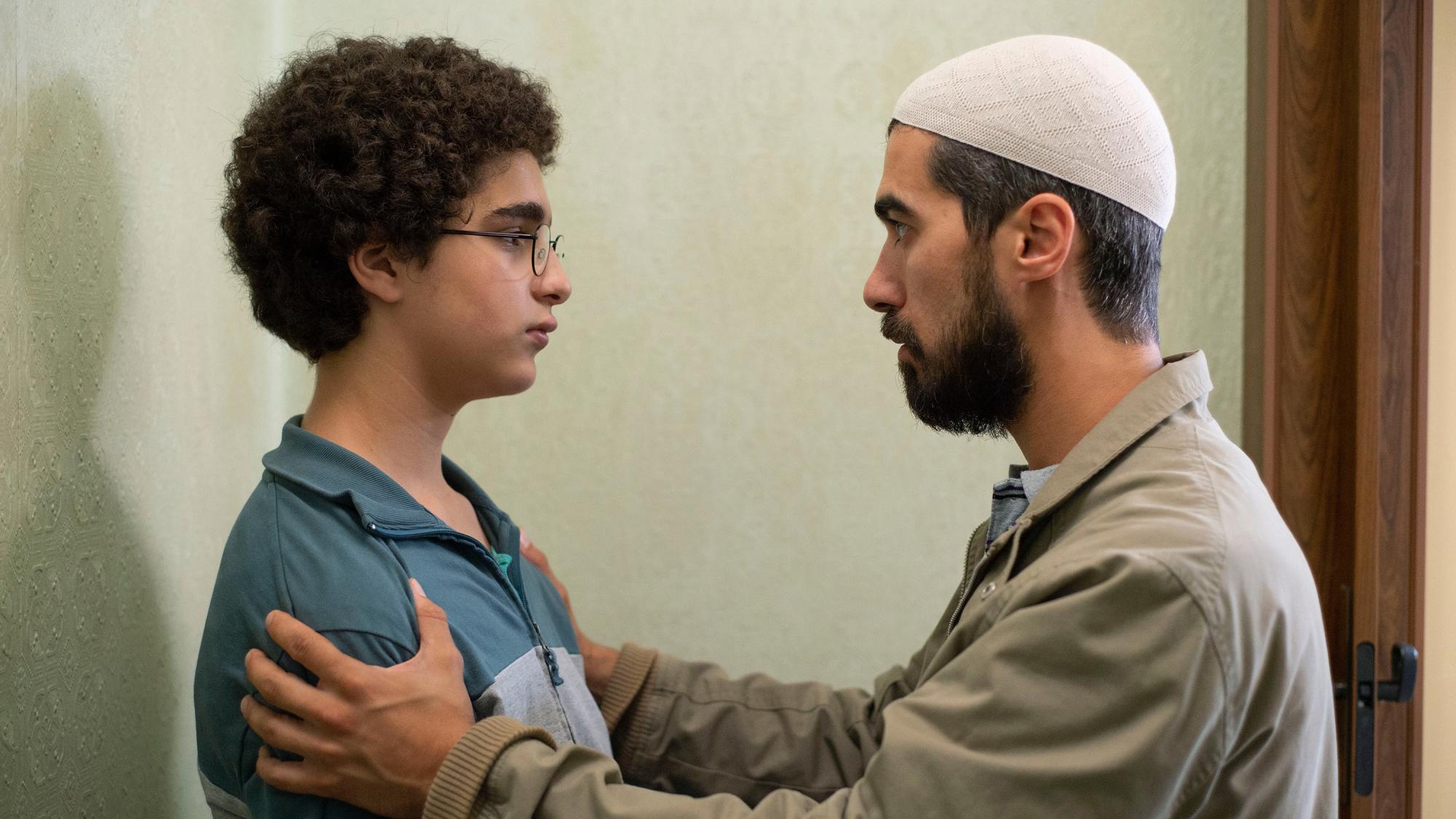
Sitting among the New York critics at a screening of Young Ahmed, a film about Islam
The press screenings for the New York Film Festival have begun, and on Monday I screened a new film by the Dardenne brothers. The film, called Young Ahmed, is about a teenage boy trying to embrace radical Islam. Luc and Jean-Pierre Dardenne are considered the “Coen brothers of Europe,” and we published a feature last year on their spiritually infused films.
Many of the films the Dardennes write and produce focus on the relationship between fathers and sons. Often they focus on middle-school-age boys struggling with their identity. In Young Ahmed, our middle-school protagonist’s father is absent, and his mom sighs at one point that Ahmed wouldn’t be running after extremist ideologies if his father were around. It’s a fascinating and complex film, and fits in just right with the Dardennes’ other films about boys with absent fathers, such as The Kid With a Bike.
But at the end of the New York screening, the (white) critic in front of me dismissed the film as a portrayal of Islam from “problematic white men.” Another reviewer afterward called it a “hateful, duplicitous little movie” full of “toxic Islamophobia.” That misses completely, I think, the religious nuance of what the Dardennes are doing here—their films tell the spiritual stories of Belgium, not just Catholic Belgium. And Young Ahmed depicts many different strains of Islam if the grouchy critics would pay closer attention.
But I shouldn’t be surprised if the New York reception of the film is overly political or self-righteous. What the Dardennes gave us is another philosophical pinprick about our own identities: our perceived righteousness and need for forgiveness.
Source: Boy without a father
Thomas Fersen: all he has left is his slip!
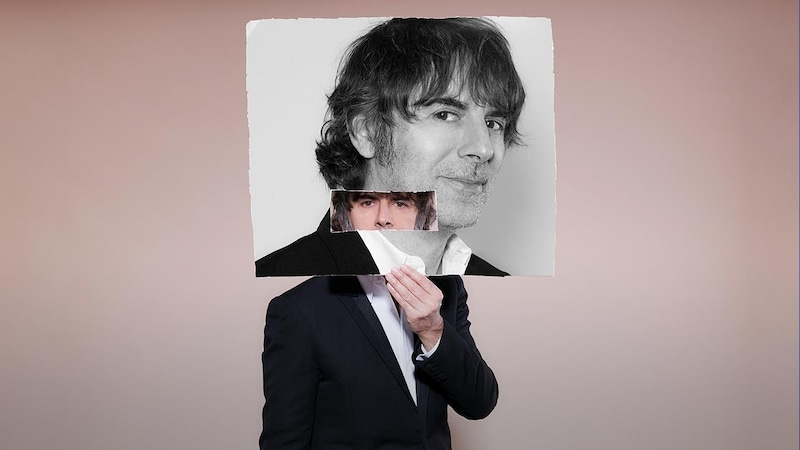
The light-hearted storyteller returns with his rabbit skin on his head and a small wonder under his arm: a twelfth album carried by beautiful acoustic orchestrations, where teenage and love stories intertwine and some animals , obviously.
[ GOOGLE TRANSLATED}
The 56-year-old singer-songwriter, himself an unparalleled theatrical character, takes us on new paths thanks to his always fertile imagination, in the service of a word as brilliant as wacky.
For this new album, Thomas Fersen trades the string quartet of the precedent A stroke of cow tail against other acoustic sonorities, including that of ukulele, sitar and especially the banjo. The instrumentation, enhanced by keyboards and used with great sobriety, adds to the magic of his dream world and his mastery of rhyme.
Animals, old and troubled waters
This walk in the land of Fersen promises a beautiful moment of reverie as well as unusual encounters. Who else would start his record with a declaration of love to the old (except The Three Agreements and their success I love your grandmother)? Or, imagine a fight between King Kong and T-Rex at the Grand Rex?
With his usual derision and a touch of nonchalance, the non-conformist declares in his first excerpt that all he has left is his slip! And that the zombies of the cemetery that pursue him do not find their hole. Hilarious, for young and old! And nobody had rhymed “tomato” and “automaton” since Luc Plamondon.
Speaking of humor, it takes to titrate a song Eat my lice. A title repulsing for a children’s song with Cajun colors, where there is still talk of monkeys. Then there is the teenager My parents are not there , who takes advantage of the absence of his parents to invite a school girlfriend, with the excuse of helping him in math. But behind the perky tunes and bouncy rhythms, so much tenderness.
In The real problem , the fanciful poet tells us casually about his love story botched with a billionaire (The disadvantage is his fortune / She wants to pay for the restaurant all the time / For me who have never a thune / Who always puts the same coat).
That’s all I have left might be tearing some people away, because Fersen dares a beautiful song – almost deadly – of more than 10 minutes, The Pond . In his bath he tells of the troubled waters in which his mother was so afraid that he would sink. Another sweetness, lighter: Want to do nothing , a small detour in the countryside on a hot summer day; a beautiful eulogy of laziness.
Mouse, fish, rabbits … his eternal animal accomplices are present throughout the disc. Basically, they are there to evoke with lightness the human condition and the absurdity of existence.
Since The Birds Ball , received as a spring bouquet in 1993, the songwriter with a neglected pace has managed to mark his own path of casual and playful scenarios, while ignoring the fashions. Above all, do not break our head, let alone break our ears, with tearful. Twenty-six years and many adventures later (and a vermeil medal of the French Academy), the eternal adulescent still has this rare quality: to be inimitable.
Pauline Croze
See more Pauline Croze articles on Pas De Merde
Film: Chantel Akerman

Chantal Akerman was born on June 6, 1950 in Brussels, Belgium as Chantal Anne Akerman. She was a director and writer, known for Je Tu Il Elle (1974), A Couch in New York (1996) and The Meetings of Anna (1978). She was married to Sonia Wieder-Atherton. She died on October 5, 2015 in Paris, France.
Chantal Akerman on IMDB
Obituary THE GUARDIAN
Trump’s Cheese Tariffs May Be His Most Normal Trade Policy

If you’re a fan of European cheeses, I’m sorry to report the price outlook is not Gouda.
The U.S. and the European Union have a long-running trade dispute over airplane subsidies. Each side alleges that the other is subsidizing its major commercial-aircraft manufacturer (Boeing and Airbus, respectively) in violation of World Trade Organization rules. The WTO says both sides are right: Boeing and Airbus both receive improper subsidies. Soon, the WTO will say how much in retaliatory tariffs each side may impose to punish the other for these violations. And in preparation for that decision, the U.S. has prepared a list of $25 billion worth of European exports we might subject to 100 percent tariffs.
The list reads like an order sheet from Dean & DeLuca.
Tariffs may be applied to cheeses including Gouda, Stilton, Roquefort, and Parmigiano-Regianno. Olive oil. Olives. Dried cherries. Apricot jam, peach jam, currant jelly, pear juice. Ham, including Proscuitto di Parma, Jamón Ibérico, Jambon de Bayonne and any of the other delicious European hams. Wine. Whiskey. Brandy (e.g., Cognac). If you might buy it to throw a fabulous cocktail party, it may soon be subject to a prohibitive tariff.
Meanwhile, the EU has released its own list of goods it might tariff because of our subsidies to Boeing — it includes live lobsters, orange juice, and rum.
Donald Trump, who doesn’t drink, says you shouldn’t worry about wine tariffs because the best wines are American anyway. But while high tariffs that upset coastal snobs would seem to combine two of Trump’s passions, his strategy of threatening these tariffs is actually one of the more ordinary parts of his trade policy. Long before Trump was president, the U.S. and Europe have exchanged punitive tariffs on luxury and specialty goods as tools to push for resolutions to valid trade grievances [ . . . ]
Read Full story at INTELLIGENCER: Trump’s Cheese Tariffs May Be His Most Normal Trade Policy
 Pas De Merde