
On October 8 the artist known as “Pomme” visited the offices à Morning Coworking Bagnolet to play this lovely show filmed live. Pas de Merde, we love it!
Pomme
British Writer Pens The Best Description Of Trump I’ve Read
Someone on Quora asked “Why do some British people not like Donald Trump?” Nate White, an articulate and witty writer from England wrote the following response:
A few things spring to mind. Trump lacks certain qualities which the British traditionally esteem. For instance, he has no class, no charm, no coolness, no credibility, no compassion, no wit, no warmth, no wisdom, no subtlety, no sensitivity, no self-awareness, no humility, no honour and no grace – all qualities, funnily enough, with which his predecessor Mr. Obama was generously blessed. So for us, the stark contrast does rather throw Trump’s limitations into embarrassingly sharp relief.
Plus, we like a laugh. And while Trump may be laughable, he has never once said anything wry, witty or even faintly amusing – not once, ever. I don’t say that rhetorically, I mean it quite literally: not once, not ever. And that fact is particularly disturbing to the British sensibility – for us, to lack humour is almost inhuman.
But with Trump, it’s a fact. He doesn’t even seem to understand what a joke is – his idea of a joke is a crass comment, an illiterate insult, a casual act of cruelty.
Trump is a troll. And like all trolls, he is never funny and he never laughs; he only crows or jeers. And scarily, he doesn’t just talk in crude, witless insults – he actually thinks in them. His mind is a simple bot-like algorithm of petty prejudices and knee-jerk nastiness.
There is never any under-layer of irony, complexity, nuance or depth. It’s all surface. Some Americans might see this as refreshingly upfront. Well, we don’t. We see it as having no inner world, no soul. And in Britain we traditionally side with David, not Goliath. All our heroes are plucky underdogs: Robin Hood, Dick Whittington, Oliver Twist. Trump is neither plucky, nor an underdog. He is the exact opposite of that. He’s not even a spoiled rich-boy, or a greedy fat-cat. He’s more a fat white slug. A Jabba the Hutt of privilege.

- Jane Godall on apes and Trump’s grooming Macron – Read
- This anti-Trump ad is paid for by Republicans. Watch!
- If you’re British – check out our sister site, The Hobbledehoy
And worse, he is that most unforgivable of all things to the British: a bully. That is, except when he is among bullies; then he suddenly transforms into a snivelling sidekick instead. There are unspoken rules to this stuff – the Queensberry rules of basic decency – and he breaks them all. He punches downwards – which a gentleman should, would, could never do – and every blow he aims is below the belt. He particularly likes to kick the vulnerable or voiceless – and he kicks them when they are down.
So the fact that a significant minority – perhaps a third – of Americans look at what he does, listen to what he says, and then think ‘Yeah, he seems like my kind of guy’ is a matter of some confusion and no little distress to British people, given that:
• Americans are supposed to be nicer than us, and mostly are.
• You don’t need a particularly keen eye for detail to spot a few flaws in the man.
This last point is what especially confuses and dismays British people, and many other people too; his faults seem pretty bloody hard to miss. After all, it’s impossible to read a single tweet, or hear him speak a sentence or two, without staring deep into the abyss. He turns being artless into an art form; he is a Picasso of pettiness; a Shakespeare of shit. His faults are fractal: even his flaws have flaws, and so on ad infinitum. God knows there have always been stupid people in the world, and plenty of nasty people too. But rarely has stupidity been so nasty, or nastiness so stupid. He makes Nixon look trustworthy and George W look smart. In fact, if Frankenstein decided to make a monster assembled entirely from human flaws – he would make a Trump.
And a remorseful Doctor Frankenstein would clutch out big clumpfuls of hair and scream in anguish: ‘My God… what… have… I… created? If being a twat was a TV show, Trump would be the boxed set.
Strange Bedfellows: Cardinal Dolan, U.S. Catholicism & Donald Trump
New song from Thomas Fersen
Ken Burns missed these greats in his “Country Music” documentary
By: Michael Stevenson
Sixteen hours may sound like a crazy amount of run time, but considering Ken Burns was covering nearly 100 years of music, his PBS documentary “Country Music” was anything but “too long.” It was excellent from start to finish, and I didn’t want it to end. That said, the venerable documentarian with the puddin’ bowl haircut made several glaring omissions. There are five performers that I believe Mr. Burns gave short shrift.
Here they be:
OMISSION #1 GLEN CAMPBELL
Glen Campbell deserved more than the brief mention he had in the documentary. He was the most popular “cross-over” artist of his time (not always a compliment, but in this case it is.) “The“Glen Campbell Good Time Hour” television show, which aired 1969-1972, featured crackerjack live performances and duets with the likes of Ray Charles, Tom Jones, “newcomer” Linda Ronstadt, C&W greats Roger Miller, Merle Haggard and many others. Like all the variety shows of that time, the great music was punctuated with slimy celebrity walk-ons and unfunny comic skits, but what the hell can the son of an Arkansas cotton-picker do about that?
Can one possibly overstate the greatness of Glen Campbell’s most famous songs “Galveston,” “By The Time I Get to Phoenix,” and “Wichita Lineman”? (Each composed by the legendary Jimmy Webb.)
Glen called “Wichita Lineman” the favorite of all his songs. Mine too. In an interview before his death, Glen said that he filled in what might have been a third verse of “Wichita Lineman” with a guitar solo, one now considered iconic. He performed the solo on a six-string bass guitar belonging to legendary L.A. bass player Carol Kaye.
He was one of the most respected session musicians of the ‘60s – a certified member of the famed collection of session men deemed The Wrecking Crew. (There’s a documentary on those rascals also – check it out). That’s Glen’s guitar on Beach Boys’ “Pet Sounds” LP, and on Frank Sinatra’s “Strangers in the Night.” By his own count he played on 586 recordings. “None of those singing stars I backed even knew my name,” he has said. ” I was just the guy at the end of the line, picking guitar.” Among country guitar pickers – he had few peers.
And of course, Glen Campbell could sing! Along with his songs, Campbell’s duet album with the mysterious and talented Delta beauty Bobbie Gentry was nearly as good as George & Tammy’s duets, peaking at #1 (in 1968, no less!) Their on-screen chemistry was, well maybe not “clean as country water”, but certainly “wild as mountain dew.”
His TV show always began with the opening chords of “Gentle On My Mind,” the classic written by John Hartford, who was also a regular on the show. Some consider that song not only Glen’s signature, but the greatest country song of all time.
Glen’s life story was a country song – complete with drug addiction, love affairs (Tanya Tucker), booze, fights, jail, and comebacks (“Rhinestone Cowboy”). For christsake, he even shared a movie screen with John Wayne (“True Grit”).
He had a sad, but beautiful ending to his career and life. Following his Alzheimer’s diagnosis, Campbell embarked on a final “Goodbye Tour” with three of his children joining him in his backup band. He said about his disease at that time, “The stuff I can’t remember is great because it’s a lot of stuff I don’t want to remember anyway.”
Wouldn’t footage of one of those final shows of Glen & Family have been perfect for a documentary that had such strong themes of family, faith, struggle, and Redemption?
#2 ALISON KRAUSS
This omission is even more curious than that of Glen Campbell, because Alison is as popular as she’s ever been, and has never been more respected in the greater music community (recently awarded an Honorary Doctorate of Music from Berklee College of Music.)
She has sung or played fiddle with nearly all the country artists in the documentary, including Dolly, Emmylou, Ricky Skaggs and Vince Gill. She’s also collaborated with performers outside of country music, such as Elvis Costello (who wrote “Scarlet Tide” which she beautifully performs in the film Cold Mountain), and the famed classical cellist Yo Yo Ma (singing on “Slumber My Darling,” a song written by Stephen Foster in the year 1862.)
Alison is actually the most awarded singer and the most awarded female artist in Grammy history. She was a Nashville “Outlaw” from the get-go, signing with Boston’s Rounder Records in 1987 and staying loyal to her tiny record label even after she became popular. She has performed on the Academy Awards and sung at the White House (invited by President Barack Obama). She has even recorded an excellent duet album with Led Zeppelin’s Robert Plant!
Even with her forays into rock, pop, and classical music, she has been a guardian of the true Bluegrass musical tradition from her teenage years to today.
So, how in Sam Hill did Mr. Burns pass on all this? Maybe I’m biased, as I first saw her play a live show in 1985 when she was just 18 years old, in a church hall less than a mile from my current home. I’ve loved her ever since.
Had Burns given her proper treatment, he may have used this sublime live performance of Alison performing the country spiritual “Down To the River To Pray,” a song featured in the Coen Brothers’ brilliant film, O Brother Where Art Thou?
#3: AUSTIN CITY LIMITS
Burns barely mentioned PBS’ iconic Austin City Limits in his documentary, even though he used lots of footage from the show. Now in its 40th season, Austin City Limits was far more entertaining, musically challenging, and more influential than anything ever presented on the often-creepy CMT! (Ralph Emery? bleh!)
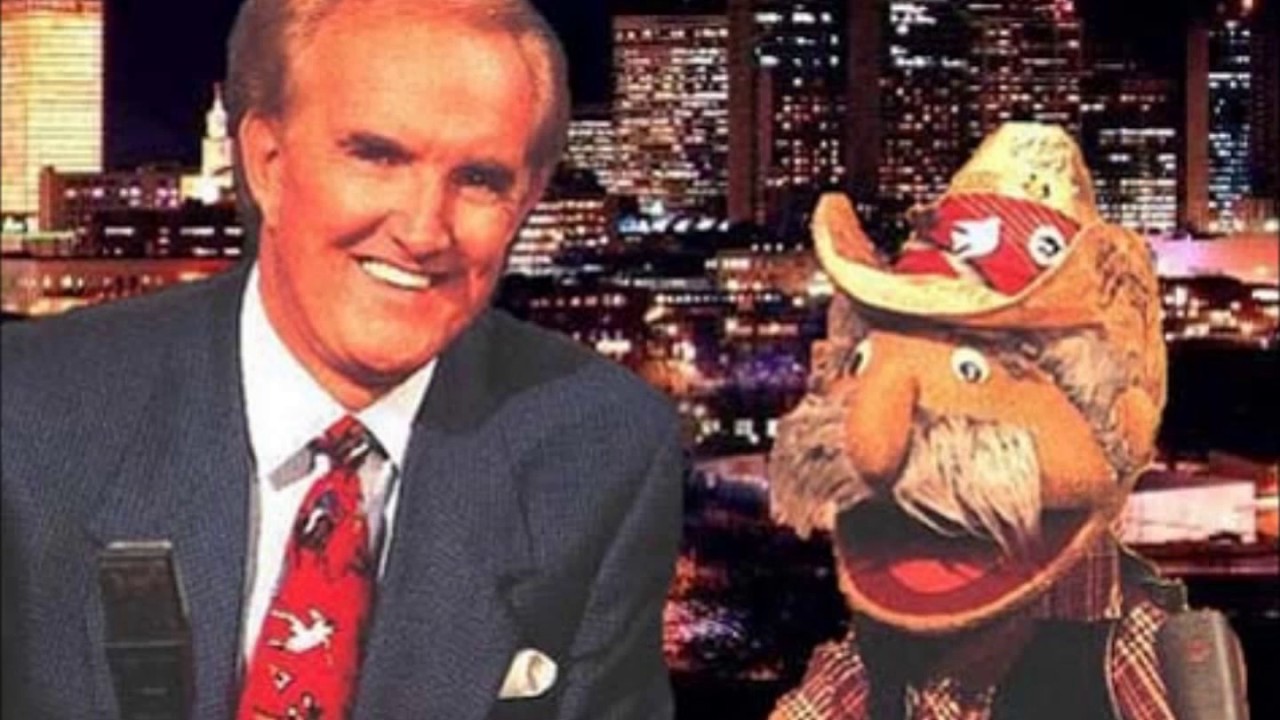
Austin City Limits” first aired in 1975, with Willie Nelson featured in the pilot, and Asleep at the Wheel and Bob Wills’ Original Texas Playboys on the first episode. Each week since then, I could turn to my local PBS station and have the opportunity to see live performances from C&W legends like Ernest Tubb, Waylon Jennings and Merle Haggard. But even more cool was discovering new performers on the “fringe” of C&W, getting little exposure elsewhere; performers like Lyle Lovett, Buddy Miller, Lucinda Williams, Shelby Lynne, Jim Lauderdale, John Hiatt, the Avett Brothers, Neko Case, The Jayhawks, Nanci Griffith, and Joe Ely – all who were first introduced to me by watching Austin City Limits.
“It was the biggest deal for me because it was a show for musicians,” singer Sheryl Crow said when invited on the show. “It was where you got to see authentic singer-songwriters, authentic players and it was the mark of real musicianship.”
Authentic, cutting-edge, and inclusive, Austin City Limits has done more to promote real country music than any similar coming out of Nashville. And of course, Austin City Limits featured the greatest theme song ever – Gary P. Nunn’s “London Homesick Blues” (“I wanna go home with the armadillo…”)
#4 IRIS DEMENT
It’s not completely surprising that singer-songwriter Iris DeMent was ignored on the documentary. DeMent is notoriously shy and seldom gives interviews. She doesn’t always smile in photos. She mainly sings gospel music, yet she herself teeters between being an agnostic and an atheist. She’s recorded only six albums since 1993. Yet I completely agree with National Public Radio’s assessment of Iris:
“Iris DeMent makes music that celebrates humanity’s efforts toward salvation, while acknowledging that most of our time on Earth is spent reconciling with the fact that we don’t feel so redeemed. Grounded in hymns, early country songs, gospel and folk, DeMent’s work is treasured by those who know it for its insight and unabashed beauty.“
There is “unabashed beauty” in the seminal country songs Burns repeats through his documentary – songs like the Carter Family’s “Wildwood Flower,” “Will the Circle Be Unbroken,” and Jimmie Rodgers’ ‘Waiting For a Train” and “Miss the Mississippi.” Iris DeMent is so grounded in that tradition, her best songs would fit comfortably on those original recordings of the Carters and “The Blue Yodeler” made in Bristol, Tennessee in the year 1927.
She was born in Arkansas, the youngest of 14 children in a Pentecostal household. Her beautiful song “Mama’s Opry” describes hearing her mother singing along to records by Jimmie Rodgers and the Carter Family (“Nothing in the world is as dear to me, as the sound of my Mama’s Opry”. )
Her debut album, 1992’s “Infamous Angel,” included the song David Byrne would record, “Let the Mystery Be.” Another song from the debut LP, “Our Town” was memorably played during the closing scene for the final episode the much-adored TV series “Northern Exposure.”) Television critics have referred to that scene as the finest ending to a television series ever, and I believe most of the credit should go to Iris’ touching recollection of her the hometown of her youth.
The Los Angeles Times wrote on July 26, 1995:
“Northern Exposure” was in fact quite life-affirming in its celebration of community, friendship and nature and its respect for diversity and life’s imponderables. Now it’s passing away. Yet even as it does so, the show gently reminds us once again, with tonight’s final montage and its last brilliant musical selection of Iris DeMent’s “Your Town”, that life goes on.
Let’s dance.”
In 1999, Iris sang four duets with John Prine on his wonderful album “In Spite of Ourselves,” including the great title track. In 2004 she recorded Lifeline, a collection of traditional Protestant gospel songs. In her liner notes, DeMent recounts how her mother sang these songs in times of stress looking straight at the sky, “as if she were talking to someone.” In 2012, she recorded a song “The Night I Learned How Not to Pray.”
While some find her vocal stylings contain too much twang, Merle Haggard once called her “the best singer I’ve ever heard.” Iris believed that title belonged to Tammy Wynette, for whom she dedicated the song “Making My Way Back Home” from her last LP. “Tammy was just the greatest country singer there ever was.”
About the country songs she writes, Iris has says, “I’m not writing for my own entertainment. I’m writing and singing as part of a calling. I feel like I have a job to do, and I invite the spirits of the dead into my room; I invite my history, the people who got me here. When I go to work, I actually call to mind other people I’m close to. I sort of pray.”
Country Music? Country music is Iris DeMent.
#5 JOHN PRINE
John Prine is, in my opinion, the best songwriter living today.
Of John Prine’s greatest song, “Angel From Montgomery,” Bonnie Raitt has said, “I think that song probably has meant more to my fans and my body of work than any other song.” Prine says he wrote the song based on a “vivid picture of this woman standing over the dishwater … She wanted to get out of her house and her marriage and everything. She just wanted an angel to come take her away from all this.”
While “Angel From Montgomery” is often listed amount the top 100 country songs of all time, other performers prefer “Paradise,” “Speed of the Sound of Loneliness,” “Souvenirs,” or “Unwed Fathers.” Bob Dylan’s favorite is “Lake Marie.” Johnny Cash’s had a hit with “Sam Stone” in 1971, even though Cash cut-out Prine’s original lyric, “Jesus Christ died for nothing, I suppose.” Prine’s songwriting has been described as “veering from humorous to devastating, often in the same line.”
Since Prine’s self-titled debut in 1971, he has recorded over 20 albums (my favorites are “The Missing Years” and “In Spite of Ourselves”), and performed concerts around the world. A young journalist named Roger Ebert wrote a rave review for the Chicago Sun- Times, essentially launching Prine’s music career. Next, an admiring Kristofferson got him his first record contract. Dylan and Cash soon hailed Prine as one of the best songwriters of his generation. Today Prine is listed among the Nashville Songwriters Hall of Fame. The Grammy Hall of Fame inducted his 1971 debut album in 2014.
A new generation of songwriters have adopted him as mentor and hero. Sturgill Simpson, Jason Isbell and Margo Price, each have opened for Prine. “We hold him up as our Hank Williams,” says Todd Snider. Kacey Musgrave had a hit with the awesomely-titled “Burn One With John Prine.” I’d like to burn one with him, too. Who wouldn’t?
As for a great Country Music “story” – he was working as a mailman when he recorded that first record. He served in the Army, stationed in Germany, during the Vietnam War (how in the world did Burns not interview Prine in his segment about the Vietnam war?) His grandpa was a carpenter. He’s been beating cancer for about 20 years. And like Jesus Christ, he eventually found his “Irish bride.” (see “Jesus, the Missing Years”.)
So. Many. Great. Songs.
I love the songs of Townes Van Zandt, Gram Parsons, and Guy Clark – each of whom Ken Burns devoted considerable time. None of these can hold a candle to John Prine as a songwriter. (True, Gram and Townes died young). But just as Townes’ most unforgettable song “Pancho and Lefty” was dissected for its greatness in the documentary, so could “Angel From Montgomery,” and several other Prine compositions – like “Hello In There”:
“Ya’ know that old trees just grow stronger
And old rivers grow wilder every day
Old people just grow lonesome
Waiting for someone to say, “Hello in there, hello”
John Prine is a national treasure. He became the first songwriter ever to read and perform his work at the Library of Congress – a tribute usually reserved for prize-winning authors, politicians and respected academics.
I can’t for the life of me figure out how Ken Burns left John Prine out of his documentary on country music. But it’s a big ol’ goofy world, right? The good news is that Prine will soon be the focus of his own documentary (working title “John Prine: Hello in There”). Hello and thankfully not yet goodbye.
“Up in the morning
Work like a dog
Is better than sitting
Like a bump on a log
Mind all your manners
Be quiet as a mouse
Some day you’ll own a home
That’s as big as a house …
There’s a big old goofy man
Dancing with a big old goofy girl
Ooh baby
It’s a big old goofy world”
 Pas De Merde