The Argentinians may have changed the way we think of malbec, but here are three wines, mostly from Cahors, which show how France has reclaimed the grape, says David Williams
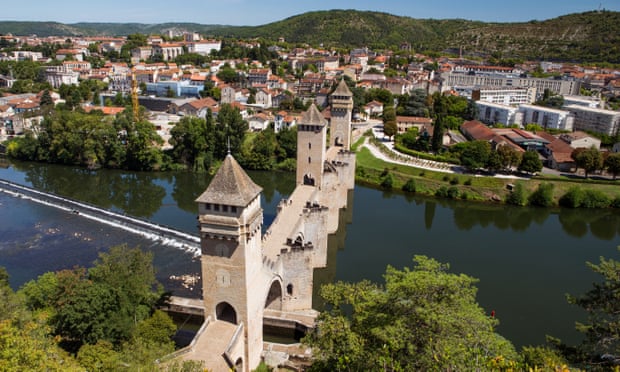
:: THE GUARDIAN :: The Argentinians have made malbec one of the great success stories of wine in the 2010s – the variously lush, chocolatey and perfumed reds they make from it now a fixture on every bottle-shop shelf and restaurant list. If this latter-day success was once a source of irritation to vignerons in the variety’s original home in southwest France, they have long since come to see it as an opportunity. Once abundant in Bordeaux, the region with the closest association with malbec today is Cahors, an appellation in the gently picturesque Lot Valley around the eponymous medieval city. The wines here were once famously chewy, dense, and dark – black wines by name and nature, and with malbec going by its local name, côt (although this was never seen on the label). Today, Sainsbury’s succulent ripe example fits seamlessly alongside its range of Argentinian malbecs [ . . .]
As they make their way, sometimes merry, sometimes melancholy, a double-portrait of the artists forms. It’s very moving.
ROGEREBERT.COM
Agnes Varda is almost 90 years old and she is still making films. That alone should be cause for dancing in the streets. But wait, there’s more: Agnes Varda is almost 90 years old and she is still making fantastic films. Searching, compassionate, provocative, funny, sad ones. This is one of them. You should see it, and then go dancing in the streets.
Varda has been making films since 1955, and throughout her career, which saw her as one of the key figures in the French New Wave, she’s been a generous and ingenious collaborator. For this movie, which is part character drama (with real-life characters), part road documentary, and part essay-film, Varda co-signs with the French artist who calls himself JR. A bit over one-third Varda’s age, he always sports a hat and dark glasses. His work is in photography and public art. He travels through Europe in a van that’s a photo booth, creating large-format portraits of people he meets. He goes even larger with some of his other works, creating giant pictures that he then affixes to the sides of buildings, or train cars, or ships. After which he documents that work, and lets nature take its course—the images are generally washed away by time. In this film, one is very dramatically swept off by the tide.
JR’s is a humanist artistic mission; he gets ordinary people to partake in his work, which inevitably delights them. This movie, which has the French title “Visages Villages,” opens with scenes set in various places where, Varda and JR explain in voiceover, they did not meet. (Included is a funny scene at a disco, where a spry Varda—her unusual bowl haircut totally white on top, with a thick ring of vermillion at bottom, a kind of tonsure—dances up a storm at the other end of the floor from JR.) Once each describes the others’ work, and their mutual admiration, they’re off in JR’s van.
Varda’s ideas for photo work bring her to places she visited long ago, and her own earlier films. They visit the village of Cherance, in Normandy, where Nathalie Sarraute, the great writer to whom Varda dedicated her amazing 1985 film, “Vagabond,” lived. They find the well-hidden graves of Henri Cartier-Bresson and his wife, and pay homage. But while they honor the dead, they concentrate on celebrating the living. At one village, they see a row of one-time miners’ houses, waiting to be torn down. The hold up is one woman, the surviving daughter of a miner, who’s staying put. Her portrait, along with vintage images of the miners from the town, is pasted to the houses. The port at Le Havre, a man’s world clotted with ship’s containers, sees its largely unheralded women celebrated with a triptych pasted to a block of stacked containers. An enlarged portrait of Guy Bourdain, a one time collaborator of Varda’s who went on to become a celebrated photographer, is put on a concrete bunker that Germans abandoned in World War II and ended up off a cliff and embedded in a beach. A visit to a goat farm inspires an artwork calling for goats to be permitted to own their own horns.
As they make their way, sometimes merry, sometimes melancholy, a double-portrait of the artists forms. It’s very moving. Varda’s sight, which served her so well so many years, is getting dimmer. At the same time she wonders why JR always wears dark glasses. This habit, she tells him, reminds her of an old friend, Jean-Luc Godard. The resemblance sets up the film’s finale, which is puzzling, heartbreaking, but ultimately celebratory. And wobbles the line between documentary and fiction so strongly that the vibrations will linger in your heart for days afterwards.
Bonjour! This week we asked for your Paris tips. Here are some highlights from the 148 responses. If you learn just thing, let it be that Parisians like to say hello.
Say hello
If you think Parisians are rude, it might just be that you’re not saying hello. “It is considered the height of rudeness to not greet anyone-even when you get on a bus,” says Klee. “Anytime you walk into a store, you will be greeted and you must greet the shop-person back,” says Scout’s Honor. “I noticed that even when I was walking down an alley and another person crossed my path, they would say ‘Bonsoir,’” says ceedotkaydot. Add an Au revoir, bonne journee when you leave, says jseb.
And start your conversations in French, even when you know the other person speaks English. Readers all agreed that it’s rude to just start talking to Parisians in English. “The best phrase I know in French is Je suis désolé, je ne parle pas français, says JobiWan. “I’ve seen tourists (mostly American) be treated as annoying tourists because they are pushy and demanding, and yet when I approach the same vendors and tell them I don’t speak French (in French), they are much more polite and accommodating.
Even those that don’t speak English are very pleasant and try to work with you.”
You can push it further, says TheMonkeyKing: “We found ourselves to be instant hits in small neighborhood cafes where we badly mangled local French but in their laughter appreciated our efforts. One place poured us extra wine and another one gave use free desserts with our dinner. If you can sneak in a malaprop, you’ll become their darling.”
Walk if you can
While the metro is top-notch, Paris is best seen above ground. Sinisterblogger elaborates:
Walk everywhere and don’t be afraid to get lost. If you get lost, hop on the Metro (there’ll be a station nearby). It’s very, very easy. But make a point to get lost. Just wander. Find a cafe off the beaten path, away from the tourists, sit, drink wine, people watch.
Aimawayfromface3 agrees:
Plan less and wander more. Paris is filled with little micro-neighborhoods and interesting streets. Be sure to take at least one day to just wander about without any real plans or direction. I happened upon an old raised railway line (Promenade Plantee) that they turned into a park. (Similar to the High Line Park in Manhattan)
Papa Van Twee learned this the hard way, after his tour bus broke down. “The next day we skipped the bus, and just walked. It was a lot more fun that way. You can’t get to know a city until you’ve walked it, and Paris is a wonderful city to get to know.”
Avoid scams
“Ignore anyone approaching you with a clipboard asking if you speak English, or anyone with a poorly made friendship bracelet in their hand,” says Kevin Lee Drum.
“I do not feel that the city is generally unsafe, but keep an eye on your valuables, there are many pickpockets,” says Frederi. [ . . . ]