
Jain
The Travails of Emmanuel Macron
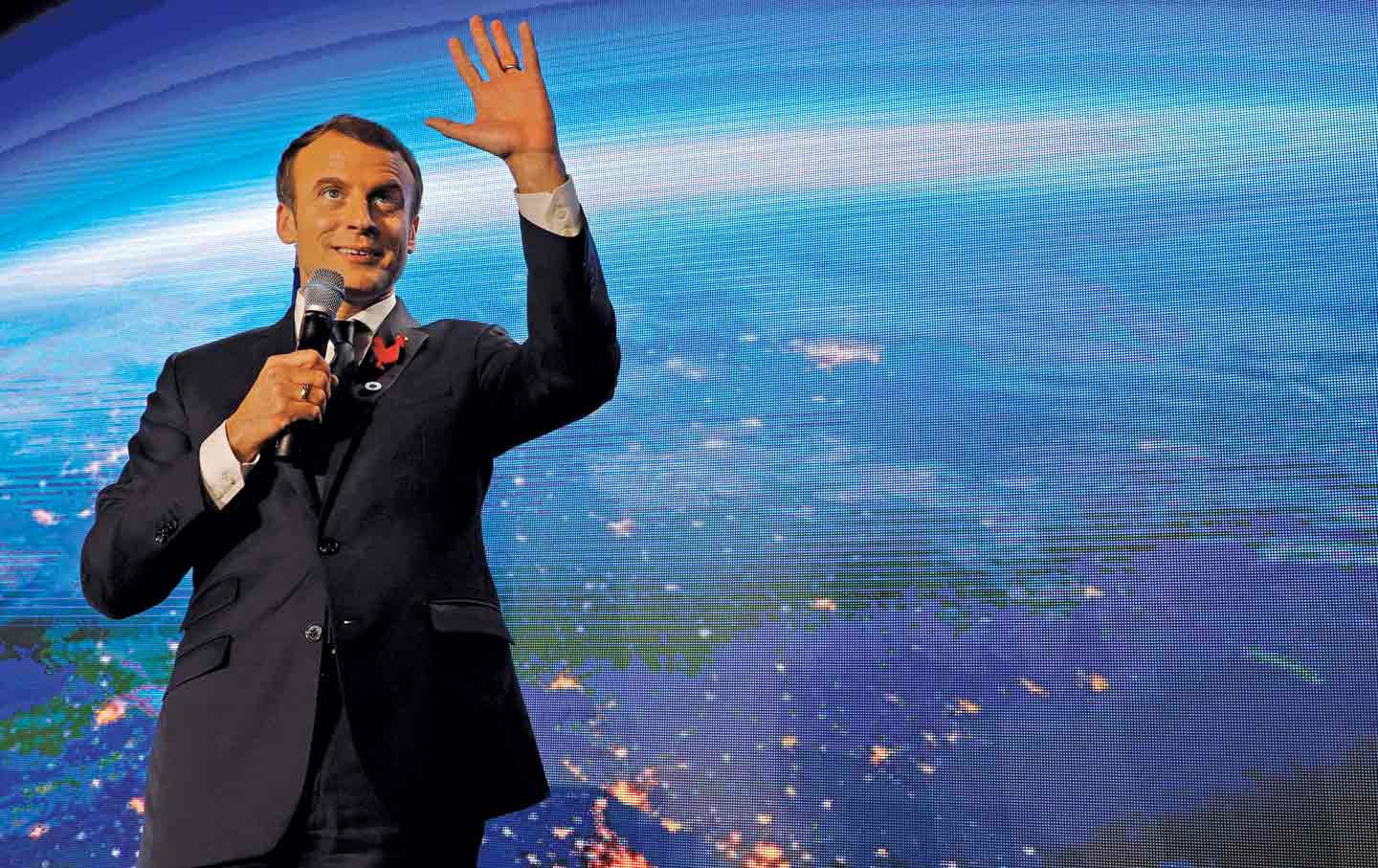
A new book equates the French president’s rise to a revolution. For much of France’s working and middle classes, it has been nothing short of a disaster.
Last September, French President Emmanuel Macron met an unassuming gardener on the grounds of the Élysée Palace. Introducing himself, the 25-year-old timidly explained that he was having trouble finding work. “I send résumés and cover letters… they don’t lead to anything,” he told the president. Many people in France can relate: The country’s unemployment rate hovers just below 9 percent, more than two points above the European Union average. The joblessness rate, meanwhile, is more than twice that for young people age 15 to 24.
Macron’s reaction, however, was less than sympathetic—almost as if he were hearing this problem for the very first time and wasn’t all that convinced of its seriousness. “If you’re willing and motivated, in hotels, cafés, and restaurants, construction, there’s not a single place I go where they don’t say they’re looking for people!” he exclaimed. Then he added, “If I crossed the street, I’d find you one.” Continue reading “The Travails of Emmanuel Macron”
Partisan Café – Paris by Mouth
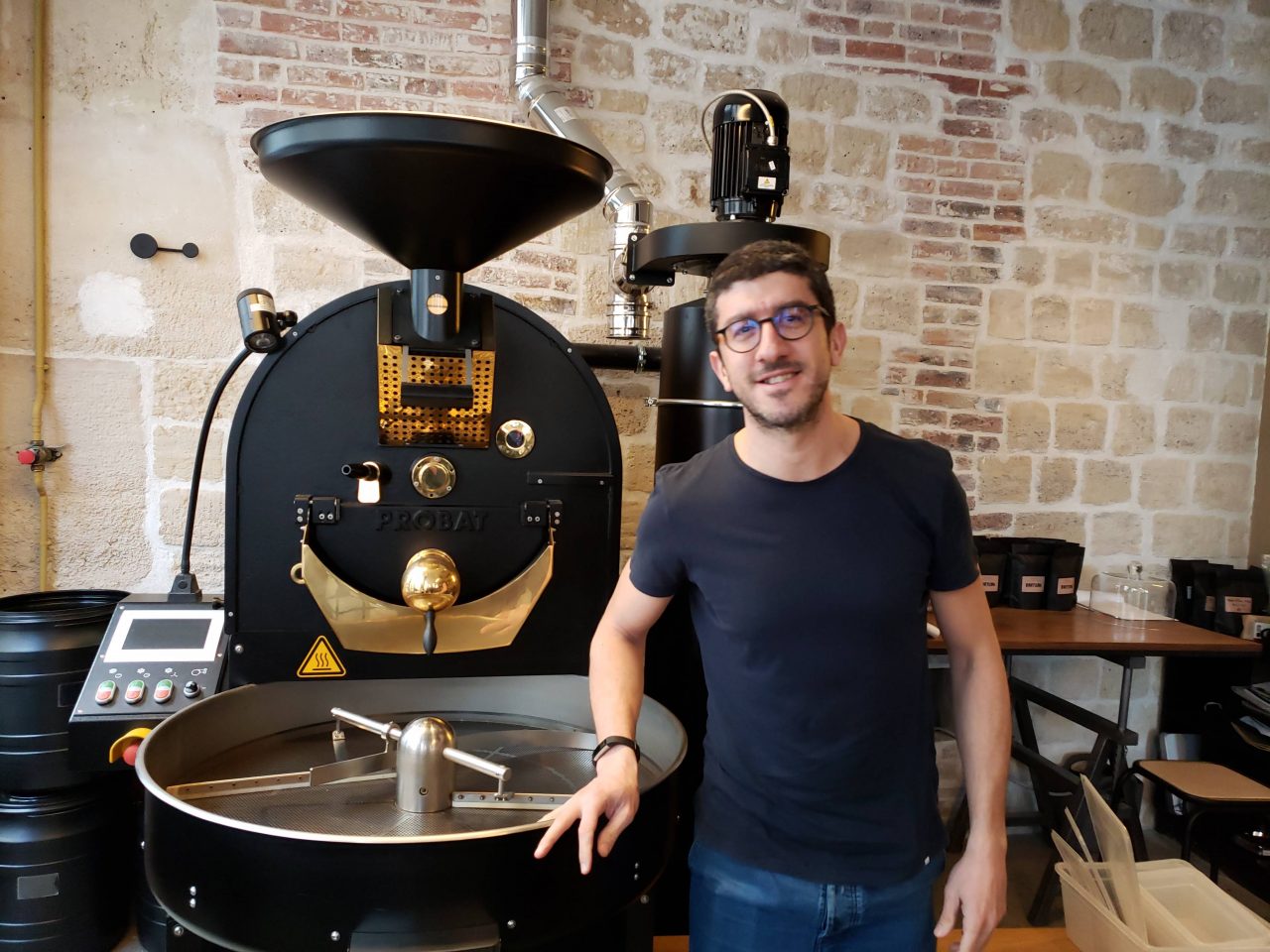
Upon first glance, you’d be forgiven for confusing the industrially chic Partisan Café for another could-be-anywhere cosmopolitan, third-wave coffee joint. But like most things coffee, the devil is in the details. In this, financial analyst-cum-café owner, Georges Karam spares none. Combining a historian’s appreciation of coffee culture and Paris architecture with a physicist’s approach to fluid dynamics, Georges’ coffee geekery caters to a distinctly French sensibility. 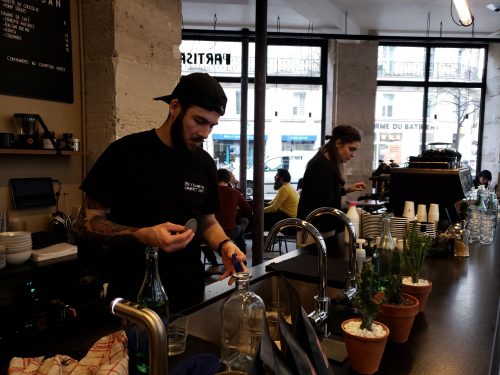
Source: Partisan Café – Paris by Mouth
Agnès Varda, Influential French New Wave Filmmaker, Dies at 90 – The New York Times
A Paris art exhibit renames paintings to put the focus on their black subjects
With ‘The Black Model,’ the Musée d’Orsay makes a political statement.
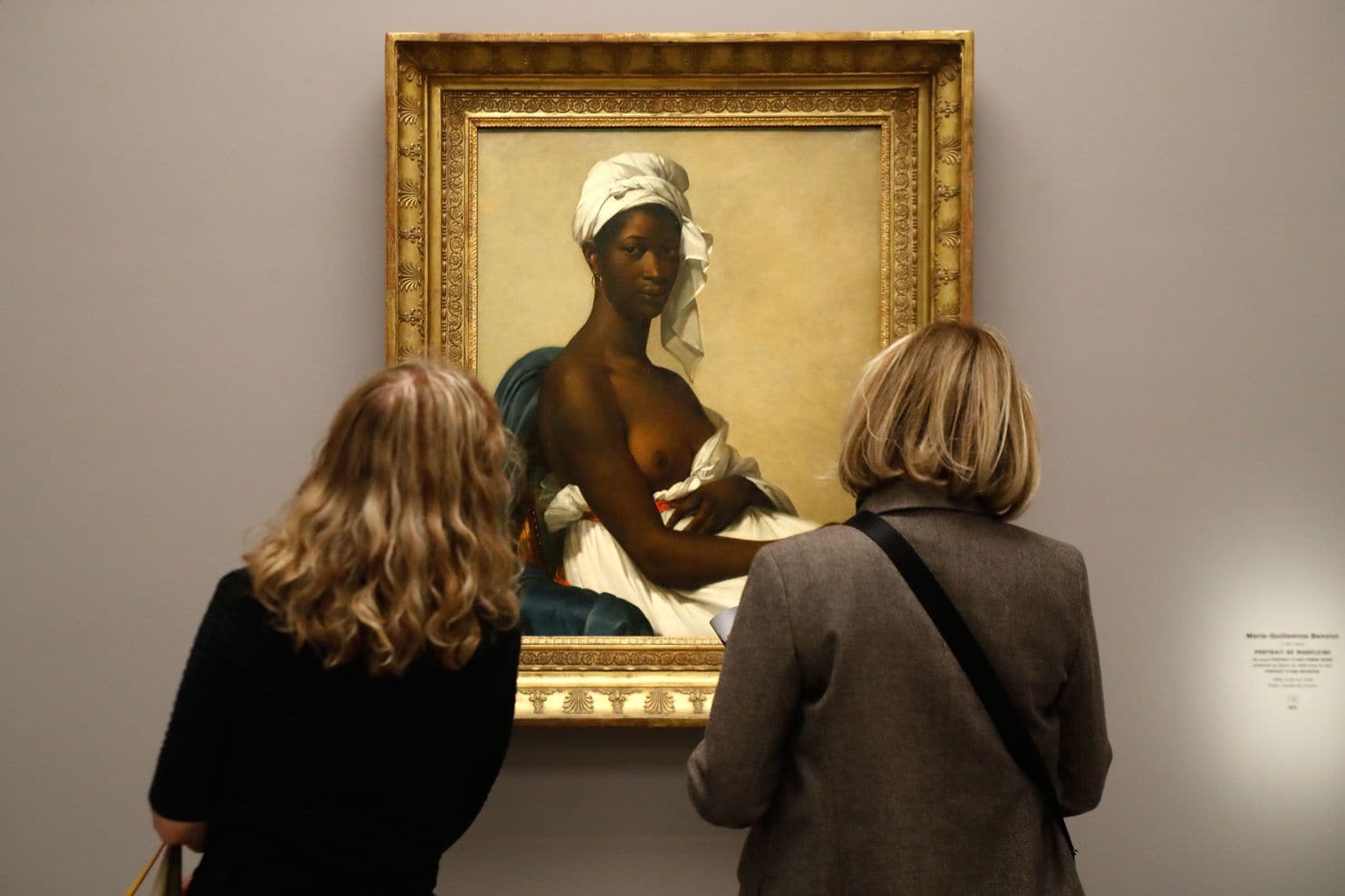
PARIS — At the Louvre, the striking painting is identified simply as “Portrait of a black woman.”
The work is widely considered allegorical — the subject’s bare breast and classical dress, in the colors of the French flag, alluding to the French Republic and the figure of Liberty. The painting was first exhibited at the Paris Salon of 1800, so artist Marie-Guillemine Benoist could have been referring to the just-finished French Revolution or Napoleon Bonaparte’s moves to reinstate slavery — or both.
But the painting hangs under a new title in a groundbreaking show at the Musée d’Orsay directly across the Seine River: “Portrait of Madeleine.” For the first time since the early 19th century, Benoist’s sitter has her own story. As viewers learn, the woman gazing back at them was an emancipated slave from Guadeloupe and a domestic servant who worked in the home of the artist’s brother-in-law.
This is the project of “The Black Model: From Géricault to Matisse,” a major exhibit that opened at the Orsay on Tuesday. The show attempts to restore the identities and perspectives of black figures who were depicted on canvas but largely written out of history.
The exhibit expands on an earlier version that debuted at Columbia University’s Wallach Art Gallery last fall, inspired by the research of American art historian Denise Murrell. But it lands with different impact in France, where the state is officially blind to race, both as statistical category and as lived experience.
“We are tacking political questions, social questions,” said Musée d’Orsay director Laurence des Cars. “We are tackling a very sensitive subject.” [ . . . ]
Continue at WASHINGTON POST: A Paris art exhibit renames paintings to put the focus on their black subjects – The Washington Post
 Pas De Merde