With Sweets, Crafts and Wine, the Strasbourg Christmas Market Arrives in New York

Alsace brings a piece of its famous Christmas market to Bowling Green Park in New York for the month of December.

Tarte flambée, hot mulled wine, chalets selling soft fabric ornaments, oven mitts, and Bredele cookies… the Strasbourg Christmas market has arrived.

A piece of the world famous Marché de Noël de Strasbourg is residing in New York from December 6 to 22. With support from the cities of Strasbourg, Colmar and Mulhouse, thirty chalets and their accompanying wares were imported from the small region of France that borders Germany and installed in Bowling Green Park. The area’s gastronomie, wine, culture and heritage are highlighted through artisan creations, sweet treats, regional food specialties and wine, all for sale seven days a week, 11 a.m. to 7 p.m.

After the North Pole, Alsace is the region of the world most closely associated with Christmas. Since 1570, Strasbourg has hosted an annual monthlong holiday market whose unrivaled size and holiday enthusiasm has earned the city international recognition. Four million people come to Alsace every year just for the Christmas season, to enjoy the 100 holiday markets in the region and partake in a few of the 7,000 events that happen on Christmas day alone. Continue reading “With Sweets, Crafts and Wine, the Strasbourg Christmas Market Arrives in New York”
French wine, cheese targeted in latest Trump trade fight

French wine tariff

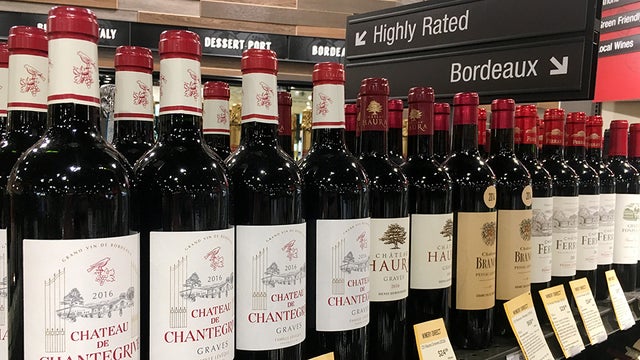
Industry groups are sounding the alarm on President Trump’s proposal to hit $2.4 billion in French goods with tariffs, warning that the latest trade salvo will affect a broad array of goods and its effects fall on U.S. consumers and small businesses.

The administration has proposed tariffs on a wide number of French products, including cheese, sparkling wine and Champagne, beauty products, handbags and home goods, in retaliation for a French tax on online services that targets American tech giants such as Google and Amazon.

Trade watchers warned the scope of the tariffs would be broad and lead to stark price hikes for consumers.

In 2018, the average tariff rate on French imports was 2.9 percent, according to the National Retail Federation (NRF). Under Trump’s tariffs, new taxes could be up to 100 percent for many goods. Continue reading “French wine, cheese targeted in latest Trump trade fight”

Paris’ hidden vineyards

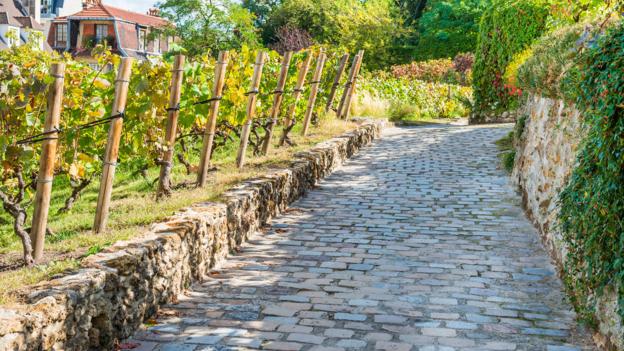
Tucked amid the city’s urban sprawl, dozens of secluded vineyards dot the French capital and produce some of France’s most exclusive wines.

When I first met Irene Henriques, it was the hottest-recorded week in French history. She was standing at the foot of her vineyard wearing long trousers and a thick khaki workman’s coat. When I asked how she wasn’t melting, she laughed and replied in her soft-spoken voice, “After 30 years of wine-growing, you get used to it.”

Gesturing towards the rolling, bucolic hill behind us, Henriques begged, “It’s beautiful, no?” I had to agree. The land that she and her team have spent decades cultivating looks like a Rococo painting come to life; an Arcadian vision of the French countryside. Climbing wisteria and lilacs line the surrounding iron fence, while apple and pear trees provide much-needed shade. Henriques’ most important crops, the Pinot Noir, Chardonnay and Muscat grapes, crown the hill, gorging themselves on sunlight.

France has strict vine-planting regulations, and until recently, only certain regions – including Bordeaux, Bourgogne and Champagne – could bottle and sell wine commercially. But in 2016, an EU-mandated liberalisation of the French wine sector extended the right to sell wine commercially throughout most of France. Yet, wines produced within the French capital can still not be sold to commercial markets because of the perceived threat urban pollution may have on the grapes.

But the goal of Parisian vineyards was never to make money. So rather than going from wine cellars to wine sellers, the bottles have always been auctioned off to benefit the city during harvest time. Also, because the vines are owned and operated by the City of Paris, you can’t just go for a tasting or a tour, as you can in other French regions. Continue reading “Paris’ hidden vineyards”