Music Review: Fierce Flowers “Mirador”

Fierce FlowersMirador

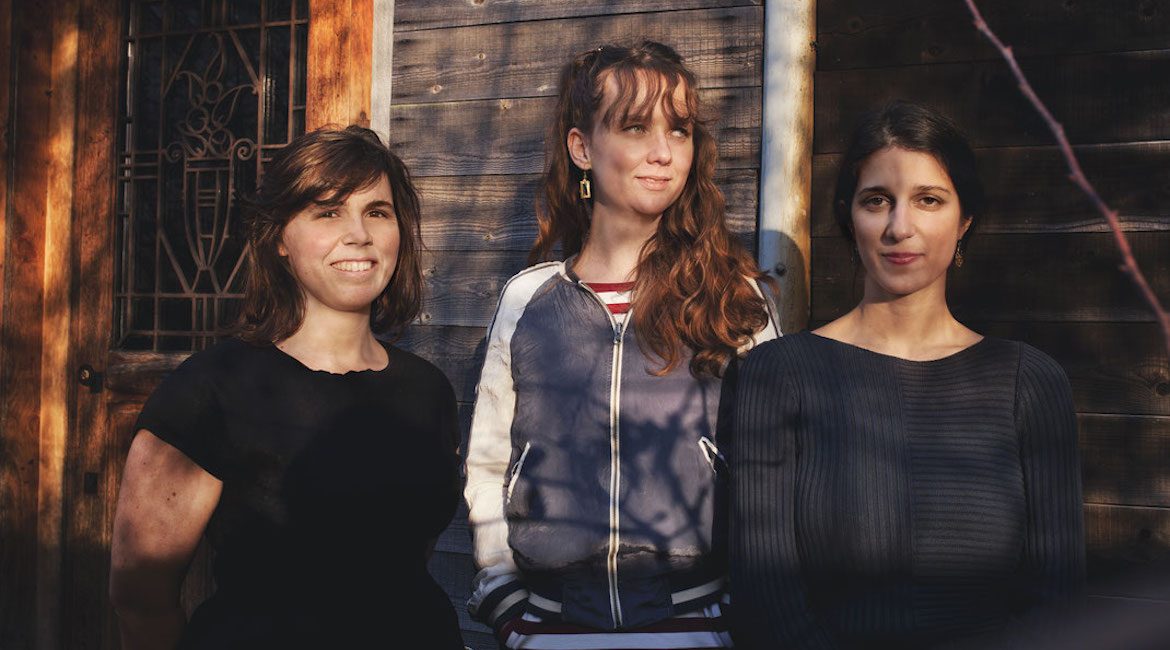
‘Mirador’ is originally a Catalan word, meaning ‘looking’ or ‘seeing’. It is now often used to describe a tower built specifically to provide a scenic view. On this, their first full-length album release, Paris-based Americana and bluegrass trio Fierce Flowers produce an eclectic panorama of songs, influenced by both Oldtime and bluegrass music from the Appalachian mountains, and also by the traditions of European folk and dance.

When French guitarist Léopoldine Guillaume, German violin and banjo player Julia Zech and American/Armenian double bassist Shushan Kerovpyan first met in 2016, it was aboard the Anako, a canal barge docked in La Villette Bassin, in Paris’ 19ème arrondissement. The trio began playing together, their voices locking together in a mélange of close harmony, individual instruments coalescing into a pattern of danceable rhythms and rooted arrangements, and all housed within original songs written in both English and French. An eponymous 7-track EP was released in 2017, and they have since toured throughout Europe, as well as visiting the UK and the United States.

What will impress with this latest release is the diversity of traditional musical styles and influences incorporated into the twelve tracks on ‘Mirador’. From the upbeat opening song ‘Dance To The Open Road’, to the brief and quirky ‘Underwear In A Letter’ which brings the album to a close, ‘Mirador’ is a constantly evolving potpourri of delight and surprise. The jazz-tinged folk of the title track is swiftly followed by a swamp blues stomp, ‘Tell Me No’ and then the Appalachian style folk ballad ‘La Corde’. The uplifting ‘Thorny Path’ has Zech playing both violin and banjo, even taking her bow to the banjo during the middle eight solo. ‘Cette Ronde’ is a fine example of French bluegrass (l’herbe bleue?) which is almost créole in character, whilst acappella harmonies in ‘Deux Pierres Noires’ are spine-tinglingly tight. ‘Belle Paresse’ is a love song with a distinctly Eastern feel, yet ‘Tell Me Lies’ is closer to Country and Western in its character.

Fierce Flowers have not just embraced Americana, they have grabbed it by the lapels and plunged it into their own pot-boiler blend of Parisian and European flavours. The trio manage to switch seamlessly between English and French, with all three taking a turn on lead vocals, and knitting each instrument into a patchwork swathe of rhythm and melody. They are an ensemble whose music is an absolute delectation to discover. Bon appetit!

Source: Fierce Flowers: Mirador (Album Review) | Folk Radio UK
Guillaume Gallienne’s “Maryline”

Cesar Award-winner Guillaume Gallienne (‘Me, Myself and Mum’) returns with his second feature, starring Comedie-Francaise actress Adeline d’Hermy.

For his 2013 feature debut, Me, Myself and Mum, actor Guillaume Gallienne crafted a clever autobiographical comedy where he starred as both himself and his domineering French mother. Best described as a “coming in” movie where, in a major third-act twist, the director revealed that he was actually hetero despite the assumptions of everyone around him, Mum made a sizeable splash at the Cannes Directors’ Fortnight and went on to win three Cesar Awards, including best film honors.

In his follow-up effort, Maryline, Gallienne once again focuses on a sole performer — in this case, fellow Comedie-Francaise thespian Adeline d’Hermy, who became a societaire of the historic French theater back in 2010 and has performed in productions of works by Moliere, Marivaux, Shakespeare and Marguerite Duras.

Without much of a traditional plot, Maryline is basically a vehicle to showcase 30-year-old d’Hermy’s talents on stage and on screen, where until now she has played small roles in films like Yves Saint Laurent and Camille Rewinds. This will no doubt change after people see her in Gallienne’s generous, if somewhat vacuous, portrait of an actress-in-the-making, which follows the titular lead character from one catastrophe to another until she eventually comes into her own.

Set in an unspecified time period that looks vaguely like the late ‘70s or early ‘80s, the episodic narrative picks up Maryline (d’Hermy) as she arrives for her first big movie shoot, which is some sort of costume drama directed by a tyrannical German auteur (Lars Eidinger). Cripplingly shy yet alluring in mysterious ways, Maryline “has something,” as they say about budding stars, though it’s hard at first glance to see what. When she gets her period on set — in a contrived plot device that yields zero laughs — and embarrasses herself in front of the camera by failing to speak up, Maryline winds up loosing her cool, then punching out the director and calling it quits.

For a time she disappears into a working-class life as a mailroom girl in a Coen-esque office building, while also becoming something of a major lush. A few scenes set in her humdrum Gallic village, where her father died and her mother runs a local café, divulge bits of biographical information, but Maryline pretty much remains a cipher. She’s unable to communicate with others, spends a lot of time wallowing in her apartment and seems borderline on the spectrum. Yet when she’s given the chance to perform again — by a kindhearted film director (Xavier Beauvois) and lead actress (Vanessa Paradis), who helps her to overcome stage fright — Maryline manages to find her true calling, which turns out to be in the theater rather than on the screen.

This is definitely an actor’s movie, and one with little concern for story or character or even any kind of general meaning. Yet if you view Maryline as a performance piece rather than as a typical film — although Christophe Beaucarne’s gorgeous photography helps to lend it some cinematic flair — it can be intermittently thrilling to see how d’Hermy’s character slowly but surely crawls out of her shell and learns her craft, leading up to a closing act that’s a tour de force of wordless gestures and suppressed rage. Gallienne cleverly keeps us in the dark during the extended finale as to whether we’re watching a scene from Maryline’s life or a depiction of it on stage, blurring the lines between reality and fiction while doubling down on his movie’s theatricality.

Such effects could prove frustrating to viewers looking for something more relatable — Maryline has underperformed in France thus far, grossing a fraction of what the breakout hit Mum did in its first week of release — while likely making the film a pure curiosity item abroad. But as a work entirely dedicated to revealing the artistry of its lead performer, Gallienne’s sophomore effort ultimately does the trick, and by the time the curtain falls one longs to see what d’Hermy will do next.

Production companies: LGM, Gaumont, France 2 Cinema, Don’t Be Shy Productions
Cast: Adeline d’Hermy, Vanessa Paradis, Alice Pol, Eric Ruf, Xavier Beauvois, Lars Eidinger
Director-screenwriter: Guillaume Gallienne
Producers: Cyril Colbeau-Justin, Jean-Baptiste Dupont, Sidonie Dumas, Guillaume Gallienne
Director of photography: Christophe Beaucarne
Production designer: Sylvie Olive
Costume designer: Caroline De Vivaise
Editor: Valerie Deseine
Casting director: Nathalie Cheron
Sales: Gaumont

In French
107 minutes

‘Monet and Boston’ will celebrate a strong connection, collection at the MFA

Several Impressionist paintings are coming home for the occasion.

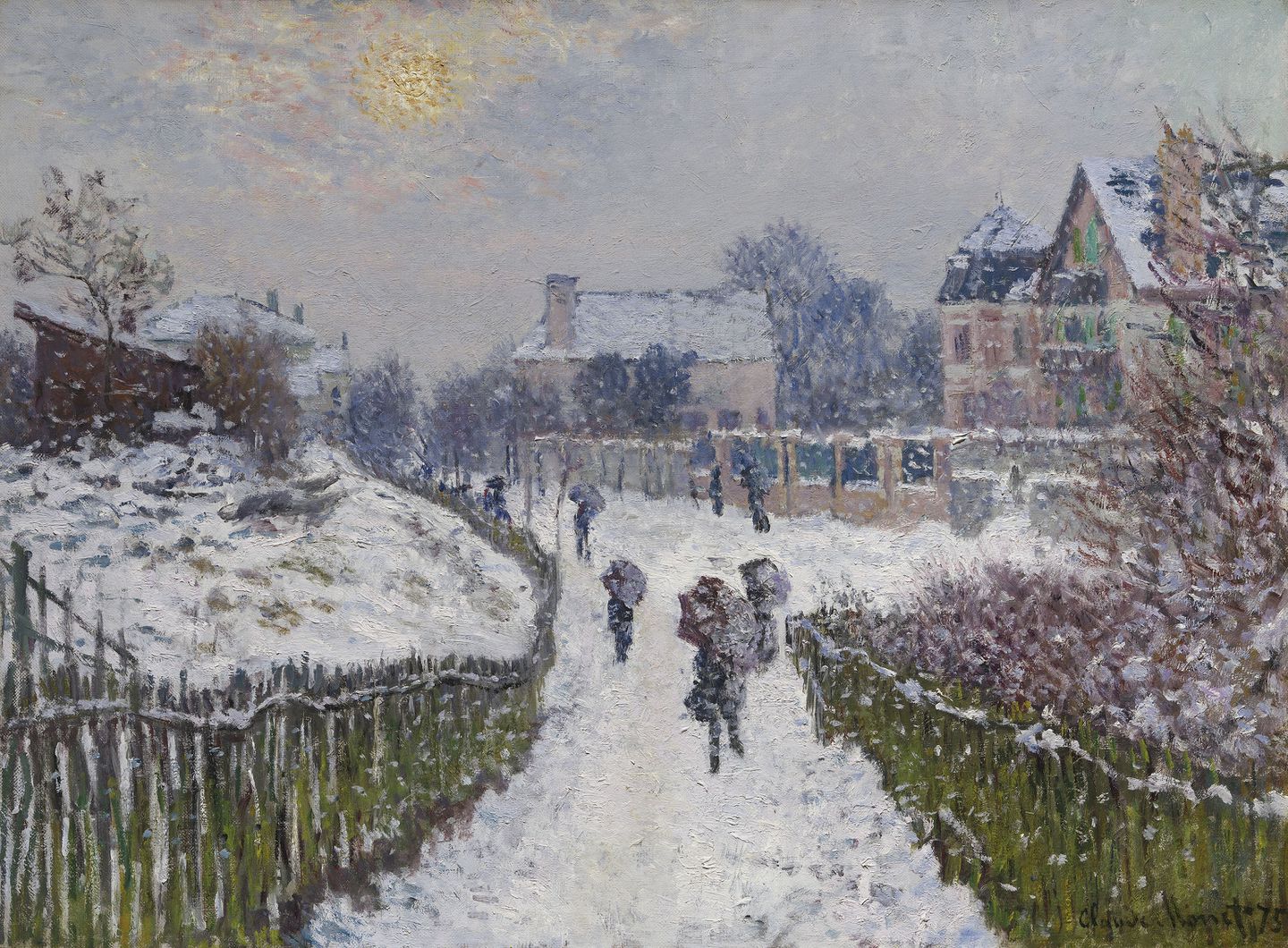
By the standards of even the most feverish of Monet fans, the standing display of the Impressionist master at Boston’s Museum of Fine Arts is pretty damn good. On any given visit, you’re likely to see 10 or 12 at a time — luminous grainstacks, shimmering waterlilies, a mountain glade, and more often than not, that gleefully bizarre portrait of Camille, the painter’s wife, swathed in a demonic kimono.

So how would you feel about seeing, say, 35 Monet paintings all at once? That’s the full complement of the museums’ holdings. Out they’ll come in April, reunited for the first time in a quarter century [ . . . ]

Continue at: ‘Monet and Boston’ will celebrate a strong connection, collection at the MFA – The Boston Globe