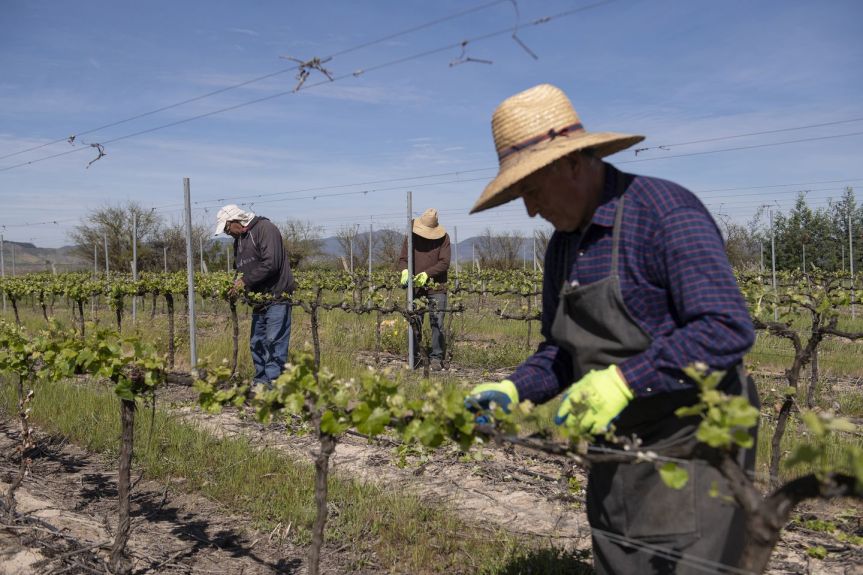
Nowadays, Paris is for lovers of beer as well as wine. Check out these locations

BrasserieBrasserie might mean brewery, but only recently are Parisian establishments getting back to ale.

In Paris, you’re never far from a glass of wine. Step into a classic bistro and there will be good-value reds from the valleys of Rhone and Loire. Higher-end restaurants will inevitably point you in the direction of first-growth Bordeaux. New-wave wine bars are bursting with biodynamic Beaujolais. And a glass of Alsace riesling is de rigueur at a brasserie.

For a drinker interested in quality and value, wine can sometimes seem like the only option in this city. Every street, it seems, has its own cave à vin, complete with regional focus and invariably helpful staff, if you speak French. My favorites include Les Caves Saint-Martin on Rue du Faubourg Saint-Martin, where I once bought two bottles of an excellent grower champagne on the recommendation of the shop owner, and Trois Fois Vin on Rue Notre Dame de Nazareth.

The great food halls devote huge amounts of space to France’s most famous wine regions. I remember wandering into the recently reopened Galeries Lafayette food hall (“Lafayette Gourmet”) in 2014 to find acre upon acre of wine, the vast majority of it French (including 1,200 options from Bordeaux alone!). There were a few desultory shelves of beer.

It hasn’t always been like this: Brasserie, after all, means brewery. When Alsatians founded these palaces of gustatory gratification in the late 19th century, there was often brewing on-site. There still is at Brasserie Georges, which reinstalled a brewery in 2004, but that’s in Lyon. Paris’s mightiest brasseries long ago gave up grain for grape.

Beer is flowing in establishments with a young, energetic vibe

Testing beer at the Gallia brewery. Heineken has bought a minority share. (Gallia)

But things are changing. Breweries and bars are popping up throughout the city. It’s a young, energetic scene, exemplified by the annual Paris Beer Festival (formerly Paris Beer Week). That the name is in English rather than French is telling; much of Paris’s modern beer culture has more than a hint of Anglo-Saxon influence. That said, there’s a definite Gallic edge to places such as La Fine Mousse, an elegant bar and restaurant in the Marais, or breweries such as La Goutte d’Or, which uses ingredients reflecting the rich diversity of the local neighborhood.

The heart of this nascent Beervana can be found in northeast Paris, where rents are lower and the population younger. Around the Bassin de la Villette, a half-mile-long artificial lake in the 19th arrondissement, you’ll find Paname Brewing, a brewpub where the New England IPA is called Brexiteer (an example of how the French occasionally conflate “Anglo-Saxon” countries), and L’Atalante, with a huge outdoor terrace that fills up with young Parisians on summer evenings.

One of the most interesting breweries is Gallia: Originally founded in 1890, it was reestablished as a brand at the end of 2009. At first, the resurrected brand’s founders, Guillaume Roy and Jacques Ferté, focused on conservative pale lagers — but under head brewer Rémy Maurin, the range has expanded to encompass an impressive variety of flavors and styles.

It hasn’t gone unnoticed; in September, Heineken bought a minority share. Most bars in this city are tied to big brands such as Heineken or Kronenbourg. If they start offering customers the likes of Gallia, it’ll be a genuine game-changer.

It’s about time. Paris sits on the dividing line between northern Europe, where beer has traditionally held sway, and the wine-drinking south. Only Champagne, of France’s great wine regions, is further north, and it has (or had, until global warming) a fairly marginal grape-growing climate. This is natural beer country; it’s only right that Beaujolais, Bordeaux and the rest make room for la bière artisanale.

Will Hawkes is a freelance travel and drinks writer based in London.
Source: Nowadays, Paris is for lovers of beer as well as wine. Check out these locations. – The Washington Post

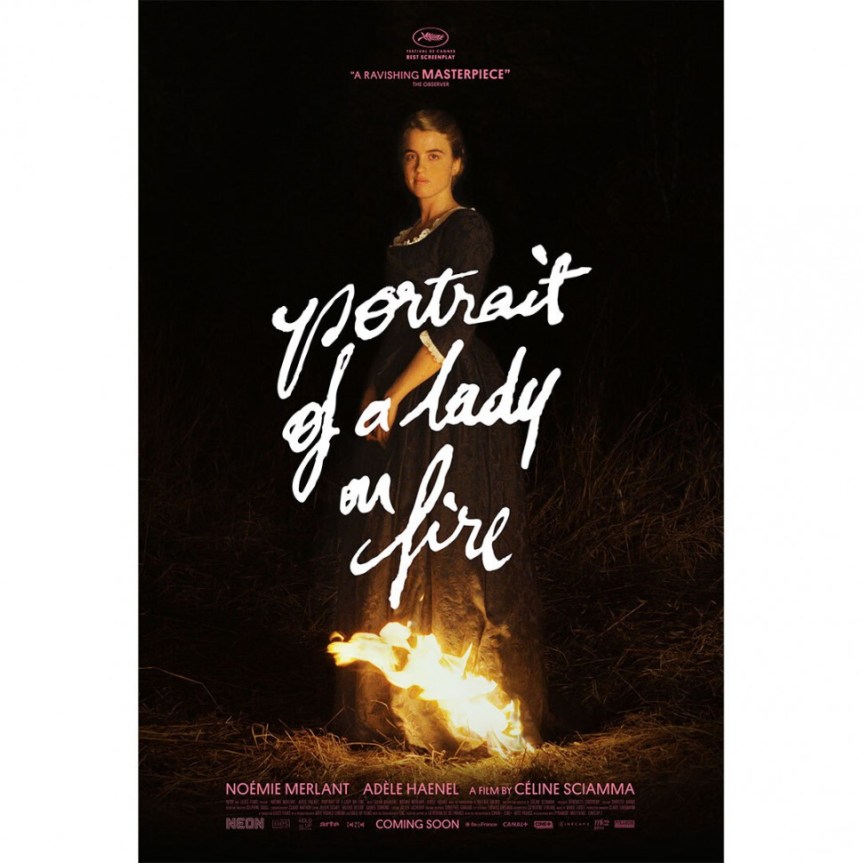
Portrait of a Lady on Fire

France, 1760. Marianne is commissioned to paint the wedding portrait of Héloïse, a young woman who has just left the convent. Because she is a reluctant bride-to-be, Marianne arrives under the guise of companionship, observing Héloïse by day and secretly painting her by firelight at night. As the two women orbit one another, intimacy and attraction grow as they share Héloïse’s first moments of freedom. Héloïse’s portrait soon becomes a collaborative act of and testament to their love.

Winner of a coveted Cannes prize and one of the best reviewed films of the year, Portrait of a Lady on Fire solidifies Céline Sciamma as one of the most exciting filmmakers working today.


Portrait of a Lady on Fire (2019)
Directed by:Céline Sciamma
Written by: Céline Sciamma
Cast: Adèle Haenel, Valeria Golino, Noémie Merlant, Luàna Bajrami
French with English subtitles
Runtime: 2h02
Distributor: Neon

Winner of the Queer Palme at Cannes 2019

Source: PORTRAIT OF A LADY ON FIRE

Climate change fixes for your favorite wine

Don’t get too attached to that pinot noir. New research suggests swapping out grapes to avoid climate catastrophe

January 31, 2020 at 7:00 AM EST

The prospect of hotter summers, warmer winters, drought and violent weather events have caused experts to warn of coming wine shortages and price increases, changing varietal character and, in some dire predictions, the extinction of some wines altogether.

Maybe there’s a fix, says a research paper in the journal Proceedings of the National Academy of Sciences.

The scientists’ computer models show that if we do nothing, global warming of 2 degrees Celsius would wipe out 56 percent of current wine-growing land; increase that to 4 degrees and an estimated 85 percent of grapes won’t be viable.

This team of researchers investigated whether using more heat-tolerant grapes would allow vineyards to adapt. They found that by reshuffling where certain grape varieties are grown, potential losses at 2 degrees of warming could be halved, and cut by a third if warming reached 4 degrees.

The researchers, led by Ignacio Morales-Castilla at the University of Alcalá in Spain and Elizabeth Wolkovich at the University of British Columbia at Vancouver, focused on 11 varieties of wine grapes including cabernet sauvignon, chardonnay, merlot, pinot noir, riesling, sauvignon blanc and syrah, as well as lesser-known varieties chasselas, grenache, monastrell (also known as mourvedre) and ugni blanc. Together, these account for a third of the total area planted to wine grapes and represent important parts of the wine industry in France, Australia, New Zealand and Chile.

The team used vintner and researcher archives to build a model for when each would bud, flower and ripen in wine-growing regions around the world under three different warming scenarios. Then it used climate change projections to see where those varieties would be viable in the future.

“Each variety has a different sensitivity to the climate,” says Ben Cook, one of the study’s authors and a professor at Columbia University’s Lamont-Doherty Earth Observatory and the NASA Goddard Institute for Space Studies. “Basically, replacing varieties with more climatically suitable varieties, called cultivar turnover, increases resilience to climate change. It’s a story of mitigation and adaptation.”

The researchers, led by Ignacio Morales-Castilla at the University of Alcalá in Spain and Elizabeth Wolkovich at the University of British Columbia at Vancouver, focused on 11 varieties of wine grapes including cabernet sauvignon, chardonnay, merlot, pinot noir, riesling, sauvignon blanc and syrah, as well as lesser-known varieties chasselas, grenache, monastrell (also known as mourvedre) and ugni blanc. Together, these account for a third of the total area planted to wine grapes and represent important parts of the wine industry in France, Australia, New Zealand and Chile.

The team used vintner and researcher archives to build a model for when each would bud, flower and ripen in wine-growing regions around the world under three different warming scenarios. Then it used climate change projections to see where those varieties would be viable in the future.

“Each variety has a different sensitivity to the climate,” says Ben Cook, one of the study’s authors and a professor at Columbia University’s Lamont-Doherty Earth Observatory and the NASA Goddard Institute for Space Studies. “Basically, replacing varieties with more climatically suitable varieties, called cultivar turnover, increases resilience to climate change. It’s a story of mitigation and adaptation.”

Cook says that changing out grape varieties isn’t the only solution to pushing back against the effects of climate change. Many vineyards are topographically complex and will allow microclimates, especially if vineyards move to higher ground. Moving vineyards to north-facing slopes might also slow the effects. And in France, Cook says, where irrigation is not utilized, watering could be employed.

“We wanted to give a different perspective on all those apocalyptic takes,” Cook says. “Winemakers are becoming more interested and aware of climate change and a lot of them are really concerned. They are seeing things they haven’t seen before, with storms and heat waves. But what you do about it is a complicated thing.”

Geoff Kruth, the president of GuildSomm, an international organization for sommeliers, says wineries are understandably concerned about the uncertainties of climate change, “but it’s important to remember that there are dozens human decisions — rootstocks, trellising, timing of vineyard work, etc. — that have significant impacts on how a vine reacts to a climate.”

Many wine industry experts have pointed to increased ripeness in grapes and higher alcohol levels as indications of climate change.

“The real reason wines got riper is that people wanted them to get riper. Generally, if you look at wines from the 2000s, you see more sugar in the grapes and more alcohol in the wines,” Kruth says. “People have been quick to associate this with climate change, when in reality it was conscious human decisions. Now you see the alcohols are dropping. It’s a consumer trend. The grower and winemaker have a strong hand in all of these things.”

Mike Heny, a longtime Virginia winemaker who makes wine for 15 vineyards in the state, points to steps that already have been taken around the world to address climate change.

“It’s a multipronged approach,” Henry says. “In Napa, people are removing the primary grape cluster so the secondary one is the one that gets turned into wine so you can push off ripening, which allows for lower potential alcohol and greater physiological maturity so you get greater flavors. People are leaving a bit more canopy, carrying a bigger fruit crop to delay ripening, picking earlier.”

Champagne is looking at England as a new venue for high-quality sparkling wines. In July, Bordeaux allowed a number of new grapes to be planted, he says. It was previously illegal to plant anything but the five main historic grapes. And in Italy, a new VCR program is working to breed traditional vinifera grapes like merlot with hybrids that are hardier and exhibit more resistance.

The question for Heny and other winemakers is whether consumers will be amenable to these changes.

“A mutt is better than a purebred when the going gets tough,” Heny says. “But people aren’t into drinking the mutt wines as much. At the end of the day, we have to make wines that people love.”

Source: Climate change fixes for your favorite wine – The Washington Post

Baudelaire’s unknown extra verse to erotic poem revealed


New lines to The Jewels, inscribed in a copy of Les Fleurs du Mal, has been unveiled as the volume comes up for auction

More than 150 years ago, Charles Baudelaire scrawled an extra verse of his erotic poem The Jewels into a copy of his landmark collection Les Fleurs du Mal. The stanza has never been made public, with the book’s previous owner wanting to keep it private, but ahead of its auction next week, the lines have been revealed to the world.

The Jewels was one of six Baudelaire poems banned by a French court in 1857, less than two months after Les Fleurs du Mal (The Flowers of Evil) was published, and the poet and his publisher prosecuted for offence to public decency. The court ruled that the erotic verses – beginning “La très chère était nue, or “My darling was naked” – would “necessarily lead to the excitement of the senses by a crude realism offensive to public decency”. The conviction was only overturned in 1949.

Baudelaire wrote the additional verse into a first edition of the book, sending it to his friend, the journalist and literary critic Gaston de Saint-Valry, as a “testimony of friendship”. According to auction house Drouot, the verse was only previously reported by Baudelaire expert Yves Le Dantec in 1928, who tried and failed to persuade the book’s former owners to make it public. Due for sale on 22 November, its estimated price is €60,000-€80,000 (£51,000-68,000).

“The verse added by the poet is completely unknown, and gives this copy a major literary importance,” writes Drouot in its catalogue.

Et je fus plein alors de cette Vérité: / Que le meilleur trésor que Dieu garde au Génie / Est de connaître à fond la terrestre Beauté / Pour en faire jaillir le Rythme et l’harmonie,” wrote Baudelaire. The lines, which come after a verse in which Baudelaire’s naked lover is seen only in the light of the hearth, translate as: “And I was full then of this Truth: / That the greatest treasure reserved by God for the Genius / Is to know profoundly earthly Beauty / So that from there can spring forth Rhythm and harmony.”

Drouot’s Myrtille Dumonteil told France Info that “the writing has been authenticated and is the hand of Baudelaire. It y is the type of object that one always hopes to find in an estate.”

The lot will also include the 1928 letter from Le Dantec, in which he attempted to persuade the book’s previous owner to make the verse public. “I do not need to stress to you the primordial interest represented by this discovery of an original verse by the great poet,” writes Le Dantec. “I consider that there is no unpublished note, word, not even a letter from a man such as Baudelaire which should remain unknown, that everything concerning him is interesting. Far from devaluing such a treasure, the ‘disclosure’ could only increase its value – assuming that is the real reason for your negative response.”

Seen today as a classic of 19th-century poetry – TS Eliot called Baudelaire “the greatest exemplar in modern poetry in any language” – Les Fleurs du Mal’s reception in 1857 was far from welcoming. Linking sexuality, love and death, touching on lesbian love and the seamy side of urban life, one 1857 reviewer wrote: “Never has one seen so many breasts bitten or even chewed in so few pages.” Another in Le Figaro, denounced the collection’s “putridity”.

Source: Baudelaire’s unknown extra verse to erotic poem revealed | Books | The Guardian