To ban or not to ban? What future for pesticides and GMOs in the EU?

PART ONE

French Agriculture Minister Didier Guillaume tells Catherine Nicholson why he believes a transition to lower-chemical farming is essential and how he thinks it can be achieved.

Meanwhile, Green MEP – and organic farmer himself – Benoît Biteau tells us why what he learnt converting his father’s farm to greener practices can be replicated.

In our reports, we meet some of the mayors who have banned pesticides around their towns and find out more about the conflict with the farming community. We also meet French farmers who are testing how to reduce their dependence on chemical pesticides

PART TWO

Source: To ban or not to ban? What future for pesticides and GMOs in the EU? (part 1) – Talking Europe

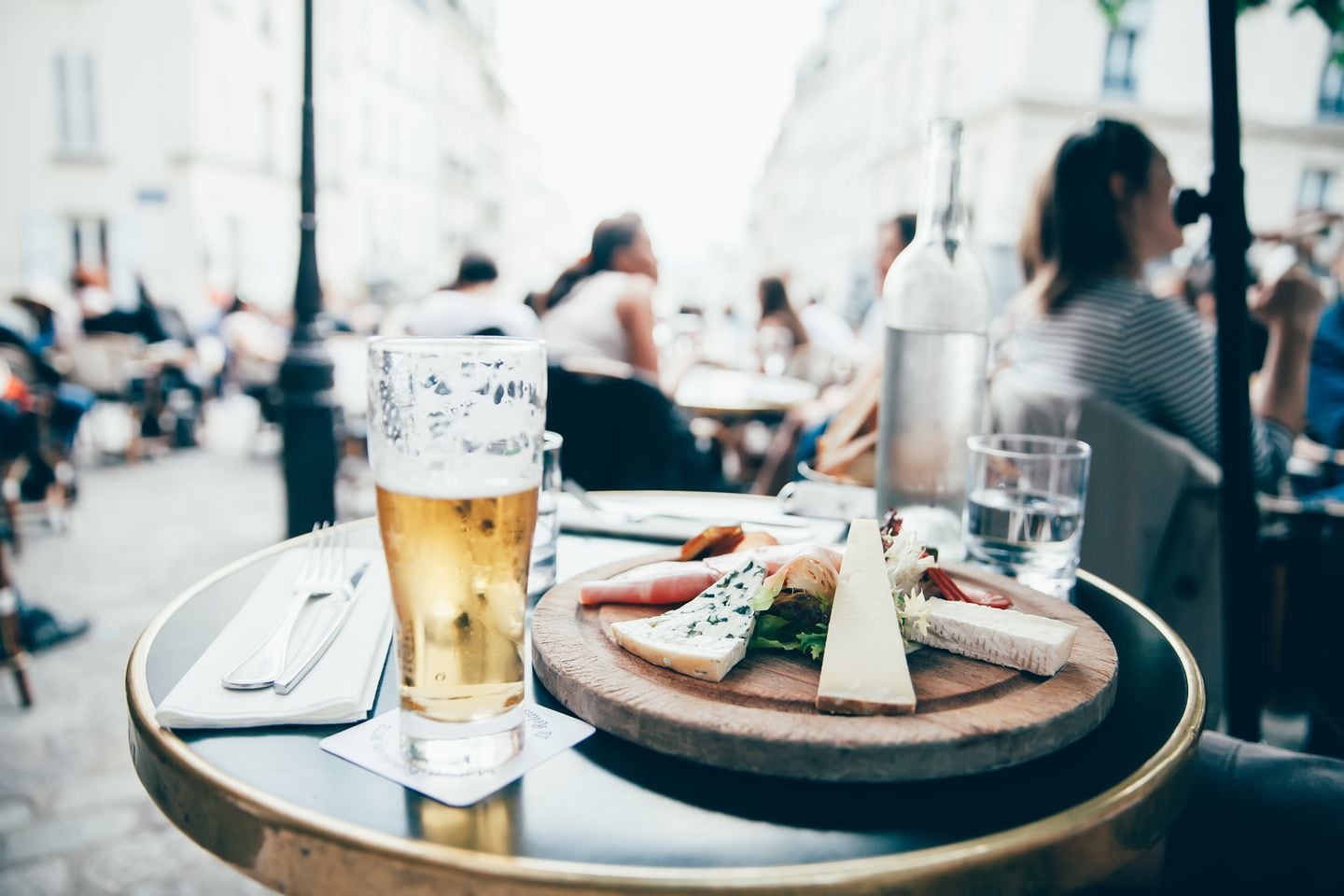
Nowadays, Paris is for lovers of beer as well as wine. Check out these locations

BrasserieBrasserie might mean brewery, but only recently are Parisian establishments getting back to ale.

In Paris, you’re never far from a glass of wine. Step into a classic bistro and there will be good-value reds from the valleys of Rhone and Loire. Higher-end restaurants will inevitably point you in the direction of first-growth Bordeaux. New-wave wine bars are bursting with biodynamic Beaujolais. And a glass of Alsace riesling is de rigueur at a brasserie.

For a drinker interested in quality and value, wine can sometimes seem like the only option in this city. Every street, it seems, has its own cave à vin, complete with regional focus and invariably helpful staff, if you speak French. My favorites include Les Caves Saint-Martin on Rue du Faubourg Saint-Martin, where I once bought two bottles of an excellent grower champagne on the recommendation of the shop owner, and Trois Fois Vin on Rue Notre Dame de Nazareth.

The great food halls devote huge amounts of space to France’s most famous wine regions. I remember wandering into the recently reopened Galeries Lafayette food hall (“Lafayette Gourmet”) in 2014 to find acre upon acre of wine, the vast majority of it French (including 1,200 options from Bordeaux alone!). There were a few desultory shelves of beer.

It hasn’t always been like this: Brasserie, after all, means brewery. When Alsatians founded these palaces of gustatory gratification in the late 19th century, there was often brewing on-site. There still is at Brasserie Georges, which reinstalled a brewery in 2004, but that’s in Lyon. Paris’s mightiest brasseries long ago gave up grain for grape.

Beer is flowing in establishments with a young, energetic vibe

Testing beer at the Gallia brewery. Heineken has bought a minority share. (Gallia)

But things are changing. Breweries and bars are popping up throughout the city. It’s a young, energetic scene, exemplified by the annual Paris Beer Festival (formerly Paris Beer Week). That the name is in English rather than French is telling; much of Paris’s modern beer culture has more than a hint of Anglo-Saxon influence. That said, there’s a definite Gallic edge to places such as La Fine Mousse, an elegant bar and restaurant in the Marais, or breweries such as La Goutte d’Or, which uses ingredients reflecting the rich diversity of the local neighborhood.

The heart of this nascent Beervana can be found in northeast Paris, where rents are lower and the population younger. Around the Bassin de la Villette, a half-mile-long artificial lake in the 19th arrondissement, you’ll find Paname Brewing, a brewpub where the New England IPA is called Brexiteer (an example of how the French occasionally conflate “Anglo-Saxon” countries), and L’Atalante, with a huge outdoor terrace that fills up with young Parisians on summer evenings.

One of the most interesting breweries is Gallia: Originally founded in 1890, it was reestablished as a brand at the end of 2009. At first, the resurrected brand’s founders, Guillaume Roy and Jacques Ferté, focused on conservative pale lagers — but under head brewer Rémy Maurin, the range has expanded to encompass an impressive variety of flavors and styles.

It hasn’t gone unnoticed; in September, Heineken bought a minority share. Most bars in this city are tied to big brands such as Heineken or Kronenbourg. If they start offering customers the likes of Gallia, it’ll be a genuine game-changer.

It’s about time. Paris sits on the dividing line between northern Europe, where beer has traditionally held sway, and the wine-drinking south. Only Champagne, of France’s great wine regions, is further north, and it has (or had, until global warming) a fairly marginal grape-growing climate. This is natural beer country; it’s only right that Beaujolais, Bordeaux and the rest make room for la bière artisanale.

Will Hawkes is a freelance travel and drinks writer based in London.

Source: Nowadays, Paris is for lovers of beer as well as wine. Check out these locations. – The Washington Post

Five literary cities to visit in France

Visit the places that come alive in the pages of France’s best loved novels and poetry.

We need not congratulate the French any further on their abilities to make winningly bad pop music, always look good in Breton striped shirts and retire at the age of 52. Far less heralded is how the best French authors have managed to imbue their places of origin into their greatest works in ways that just beg for further exploration. Whether your urge, after reading Madame Bovary, is to seek out the provinces of France that Emma dreamed of fleeing from or whether you desire a night in the bawdy bars depicted by Balzac after reading A Harlot High And Low, here are five of the greatest French literary home towns.

Flaubert’s Rouen
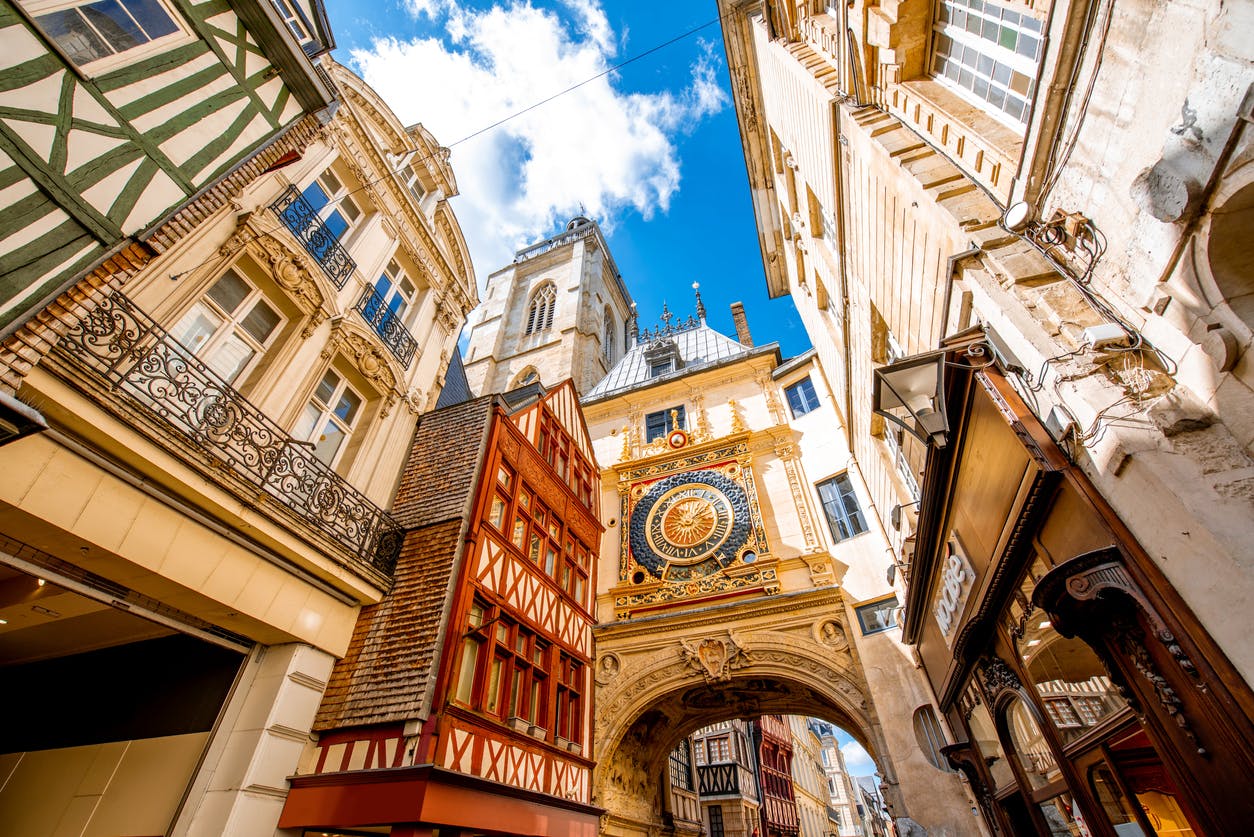
Great Clock in Rouen city, France

Great Clock in Rouen city, France

Half-timbered houses lining the banks of the Seine, a towering Gothic church and bijou brasseries; the hometown of Gustav Flaubert plays a starring role in Madame Bovary where bored Emma meets Leon the lawyer inside the cathedral before embarking on a very carnal cab ride around the town and surrounding countryside, a passage which put Flaubert himself in the dock for an obscenity trial which he won. Heavily damaged during World War II, the town today is home to the Museum of Flaubert, a gallery where you can see images of the hospital where his surgeon father worked and the room in which Gustav was born.

More evocative is the Flaubert Pavilion in the small town of Canteleu, about 15 minutes’ drive outside the town. This is the only part of the house  where Flaubert worked and lived for around 15 years that is still standing, and it’s full of miscellaneous writing equipment, engravings and drawings that all belonged to the great chronicler of petit bourgeoisie frustrations.

Jules Verne’s Nantes
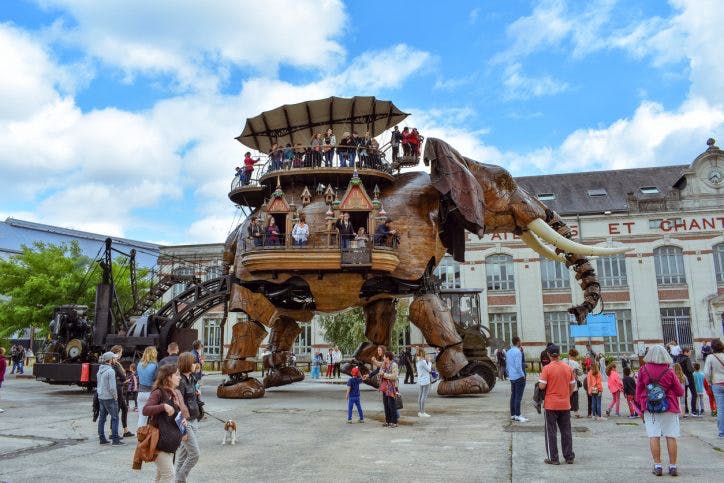
The Machines Of The Island Of Nantes, France

The father of science fiction would, one would assume, not be too surprised where he to return to Nantes today to see a giant mechanical elephant parading around an industrial wasteland. That is exactly how Jules Verne’s legacy has manifested in the form of ‘The Machines Of The Island Of Nantes’. Located in the middle of the Loire river the 39 foot high elephant (which you can take a ride on top of as it moves around the island) has recently been joined by an immense carousel which visitors can move about amidst a ballet of aquatic animals.

Stay the night in Le Plateau Jules Verne, a collection of Verne themed suites. The De la Terre à la Lune (From the Earth to the Moon) is a delight with a spaceship style sleeping bunks for kids and a stone cellar lined with cabinets filled with ephemera inspired by his books.

Balzac’s Tours

The largest city in the Centre-Val de Loire region was strangely modest about its status as the birthplace of one of the founders of the 18th century realist movement in literature until very recently. Balzac’s novels may be full with the noise of rowdy Parisian hotel bars and raconteurs bickering in cafes but the man himself was raised in a typically bourgeoisie household with distant parents who packed him off to live with a wet-nurse as an infant for four years.

Despite this far from loving upbringing Tours was a town he returned to again and again, describing it once as “amorous, buxom, blooming”; the town, and its Gothic Cathedral Saint-Gatien, the Abbaye de Marmoutier, and the grandiose Pont Wilson bridge are mentioned in more than 40 of his works. The most atmospheric spot of all is the Hotel du Theatre. Located opposite the opera house this is the intimate spot (called Pension Le Guay in Balzac’s time) where young Honore learned to read and write between the ages of five and eight. The hotel today has a dedicated Balzac nook where you can sip coffee (Balzac drank up to 50 cups a day) and get cracking on Le Comedie humaine.

Sartre’s Paris
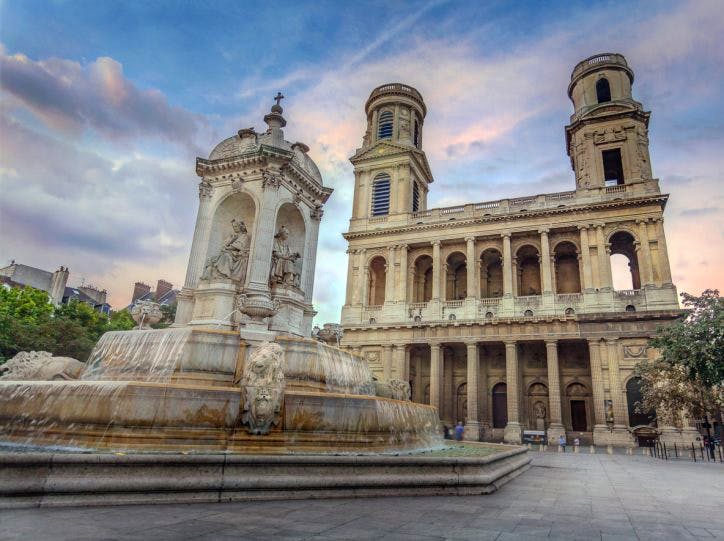
The Church of Saint-Sulpice and Fountain in Paris, France

The Church of Saint-Sulpice and Fountain in Paris, France

There may not be quite so many Gauloises smokers and there are definitely fewer black polo necks on display but the outdoor tables at Café de Flore on the Parisian Left Bank still exude a bohemian air. This is where Jean Paul Sartre, along with his partner Simone de Beauvoir and a motley crew of the city’s intellectual elite would discuss essence, existence and (possibly) the larcenous price of a café au lait in this defiantly unchanging café- still with the Formica and nicotine stained wood interiors that the existentialist thinkers would have known.

From here it’s a five minute walk to place Saint-Sulpice,  home to Cafe de la Mairie.  This was where Sartre and Albert Camus would regularly meet during their tenures working on the radical left-wing newspaper Combat. It’s also known as the last place they met, a fierce argument in 1951 resulted in the two of them never speaking again. Over in Montparnasse Cemetery lies Sartre’s final resting place. Despite numerous infidelities and fallings out, Sartre and de Beauvoir were buried together (Simone died in 1986, six year after Sartre). You can find their modest grave by picking up a free map from the warden’s hut. The faded sandstone grave does usually have some brash licks of colour on it; lipstick marks from those who kiss the headstone. Hell is other people indeed.

Colette’s Burgundy
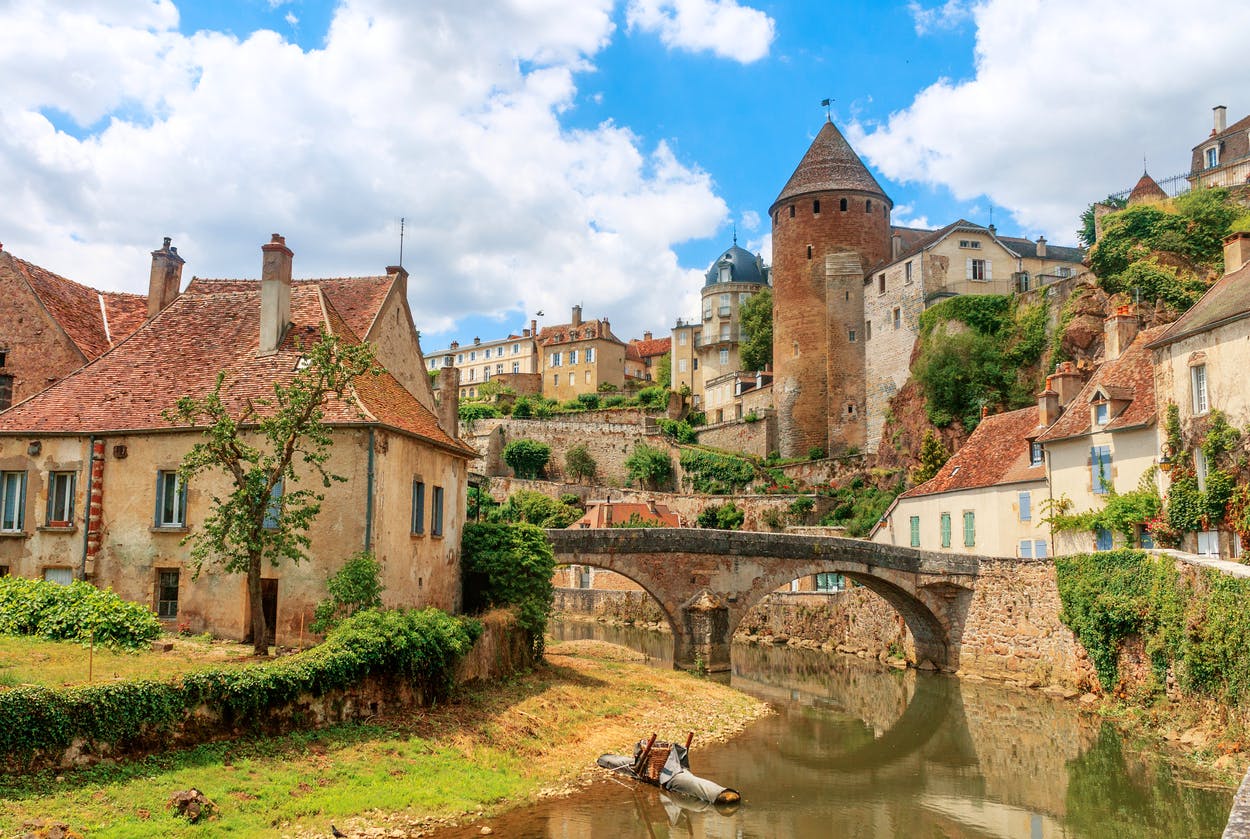
The medieval town of Semur en Auxois, Burgundy

The medieval town of Semur en Auxois, Burgundy

“My house remains for me what it always was, a relic, a burrow, a citadel, the museum of my youth”, wrote the grande dame of French letters back in 1907. Colette’s famously acute vanity and high self-regard suggests she would be delighted by the meticulous retro-fitting of her childhood home in Saint-Sauveur-en-Puisaye, 100 miles from Paris, into how it would have looked during her time there.

Away from the salon style furnishings of the house (think pianos, oil lamps and acres of terracotta and marble) the village, in the departement of Burgundy, L’Yonne, is also home to the Musee Colette. Housed in an ancient chateau and opened by her only child Colette de Jouvenel in the 1990s, the rooms are full to the brim with photos of Colette and her family. Around 100km east in the pretty town of Saulieu Colette’s favourite restaurant is still in business.  Called L’Hostellerie de la Côte in her time, the name may have changed to Relais Bernard Loiseau but the lusty Burgundian dishes of frogs legs and hazelnut liqueur soufflé are as rich and robust as she would have remembered

Source: Five literary cities to visit in France | Spectator Life

Sour notes for Macron from striking Paris Opera musicians

French President Emmanuel Macron has called for a compromise between his government and unions over plans to change the pension system that have led to sustained strikes — including from Paris Opera musicians who staged a street concert in rebellion.

PARIS – French President Emmanuel Macron has called for a compromise between his government and unions over plans to change the pension system that have led to sustained strikes — including from Paris Opera musicians who staged a street concert in rebellion.

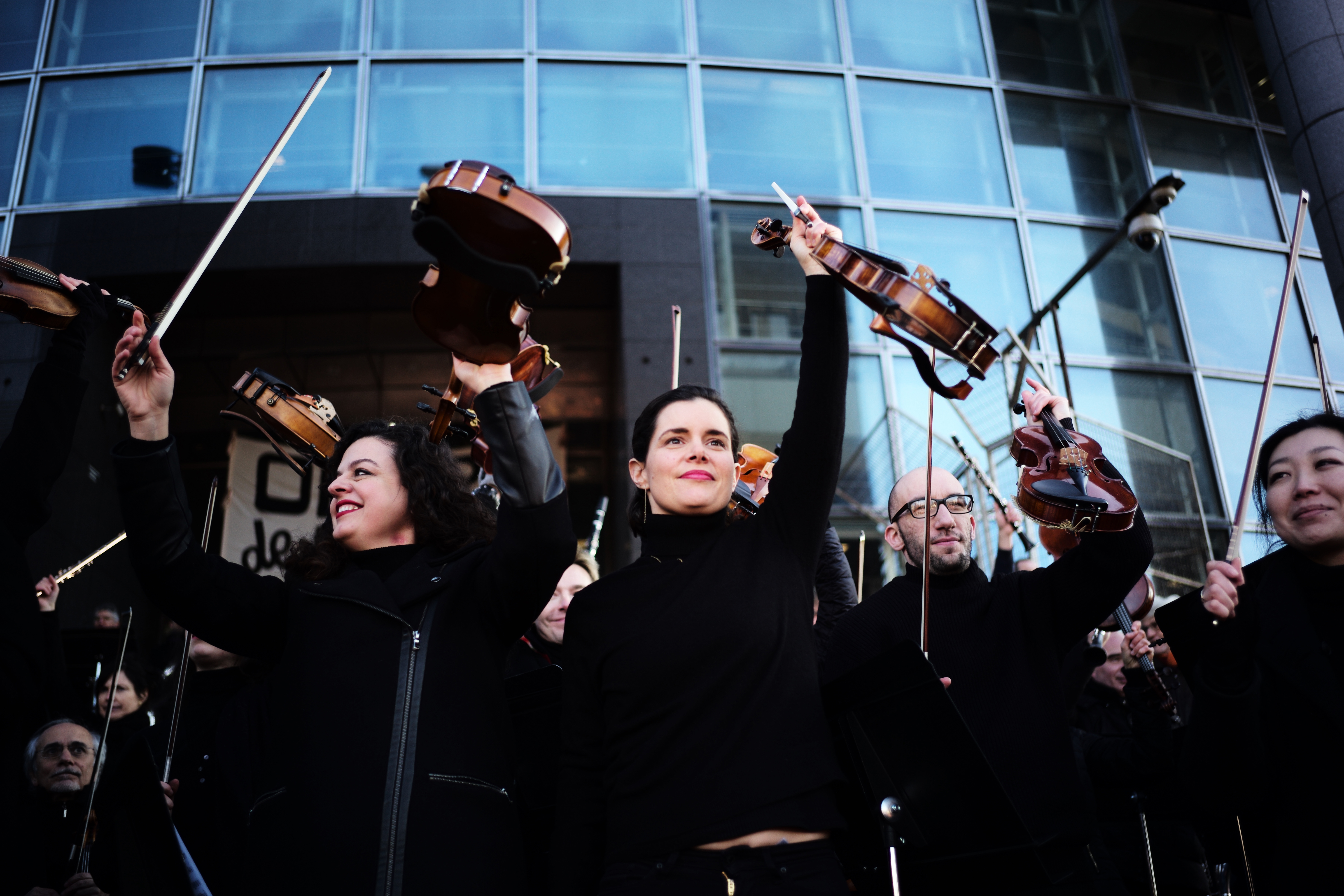
In a spirited, makeshift performance, Paris Opera musicians played excerpts Tuesday from “Carmen” and “Romeo and Juliet” on the front steps of the Opera Bastille, which served as a dramatic reminder of the rocky start to 2020 that awaits Macron.

Tuesday marked the 27th consecutive day of transport strikes. The Versailles Palace, usually a huge tourist draw, said it was closed Tuesday because of strikes, too.

In his televised New Year’s address, Macron said the pension overhaul “will be carried out” but called on his government to “find the path of a quick compromise” as negotiations with unions resume in early January.

Seeking to ease tensions, he suggested people with painful work will be allowed early retirement.

Yet Macron stayed firm on the principles of the reform, including its most decried measure: raising the eligibility age for full pensions from 62 to 64. He insisted that the new system will be fairer and financially sustainable.

“My only compass is our country’s interest,” he said.

Musicians who have put down their instruments since open-ended strikes started Dec. 5 reveled in the chance to play for the crowd that gathered to hear them on Paris’ Place de la Bastille, the site of an infamous prison stormed by a revolutionary mob on July 14, 1789, and then demolished.

“We’re all at the bottom of a deep hole being unable to play since Dec. 5,” said violinist Emilie Belaud.

But, she added, orchestra members are determined to hold firm. The Paris Opera has had to cancel all its scheduled ballets and operas since Dec. 5 — 63 performances in all.

“If the government persists in being stubborn and refusing to negotiate in good conditions, we’ll carry on,” Belaud vowed.

The crowd chanted for the abandonment of the retirement overhaul. They also cried, “We’re united! General strike!”

Macron wants to unify France’s 42 different pension plans into a single one, giving all workers the same general rights. [ . . . ]

Source: Sour notes for Macron from striking Paris Opera musicians

Paris prepares for its first Christmas outside Notre Dame

Notre Dame
Notre Dame

The cathedral’s famed celebrations will take place at Saint-Germain l’Auxerrois as its congregants and choir carry their faith “beyond the walls.”

Notre Dame kept Christmas going even during two world wars – a beacon of hope amid the bloodshed.

Yet an accidental fire in peacetime finally stopped the Paris cathedral from celebrating Midnight Mass this year, for the first time in over two centuries.

As the lights stay dim in the once-invincible 855-year-old landmark, officials are trying hard to focus on the immediate task of keeping burned out Notre Dame’s spirit alive in exile through service, song, and prayer.

“This is the first time since the French Revolution that there will be no midnight Mass [at Notre Dame],” cathedral rector Patrick Chauvet told The Associated Press.

There was even a Christmas service amid the carnage of World War I, Mr. Chauvet noted, “because the canons were there and the canons had to celebrate somewhere,” referring to the cathedral’s clergy. During World War II, when Paris was under Nazi occupation, “there was no problem.” He said that to his knowledge, it was only closed for Christmas in the period after 1789, when the anti-Catholic French revolutionaries turned the monument into “a temple of reason.”

Christmas-in-exile at Saint-Germain l’Auxerrois this year will be a history-making moment.

“We have the opportunity to celebrate the Mass outside the walls, so to speak … but with some indicators that Notre Dame is connected to us,” Mr. Chauvet said.

Those indicators include a wooden liturgical platform that has been constructed in the Saint-Germain church to resemble Notre Dame’s own. A service will be led at midnight on Dec. 24 by Mr. Chauvet to a crowd of faithful, including many who would normally worship in the cathedral, accompanied by song from some of Notre Dame’s now-itinerant choir.

The cathedral’s iconic Gothic sculpture “The Virgin of Paris,” from which some say Notre Dame owes its name, is also on display in the new annex.

The 14th-century masterpiece, which measures around six feet and depicts Mary and baby Jesus, has come to embody the officials’ message of hope following the fire.

Continue reading “Paris prepares for its first Christmas outside Notre Dame”