‘Quoi, just two glasses?’ French urged to cut down on their drinking

vin

France on Monday launched a national campaign to encourage the wine-loving French to cut down on their drinking after a study showed that a quarter of them over-consume. But many still feel that “a nice meal can’t be enjoyed without a good wine”.

France has one of the highest alcohol consumption rates in Europe, with the country trailing behind only Estonia, Lithuania and the Czech Republic in the quantities of alcohol it drinks, according to the World Health Organization. This drinking culture – largely attributed to wine, which represents 58 percentof France’s total alcohol consumption – on Monday prompted the public health agency and the National Institute of Cancer (INCa) to launch a national campaign, with recommendations for the maximum daily intake of alcohol.

I’ve never seen, to my knowledge – unfortunately, perhaps – a youngster leaving a nightclub drunk because they drank Côtes-du-Rhône, Crozes-Hermitage or Costières-de-Nîmes.

“For your health, alcohol should be limited to a maximum of two glasses per day, and not every day either,” they wrote, a limit that 24 percent of French adults regularly surpass. Alcohol is the second-biggest cause for preventable deaths in France after tobacco, killing some 41,000 people each year.

Forty-year-old Caroline from Paris, who did not want to give her real name, said that she grew up “literally swimming in wine”.

“In my family, our meals together have always been extremely important, and there has always been wine on the table.” Continue reading “‘Quoi, just two glasses?’ French urged to cut down on their drinking”
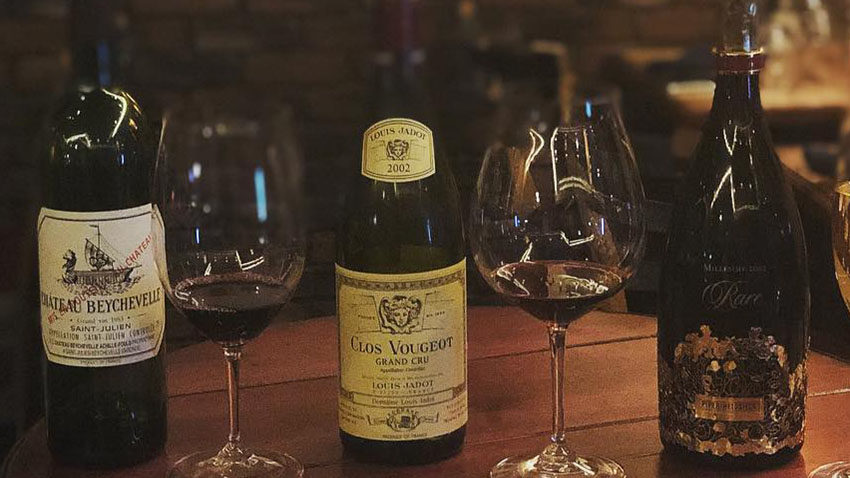
How to order French wine, according to a sommelier 

Wine tips

A wine from Burgundy, Bordeaux, or the Loire Valley is a great place to start.

Nathan Derri is the sommelier at the newly opened 1855 Bar à Vins in the Back Bay, so he has a very strong handle on French wines. If you don’t, don’t sweat it, he said.

That said, if you feel like you need a little help ordering a bottle of French wine, Derri offered the following tips.

Get to know French wine labels

1855 Bar à Vins has more than 350 bottles of French wine on the menu — that’s a lot of vins! But once you understand French wine labels, it becomes easier to find the type of wine you enjoy, Derri said.

“I can see how French wine can be intimidating, but it’s not,” Derri said. “You just need to pop that cork, sit down, Continue reading “How to order French wine, according to a sommelier “

1 in 5 cheeses in Germany positive for Brucella; 9 vendors sold more than half of contaminated samples 

brucellosis

One in five cheeses sampled in Germany were found to be positive for Brucella, according to a study.

Brucella was detected in 41 of 200 samples from endemic countries sold at weekly markets, in supermarkets, and by delis in Berlin, as well as 15 prepacked cheese samples bought online via eBay.

Cheese made from pasteurized sheep’s milk and sold unlabeled or loose by market vendors was the most frequent type associated with the presence of Brucella DNA. Cheese samples included loose, non-labelled and pre-packed; labelled samples of brine, cream, soft, semi-hard and hard cheeses; and cheese made from bovine, ovine and caprine milk.

Researchers determined nine vendors sold more than 50 percent of the Brucella positive cheese samples, including seven at weekly markets and two supermarkets.[ . . . ]

Read Full Story at 1 in 5 cheeses in Germany positive for Brucella; 9 vendors sold more than half of contaminated samples | Food Safety News

Beyond glyphosate: French vineyards shift away from controversial weedkiller

France’s wine industry can become “the first in the world without glyphosate”, President Emmanuel Macron said Saturday at the Paris Agriculture Fair. But is foregoing the controversial herbicide possible? FRANCE 24 spoke with vintners.

At France’s largest, if temporary, farm – the country’s annual agricultural fair, held at Porte de Versailles exhibition grounds on the southern rim of Paris – it was barely 10am on Monday and Xavier Martin was already enjoying a glass of red wine.

At a stand showcasing his wine from Irouléguy in the Basque country, the 58-year-old had just polished off a fried egg and a slice of grilled bacon. “Wine, I was born in it,” the fifth-generation winegrower says. A salon jury had just rewarded his 2017 Mignaberry rosé with a gold medal.

Martin, who gave up on synthetic herbicides 20 years ago, feels strongly about glyphosate. “We must keep our soils clean, just as we received them from our ancestors, to pass them on to our children,” the bearded vintner says.

“These grounds will outlive us. We must work to preserve them.” Continue reading “Beyond glyphosate: French vineyards shift away from controversial weedkiller”

Berger on wine: There’s much to love about Rhône Valley wines

Rhône region winesDan Berger writes about the wines of the Rhône region of southern France, which have long flown under the radar.

Of all the French wine regions that are widely considered iconic, perhaps the least acclaimed is the southern French district known as the Rhône Valley.

The name Chateauneuf-du-Pape in the south (literally “new home of the pope”) comes from the roughly 70-year period when political and ecclesiastical conflicts caused the papacy to be based not in Rome but in Avignon, France. The reds can be utterly sublime.

Bordeaux, Burgundy, Champagne, Alsace and the Loire Valley all have supporters, with the first three attaining near mythic status and lots attention on the world wine stage. Most of the wines from this trio of regions today command high prices. Continue reading “Berger on wine: There’s much to love about Rhône Valley wines”