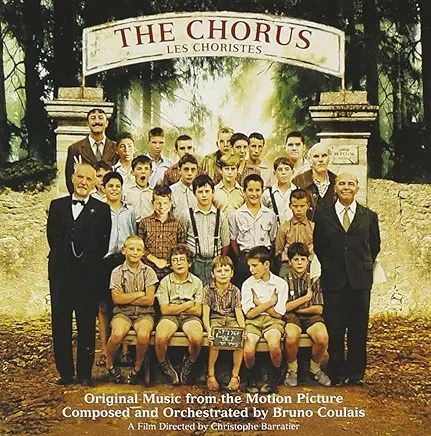
This Sunday’s FRENCH CONNECTION on WRIU 90.3 FM celebrates the musical scores from four wonderful French films: Les Choristes from 2011, Amelie from 2001, Ascenseur pour L’échafaud from 1957, and Black Orpheus, from 1959.
( This program originally aired on WRIU, Kingston, 90.3 FM on Sunday, August 17 )
The French Connection 8-17-25
Notes:
Our guest in studio is mon ami Wayne Cresser, host of Picture This: Film Music on the Radio.
FIRST SET: from “Les Choristes” (2011) | Composed by Bruno Coulais; Performed by the Bulgarian Symphony Orchestra, with the boys choir Les Petits Chanteurs de Saint-Marc.
– “Les Avions En Papier” – “Vois Sur Ton Chemin (Les Choristes)” – “La Nuit” – “Compère Guilleri” – “Lueur D’été” – “Cerf-Volanther notables”
The story of Les Choristes was inspired by the origin of an actual boys’ choir The Little Singers of Paris.
At the 77th Academy Awards, Les Choristes was nominated for Best Foreign Language Film and Best Original Song (the latter for “Vois sur ton chemin“)
Notably, Les Choristes was director Christophe Barratier’s first feature film.
SECOND SET: from “Amelie” (2001) | Composed and performed by Yann Tiersen
– “La valse d’Amélie”
-“Comptine d’un autre été : L’Après-midi”
-“Les Jours tristes”
-“L’Autre valse d’Amélie”
Amélie is rated #37 among the “50 Greatest Romantic Comedies of All Time” by Rolling Stone magazine, and in 2025, the film ranked number 41 on The New York Times‘ list of “The 100 Best Movies of the 21st Century.”
Yann Tiersen is a French- Breton musician and composer. In just two weeks, he composed nineteen pieces for ”Amelie.”
Tiersen just recently released an introspective new album called Rathlin from a Distance | The Liquid Hour.
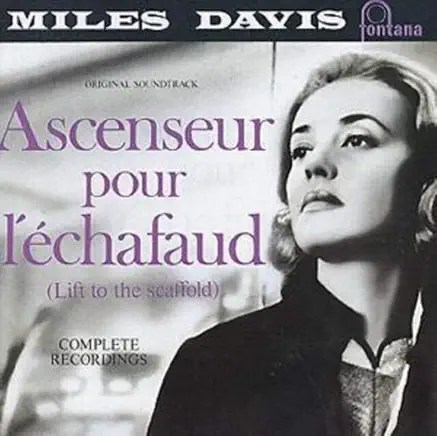
THIRD SET: “Ascenseur pour l’échafaud” (1957) | Composed and performed by Miles Davis
– “Sur L’autoroute”
The soundtrack for Ascenseur pour Léchafaud, scored by American trumpeter Miles Davis, became an instant jazz classic, known for its atmospheric, moody, and improvisational style – perfectly complementing the film noir mood of Louis Malle’s movie.
On December 4,1 957, Davis brought his four sidemen to a French recording studio without any practice or preparation. Once the plot of the film was explained, Miles and his band improvised what would become the classic soundtrack.
The musical ideas explored on Ascenseur pour L’échafaud paved the way for Miles Davis’s later masterpiece, “Kind of Blue”.
FOURTH SET: “Black Orpheus” (1959) | Composed by Antonio Carlos Jobim & Luis Bonfa
-“Manhã de Carnaval”
-“Manhã de Carnaval / La Chanson d’Orphée” performed by Pauline Croze
-“Samba de Orfeu”
Black Orpheus is a 1959 romantic tragedy film directed by French filmmaker Marcel Camus.
The film is particularly notable for its soundtrack by two Brazilian composers: Antônio Carlos Jobim, whose “Manhã de Carnaval” and “Samba de Orfeu” have become classics of bossa nova.
Black Orpheus won the 1960 Academy Award for Best Foreign Language Film.
CLOSING SONG: Sidney Bechet “Si Tu Vois Ma Mere” (1952)
I encourage Pas de Merde followers to tune in to WRIU(90.3 FM and streaming at wriu.org) Sundays at 6 pm for more great film music.
J’ai failli oublier! If you love the radio show (below) you may want to read Mr. Cresser’s latest collection of short stories. His most recent work The Book of Norman, is available now at Amazon, Barnes and Noble, Lulu and Rakuten Kobo.
Selections from the Picture This broadcast:
• Amelie’s Waltz from Amelie, composed by Yann Tiersen
• From The Triplets of Belleville, composed by Benoit Charest
• Tour de France
• Belleville Rendez-vous, a collaboration between -M-, aka Matthieu Chedid, and Charest
• The Jungle of Belleville
• Title theme from My Uncle, composed by Alain Romans
• Four Songs composed by Georges Auric
• Where is Your Heart from Moulin Rouge
• Suite 2 from Roman Holiday
• Suite 1: Titles and Suite III: The Eiffel Tower from The Lavender Hill Mob
• Title song from Bonjour Tristesse, performed by Juliette Greco
• Title theme from Call My Agent composed by Christophe Mink and Loik Dury
• Three songs composed by Francis Lai
• Olivier from Tender Moment
• I Wonder Why from Tender Moment, performed by Nicole Croisille
• Title song from 13 Hours in France
• Day for Night Suite from Day for Night, composed by Georges Delerue
• Truancy from The Four Hundred Blows, composed by Jean Constantin
• Charlie and Lena from Shoot the Piano Player, composed by Georges Delerue
• From Jules and Jim
• Title Theme composed by Georges Delerue
• The Whirlwind, composed by Georges Delerue, Yip Harburg and Cyrus Bassiak. performed by Jeanne Moreau
• Title song from Kid of Paris, composed and performed by Charles Aznavour
• She-She from The Seven Faces of Woman, composed and performed by Charles Aznavour
• The Other Waltz from Amelie, composed by Yann Tiersen
• Title song from Poly’s Vacation, composed and performed by Charles Trenet
• Haiti from Zou-Zou, composed by Vincent Scotto, performed by Josephine Baker
• Feeling Like a Million from Babes in Arms, composed by Nacio Herb Brown and Arthur Freed, performed by Josephine Baker
• Dream Ship from Princess Tam Tam, composed by Alain Romans, performed by Django Reinhardt
• Title song from The Wild West, composed and performed by Jacques Brel
• Tender Heart from An Idiot in Paris, composed and performed by Jacques Brel
• Midnight in Paris from Have Moicy!, composed by Con Conrad and Herb Magidson, performed by the Unholy Modal Rounders
• My Funny Valentine from Chet Baker Sings, composed by Richard Rodgers and Lorenz Hart, performed by Chet Baker
• Belleville, written and performed by Django Reinhardt
• Minor Swing from Lacombe Lucien, written and performed by Django Reinhardt
• Title Theme from The Monkey in Winter, composed and performed by Michel Magne
• Tontons swing from Gun-toting Uncles, composed and performed by Michel Magne
• LeFestin from Ratatouille, composed by Michael Giacchino, performed by Giacchino and Camille
JAmélie (2001) is one of the most well-known French movies, and with good reason! It is a beautiful, poetic display of French culture. But luckily for YOU, it also gives us a fantastic example of colloquial, REAL spoken French – the kind you might actually expect to hear in a cozy café in Montmartre. In today’s lesson, we’ll explore a short dialogue between some of the movies main characters. I’ll explain some of the vocabulary you may not know, and we’ll keep revisiting the scene until you completely understand it. Are you ready? Let’s dive in! What new vocabulary did you learn today? Let me know in the comments. Take care and stay safe. 😘





 Pas De Merde