
The group’s first album, the self-titled Nouvelle Vague, was released in 2004. Explaining how the project came about, leader Oliver Libaux later said: “Marc Collin and I were both musicians and producers in the French music industry when, in 2003, Marc called me with this very strange idea of covering Love Will Tear Us Apart in a bossa nova version. I thought this idea was absolutely crazy but very exciting. So we decided to get into the studio and try it out as soon as possible. Then we did Just Can’t Get Enough and Guns Of Brixton. We put the album together in just eight months.”
What Americans can expect when traveling to France during the pandemic
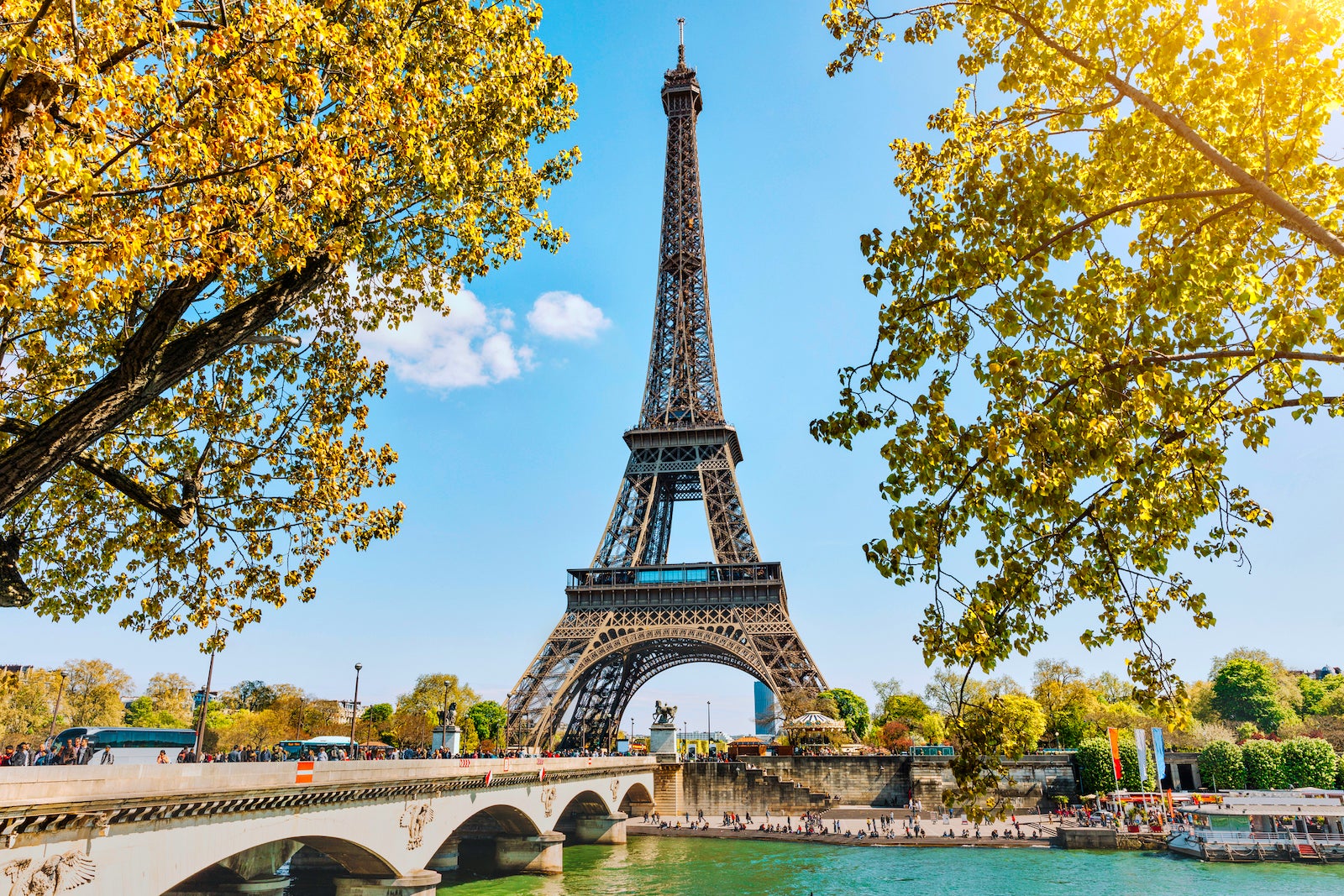
By Andrew Kunesh
As of today, June 9, 2021, France has reopened to tourists from a handful of nations, including the U.S. Those coming from the U.S. must possess proof of vaccination and a negative COVID-19 test to gain entry to the country without mandatory quarantine.
I’m a huge fan of France and was ecstatic to hear the reopening news. Naturally, I hopped on one of the first flights to Paris (CDG) that arrived just hours after the new regulations went into effect.
Here, I’ll give you a look at my experience entering France under the new coronavirus entry restrictions.
I’ll start with a quick overview of what Americans need to bring for entry to France and then discuss my travel experience, from checking in at New York-JFK to clearing customs at Paris (CDG).
Let’s get started!
Overview of France’s entry requirements (and what to bring)

Today, France implemented a “stoplight” system for tourists entering the country. There are three different colors: green, orange and red. Those coming from green countries can enter without restriction if vaccinated, while those in red countries are mostly barred from entry except for essential purposes.

Orange is the largest category and contains most of the countries outside of the Schengen area. This includes the U.S., U.K., Canada and Mexico, among others.
Entry requirements are very straightforward. According to the French Government (PDF link), vaccinated Americans (and vaccinated travelers from other orange countries) can enter France with the following:
- Proof of your vaccination — the following vaccines are accepted:
- AstraZeneca
- Johnson & Johnson
- Moderna
- Pfizer
- A negative COVID-19 test:
- PCR within 72 hours of boarding
- Antigen within 48 hours of boarding
Note that you must wait a set amount of time after your COVID-19 vaccine in order to enter France. The wait time depends on which vaccine you received:
- Two weeks after the second injection for two injection vaccines (Pfizer, Moderna, AstraZeneca)
- Four weeks after the injection for single injection vaccines (Johnson & Johnson)
Unvaccinated persons coming from orange countries are not allowed entry to France unless he or she has a “compelling reason” for their visit or is a French citizen, EU national or holds one of a handful of French visas.
Additionally, unvaccinated travelers are subject to tougher restrictions:
- Proof of a negative COVID test, either:
- PCR within 72 hours of boarding
- Antigen within 48 hours of boarding
- Antigen test on arrival
- Mandatory seven-day self-quarantine
In other words: if you’re coming from an orange country, you can only visit for tourism if you’re fully vaccinated.
Related: What you need to know about COVID-19 vaccines in the US
COVID-19 restrictions in France
Many COVID-19 restrictions in France have been eased alongside the border reopening. That said, there are still some restrictions in place that you should be aware of if you plan to visit France immediately.
- There is an 11 p.m. curfew, with a fine for breaking it
- Indoor dining at cafés and restaurants around the country have resumed indoor dining at 50% capacity, with a maximum of six people allowed per table
- Outdoor dining has resumed at full capacity
- Museums are open, albeit with capacity restrictions
Many of these restrictions are set to be lifted at the end of the month. So if you’re a night owl, consider pushing your trip back a few weeks [ . . . ]
Continue at source: What Americans can expect when traveling to France during the pandemic
Comme une Française: Bien Meaning in French
C’est bien! C’est bon! C’est… délicat. These two French words may have very similar meanings, but learning to use them the way we do in everyday spoken and written French can be tricky. Are you using them properly? Let’s find out! In today’s lesson, we’ll explore the core differences between “bon” and “bien”, including what role they play in a sentence, how they’re used in common French expressions, and whether or not you can use them interchangeably.
Take care and stay safe. 😘 from Grenoble, France.Géraldine
Vincent van Gogh – Patch of Grass
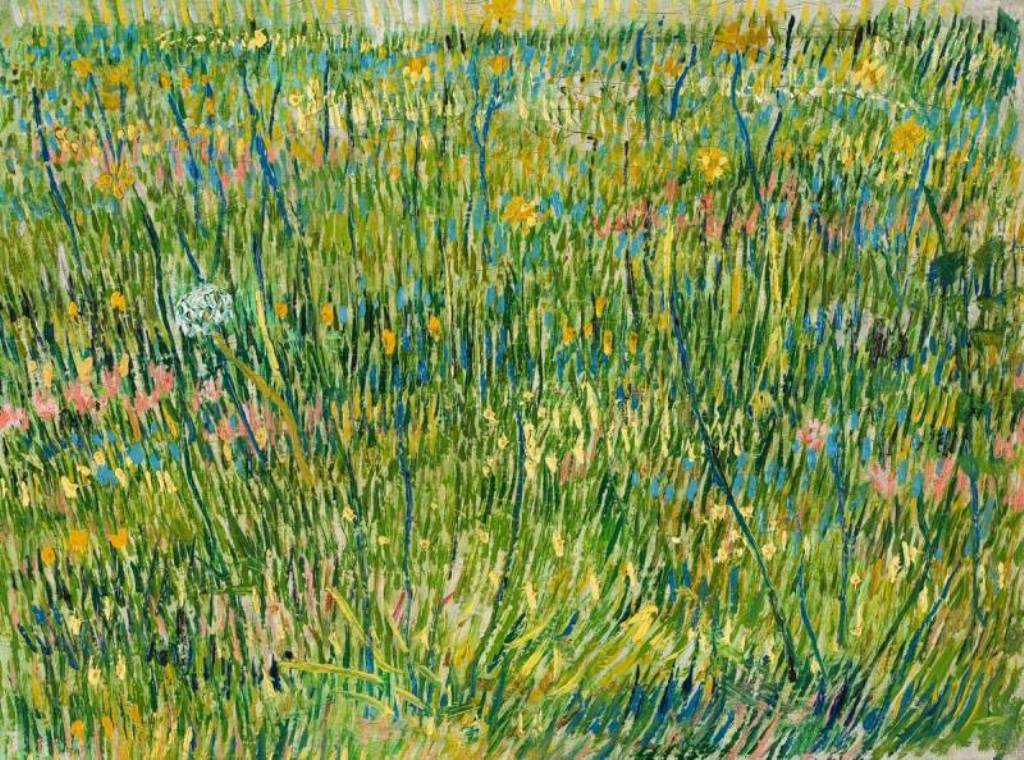
Vincent van Gogh – Patch of Grass, 1887. Oil on canvas, 30.8 x 39.7 cm. Kröller-Müller Museum, Otterlo, Netherlands
D-Day invasion: What happened during the Normandy landings

D-Day — the military term for the first day of the Normandy landings — was the largest amphibious invasion ever undertaken and laid the foundations for the Allied defeat of Germany in World War II.
The invasion took place June 6, 1944, and saw of tens of thousands of troops from the United States, the UK, France and Canada landing on five stretches of the Normandy coastline — codenamed Utah, Omaha, Gold, Juno and Sword beaches.
Planning for D-Day began more than a year in advance, and the Allies carried out substantial military deception — codenamed Operation Bodyguard — to confuse the Germans as to when and where the invasion would take place.
The operation was originally scheduled to begin on June 5, when a full moon and low tides were expected to coincide with good weather, but storms forced a 24-hour delay. [ . . . ]
Continue at CNN: D-Day invasion: What happened during the Normandy landings – CNN
This wonderful concert recording of Moriarty is now ten years old!
Pas de Merde favorite Rosemary Standley performs with her band Moriarty in 2011
 Pas De Merde