
Category: Movies
Meetings, moral situations themes of Dardennes’ films
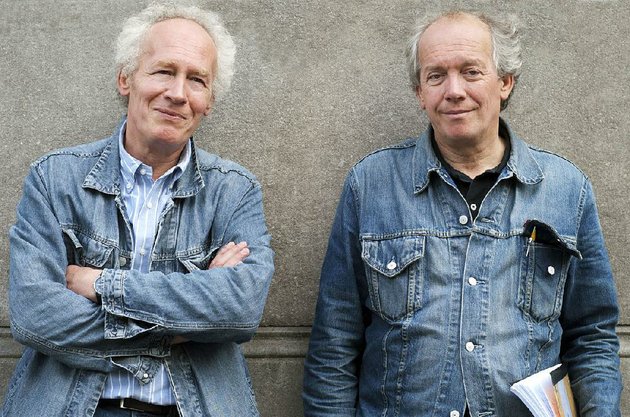
It’s difficult to imagine the Dardennes brothers, who have made a scintillating career out of somber, unadorned verite dramas (L’enfant, The Kid With a Bike, Two Days One Night) playing anything for laughs, but at the end of our chat about their new drama, The Unknown Girl, there was Luc, upon hearing I was from Philadelphia, telling a long set joke via their interpreter based on my home city.
With the publicist glaring daggers at me for getting extra time, he told the joke in several long bursts of French, and in the end, touching as it does on identity politics and psychological complexity, it was a pretty good example of what you would imagine to be Dardennes levity. We met with the pair of white-haired Belgians at the Toronto International Film Festival, where their new film had just had its North American premiere (it’s now streaming on Netflix), as they held forth, mostly through a translator, about the ethics in their films, their dual writing process, and what happens when a businessman coming from New York has to unexpectedly spend a night in Philadelphia back in the ’50s.
Your last two films have to do with personal morality, specifically a path toward doing the right thing, no matter how difficult, and finding a kind of salvation in the process. Was it a conscious decision to systematically address these issues?
Jean-Pierre: It’s true that there’s a similarity between the two films: In both, somebody goes to see other people and it creates a moral situation. In [Two Days, One Night], the question is would I act in solidarity with the woman in front of me; and in [The Unknown Girl], it’s would I tell the truth to that woman? In this film, [protagonist Jenny, played by Adele Haenel], isn’t a judge, but still the characters have to put their self-interest behind them to tell her the truth, and in her guilt of letting somebody die, how does she deal with the question herself? In Two Days, it’s kind of the same moral questioning. We want the audience to question themselves, [make it] part of their own questioning.
Luc: Jenny was obsessed with the unknown girl. Thanks to her naivety, and innocence, we finally learn her name. This investigation is a quest for truth, [to] help her find her place in the world. The inner happiness that you’re talking about, the characters are finding it, but it should also resonate with the audience.
For a lot of people, they derive this inner solace from organized religion: For these two main characters, the films suggest the true path comes from your personal morality. Don’t look up at the heavens; look inside yourself. Is that fair to say?
Jean-Pierre: Don’t look up; but look into my eyes; in your eyes; our eyes. The camera is on the same level as the eyes of the character. We shoot at the human level, just the face of Jenny, the face of passion of the people who she encounters. I think in real life, it is the same: the moral question comes from the meeting, the encounter between the two gazes.
Jenny never acts out of anger, even when others are trying to hurt her. She never turns to rancor. It’s like she’s everyone’s conscience, waiting for people who have done the wrong thing to finally confess to her, almost like a religious figure.
Luc: It was important for us not to transform her into a professional detective, someone who judges others or is violent with them. We tried to build a character who is waiting for answers, but is able to keep silent and not violent. For example, the sequence with Olivier Gourmet, when he wants to hit her, it would have been possible to begin a fight, but we decided no, she’s not like this. She escapes and looks into his eyes with pride, and it’s enough. It was our challenge to build a character like this. It’s so easy to be violent.
I’d like to ask you about your working methodology. How do you work together on a script? Is it like the Coens where one of you sits at the computer and you just roll through it together, or do you work separately and come together to compare notes?
Jean-Pierre: When we make a movie, before writing, we discuss it for a long time, two months, three months, four months. “Yes. No.” You are not agreeing sometimes, but finally we find the same character and situation. It’s after a lot of discussion. On the flight, here in the hotel; not all the time, but often: the real fun. After that we feel the same character, the same age. Not the same face, not this actress or [that one]. No it’s not that. It’s the same feeling, the same feeling. When we have that, we can go.
So you work all this out before you even start?
Jean-Pierre: The beginning of the beginning, yeah.
Thank you.
Luc: You come from?
Philadelphia.
Jean-Pierre: Ah, we don’t know this city, only New York.
It’s a little bit south of there.
Luc: I know a joke from Philadelphia. Not in English. It’s very difficult.
OK?
Luc (via translator): The joke takes place in the ’50s, in the time when America was seen as very racist. There’s a sales representative who had to stop in New York, and he must take a train to Philadelphia. So he finds his own hotel because he has to wake up early in the morning. There’s just one bed left in a room, but there’s another bed where there’s a black person sleeping. He says, “No, I don’t want to sleep in that room, there’s a black person,” but he has no choice he must take the room. He says, “OK, but I want you to wake me up at 4 in the morning. Don’t mistake the two beds, I’m in that bed.” In the meantime, he doesn’t want to stay in the room, so he goes to the bar where people are partying, drinking champagne, laughing. He’s having fun and at some point somebody burns the champagne cork and starts disguising him as a black person. He starts singing a Louis Armstrong song, and he’s so drunk that people have to bring him to his bed in the hotel.
Huh.
Luc (via translator): [The next morning], they wake him up. He jumps out of bed, he has to really rush, take his clothes, run to the train station and jump in the train. He’s “OK, I need to wash my hands and face because it’s the morning.” He goes to the bathroom and sees himself in the mirror and thinks, “the hotel is so stupid they woke up the black person instead of me.” At this moment this racist person has never been so close to his own reality because he thought he was a black person.
Translator: That’s a good Philadelphia story.
MovieStyle on 12/29/2017
Print Headline: Meetings, moral situations themes of Dardennes’ films
Source: Meetings, moral situations themes of Dardennes’ films
“Rodin” – a film by Jacques Doillon
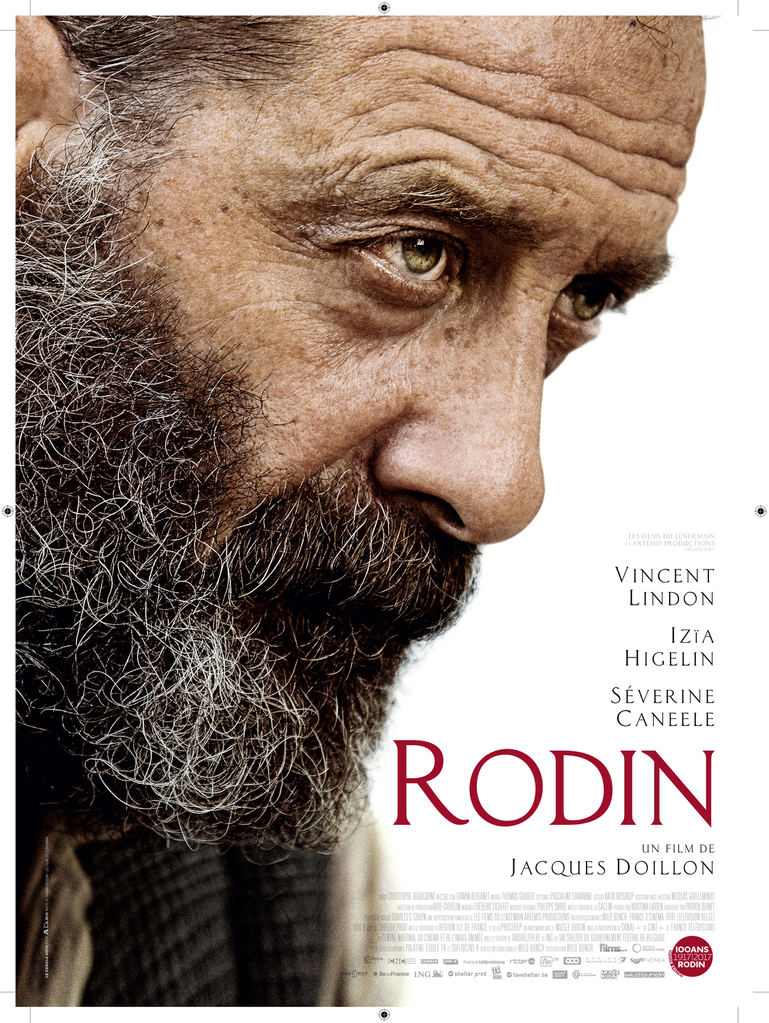
In Paris, 1880, forty-year-old Auguste Rodin at last receives his first state commission: The Gates of Hell, a sculptural group work composed of many figures, some of which would be the basis of free-standing sculptures that would later bring him fame, such as The Kiss and The Thinker. At the time, he shares his life with Rose, his longtime companion. He meets young Camille Claudel, his most talented student, who quickly becomes his assistant, then his mistress. Ten years of passion, but also of mutual admiration and complicity. After their break-up, Rodin relentlessly pursues his work, coping with the rejection and the enthusiasm provoked by the sensuality of his sculptures, and with his Balzac, rejected during his lifetime, he creates the uncontested departure point of modern sculpture | More at UniFrance
Charlotte Gainsbourg Finds Her Own Voice
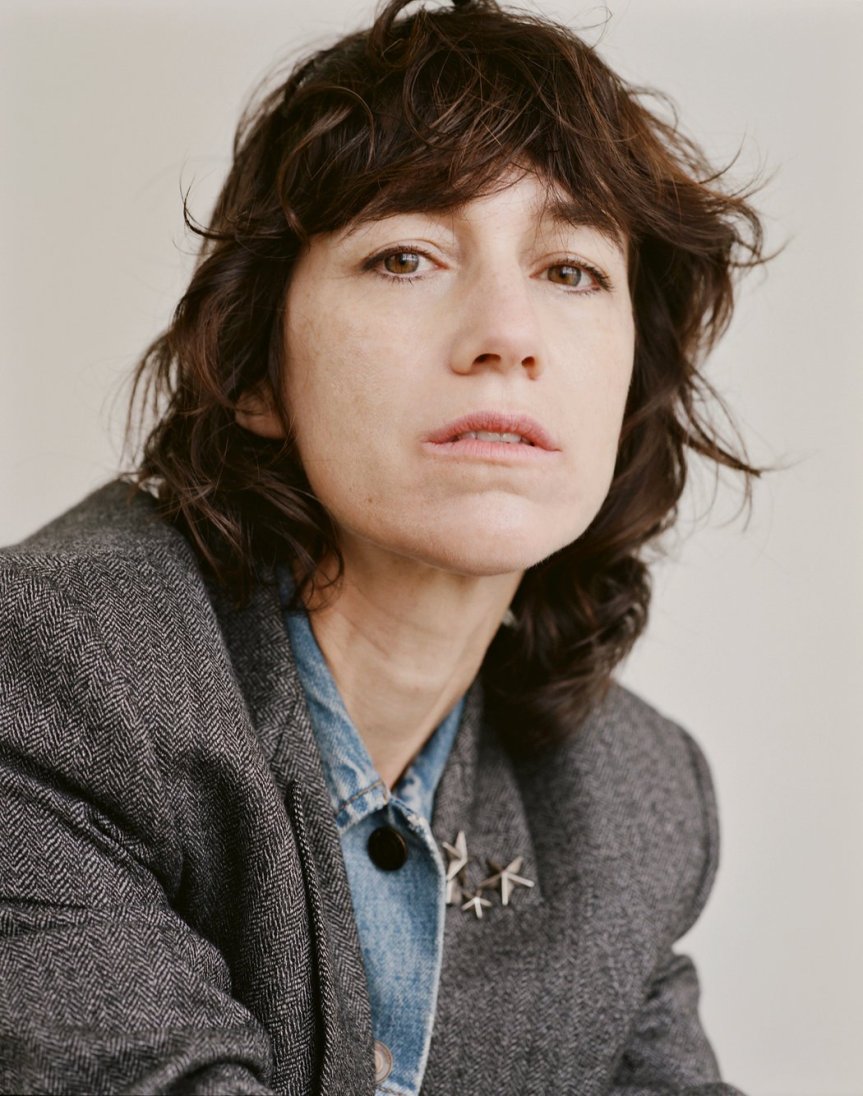
When Charlotte Gainsbourg was 4, her mother took her and her half sister to see “Jaws.” “I don’t know why,” the French actress, singer and style icon, 46, said recently. “Maybe she was drinking a little. And then in the theater, she suddenly realized how traumatizing it was.”
Sipping green tea in a corner booth at the cafe of the Marlton Hotel, casual yet chic in a white T-shirt and jeans, Ms. Gainsbourg recounted her mother’s reaction to watching her young children take in the 1975 killer-shark blockbuster. “She just put her hands on our faces,” she continued. “So the sound is what I kept. It’s part of me.” [ . . . ] Full story at NYTimes

Jean-Luc Godard Retrospective on MUBI
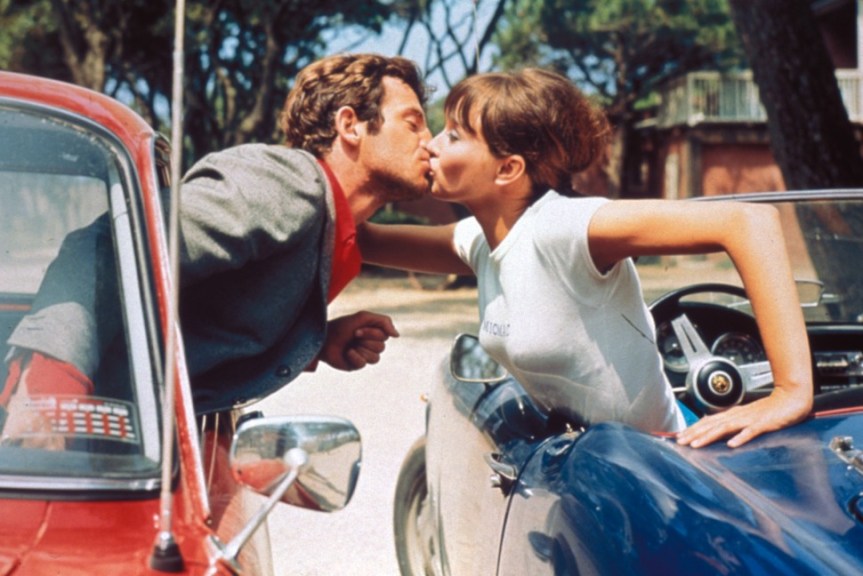
From November 12, MUBI will present a career-spanning selection of the films of legendary French director Jean-Luc Godard, ranging from the jazz-pop New Wave films of the ‘60s that made his name to his 1980s comeback with the contemporary masterpiece In Praise of Love. The series will also celebrate Godard’s birthday, which falls on December 3. Please find some more information on MUBI at: Jean-Luc Godard Retrospective on MUBI | French Culture
The Line-up
Pierrot le fou — November 12
Prenom Carmen — November 19
Alphaville — November 26
Détective — December 3
A Woman Is a Woman — December 10
In Praise of Love — December 17
Contempt — December 24
What Jean-Michel and Céline Cousteau Want You to Know About the Ocean
The father-daughter duo share their thoughts on loving the ocean and teaching others about its wonders.Interview by Lauren Paige Kennedy; Produced by Lauren PhillipsJean-Michel Cousteau and Céline Cousteau, ocean advocates/filmmakers/familySon and granddaughter, respectively, of legendary diver and explorer Jacques Cousteau, the Cousteaus embody a generations-long effort to educate the human population on the wonders of the natural world, particularly the oceans. Most recently, they teamed up with narrator Arnold Schwarzenegger to deliver the upcoming Wonders of the Sea 3D.
The film is a literal deep dive into the underwater ecosystems between Fiji and the Bahamas, using new techniques to expose the ocean’s beauty as never before.
Source: What Jean-Michel and Céline Cousteau Want You to Know About the Ocean – Coastal Living
 Pas De Merde