French nationality ranked ‘best in world’ again

passport

The French nationality has been ranked the best in the world for the eighth consecutive time, according to the latest ranking (2018) of the global Quality of Nationality Index.

The index defines nationality as “legal statuses of attachment to states”.

It takes into account nationality qualities such as home-country economics, peace, stability, citizens’ opportunities for development, ease of visa-free travel, and opportunities to work and live abroad.

These “make one nationality better than another in terms of a legal status through which to develop your talents and business”, the index – full name full name Kälin and Kochenov’s Quality of Nationality Index (QNI) – says.

The QNI ranks the world’s nationalities by a strict set of criteria (Map: Quality of Nationality Index (QNI) / nationalityindex.com)

France came out on top of the ranking, with a score of 83.5 out of 100. This was closely followed by Germany and the Netherlands (both 82.8); Denmark (81.7); and Sweden and Norway (81.5).

France won out due to its place as the world’s sixth largest economy, but also for its place in the European Union, the list said, with all EU members listed at the top of the table due to their freedom of movement.

France was especially praised for its qualities in helping citizens to travel, live and work abroad. A French passport allows the holder to travel in almost 165 countries without a visa.

The top 10 was rounded out by Finland (81.2), Italy (80.7), the United Kingdom (80.3), Ireland (80.2) and Spain (80.0)
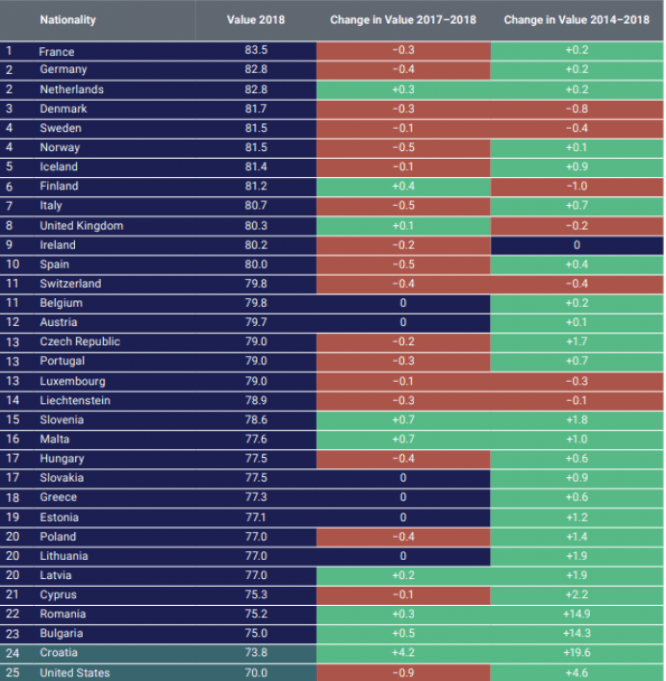
(Table: Quality of Nationality Index (QNI) / nationalityindex.com / LaDepeche.fr)

At the bottom of the top 25 were the United States (70.0), with Croatia (73.8), Bulgaria (75.0), Romania (75.2), Cyprus (75.3), Poland, Latvia and Lithuania (all 77.0) coming just ahead.

The bottom three nationalities were South Sudan (157th), Afghanistan (158th), and Somalia (159th), with respective scores of 15.9, 15.4, and 13.8.

Risks of a ‘hard Brexit’

But the UK could see its ranking fall to 56th globally in the next list “if it pursues a ‘hard Brexit'”, the researchers have suggested, putting it on a par with China (currently 56th) and Russia (currently 62nd).

The index is named after its creators, Dr. Christian H. Kälin and Professor Dr. Dimitry Kochenov.

Dr. Kälin is a law professor and chairman of law firm Henley & Partners, and is considered an expert in investment migration.

Prof. Kochenov is a Chair of EU Constitutional Law at the University of Groningen in the Netherlands, and writes widely on comparative and European citizenship law and migration regulation.

In a statement, Prof. Kochenov said: “The UK may be about to establish a world record in terms of profoundly undermining the quality of its nationality without going through any violent conflict.

“Depending on the still-to-be determined outcome of Brexit, the UK could see itself falling from the elite group of ‘very high quality’ nationalities into the ‘high quality’ bracket.

“A truly ‘hard’ Brexit would result in the UK having a nationality that does not grant Britons settlement or work rights in any of the EU jurisdictions or Switzerland, Norway, and Iceland: a collection of the most highly developed places on earth, greatly diminishing the quality of its own nationality in an irrevocable manner: either you have such rights, or not – and in such a scenario UK citizens won’t have them.”

Prof. Kochenov added: “The QNI is a clear illustration of the simple fact that speaking of the different nationalities of the world as equal, or even comparable, is misleading.

“We see that some nationalities offer bundles of rights, while others, quite clearly, are painful liabilities, dragging down the holders.”

Read more at source: French nationality ranked ‘best in world’ again
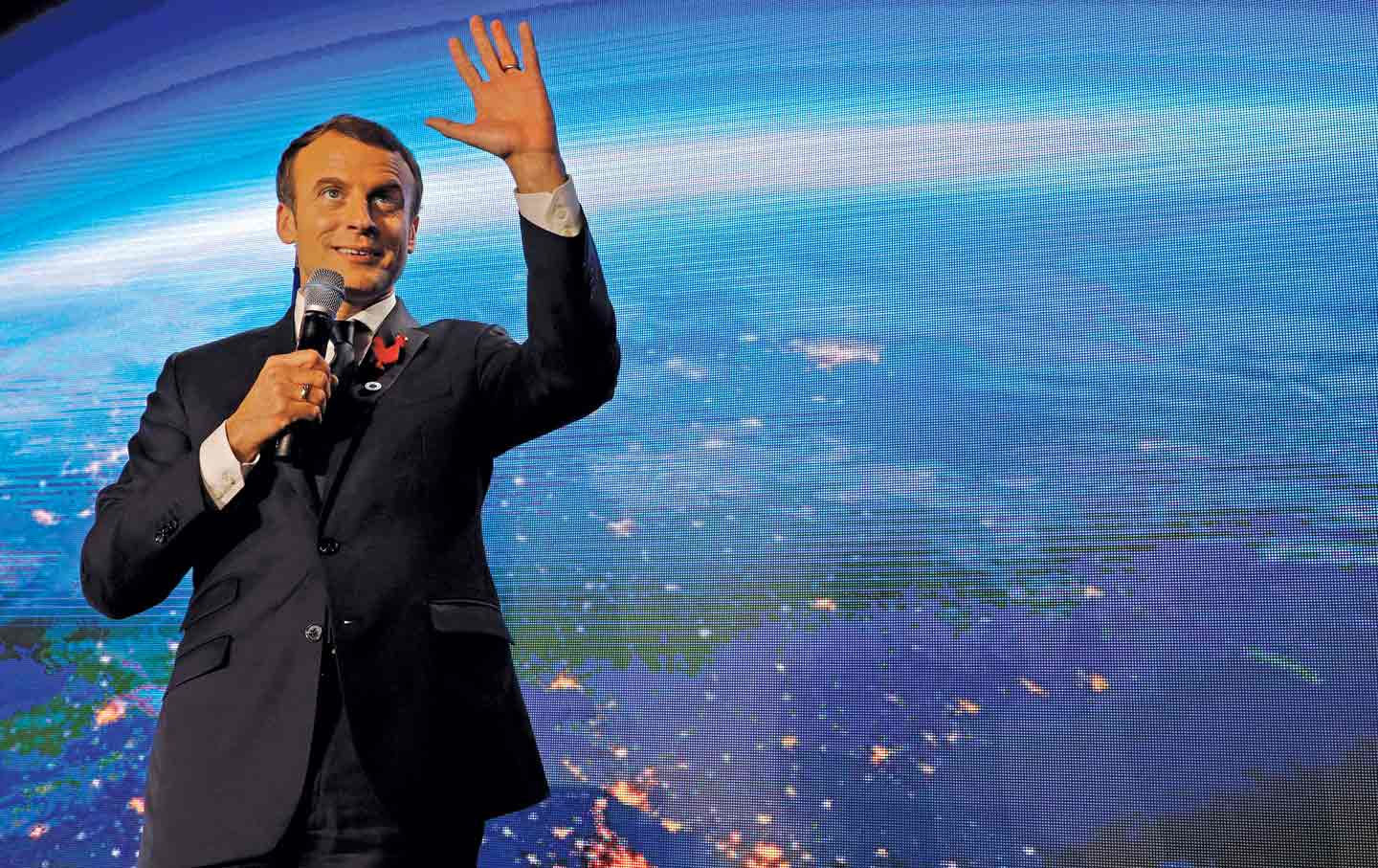
The Travails of Emmanuel Macron

Macron

A new book equates the French president’s rise to a revolution. For much of France’s working and middle classes, it has been nothing short of a disaster.

Last September, French President Emmanuel Macron met an unassuming gardener on the grounds of the Élysée Palace. Introducing himself, the 25-year-old timidly explained that he was having trouble finding work. “I send résumés and cover letters… they don’t lead to anything,” he told the president. Many people in France can relate: The country’s unemployment rate hovers just below 9 percent, more than two points above the European Union average. The joblessness rate, meanwhile, is more than twice that for young people age 15 to 24.

Macron’s reaction, however, was less than sympathetic—almost as if he were hearing this problem for the very first time and wasn’t all that convinced of its seriousness. “If you’re willing and motivated, in hotels, cafés, and restaurants, construction, there’s not a single place I go where they don’t say they’re looking for people!” he exclaimed. Then he added, “If I crossed the street, I’d find you one.” Continue reading “The Travails of Emmanuel Macron”

Hunchback of Notre Dame, The (1939) — (Movie Clip) King of Fools

The mob (led by Edmond O’Brien as Gringoire) is totally into naming Quasimodo (Charles Laughton) the King of Fools until dour Frollo (Cedric Hardwicke) intervenes in The Hunchback of Notre Dame, 1939.

Watch at TCM: Hunchback of Notre Dame, The (1939) — (Movie Clip) King of Fools

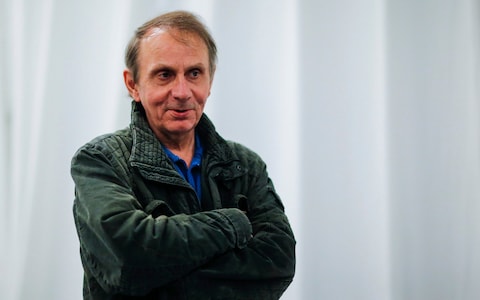
France honours its most provocative author 

Michel Houellebecq, the enfant terrible of French literature, was awarded the Legion of Honour, France’s highest civilian distinction, in the New Year honours list on Tuesday.

A forthcoming novel by the celebrated but controversial author predicts the doom of western civilisation. Seratonin, due out on Friday, focuses on the festering rage in provincial France that has exploded into the “yellow vest” protests.

Like his previous books, it is set to become an instant bestseller and is already being hailed as the biggest literary event of 2019. It is also likely to enrage those who object to the views that have made Houellebecq, 62, an iconic figure for the nationalist, eurosceptic Right.

The title of the novel, to appear in English in the autumn, refers to the main ingredient of an anti-depressant that causes its anti-hero, Florent-Claude Labrouste, to suffer impotence and nausea. Like most of Houellebecq’s protagonists, he is a thinly disguised version of the author himself.

At 46, fed up with his Japanese girlfriend and his job, Labrouste returns to his native Normandy, where he meets suicidal farmers, prevented from making ends meet by EU dairy quotas. Out of despair and fury, they take to the streets and stop traffic in “yellow vest” style.

Houellebecq’s bleak view of France and Europe is much in evidence. “No one in the West will ever be happy again,” he writes. “This is how a civilisation dies, without danger or drama and with very little carnage.” [ . . . ]

Continue at THE TELEGRAPH: France honours its most provocative author 

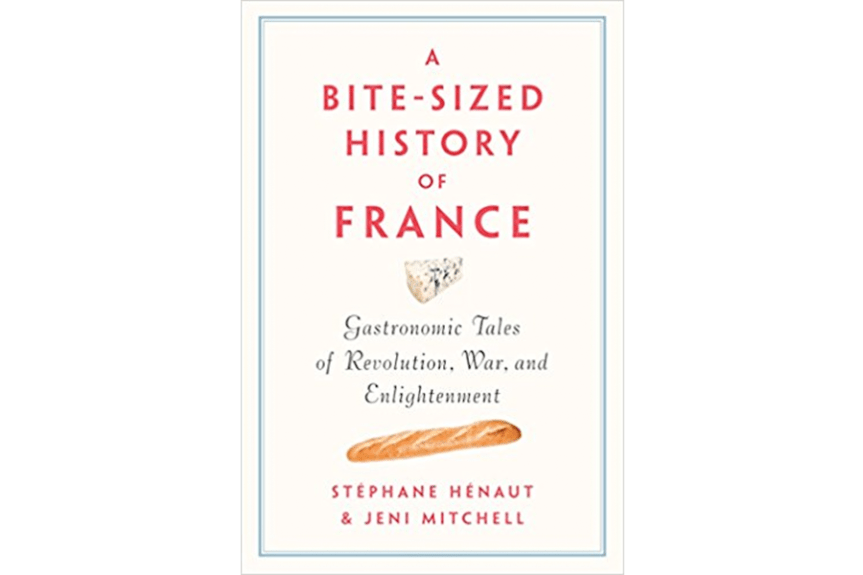
‘A Bite-Sized History of France’ delightfully combines French history with gastronomy

Napoleon’s most famous (and probably apocryphal) quote weaves together war and food: “An army marches on its stomach.” In a few short words, we are led to consider the immense logistics that make war possible, and the humanity of the people who wage it. It’s a fitting quote to introduce A Bite-Sized History of France, a new and impressive book that intertwines stories of gastronomy, culture, war, and revolution.

Each amuse bouche-sized chapter of “A Bite-Sized History of France” tackles a different theme, ranging from the relationship between the revolutionary government and potatoes to the connection between the thoughts of philosopher Jean-Jacques Rousseau and a search for “authentic” French food. The book delves back to the origins of seemingly eternal fixtures of French food culture (chocolate, raw oysters, sweet pastries) and teases out the meaning of their arrival. And it dives into serious historical events ranging from revolutions to sectarian massacres with real conviction, recapping many of the most significant political and military developments in France’s long history as it goes.

Throughout the book, the authors return to certain themes that tie together its many far-flung topics and tastes. Chief among these are the theme of inequality – an examination of how the rich and the poor pursue pleasure and sustenance is at the heart of “A Bite-Sized History of France” and that frame provides a window into economics, inequality, and revolution. Perhaps mostly strikingly, the authors tell the story of a famous Christmas Day feast for wealthy Parisian during the 1870 siege by Prussian troops. Food had seemingly run out, but for those with means, the zoo would serve as a kind of exotic butcher shop:

“[The meal] began with a stuffed donkey’s head, an inelegant successor to the usual porcine centerpieces of prewar banquets. The soup course included elephant consommé. This was followed by kangaroo stew, rack of bear in pepper sauce, and roasted camel à l’anglaise (a cheeky reference to what the French saw as the plainness of English cuisine.) The main course included le chat flanqué de rats (cat flanked by rats) and cuissot de loup, sauce chevreuil(wolf in deer sauce), a wry inversion of the natural order.” Continue reading “‘A Bite-Sized History of France’ delightfully combines French history with gastronomy”