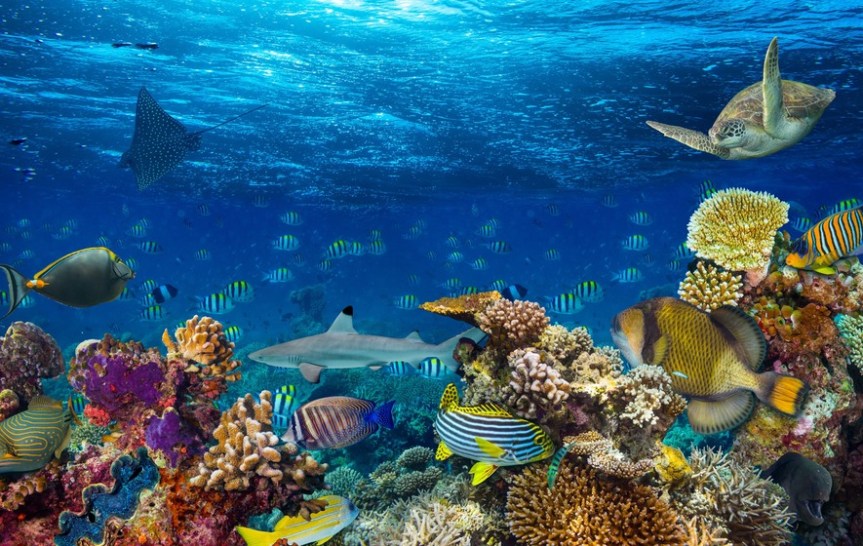
11 things we learned from Fabien Cousteau – who lived under water for 31 days

The food was ‘really, really awful’.

In 2014, Fabien Cousteau and his team embarked on a mission to break the world record for the number of days spent living under water.

They set up temporary quarters on Aquarius, an 81-ton vessel that serves as the world’s only underwater marine laboratory located nine miles off the coast of the Florida Keys and 63 feet beneath the sea.

Then 31 days later, the team emerged back on the shore, breaking the record formerly set by Mr Cousteau’s grandfather – the famous ocean explorer Jacques Cousteau – by a day.

Four years later, Mr Cousteau relives his Mission 31 experience on Reddit’s Ask Me Anything and here are 11 things we learned from the aquanaut. [ . . . ]

Read More at Source: THE IRISH NEWS 11 things we learned from Fabien Cousteau – who lived under water for 31 days – The Irish News

The literature debate tearing apart Paris: should Céline’s racist pamphlets be published?


Louis-Ferdinand Céline was one of France’s greatest novelists – but plans to republish his anti-Semitic writing has dramatically divided Paris.

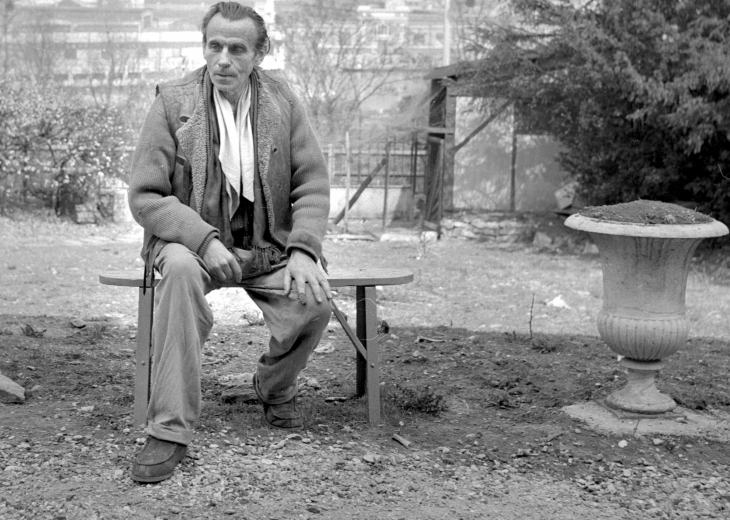
n a cold but sunny afternoon in late January I paid a visit to the Passage de Choiseul in the commercial heart of Paris. The passage is a covered arcade, one of many such places that were built across the Right Bank of Paris in the early part of the 19th century, and which were effectively the world’s first shopping malls. The Passage de Choiseul is also one of the most important and totemic sites in French literary history. It was the childhood home of the novelist Louis-Ferdinand Céline, arguably the greatest French writer of the 20th century, who still regularly outranks Marcel Proust in readers’ surveys and sales. Most significantly for his admirers, the passage was immortalised by Céline in his two magnificent novels, Journey to the End of the Night andDeath on the Instalment Plan, published in the 1930s. In Céline’s day the place was poor and decrepit and “stank of dogs’ piss”. Nowadays it is expensive and chic. But there is no trace of its most famous literary inhabitant – an extremely unusual fact in France, a country that prides itself on its literature, and where even the meanest provincial town has at least one Avenue Victor Hugo or Lycée Baudelaire.

I bought some pens and a notebook in the upmarket stationery shop just opposite the entrance to number 67, where I knew Céline had lived, and asked the lady behind the counter why there was no trace of the great man. She said that she was often asked this question by Céline’s admirers, who came from all over the world to this place, and that she did not know why there was no commemorative plaque or any other sign that Céline had lived here. She then hesitated, looked around to check that we were alone, and said quietly: “There are many Jews here who control business. They don’t want anyone to remember him.” [ . . . ] More at: The literature debate tearing apart Paris: should Céline’s racist pamphlets be published?

Julia Child “France is a Feast” exhibit

I love these rarely seen black and white photographs taken by Paul Child in France between 1948 and 1954.

The recent exhibit features 60 rarely seen black-and-white photographs taken between 1948 and 1954 along with notebooks, logs, letters and a Rolleiflex camera that Paul Child liked to use because it allowed him to look down and capture people unobtrusively.

Paul’s wife, Julia Child, became a celebrity cookbook author and “The French Chef” on television.

Julia Child
Julia smoking a cig in Cassis 1950
Juila Child2
Julia Child, telephone booth

‘The Gourmands’ Way’ review: Six Americans in Paris who changed the way we eat


For Americans growing up in the post-World War II affluence of peace and plenty, convenience cooking, supermarket produce and processed foods formed the basis of [ . . . ]

“The kitchen is a sensual place, and few household activities are more gratifying to the home cook than satisfying the gastronomic whims of a lover or spouse.”

Source: ‘The Gourmands’ Way’ review: Six Americans in Paris who changed the way we eat | Newsday

Naked attraction: art and tragic tales in Modigliani’s Paris

As Tate Modern prepares a new exhibition of his work, including 12 of his famous nudes, Louise Roddon explores the artist’s haunts around Montmartre and Montparnasse

Poor Amedeo Modigliani, what a tough life he led. I’m thinking this as I climb the steps to his last studio in Montparnasse. It’s a classic artist’s garret with peeling paint and poor lighting, and climbing the countless floors on a narrow stone tread, leaves me winded. It wouldn’t have been easy for a man with advanced tuberculosis. With Tate Modern about to stage its Modigliani exhibition, I’ve come to number 8 Rue de la Grande-Chaumière, his final home before he died tragically young in 1920. At 35, he wasn’t just a victim of TB, but was suffering the toll of a lifetime’s enthusiasm for alcohol and drugs [ . . . ]

More: Naked attraction: art and tragic tales in Modigliani’s Paris