10 Famous Women Artists Who Conquered the World 

Have you ever noticed that most people are not familiar with women artist, even if they can name a lot of male artists? If you are asked to name at least several well-known artists, then you will remember men only: Raphael, Gogh, Dali, and so on. And what about women? Didn’t women succeed in the field of fine arts or perhaps their works have been lost on the pages of centuries-old world history? What was women’s role in art history?

In fact, the women’s share in art really does constitute a smaller number compared to men’s one and therefore only a relatively small number of women managed to become renewed.

Sofonisba Anguissola

She is a famous Italian artist of the second half of the 16th and the beginning of the 17th century, who, first of all, gained her reputation as a portrait master. It is noteworthy that Sofonisbawas born in a noble family, where art classes were held thanks to her father, who dreamed of realizing all the creative abilities of his family consisting of four girls.Sofonisbais known for living portraits of her relatives who she tried to portray in their habitual activities. Among the teachers of the famous artist are Bernardo Campi and Michelangelo himself, although there is no complete certainty about that.

Marie Bashkirtseff

The main merit of this talented artist is that she became among the first Russian female artists whose works were purchased by the Louvre. Marie lived in the middle of the XIX century leading a short but bright and life full of creativity.Marie received all the necessary knowledge concerning painting at the Academy of Painting, however, the girl was constantly engaged in self-education and ask uncle: “Please, type my essay free!”. Soon, she was praised by famous critics in the press becoming more and more popular. To date, original Bashkirtseff’s paintings are a real rarity in the art world, as most of her works were burned down during the Second World War.

Angelica Kauffman

Angelica is considered one of the most educated and talented women during the Enlightenment age. It is known that her father was a middle-handed artist and her family moved not only from city to city, but also to other countries quite a lot.Angelica could paint beautiful things at the age of nine and even then, she was dreaming of becoming a great artist, which, she managed to do. As a result, Angelica was admitted to the Accademia di San Luca, and a few years later, she also joined the ranks of the French Royal Academy. Angelica was the most productive during her stay in London, which lasted 15 years.

Zinaida Serebryakova

Zinaida was born at the end of the nineteenth century in a creative family, in which it was difficult not to become an artist. From the early childhood, the girl was told about the important role of art in the life of every person. At age 25, the artist introduced her own self-portrait to the world, which was highly appreciated by critics at that time.

For a while, Zinaida had to stop painting because she was left alone with four young children. Everyone who knows Serebryakova’s art confirms that it is her paintings that represent the real Russian talent and deserve an art gallery dedicated to her paintings alone.

Marie Tussaud

When it comes to women in art, we are positive that many of you are familiar with the Tussaud name. Surprisingly, but little Marie did not know that her father was a sculptor for a long time, who, in consequence, handed over to her the whole life of his life – the Museum of Wax Figures. Marie continued her father’s business, followed by her children and other descendants.

Camille Claudel

Camille was a persevering and very talented artist who conquered Paris at the age of eighteen. Camilleis known for her resemblance to the popular artist of that time named Rodin with whom, she even had an affair. Nevertheless, such sculptures as “The Wave” and “The Waltz” received mass approval among true connoisseurs of art, and after Camille’s death, they were placed in a separate hall of the Rodin Museum [ . . . ]

Continue reading at: 10 Famous Women Artists Who Conquered the World | Times Square Chronicles


Read more stories about CAMILLE CLAUDEL on Pas De Merde


The Years by Annie Ernaux review – a masterpiece memoir of French life

Annie Ernaux is long overdue to be recognised in Britain as one of the most important writers in contemporary France, and this edition of The Years ought to do the trick. Originally published there in 2008, it was immediately heralded as Ernaux’s masterpiece, her brief Remembrance of Things Past. It has been expertly rendered into English by Alison Strayer, who captures all the shadings of Ernaux’s prose, all its stops and starts, its changes in pace and in tone, its chatterings, its silences.

The book spans the timeframe from the author’s birth in 1940 up to 2006, and moves from her working-class upbringing in Normandy to her years teaching French literature in a lycée, living in the Parisian suburb of Cergy, raising two sons and eventually divorcing. But it is not a straightforward autobiography; rather it is told in a choral “we”, which sometimes shifts into the third person, so the author appears as “she”. This is as close in as it gets. In so doing, Ernaux puts paid (hopefully once and for all) to the idea that memoirs by women are about the small-scale, the domestic. She shows it is possible to write both personally and collectively, situating her own story within the story of her generation, without ever confusing the two. She reflects on the book she is writing even as she writes it, resolving: “There is no ‘I’ in what she views as a sort of impersonal autobiography. There is only ‘one’ and ‘we’, as if now it were her time to tell the story of the time-before.” [ . . . ]

Continue at THE GUARDIAN: The Years by Annie Ernaux review – a masterpiece memoir of French life | Books | The Guardian

Christie’s Revives the Market’s Mood With a Strong $168 Million Impressionist and Modern Sale in London 

Claude Monet
Claude Monet’s La Gare Saint-Lazare, vue extérieure (1877)

The solid auction was led by a rare $32.8 million Monet and Picasso’s portrait of Dora Maar, which fetched $25.4 million [ . . . ]

Continue at ARTNEWS: Christie’s Revives the Market’s Mood With a Strong $168 Million Impressionist and Modern Sale in London | artnet News

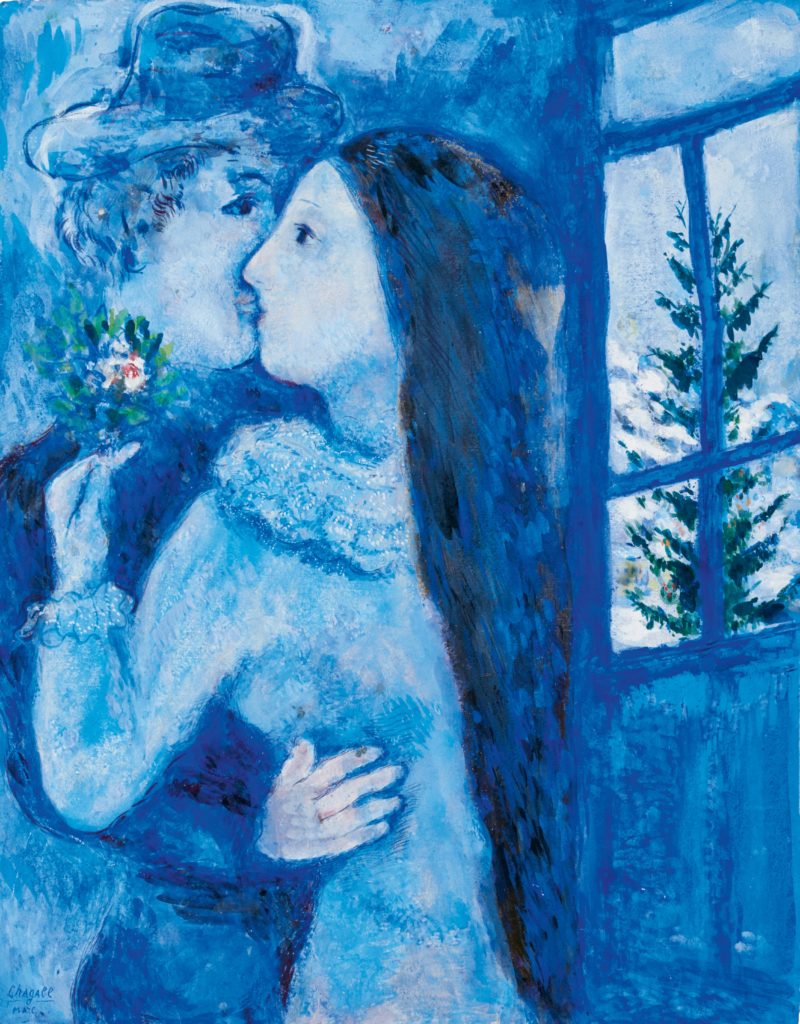
Chagal

Picasso
Pablo Picasso’s Femme dans un fauteuil (Dora Maar) (1942)
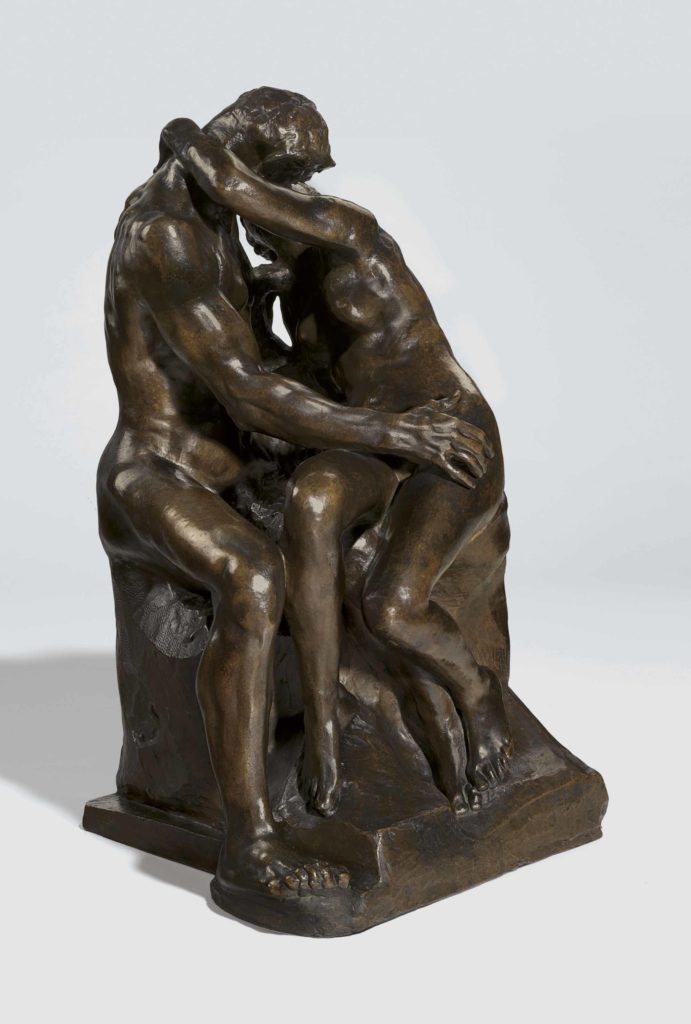
Rodin
Auguste Rodin’s Baiser, moyen modèle dit “Taille de la Porte”–modèle avec base simplifiée (1885/1890)
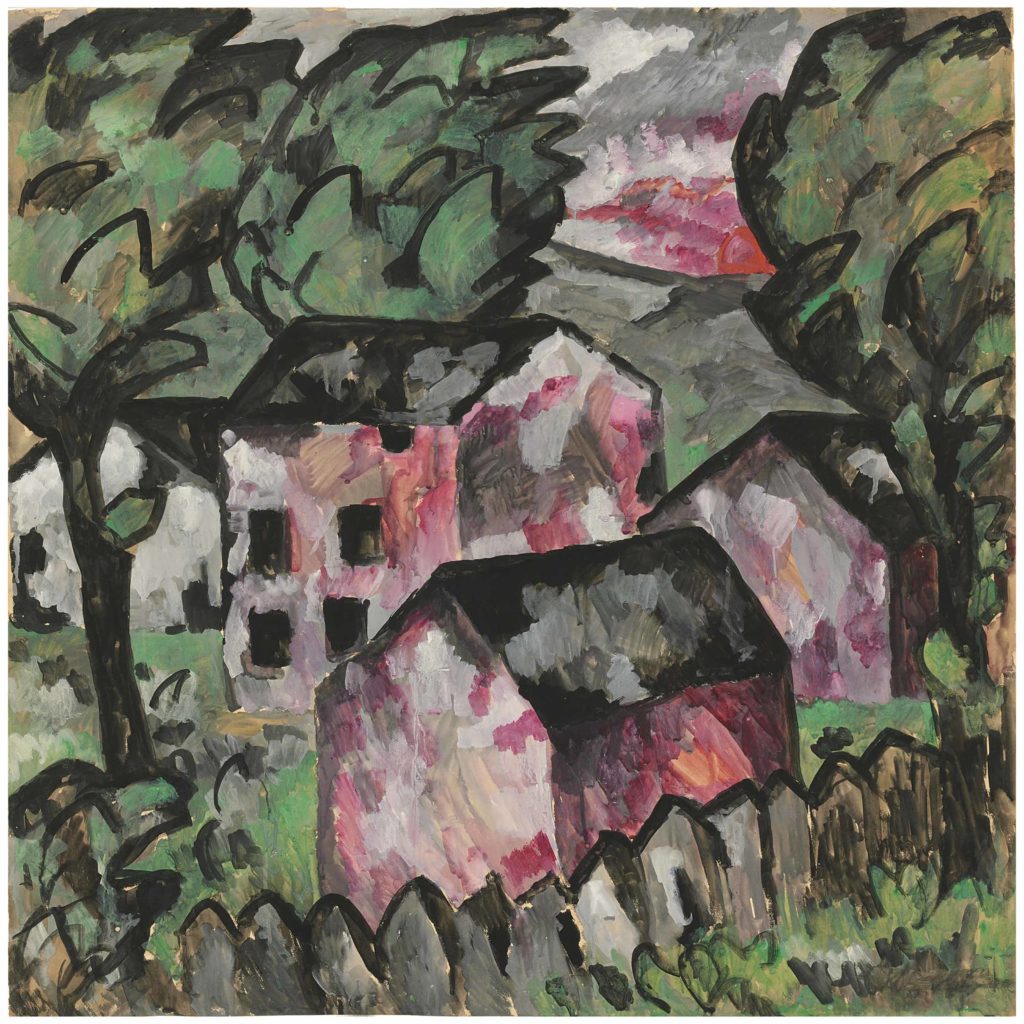
Malevich
Kazimir Malevich’s Landscape (1911)

‘Rodin’ Shines As A Story Of Both Artist And Art : NPR

While many biographies of artists focus on their tortured personal lives, Rodin maintains a close focus on sculpture itself and what makes it last.

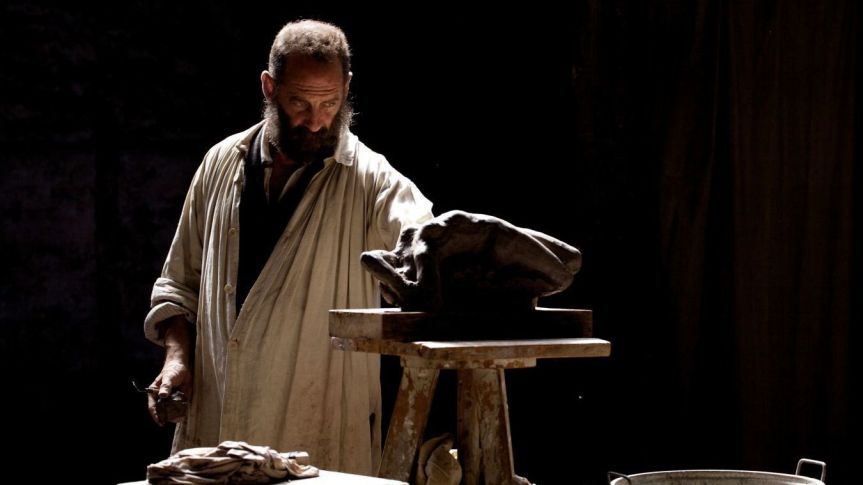
Deep into Rodin, Jacques Doillon’s quietly satisfying portrait of the famed French sculptor, a group of stuffy sponsors circles Auguste Rodin’s almost completed statue of France’s beloved novelist Honore de Balzac. Rodin (Vincent Lindon) has given the writer an enormous gut (he used a pregnant young woman and a draft horse rider as models for the belly), which the artist made capacious enough to house, in his imagination, the teeming characters who peopled the 19th-century writer’s stories. And, perhaps, his appetites.[ . . . ]

Continue at NPR: ‘Rodin’ Shines As A Story Of Both Artist And Art : NPR

Amadeo Modigliani lived hard, died young, and is on display in London 

The Jewish-Italian artist womanized, drank, and did drugs — and in his 35 years created an impressive oeuvre, now showing in a blockbuster exhibit at Tate Modern

Despite this, Modigliani’s output was considerable and his work is currently the subject of a blockbuster exhibition at Tate Modern, in London.

His major retrospective is the most comprehensive Modigliani exhibition ever held in the United Kingdom. With over 100 works, it brings together a range of his portraits, landscapes, sculptures and 12 of his iconic, languorous, female nudes, some of which have never been shown in the UK before.

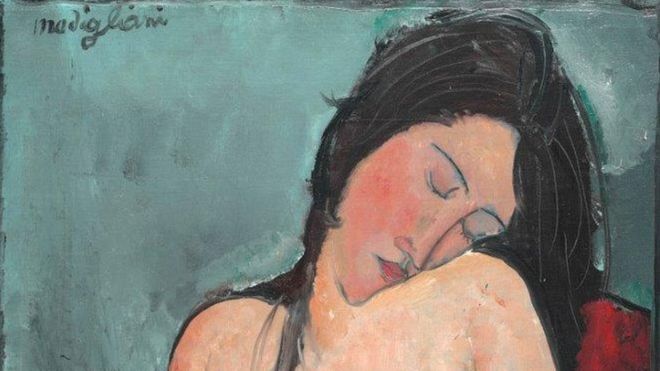
These seductive figures, such as “Reclining Nude on a White Cushion” (1917), “Female Nude” (1916) and “Seated Nude” (1916) constitute many of his best-known works today. But in the early 20th century, the provocative paintings proved controversial, shocking the French establishment.

In 1917, they were included in Modigliani’s only solo exhibition in his lifetime, but were subject to censorship on grounds of indecency: A police commissioner objected to Modigliani’s depiction of pubic hair, finding it offensive [ . . . ]

Read full story at THE TIMES OF ISRAEL: Amadeo Modigliani lived hard, died young, and is on display in London | The Times of Israel

Modigliani masterpiece on display at Ulster Museum

World famous painting goes on display after being loaned by the Courtauld Institute in London.

Female Nude, 1916′ by the Italian artist Amedeo Modigliani is on loan from the Courtauld Gallery, London.

When the painting was initially shown in Paris a century ago it created a scandal.

An exhibition containing it and a number of other Modigliani nudes was closed by the French police.

However, the reception for the masterpiece on its first day of public display in Belfast was much warmer.

“Of all the various nudes that he did, this is one of the most important,” one early viewer told BBC News NI.[ . . . ]

“There’s an immediacy and physicality” says senior curator Anne Stewart

Read Full Story at Source: Modigliani masterpiece on display at Ulster Museum – BBC News