The Entwined Lives of Françoise Gilot and Pablo Picasso

Understanding Picasso’s art, Gilot’s memoir shows, is inseparable from understanding both his genius and monstrousness.

Early on in their relationship, the painter and writer Françoise Gilot almost left Pablo Picasso. It was 1946, and the pair had gone from Paris to the South of France for the summer. It sounds romantic and likely would have been, if Picasso hadn’t insisted that they stay in the house he had given to the photographer Dora Maar, his partner before Gilot. Maar wasn’t around, but soon after they arrived, Picasso began receiving devoted daily letters from yet another former lover, Marie-Thérèse Walter, which he would read aloud every morning. As if that weren’t enough, the place was overrun with scorpions. Suddenly, Gilot found herself stuck in a “hostile environment,” as she writes in her memoir, Life With Picasso, which was originally published in 1964 and recently rereleased by New York Review Books Continue reading “The Entwined Lives of Françoise Gilot and Pablo Picasso”

Fine Arts Paris and beyond

The fair underscores its links with the museum world in its third edition. Plus highlights from Paris Photo and Also Known as Africa

Fine Arts Paris began in 2017 as a boutique affair of 34 dealers, and though it has now grown to 46 exhibitors – most of them French – it still prides itself on carefully crafted displays and museum-quality works. This year (13–17 November), the fair is looking to underscore its links with the museum world with an events programme that offers behind-the-scenes tours of various institutions. Visitors will also be treated to a first look at the Château de Fontainebleau’s most recent acquisition: a late 16th-century mythological scene by a follower of Francesco Primaticcio. La Piscine – the museum of art and industry in Roubaix – provides a pop-up display of works from its collection, by artists including Marc Chagall and Camille Claudel.

At Galerie Charvet there is a selling exhibition on the theme of museum interiors; highlights include a painting of a man polishing the armour of a horse guard at the Royal Armoury in Turin, by the Piedmontese artist Giovanni Giani in 1892. [ . . . ]
Continue at
APOLLO MAGAZINE: Fine Arts Paris and beyond | Apollo Magazine

Artist ‘Humiliated’ After His Nude Sculpture Was Covered With Underwear for Paris Event

.

The United Nations’ cultural agency has been criticized for covering up the genitalia of a series of nude sculptures with underwear.

Works by French sculptor Stéphane Simon, which show nude, classical-style figures taking selfies, were being displayed in Paris during UNESCO’s European Heritage Days event in September.

But officials decided to cover the offending parts of the artworks with underwear, to the shock of Simon and the ridicule of arts commentators.

Source: Artist ‘Humiliated’ After His Nude Sculpture Was Covered With Underwear for Paris Event | KTLA

Auguste Rodin, the father of modern sculpture

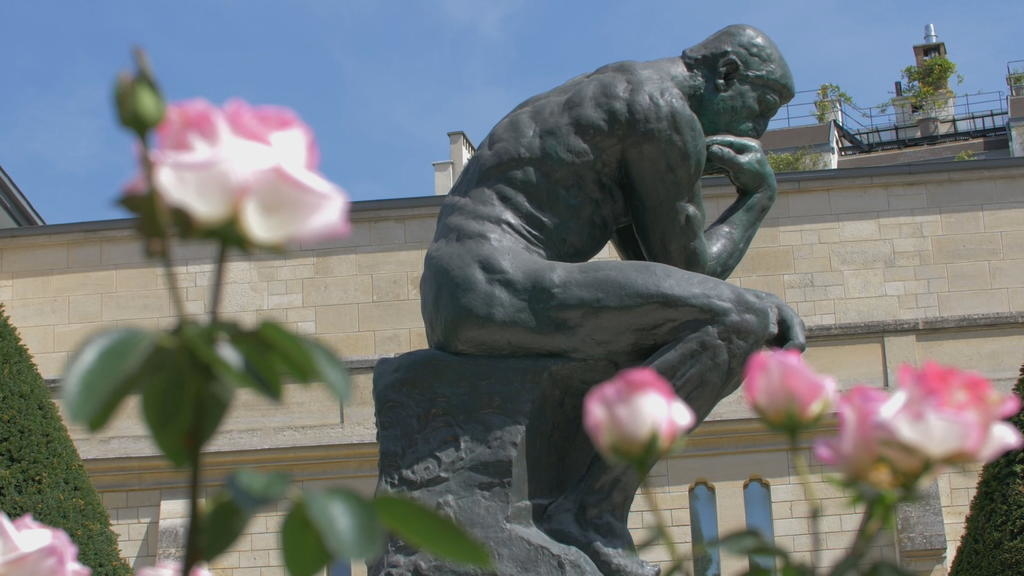
His figures capture the most universal of human emotions – passion, contemplation, despair. Auguste Rodin is known as the father of modern sculpture, an artist who managed to convey the drama of life in stone and in bronze. His talent and monumental works have been celebrated for a century now at the Rodin Museum in Paris. FRANCE 24 brings you a special programme on Rodin’s artistic legacy.

Watch at: Encore! – Special programme: Auguste Rodin, the father of modern sculpture

Berthe Morisot au musée d’Orsay : une rétrospective rare d’une grande artiste

Grâce à de nombreux prêts, le musée d’Orsay propose une rétrospective exceptionnelle de Berthe Morisot, un des grands noms de l’impressionnisme

Berthe Morisot (1841-1895) is not a dilettante painter, who would have exercised her talent as a bourgeois woman educated in the arts, in the shadow of Manet, Renoir and Monet, but a true professional painter, a founding figure of the Impressionism which exercised an art full of daring and modernity: this is shown by an exceptional exhibition at the Musée d’Orsay , which had never devoted a retrospective to him.

This is an event because of the 75 or so works collected at the Musée d’Orsay, half (37) come from private collections, only a dozen from French museums, the others are lent by foreign museums. Indeed, French public collections have been slow to take Berthe Morisot seriously and have very few of his works, while collectors and American museums have quickly bought his paintings. The exhibition shows paintings that have never been seen in France for decades.

Berthe Morisot, \ "Autoportrait \", 1885, Paris, Marmottan-Claude Monet Museum, Denis and Annie Rouart Foundation, Annie Rouart bequest, 1993
Self portrait

Berthe Morisot was born in Bourges in 1841 into a bourgeois family (her father, then, is prefect). Her future wife and mother at home are all drawn. But his mother, open to the arts, teaches music and painting to her three daughters. It is not a career, but the two younger girls, Berthe and Edma, show a talent that leads them from a particular course to a certain Geoffroy Alphonse Chocarne to the Louvre where they copy the classics, from 1858. There they meet Henri Fantin-Latour, before meeting Corot. 

Continue reading “Berthe Morisot au musée d’Orsay : une rétrospective rare d’une grande artiste”

Marais and Beaubourg area guide

Galleries and good times in the heart of Gay Paree

For the last two decades the Marais (sandwiched between St-Paul and République) has been one of the hippest parts of the city, packed with modish hotels, vintage boutiques, restaurants and bars – in no small part due to its popularity with the gay crowd (this is the only part of Paris where the blokes get winked at more than the ladies). But it’s also prime territory for art lovers, with a vast concentration of art galleries (both small and important) and museums, more often than not set in aristocratic 18th-century mansions spared by Haussmann. Two of the most sumptuous hôtels particuliers, Hôtel Guénégaud and Hôtel Carnavalet, contain (respectively) the wonderful Musée de la Chasse et de la Nature (hunting museum) and fascinating Musée Carnavalet, which retraces Paris’s history. The Marais has also long been the focus of the Jewish community: amble along rue des Rosiers, rue des Ecouffes and rue Pavée (where there’s a synagogue designed by Guimard, the brain behind Paris’s iconic Métro stations) and the air fills with the scent of falafels and sizzling shawarmas, sold in their hundreds from stalwarts Chez Hanna and L’As du Fallafel.

The Marais’s western neighbour is Beaubourg, whose focal point is the Centre Pompidou modern art museum, a benchmark of inside-out high-tech design signed Richard Rogers and Renzo Piano. This is also where you’ll find the Atelier Brancusi, the sculptor’s former workshop left to the state, and moved here from the 15th. Wander north of here for two of Paris’s lesser-known gems: The first, the Gaïté Lyrique (set in Offenbach’s former theatre) is a temple to digital arts, with streams of digital installations and live electro concerts; the second is the Musée des Arts et Métiers – a fabulous science museum with early flying machines displayed in a 12th-century chapel.

Source: Marais and Beaubourg area guide – Time Out Paris