3 Underrated French Cheeses to Eat on Bastille Day 

fromage
Pas De Merde – we love fromage!

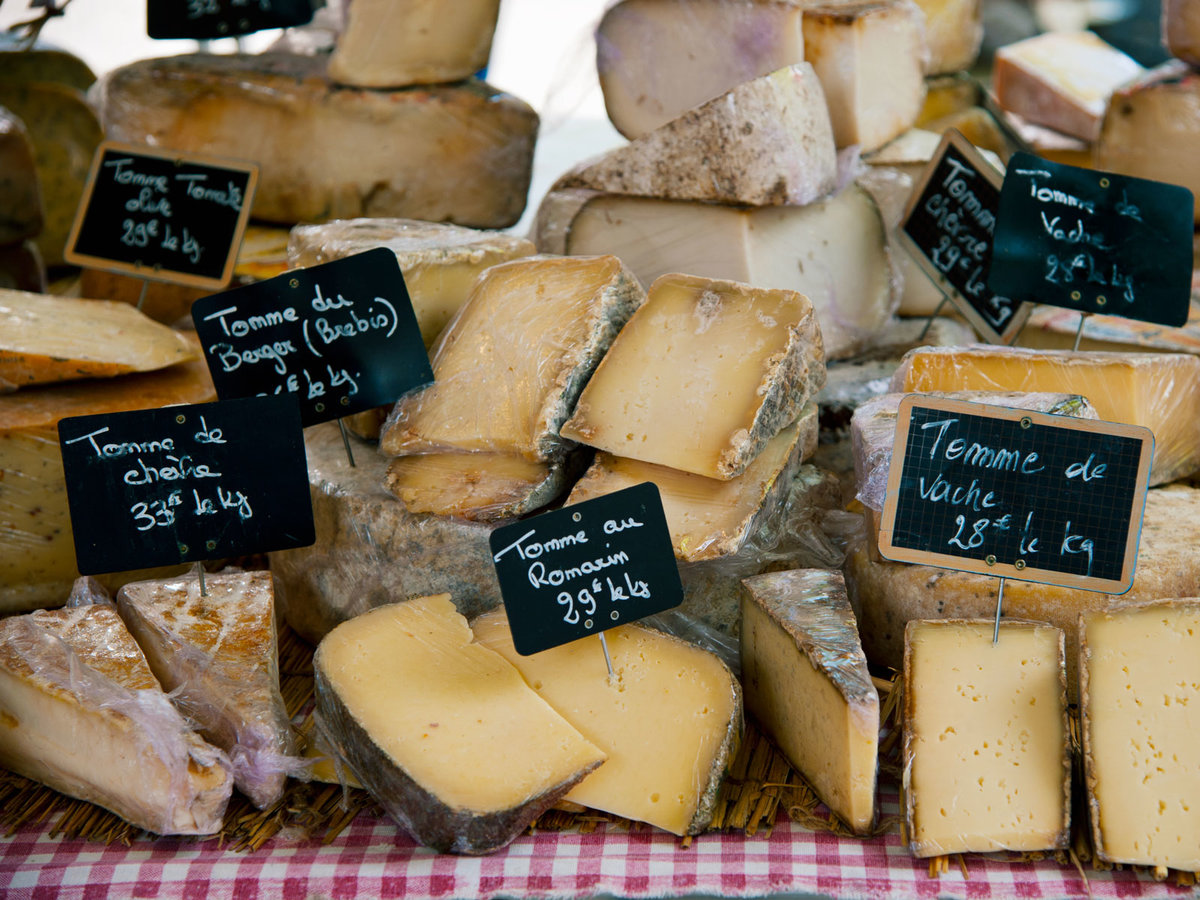
Camembert is always a good choice, but why not try some less famous—but equally transcendent—cheeses? 

One of the biggest holidays in France has become an important day for Americans to eat French food. Restaurants around the States offer Bastille Day specials, featuring classic French dishes like steak frites and canard à l’orange, to celebrate the July 14 holdiay, which commemorates the Storming of the Bastille in 1789, a major turning point in the French Revolution.

We can’t think of a better way to celebrate Frenchness than with a dreamy board of cheese. We tapped cheesemonger Carol Johnson, of Monger’s Palate in Brooklyn, to help us choose beautiful, unique fromages for a French-inflected spread, and she offered three varietals that more cheese-loving Americans should know about.

So before July 14, take a stroll to your local fromagèrie and try to get your hands on these exquisite, but lesser-known, French cheeses for the ultimate Bastille Day spread [ . . . ]

Continue at FOOD & WINE: 3 Underrated French Cheeses to Eat on Bastille Day | Food & Wine

Gauguin Review

The conceptual dullness of the new French biopic Gauguin: Voyage to Tahiti hit me especially hard, since I was fired up to see those Tahitian pictures after a June trip to Paris and the Musee D’Orsay, where many of them reside. Have you been to a highly-touristed art museum lately? It used to be that if you wanted to get close to study the brush strokes it was a guard who’d ask you to step back. Now, it’s people who yell at you for blocking their iPhone photos. The museum’s Postimpressionist area would be a great place to get lost, but, like Paul Gauguin, it ends up making you want to flee civilization for shady pandanus glades halfway around the world — preferably without Gauguin’s raging syphilis.

The syphilis isn’t mentioned by name in Gauguin: Voyage to Tahiti, although Gauguin has an unspecified cough that will obviously be fatal, because in biopics there is no such thing as an inconsequential cough. But as played by the febrile Vincent Cassel, this Gauguin seems too tightly wound for sex. The image of Gauguin the voluptuary eating and screwing and painting naked Tahitian women might be a cliché, but the director, Edouard Deluc, has gone to the other extreme. Although the script is based on Gauguin’s own writing, the film presents him as such a gloomy Gus that he might have swapped souls with his onetime pal Van Gogh.

The movie opens in France, where Gauguin is stricken that his oh-so-proper wife won’t come to Tahiti with the kids — though I imagine she’d have put a crimp in his lifestyle if she had. He does need her family money, since rich people are finding his latest works a mite unruly. He’s also dismayed that none of his fellow painters or acolytes will abandon Paris for distant French Colonial paradises. What Deluc gets right is that Gauguin, like most great artists but few in great-artist biopics, spends most of his time not carousing but sitting in front of canvases. What doesn’t come through is how entwined in Tahiti Gauguin’s various impulses were. The artist tells a doctor friend, “I paint and draw all day long and live in harmony with everything around me,” but you don’t see Buddhist oneness in Cassel’s face, especially as he ages into someone resembling Fagin. Non-transcendental, too, are composer Warren Ellis’s somber cellos and violins [. . . ]

Continue at THE VULTURE: Gauguin Review

Innovative pop singer Jain mesmerises Montreal Jazz Festival audience

Jain
Jain

“Ooouuu”, chant eager fans as they await Jain at MTelus. It’s the first of two shows she’ll be playing at the historic Montreal International Jazz Festival. For a French singer, the city is one of the few markets outside of Europe that she can truly thrive in.“Most of her U.S. tour actually had a lot of people from France attending”, explains a publicist from Sony (Jain is signed to the label’s RCA Records) division. After all, this is the singer’s fourth time playing in the city, with her last appearance less than a year ago.Jain makes her to the stage sporting a blue jumpsuit, with Nike Air Max`s the colours of her country’s flag to match the fit. Her stage setup is sparse, with the only thing with her onstage being a loop station on a podium, and an accompanying arm controller.

This is the indoor Jazz Festival performances that attracted the most children. Not only does Jain’s music transcend language barriers but also helps bring generations of listeners together for a night of sweat and dance.On the cusp of releasing a new album, Souldier, next month, fans were treated to a handful of new tracks. The songs seem to pick up exactly where 2015’s Zanaka left off, abundant in bounce and swagger. Many people in attendance are already quite familiar with its lead single, `Alright`, and those who weren’t were happy to hum or sing along when given instructions to.

The new song with the most flare to it was undeniably `Inspecta`, which samples the Inspector Gadget theme song over a menacing trap beat. It is more influenced by hip-hop than any other track she plays, showing her strives to continue evolving as an artist. For an artist full of surprises, recording a song inspired by an unprecedented animated hero only makes sense.Of course, there was only one logical tune to close the night with. `Makeba` crossed over to the North American market with a bang after being featured in a commercial for Levi’s Jeans last summer. While the advertisement currently sits at 25 million hits on YouTube, the song itself has gained double this amount.Crossing over to North America is no easy feat for French artists. While Jain has some ways to go with the rest of the continent, it is safe to say she has found something of a second home in Montreal.

Source: Innovative pop singer Jain mesmerises Montreal Jazz Festival audience | Gigwise | Gigwise

10 Famous Women Artists Who Conquered the World 

Have you ever noticed that most people are not familiar with women artist, even if they can name a lot of male artists? If you are asked to name at least several well-known artists, then you will remember men only: Raphael, Gogh, Dali, and so on. And what about women? Didn’t women succeed in the field of fine arts or perhaps their works have been lost on the pages of centuries-old world history? What was women’s role in art history?

In fact, the women’s share in art really does constitute a smaller number compared to men’s one and therefore only a relatively small number of women managed to become renewed.

Sofonisba Anguissola

She is a famous Italian artist of the second half of the 16th and the beginning of the 17th century, who, first of all, gained her reputation as a portrait master. It is noteworthy that Sofonisbawas born in a noble family, where art classes were held thanks to her father, who dreamed of realizing all the creative abilities of his family consisting of four girls.Sofonisbais known for living portraits of her relatives who she tried to portray in their habitual activities. Among the teachers of the famous artist are Bernardo Campi and Michelangelo himself, although there is no complete certainty about that.

Marie Bashkirtseff

The main merit of this talented artist is that she became among the first Russian female artists whose works were purchased by the Louvre. Marie lived in the middle of the XIX century leading a short but bright and life full of creativity.Marie received all the necessary knowledge concerning painting at the Academy of Painting, however, the girl was constantly engaged in self-education and ask uncle: “Please, type my essay free!”. Soon, she was praised by famous critics in the press becoming more and more popular. To date, original Bashkirtseff’s paintings are a real rarity in the art world, as most of her works were burned down during the Second World War.

Angelica Kauffman

Angelica is considered one of the most educated and talented women during the Enlightenment age. It is known that her father was a middle-handed artist and her family moved not only from city to city, but also to other countries quite a lot.Angelica could paint beautiful things at the age of nine and even then, she was dreaming of becoming a great artist, which, she managed to do. As a result, Angelica was admitted to the Accademia di San Luca, and a few years later, she also joined the ranks of the French Royal Academy. Angelica was the most productive during her stay in London, which lasted 15 years.

Zinaida Serebryakova

Zinaida was born at the end of the nineteenth century in a creative family, in which it was difficult not to become an artist. From the early childhood, the girl was told about the important role of art in the life of every person. At age 25, the artist introduced her own self-portrait to the world, which was highly appreciated by critics at that time.

For a while, Zinaida had to stop painting because she was left alone with four young children. Everyone who knows Serebryakova’s art confirms that it is her paintings that represent the real Russian talent and deserve an art gallery dedicated to her paintings alone.

Marie Tussaud

When it comes to women in art, we are positive that many of you are familiar with the Tussaud name. Surprisingly, but little Marie did not know that her father was a sculptor for a long time, who, in consequence, handed over to her the whole life of his life – the Museum of Wax Figures. Marie continued her father’s business, followed by her children and other descendants.

Camille Claudel

Camille was a persevering and very talented artist who conquered Paris at the age of eighteen. Camilleis known for her resemblance to the popular artist of that time named Rodin with whom, she even had an affair. Nevertheless, such sculptures as “The Wave” and “The Waltz” received mass approval among true connoisseurs of art, and after Camille’s death, they were placed in a separate hall of the Rodin Museum [ . . . ]

Continue reading at: 10 Famous Women Artists Who Conquered the World | Times Square Chronicles


Read more stories about CAMILLE CLAUDEL on Pas De Merde


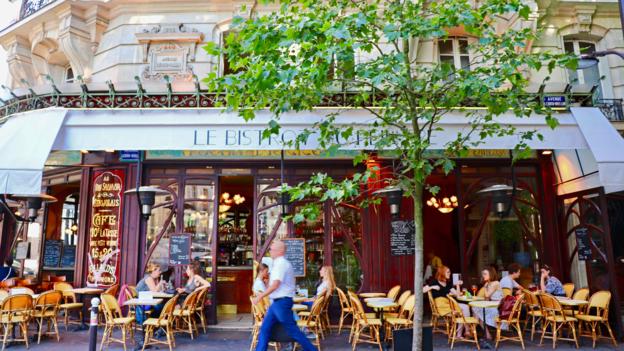
Is the iconic Parisian bistro dying?

It’s lunchtime at a busy neighbourhood bistro in Paris’ 11th arrondissement. A pair of young male servers are gliding through the restaurant, juggling plates groaning with roast chicken and frites, duck confit and beef tartare, and sliding them across the tables to their customers in swift but graceful movements.Sitting in the corner of the bar, a lone man has ordered a cheese plate, a green salad and a glass of red wine, and is consumed by his newspaper. It’s not long before a tall, middle-aged man enters the restaurant, calls out ‘Georges’, shakes his hand with a hearty one-two pump and takes the seat next to him. It’s immediately apparent that Georges’ friend is the kind of bar fixture who has the gift of banter.

The bistro bar is a place of exchange, of conversation, a way of life

“When are you going to take my order?” he teases the bartender in an accusatory tone.

“Huh la la la la,” she replies, her four “las” uttered in quick succession. “Always the same. You haven’t changed.”

She would know. Marie-Claude Lainey has been serving Serge Jovanovic his lunch for the last 15 years.

Jovanovic and Georges Cano have also been eating their lunches together over the last 15 years. In the same bistro. At the same time. Nearly every day.

Continue reading at BBC: BBC – Travel – Is the iconic Parisian bistro dying?