“Tchi-tchi” was first made popular by the legendary Corsican singer/film star Tino Rossi who recorded the song in 1936.
Thomas Fersen paid tribute to the song for his Triple Live album in 2001.

“Tchi-tchi” was first made popular by the legendary Corsican singer/film star Tino Rossi who recorded the song in 1936.
Thomas Fersen paid tribute to the song for his Triple Live album in 2001.
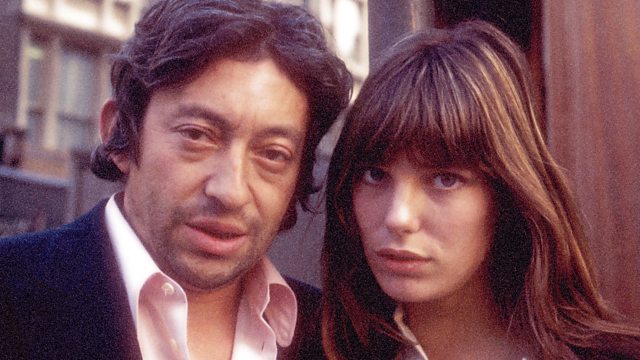
The story of how two major cultural icons of the 20th century came together.
Director: Pierre Salvadori.
With: Adèle Haenel, Pio Marmaï, Vincent Elbaz, Audrey Tautou, Damien Bonnard.
In a town on the French Riviera, detective Yvonne is the young widow of police chief Santi, a local hero. When she realizes her husband was not exactly the model of virtue so idolized by their young son, and that an innocent young man, Antoine, has spent 8 years in prison as Santi’s scapegoat, she is thrown into turmoil. Yvonne wants to do everything she can to help this very charming Antoine get back to his life and his wife. Everything that is, except telling the truth. But Antoine is having trouble adjusting to life on the other side, to say the least, and soon blows a fuse leading to a spectacular sequence of events.

De la country à la musique expérimentale, les proches d’Alain Bashung racontent à Charline Lecarpentier ses émois musicaux.
Alain Bashung was not a socialite. Few people entered his bubble. “One does not let me dream,” he once heard the musician Rodolphe Burger moan as they prepared to enter the studio. His intimate relationship to the music of others remained only more valuable. “I’m a cowboy at Paname, but it’s Dylan’s fault,” he sang in his early days. Ten years after his disappearance, the emptiness he left is not close to being filled. Moreover, from rap to song, the specter of those who claim his legacy is wide. Almost as broad, in fact, as the many influences of Bashung himself, as described by his entourage, while his historic label Barclay unites his work in an integral spiced by lives and a handful of unpublished .
JEAN FAUQUE, SINGER AND LYRICIST OF ALAIN BASHUNG
“When I met Alain in 1975, he had an impressive nightclub and an amp that could be plugged into two headsets. It was a HLM and you should not be too loud. We spent nights listening to very underground things like Kraftwerk and Robert Wyatt before ending up with country music. We lived a blessed period, there was a new musical wave every five years. He loved the punks, the new wave and this mysterious band, The Residents .
But there was finally not enough English, it was rather American. Not an album of Bob Dylan escaped him, it is understood in his way to crush the phrasing … He listened to few French artists, we made the song but that did not interest us. There was just this revelation that upset him emotionally and musically in 1993 during the recording of Chatterton in Brussels when we listened until the dawn of the complete Léo Ferré . We fell to the ground. It was wrong to have not considered earlier his case. The song called “I have long contemplated” was composed in stride. In France, except Leo, he still liked Gainsbourg . Work with him on Play Injuries was a dream. Towards the end, he introduced me to Gérard Manset . Alain’s mother tongue was German. He also heard a lot of English on radios at the American base near Strasbourg, which was broadcasting in Alsace. This is what I think explains his company of torture of the French language. He wanted to understand it better. “
CHLOÉ MONS, MUSICIAN AND WIFE OF ALAIN BASHUNG
“The more years passed, the more Alain was attached to the simple and comforting values of the country. The Walker Brothers spoke to him a lot because Scott Walker had started in a classical form before also embarking on experimentation. Seeing how music advances with the life of a man fascinated him. Among the pioneers , Gene Vincent or Jerry Lee Lewis were very important to him. This madness of the pastor who rocked on the side of the devil, all this ambivalence of rock’n’roll interested him a lot.
He particularly liked the second knives. He preferred Bobby Darrin, Johnny Mathis or Harry Nilsson to Presley and Sinatra . He loved the Highwaymen of course, including his favorites Johnny Cash, Waylon Jennings, Willie Nelson and Kris Kristofferson . When we sang together as a duo, he compared us to Gram Parsons and Emmylou Harris . One of our great pleasures was to go to Tower Records in London to buy a lot of things, even experimental ones. That’s how he discovered the records of Marc Ribot or Mr. Wardwith whom he then wanted to work. They too play with codes from the past. “
YANN PÉCHIN, GUITARIST, HAS LONG ACCOMPANIED ALAIN BASHUNG ON TOUR
“The first thing we talked about was Moondog , who was a kind of Brian Eno before the hour. Alain, because of his Kabyle origins, was very sensitive to repetitive rhythmic music, whether or not it was electronic. We can also hear about his experiments on the album Climax . Every time I came to Alain and Chloe’s, I arrived with records under his arm and he made me follow albums.
If his passion for music started with precursors, from Gene Vincent to Jerry Lee Lewis , he also had a big flash with the arrival of cold wave and new wave . Artists mark him every decade, like Martin Hannet at the time of Joy Division or the Young Marble Giants . It was he who introduced me to Richard Hawley , whom I did not know and whom he listened to a lot at the end of his life. He listened to music all the time and I can assure you that when he was president of the Prix Constantin, he had heard the two hundred records. ”
RODOLPHE BURGER, SINGER, COLLABORATOR ON THE ALBUMS FANTAISIE MILITAIRE, SONG OF SONGS, ETC.
“Alain often spoke about the famous Talk Talk Spirit of Eden and Laughing Stock , and the one that followed under the name Mark Hollis.. He adored them and me too. The music is splendid but it is also the very radical step of Mark Hollis who spoke to him. Talk Talk was making industrial pop with some success, and strong of it, Hollis had completely broken with the label EMI to afford a musical research album with his group then solo, before disappearing for good. This idea of an artist who sacrifices success in the name of an artistic requirement has made Mark Hollis a quasi-heroic figure for Alain. It is a question of raising the level in a context of an industry with which it is necessary to trick to pass the maximum of music. I could see that at times, Alain was also in a form of inner struggle to protect his freedom. “
Immortal , the complete 1977-2018 (Barclay). Released March 1st
This article can be found in the issue 66 (March 2019) of Vanity Fair France.
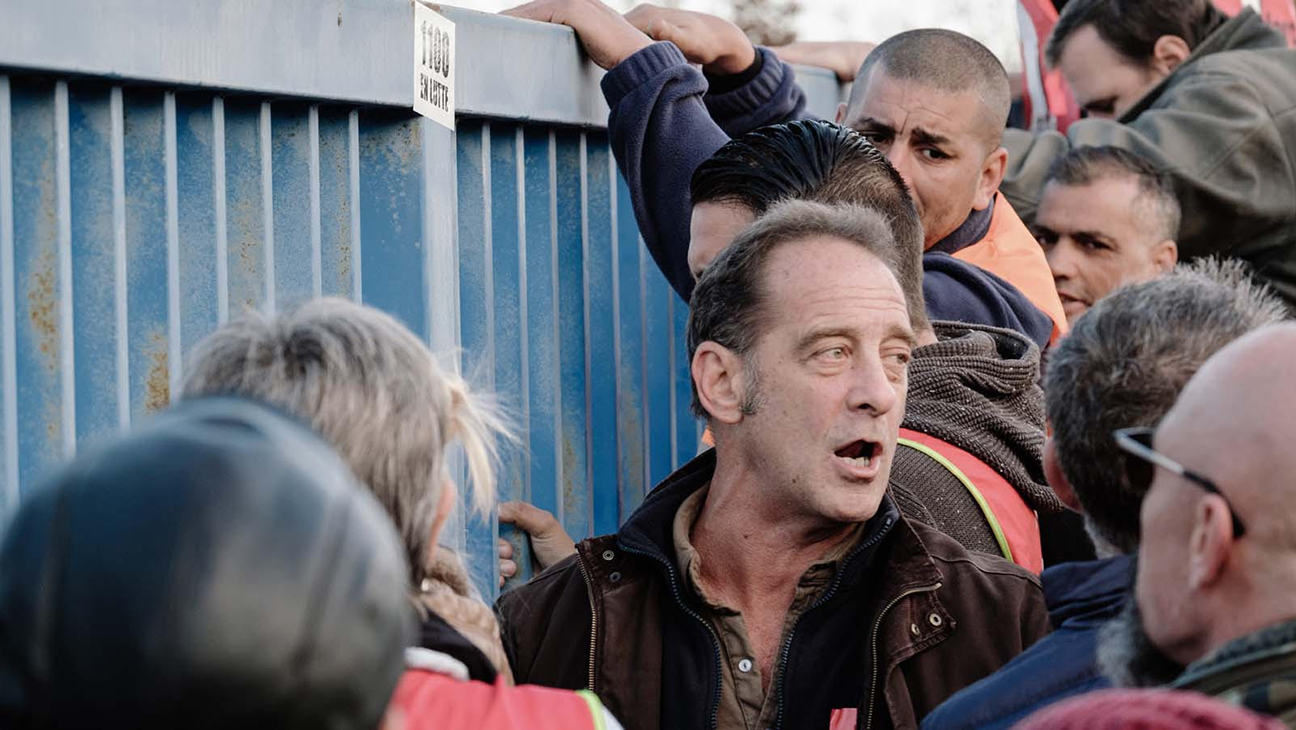
Director Stephane Brize and actor Vincent Lindon (‘The Measure of a Man’) team up again for this chronicle of a factory strike in the South of France.The workers of France unite, or at least they try to, in At War (En guerre), writer-director Stephane Brize’s proletarian cri de coeur about a long and arduous factory strike pitting the unions against the powers that be.
Very much in the same vein as 2015’s The Measure of a Man, and once again featuring Vincent Lindon in a potent lead performance, this docu-style drama is marked by several you-are-theretype scenes where the viewer is thrown into the action alongside the film’s weary protagonists, who are fighting for jobs that seem to be already lost. A tad long in spots, yet increasingly captivating as the pressure mounts, this Cannes competition entry should find a home in art houses throughout Europe, with scattered pickups overseas.
If Brize’s Man seemed to tread in the waters of the Dardennes, following one man’s long struggle to find employment in the French boondocks, this movie feels closer to Ken Loach or to early Paul Greengrass, depicting the plight of laborers with a gripping, handheld verve. In both cases, the films are anchored by Lindon’s intense and very physical turn, although in At War his character is a leader rather than a follower — yet it’s such a position that makes his predicament all the more trying.
As the pugnacious union spokesman of an auto parts manufacture in southwest France, Laurent Amedeo (Lindon) isn’t one to mince his words. When the film (written by Brize and Olivier Gorce) kicks off, he’s already leading the strike against his company, Perrin Industrie, which employs 1,100 workers and is on the verge of shutting down. Through a mix of news reports, meetings and protests, we learn that two years earlier, Perrin’s boss (Jacques Borderie) promised to keep the factory open in exchange for salary freezes, but has since reneged on that deal. With no other job prospects in the area, Laurent and the other employees have no choice but to try, by any means necessary, to prevent their only source of livelihood from going under.
The stage is thus set for a long and grueling fight between labor and management. It is indeed a war, per the film’s title, and one of attrition where both sides dig deep into the trenches and refuse to let go, wearing one another down with their tenaciousness. On the labor side, Laurent and his right-hand gal, Melanie (Melanie Rover, an actual worker like most of the cast), struggle to keep the strike going as their colleagues begin to lose faith, especially when the company offers them payouts in exchange for their cooperation. And on the management side, there are the French executives, who claim to have no control over the situation, as well as the big bosses over in Germany — including a CEO (Martin Hauser) who Laurent pursues like Michael Moore in Roger & Me, desperately trying to get a meeting so he can bargain with the man in person.
Brize takes his time to draw the battle lines during the film’s first half, which is punctuated by lengthy discussions where we enter into the social minutiae of the dispute. Compared to his earlier movies — including the excellent Guy de Maupassant adaptation from 2016, A Woman’s Life— he’s more interested here in workplace politics than in characterization, and we hardly learn much about Laurent except that he’s divorced and his daughter is expecting a child. The other workers, meanwhile, are only seen on site, their personalities revealed through protest.
But if At War tends to focus on the details of labor laws and negotiations during the first hour, it’s to make the string of victories and defeats (mostly the latter) suffered by Laurent and his team all the more intense. For every fight they win, they seems to lose much more, and the film’s most memorable sequences — such as one where the strikers invade management headquarters in Paris, and another where they are literally torn from the factory gates by riot police — reveal the physical and psychological costs of waging a conflict where the odds always seem to be stacked against you.
Lindon, who won Cannes’ top acting prize for Brize’s Man, is treading in the same waters here, although this time his character is much more vocal as he leads the charge against his employers. The actor compellingly plays a man forever pushing toward a single goal, and his fight is always shown to be a worthy one — even when his blind devotion to the cause makes him ignore the realities of those around him. Like Laurent, the movie itself tends to wear its politics on its rolled-up denim sleeves, and there is never a doubt that the workers are getting screwed so that the owners can reap higher profits.
Filming with long lenses in a handful of locations (the factory floor and various meeting rooms), DP Eric Dumont captures the action as if he were shooting events as they unfold in real time. Along with the supporting nonpro cast and all the news footage, this makes At War feel much closer to documentary than fiction — and the movie itself less like a workplace drama than the chronicle of a soldier in the heat of battle.
 The French singer brings her tour through the United States in April.
Charlotte Gainsbourg is on the road again. The Franco-British singer and actress will be on tour in the United States in April of this year. She will stop in Boston (April 7), Washington (April 8), Brooklyn (April 9), and San Francisco (April 15) and before heading to Coachella in Indio, California.
The star, who made her musical debut at the age of 12, will promote her latest album “Rest,” in which she recalls the death of her father, the famous Serge Gainsbourg, and her half-sister, Kate Barry. It was released in November 2017. The album is produced by the French DJ Sebastian Akchoté, alias “SebastiAn”, who has collaborated with Frank Ocean and Fall Out Boy. He also worked on Gainsbourg’s EP, “Take 2”, released in December.
 Pas De Merde