
The night of July 14, Saint-Germain-Prés, Paris , 1955 © Willy Ronis,

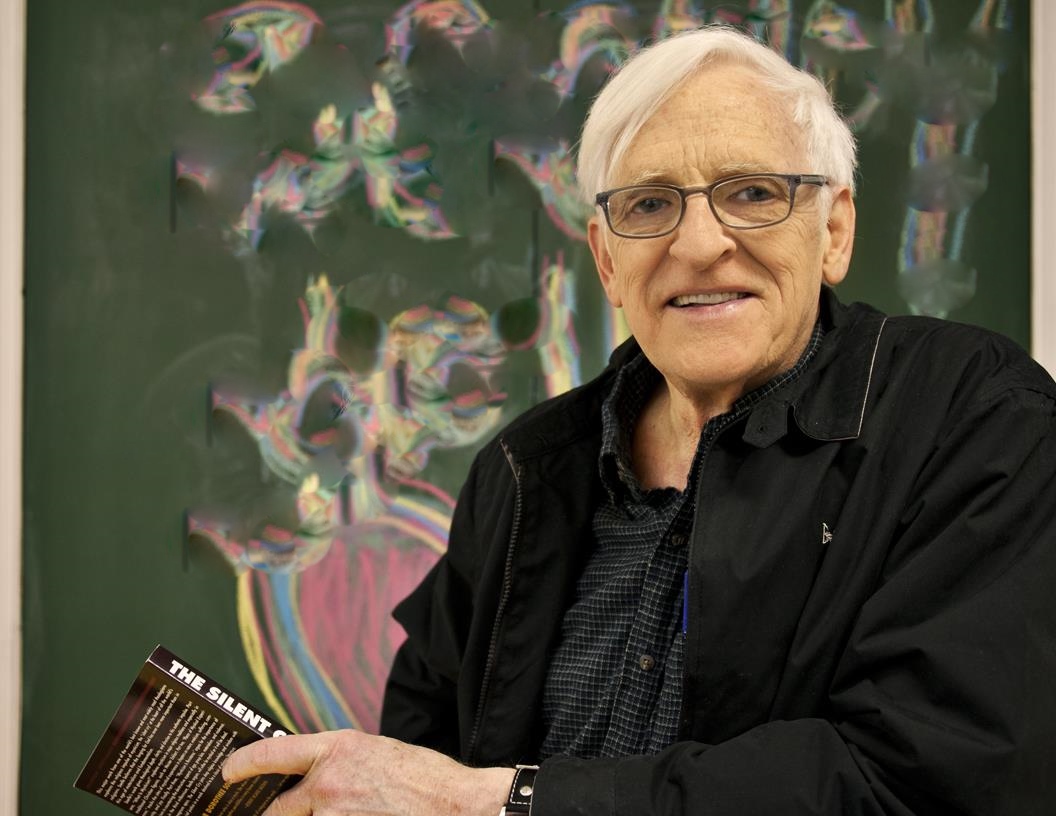
A conversation with Matthew Fox and Andrew Harvey
Interview of Matthew Fox by Andrew Harvey regarding the New Book Matthew Fox: Essential Writings on Creation Spirituality (Orbis, 2022) edited by Charles Burack.
Andrew Harvey: Hello. It is a very great joy for me to be here with you to celebrate the extraordinary book that has just come out, Matthew Fox: Essential Writings on Creation Spirituality, with an excellent introduction by Charles Burack, who oversaw the book. Matthew, this book is essentially a compendium of everything that you have devoted your life to. You have been, for me, not just a very great friend and not just a great mentor, but you’ve been in your vast fierceness, your unified burning life, someone who constantly enkindles me and irradiates me and so many others, with the flames of your blazing charity.
The publication of this book, my friends, is far more than just a new book and spiritual event, it is nothing less than the distillation of a lifetime’s passion for love and truth and justice. And it comes to us at a moment in our tragic and burning world when we need its clarity, its grounded joy, and its summons to sacred action on behalf of the whole glory of creation.
So thank you, Matt, so deeply from the bottom of my heart.
Matthew Fox: Thank you and congratulations on your new book, Love is Everything: A Year with Hadewijch of Antwerp, coming out just this very day, also a special moment.
Andrew Harvey: Hadewich invites us to listen to the great voices of the sacred feminine Christ which is returning.
Matthew Fox: Yes, and you are a perfect megaphone for that important shift in consciousness from the patriarchal version of the masculine to a balance of the healthy sacred feminine along with a healthy masculine, so this is a very special day and I might add that I was honored to write a very short Forward to that book as well, so I feel part of it.
Andrew Harvey: And what a wonderful way to begin, because one of the extraordinary contributions of your book is a new vision, both of the sacred feminine and the sacred masculine. This enables us to enter the sacred marriage of transcendence and Immanence that really does birth in us the fullness of who we can be and what the full vision of what the creation is.
One of the things you say, and it’s such an arresting and thrilling formulation, is that we need to reimagine the sacred marriage as a fusion of the Green Man and the Black Madonna and it came to me last night reading Hadewich how to reach and thank her for this extraordinary journey that I’ve been on. That the authentic sacred feminine is also a marriage of the green woman and the Black Madonna of Mary and Kali have someone totally in her being radiant with the freshness and vitality of what Hildegard of Bingen calls be viriditas or “greening power.” They align themselves with the fierce energy of compassion and the molten sacred energy for transformation of the world. So with your formulation you’ve changed the whole conversation.
But I want to begin by asking you. Where are we? This book is coming out in a terrifying moment for the whole human race.
Matthew Fox: That is true, of course, we are literally facing extinction, you know. People are acting up and acting out, and nations are doing so nations led by authoritarian leaders or authoritarian wannabe leaders and climate change, above all, is bearing down on us. Just this week, as you know, Europe set records everywhere for heat and, of course, where I live here in northern California, we’ve got the Yellowstone Park on fire like never before, and these wildfires are happening all around the world and hurricanes and floods that go with them and the droughts with all the implications for agriculture, so severe. And, of course, the melting of the glaciers and ice. Where will we be getting our water in the future? So this is truly a time to meditate on extinction, at the same time that we do what hope really is as defined by David Orr: “Hope is a verb with the sleeves rolled up.”
We have to go to work, and that includes an inner work which, as you alluded to earlier, includes the balance of the sacred masculine and feminine, but it includes a lot of things and includes a renewed commitment to justice and to carrying on the fight whether we’re talking racial justice or economic justice or gender justice or eco-justice–all these issues are on the table.
And, of course, all this is familiar to readers of Tikkun magazine because Tikkun itself stands for a healing of the of the world and that is the Jewish understanding of redemption–it’s not about some private salvation thing, where you get to heaven climbing on other people’s backs–it’s about the survival of the whole–of the Community, and today the Community is homo sapiens’ version of humanity.
Let us include in our vision of humanity all these striking dangers that face us, but at the same time, we want to embrace what our strong points are as a species. Yes, we’re discussing our shadow; that’s not a surprise—it appears in 90% of the headlines of our papers and on the Internet every day, but also let us welcome, for example, the Webb telescope–what a marvelous accomplishment as a species! What other species has done this, that we can bring back into our living rooms and our personal computers the first galaxy and the first stars from 13.8 billion years ago? From way back then the very universe is speaking to us. Just that alone is an amazing accomplishment of our intelligence and our curiosity and our willingness to pursue it.
Of course, it was created by people from, I think, over 30 countries and thousands of scientists have contributed to it, so it shows that the human community with a guided and shared purpose can accomplish an awful lot. So we have to meditate on the good things that our species has brought forth, including the courage and wisdom of Gandhi or Mandela or King or Dorothy Day or Sojourner Truth or Isaiah and Jesus, and the other prophets of the world including Black Elk. Our species is such a mixed bag. Here we have the Pope going to Canada to confess the sins of the Catholic Church and indigenous children ripped from their families and culture and put into white schools–a horrible, horrible story that is finally coming out. So we do have to pay attention to the suffering of the world and how are we going to contribute to healing it. And to survival if that’s still possible given climate change. If we don’t get honest about it and pull out of denial about what’s really facing us, we will go extinct.
I think that among things we have things going for us is the return of the feminine and the women’s movement has brought that forward and women scholarship for sure and like you say, the recovery of the great women mystics and mysticism itself, by men and women, is a real contribution to bringing forward to what has been a patriarchal era for thousands of years, bringing a balance back. Like Dorothy Soelle says, mysticism itself is the language for healthy religion and for feminism because it deconstructs the notion of simply a vertical relationship to an all-powerful divinity. So, our capacity for creativity cannot be underestimated–that’s why I don’t count our species out yet–we are capable of massive transformation, but it’s got to begin in the inside it’s got to begin with a revolution in values; and this, I think, is what mystics offer us and prophets the world over, and certainly Jesus was about that. So were the prophets who preceded him and those who have come after. So don’t cut our species out yet if we can see that the handwriting is on the wall if we still have time. Scientists are saying we have seven years. If we still have time, we can change our ways profoundly out of necessity–I do think nothing moves the human species like necessity, and the necessity is there, so that’s the kind of time we’re living in and I think we have to dig deep into our souls. Continue reading “Interview with Matthew Fox: Essential Writings on Creation Spirituality”

The majestic landscape of Provence takes center stage in Claude Berri’s two-film adaptation of an epic tale by Marcel Pagnol, a cinematic treasure that remains an abiding source of comfort for French viewers.
By Sue Harris
When Jean de Florette, the first part of Claude Berri’s magisterial two-film adaptation of Marcel Pagnol’s celebrated 1962 literary diptych, L’eau des collines, was released in theaters in August 1986—the second part, Manon of the Spring, would follow in November—it was the cinematic event of the year in France. The films ran during an exceptionally tough time for the French, who were on constant alert as they went about their daily lives because of a terrorist bombing campaign that had been targeting Paris and regional transportation networks since December 1985. One can only imagine what a relief it must have been to escape to a cinema for a few hours and be transported to 1920s rural France and a world imagined by one of the country’s most beloved and prolific chroniclers of Provençal life. Shot simultaneously on location in rural Provence over the last half of 1985, the two parts drew many millions of domestic spectators, capturing the top two box-office spots for 1986.
Jean de Florette and Manon of the Spring present Provence as a feast for the senses, a spectacular landscape of trees and mountains, dirt tracks and sun-bleached stone cottages. Our eyes, like those of Jean Cadoret, the first part’s protagonist, roam freely over the hills and valleys, soaring and sweeping, drinking in both the immensity of the land and its permanence. Tree branches intrude into our field of vision, framing the action and giving us a sense of being present with the characters in their secluded world, while natural sounds punctuate the tranquility of the countryside: cicadas and birds sing, bells peal from the village and from around the necks of grazing goats, water cascades from fountains, and mellifluous accents call out neighborly greetings. Both Jean and his daughter, Manon, play the harmonica—favoring a delicate leitmotif taken from Jean-Claude Petit’s Verdi-inspired orchestral score. The film music is alternately lyrical and soothing, plaintive and wistful, bestowing a sense of harmony with its simple orchestration, and Petit’s theme “La force du destin” (or “Jean de Florette”) gets at the heart of the pastoral sensibility of Berri’s films.
Jean is a city civil servant who inherits a remote bastide (farmhouse) from a relative. He moves his family to the countryside, full of optimism and plans for a modest life as a smallholder. Jean (Gérard Depardieu), whose head is full of science and statistics and modern farming methods, is indefatigable in his energy for his family’s adventure. His wife, Aimée (played by Élisabeth Depardieu, Gérard’s wife at the time), and their daughter, Manon (Ernestine Mazurowna), willingly assist in his endeavors no matter how arduous, plowing the land, tending the plants, fetching water in buckets from a distant well. Jean, who is hunchbacked, is watched constantly by Ugolin (Daniel Auteuil) and his uncle César “Le Papet” Soubeyran (Yves Montand), who covet the land for Ugolin’s flower business. César, the last of a long line of villagers, is a man obsessed with his family name and wealth, and he sees Jean as an interloper whose presence and projects thwart his own ambitions for his nephew. The two scheme, spying on Jean from behind trees and bushes; mocking him for his education, his attire, and his romantic ideals; and quickly turning the other villagers against the outsiders. By the time Jean and his family venture from their farm into the village itself, dressed in their best clothes and holding themselves with polite dignity, the hostility toward them is outright, and they are pelted with mud and chased out of town—the locals’ herd mentality and paranoid fear of strangers strike a very topical note for a twenty-first-century viewer.


Source: Jean de Florette and Manon of the Spring: Eternal Springs | Current | The Criterion Collection

‘Souleymane’s Story,’ Boris Lojkine’s timely drama which won two prizes at Cannes and four Cesar Awards, has been acquired by Kino Lorber for the U.S.
“Souleymane’s Story,” Boris Lojkine’s timely drama which took two prizes at Cannes’ Un Certain Regard and four Cesar Awards earlier this year, has been acquired by Kino Lorber for U.S. and English-speaking Canada distribution rights.
Bolstered by the debut performance of first-time actor Abou Sangare, “Souleymane’s Story” is a ticking-clock drama charting the journey of a Guinean immigrant working as a bicycle deliveryman in Paris in the days leading up to his asylum interview. Kino Lorber pointed the film draws inspiration from Cristian Mungiu’s “4 Months, 3 Weeks and 2 Days” and socially minded films by the Dardenne brothers.
Since world premiering at Cannes where it won the Jury Prize at Un Certain Regard and best actor for Abou Sangare, “Souleymane’s Story” became a major arthouse hit in France, selling approximately 500,000 admissions in French cinemas. The film also turned out to be one of the highlights of France’s awards season. On top of the four Cesar Awards, the film also won a Lumiere Award (France’s equivalent to the Golden Globes), as well as two European Film Awards.
Source: Kino Lorber Buys French Hit ‘Souleymane’s Story’ for North America
À l’occasion de son grand retour, Francis Cabrel nous a accordé un entretien exclusif, aux côtés de Mouloud Achour.
How to use YouTube’s auto-translate:

Reviewed by Roger Lewis | Saturday February 20 2016
One thing you can say about the British, we don’t have much patience with abstractions and causes. We are too practical. Virginia Woolf was a rarefied creature, God knows, but her last diary entry, before she walked into the River Ouse, was about what she and Leonard were going to have for tea — haddock and sausage meat.
Things are very different over on the Continent, where hard facts are shaken off for massive amounts of airy-fairyness — or what Sarah Bakewell, in her enjoyable and authoritative group biography of the existentialist movement — calls “a dangerous, irrationalist mysticism”. Eavesdrop on Simone de Beauvoir (1908-86) and Jean-Paul Sartre (1905-80), for example, in the cigarette smoke of a Montparnasse or Left Bank café, and should they have been talking about, say, coffee or cocktails, discussion might typically spiral away up into the clouds to be about the iniquities of international trade in beans or fruit, followed by a stream of elegant associations about colour and fragrance.
That’s to say, professional European philosophers like to go from the specific to the general, and then on to the arcane and the metaphysical. Sartre and de Beauvoir, for example, adored the student riots in Paris in 1968. The barricades “demanded nothing and everything”. What on earth is that supposed to mean? Another profound statement bandied about in this period was equally as vacuous, if such a thing is possible: “All consciousness is consciousness of something.” Perhaps you needed to be on drugs?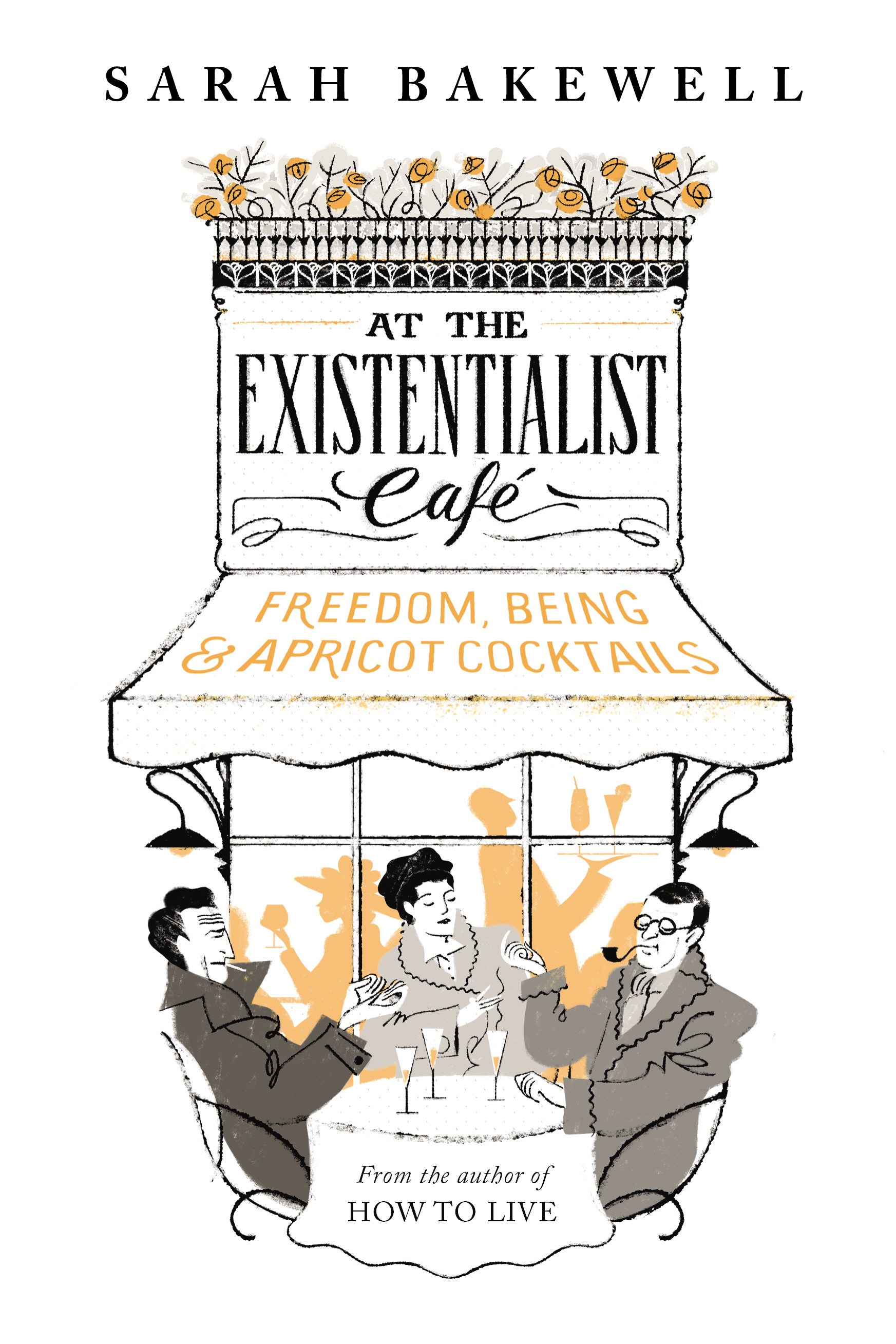
Bakewell came across these existentialists as a student in Essex. “They asked big questions about what it means to live an authentic, fully human life” — to which I would respond: what do you mean by big, what do you mean by a question, what do you mean by authentic, and what do you mean by full? Because to me, existentialism, “a philosophy of expectation, tiredness, apprehensiveness, excitement”, is incredibly adolescent and egotistical. In their Parisian cafés, Sartre and his colleagues thought it clever to pick quarrels, make difficulties, produce books that were “almost entirely unreadable”, and cleave to the notion that “for one who exists his existing is the supreme interest”.
Kierkegaard said that (does it lose something in translation? His name means “churchyard” by the way), and the existentialists also borrowed from “the anguished novelists of the 19th century” — by which I assume Bakewell specifically means the anguished, histrionic characters in 19th-century novels: Heathcliff, Raskolnikov, Alec D’Urberville.
Sounding off like mad, Sartre aped such figures and exuded an “air of intellectual energy and confidence”, says Bakewell, which made people overlook the fact he was a one-eyed midget who still lived with his doting mother. The “brilliance of his mind” got the girls into bed — and I do wonder if the point and purpose of being a French philosopher was a pretext for lots of sex. Bakewell almost implies as much: “Olga was married to Sartre’s former student Jacques-Laurent Bost, Sartre was sleeping with Bost’s sister Wanda, and de Beauvoir had retired to conduct a long, secret affair with Bost.” Bakewell describes Sartre as “a sex addict who didn’t even enjoy sex”.
“People overlooked the fact that Sartre was a one-eyed midget living with his mother
When she got wind of this, needless to say, Iris Murdoch, who in 1953 wrote the first full-length book on Sartre, was on the cross-Channel ferry at the double, keen to experience “free love with bisexual abandon” with which to pad out her novels. Despite all the sexual abandon they were not a harmonious band: “Sartre fell out with Albert Camus, Camus fell out with Merleau-Ponty, Merleau-Ponty fell out with Sartre, and the Hungarian intellectual Arthur Koestler fell out with everyone and punched Camus in the street.”
There was also a sinister and political dimension to existentialism. Issues of “what it meant to be free” struck a chord after the Nazi occupation, when, as Bakewell says, “many had good reason to forget the recent past and its moral compromises and horrors”.
If people had been cowards and collaborators — so what? “You choose who you will be,” said the existentialists. A man has every right to “constantly invent his own path”. It is interesting how antisocial this stance is, and as a fine upstanding example of such a citizen, Sartre fell head-over-heels for Jean Genet, a thief, vagrant and male prostitute. “Freedom alone can account for a person in his totality,” wrote Sartre in his 700-page encomium, Saint Genet, which attempted to justify and ennoble criminality.
Sartre also thought that “to see things fully . . . to gain freedom” his philosophy should encompass drugs, though when he took mescaline he had nightmare visions of snakes, fish, toads, vultures and beetles. For months he thought he was being followed down the street by a lobster. Maybe it was only Murdoch in an orange coat?
If existentialism appealed to the craven, the philosophy of “new beginnings” also made sense to Nazi sympathisers, when they were reinventing Germany after the First World War. Martin Heidegger, author of the influential Being and Time (1927), who in April 1933, as the rector of Freiburg University, sacked colleagues whom the regime identified as Jews, said that people must combat “the disappearing powers of authentic humanity” and rise above “a narrow-minded attachment to possessions and familiar scenes” by devoting themselves instead to the overpowering destiny of the Fatherland.
Violence was simply going to be a way of “being decisive and resolute, in carrying through the demands history was making upon Germany”. Heidegger lived until 1976, unapologetic and claiming to have been misunderstood. However, as Bakewell says, what his work boiled down to was “a call to Nazi obedience”. Serves him right if he is remembered today chiefly as a rhyme in a Monty Python song about “Heidegger, Heidegger, was a boozy beggar . . .”
Sartre, in his turn, fell for communism, believing that it was a creed for “the alienated, downtrodden, thwarted and excluded”. Anything that was against bourgeois privilege, he was for — though Sartre was pretty bourgeois himself, his late father being an officer in the navy. Indeed, you feel with these characters that, for all their pontificating, what they are fighting against are their personal middle-class backgrounds, the decorum and respectability. De Beauvoir, for instance, in The Second Sex (1949), was full of complaints about “the limits of her existence”. Neither she nor Sartre believed in marriage, “with its strict gender roles, its hushed-up infidelities and its dedication to the accumulation of property and children”. I myself have been married for 34 years and little of this has yet come my way.
Existentialism didn’t catch on in England, except briefly in 1956 with the publication of Colin Wilson’s The Outsider about the alienated strangers in literature. As Bakewell says: “It helped that Wilson himself was a publicist’s dream. Not yet twenty-five years old, he looked gorgeous, with abundant hair falling over one brow, a firm jaw, pouting lips and a chunky existentialist turtleneck.”
We have regarded it as an undergraduate fad that is to be swiftly grown out of. If we see life as futile, we’ll have a good laugh about it. If we are told we are held down by constraints — well, tradition, manners, taste, decorum, old habits may well be bourgeois niceties but they do count for something and they help hold back the chaos. The existentialist (actually surrealist) notion that “anxiety is the dizziness of freedom”: keep that for your Left Bank pretentiousness, where the golden rule, as I see it, was that no one knew quite what they were talking about.
Source: At the Existentialist Café: Freedom, Being and Apricot Cocktails by Sarah Bakewell
 Pas De Merde