How to Taste Wine Like a Pro in Three Easy Steps 

Just taking a sip is not the right way to taste wine. Fortunately, learning the process to taste wine doesn’t take too long.

1. Appearance

First, you hold your glass by the stem, not up around the top as you can often see in movies and TV series about wine. Look at everything: the appearance of the wine, which must be brilliant and clear; the color, whose depth, intensity and nuances give information about the grape variety or varieties, and its evolution which indicates the possible age of the wine. For example, for a red wine with an earthy red color, you would call it “brick,” which indicates that you are dealing with a rather old wine. The same goes for a white the color of old gold.

2. Smell

The next step is to bring out the aromas, rotate the glass a little. Professionals do it with their arms in the air, but a neophyte risks spilling and staining their clothes. Let your arms rest on the table and create a circular movement that will “shake” the wine and allow it to release aromas.

Using your nose, you can perceive any defects: the smell of cork or sometimes something musty, toasted. This is probably what is called reduction, as opposed to oxidation. This is a sign that the wine needs air; a decanter should help free it. The aromas must be clear and expressive. They could be primary and reminiscent of fresh fruit, with hints of vanilla, characteristic of barrel aging, or more or less evolved, attesting to a long stay in the cellar.

3. Flavor

Finally, it is in the mouth that you get a definitive idea of the wine by perceiving, through feedback, the heaviest aromas, and by tasting the flavors. The acidity, sweetness and bitterness (which attest to, among other things, the presence of tannins) constitute the body of the wine. What you’re looking for is an attractive harmony, an equilibrium, and above all, the answer to the only question that is worth asking: do I like this wine?

This article was first published on Le Point

Source: How to Taste Wine Like a Pro in Three Easy Steps – Frenchly

France in focus – The other D-Day: 1944 Provence landings

This week, France in Focus heads to the southern port city of Toulon, which is home to the French Navy’s main base. It was here on August 15, 1944, that the Allied invasion of southern France began. We take a closer look at just what happened and explore the various efforts being made today, 75 years later, to ensure the memory of those events lives on.

Source: France in focus – The other D-Day: 1944 Provence landings

France’s Netflix Rival Salto Will Launch in 2020 

All those French shows you wish you could stream could now be available on a new French streaming service, Salto.

Today, French regulators gave the go ahead to three of the country’s major broadcasters to start a joint online video streaming service, Salto, which is expected to launch in early 2020.

France Televisions (a public company) and M6 Groupe and TF1 Groupe (two private companies) are partnering for the venture.

Billed as a French alternative to Netflix, the service will feature French content from a variety of broadcasters and studios as well as some live channels. France Televisions owns France 2, France 3, France 4, France 5 and France Ô, M6 Groupe owns M6, W9, and 6ter, and TF1 Groupe owns TF1, TMC, TFX, TF1 and LCI. To avoid creating a streaming monopoly for the channels, the streaming site’s three broadcasting backers agreed to limit the use of their own content on the site to 40 percent of the offerings available.

In a press release announcing the verdict, Salto stated that the three companies are “combining their forces and proposing an ambitious, local response to the new expectations of the public, all while further reinforcing their active participation in French and European culture.”

Hollywood Reporter noted that’s Salto’s budget would be about $56 million for the first year.

The announcement of the French streaming service came in June 2018, but it only became a reality when regulators gave the go-ahead on August 12. France’s national competition regulator, Autorité de la concurrence, specified in a press release that the trio of broadcasters will have to submit to a series of agreements that will reduce the risk of “coordination” between the broadcasters to acquire the rights to French programs. The three parent companies also won’t be able to cross-promote the platform and their channels.

France isn’t the first country to start its own streaming service. In the U.K., the two largest broadcasters, ITV and the BBC, are launching BritBox, which offers the “best of British” TV and movies. Once given regulatory approval, BritBox will go live, likely this year.

While BritBox is available in North America, it has not yet been announced if Salto will be available Stateside.

Source: France’s Netflix Rival Salto Will Launch in 2020 – Frenchly

The end to a French cheese tradition?

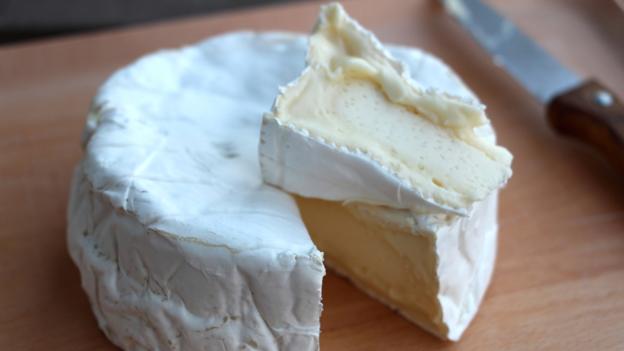
Camembert

After years of lobbying, industrial producers are now allowed to make camembert with pasteurised milk. As a result, one of France’s beloved cheeses may be disappearing – for good.

In the heart of Normandy’s Pays d’Auge region, about an hour’s drive inland from the D-Day beaches on France’s northern coast, lies the 200-person village of Camembert, surrounded by white-and-brown cows grazing in lush green pastures.

It is here that, according to legend, a woman named Marie Harel sheltered a priest who, like many following the French Revolution, was given a choice: swear allegiance to the new Republic or die at the guillotine. The refractory priest elected to flee, escaping to England through Normandy, and encountering Harel along the way. To thank her for her hospitality, the priest ostensibly shared the recipe for brie, a cheese from the region around Paris, which Harel made using local Normande milk and the moulds for washed-rind Livarot, thus inventing a new cheese that, as tradition dictated, she named after the village where she made it: camembert.

While the validity of the legend is impossible to confirm, culinary anthropologist Georges Carantino maintains that it is rooted in fact.

“In any case, it evokes that there was indeed a transmission of the techniques from an area like Brie, where this type of cheese is very old, to [Pays d’Auge], where it is a much more recent addition to the landscape.”

No matter how the technique arrived, the Normandy region that had previously produced only washed-rind cheeses like Livarot or Pont l’Evêque suddenly began making bloomy-rinded cheese like brie in the 18th Century, and camembert has been inextricable from Camembert ever since.

Of course, it would be unfair to say that camembert is merely brie made in Normandy. While the cheeses are made with the same Penicillium camemberti spore and thus boast a similar downy white mould, flavour-wise, camembert exists somewhere between the milder, buttery Brie de Meaux and the rich, meaty Brie de Melun. This can be attributed, at least in part, to the fact that while Brie de Meaux is made primarily with rennet fermentation and Brie de Melun with lactic fermentation, camembert is made with a bit of both – a process facilitated by the rich, raw milk of local Normande cows with which camembert should always be made, at least in the mind of a true turophile.

The result is a cheese that is rich, mushroomy and complex in flavour – and unfortunately, it may be disappearing from the nation’s culinary landscape for good.

Camembert, like many cheeses, is protected by the Institut National de l’Origine et de la Qualité (INAO), a unique French organisation that strictly governs the manufacture of 46 cheeses (and 300 wines) via the French Appellation d’Origine Contrôlée (AOC) and equivalent European Appellation d’Origine Protégée (AOP) labels. This institution aims to protect terroir, the French notion that a product is inextricably linked to the place where it is made, from traditional manufacturing processes down to unique microorganisms in the air.

But the governing of camembert has long been more complex than most. In the 19th Century, thanks to the creation of the small wooden box in which the cheese is still sold today and the simultaneous rise of train transport, camembert became quite easy to stack and ship. As a result, it was soon enjoyed by people from all over France. Since this rise in popularity predated AOP cheese regulations by several decades, camembert fans from Anjou to the Pyrenees began making their own versions, inexorably divorcing camembert from its Norman terroir.

Today, the word camembert refers not to a specific cheese, but rather to a cheese type made the world over – in fact, it was a Quebecois camembert that was dubbed the best in the category worldwide at this year’s World Championship Cheese Contest in the US state of Wisconsin – a snub that French magazine VSD called ‘stinging’ and ‘shameful’.

Despite the loss of the word, locals did finally earn AOC status for the traditional cheese in 1983, when the INAO developed an official charter, not for ‘camembert’ but for the phrase ‘Camembert de Normandie’. The cheese, it was decided, would be obligatorily made in Normandy, with the raw milk of pastured herds of cows ‘in a process of genetic evolution’ towards the Normande breed (a rule that was modified to specify that, at first, 25%, and then, in 2017, 50% of the herd be made up of Normande cattle).

By this point, however, even Normandy camembert no longer belonged to the small, artisanal producers that had once handmade this cheese throughout the region, ladling it into moulds in five distinct layers, as tradition dictates. Industrial giants such as Lactalis had set up shop and wanted their product to sport the AOP label. The caveat? They wanted to use pasteurised milk. Continue reading “The end to a French cheese tradition?”

Noise Day. The indestructible Jain has shaken the gardens of Palud

She gave everything for her last concert in France. The French artist had the festival-goers sit, jump and sing, chaining his acid pop-electro tracks. The public is conquered.

She arrived alone on the big stage of the Festival of Noise. But the French singer knows how to occupy the space. Dressed in her usual blue jumpsuit, Jain stamps, runs and leaps, bringing the festival-goers into her folly.

“I want to see everyone jumper! “ Repeated the artist, tireless. The public moves and she asks for more. Everyone sits and hands in the air, she proposes to dance like a zombie and launches a competition of “ola”. Jain has fun, in communion with his audience.

His titles, all too rhythmic, are linked: Souldier , Oh Man , Alright , or the mythical Come , on the guitar, on which she does not forget to extend the microphone to some festival-goers well placed (or not) in the first ranks . The singer announces, she wants to turn the gardens into a “giant nightclub. “

After an hour and a quarter of show, she concludes on Makeba , with emotion. After four years of touring, this is the last concert of the electro-pop artist in France, who will continue performances in Japan.

She thanks “the best of the public” , completely under her spell.

“It’s a discovery and we are amazed by all its energy! “ Wonder Nicole and Laurent.

“I had already seen it in concert and today it was even better! She’s sending ! “ Exclaims Patricia. She especially appreciated the exchange with the festival-goers. “We get caught up in the game.”

Jain? It was simply Jain-ial.

Source: Noise Day. The indestructible Jain has shaken the gardens of Palud