
This stunning Loire Valley cabernet franc will set you back just $20
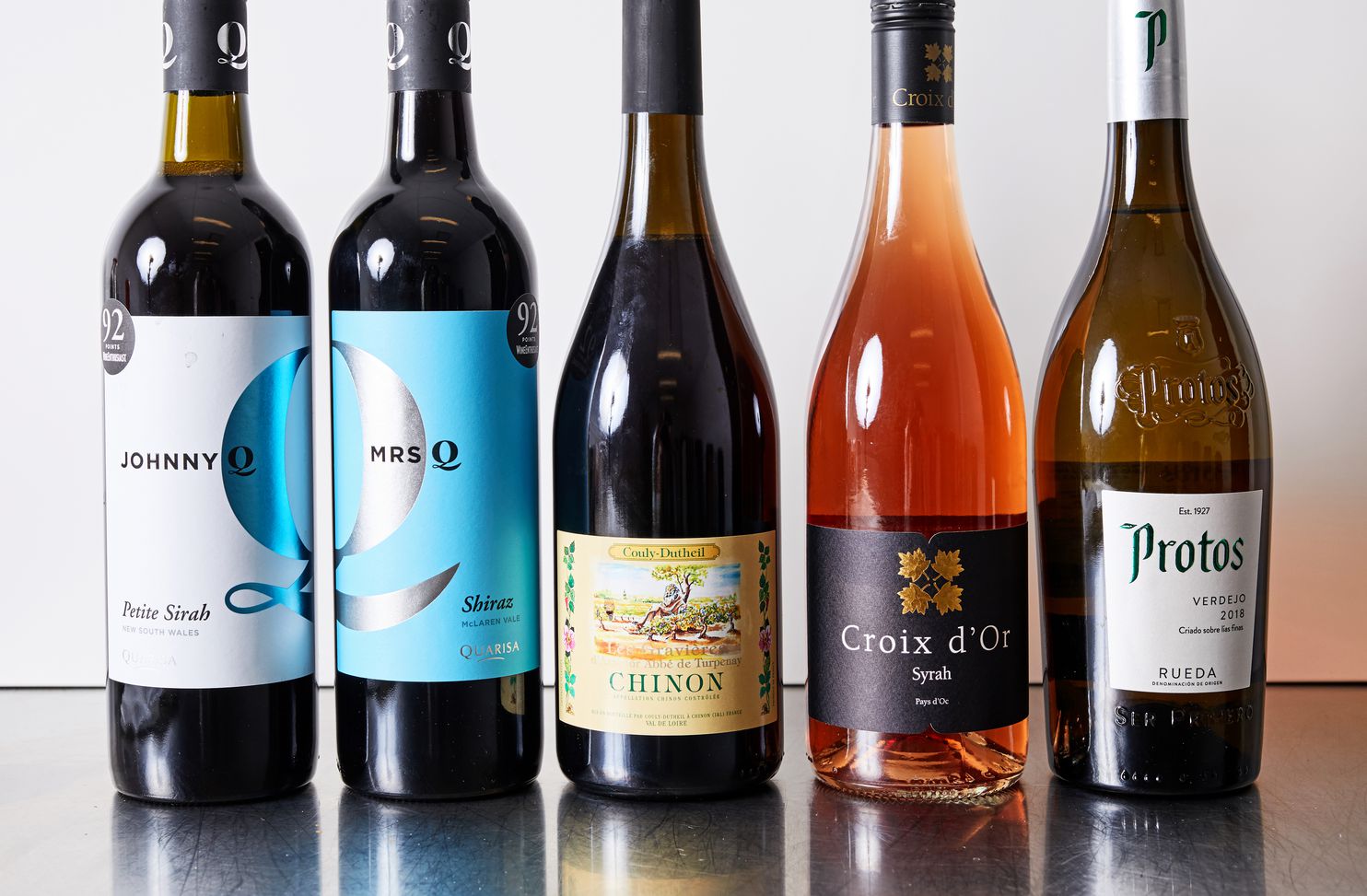
RECOMMENDED | Plus, two Australian reds, a French rosé and a Spanish white to sip and savor.
The Loire Valley in France produces some delicious red wines from cabernet franc grapes. Here’s a terrific example from Couly-Dutheil, along with two wines from Australia, a tasty French rosé and a rich Spanish white.
GREAT VALUE
Couly-Dutheil Les Gravieres d’Amador Abbé de Turpenay Chinon 2017
Loire Valley, France, $20
Wow — tobacco smoke, white pepper and old leather accent the dark cherry flavors. There’s energy here and a lot going on to carry though a meal. Alcohol by volume: 12.5 percent.
Imported and distributed by Elite: Available in the District at Eye Street Cellars, Paul’s of Chevy Chase, Rodman’s, Whole Foods Market (Foggy Bottom, H Street, P Street, Tenleytown). Available in Maryland at Mills Fine Wine and Spirits in Annapolis, Wells Discount Liquors in Baltimore, Wine Bin in Ellicott City. Available in Virginia at the Bottle Stop in Occoquan, Market Street Wineshop in Charlottesville, Whole Foods Market (Arlington, Richmond, Tysons). [ . . . ]
Continue at WASHINGTON POST: This stunning Loire Valley cabernet franc will set you back just $20 – The Washington Post
Artist ‘Humiliated’ After His Nude Sculpture Was Covered With Underwear for Paris Event
 .
.
The United Nations’ cultural agency has been criticized for covering up the genitalia of a series of nude sculptures with underwear.
Works by French sculptor Stéphane Simon, which show nude, classical-style figures taking selfies, were being displayed in Paris during UNESCO’s European Heritage Days event in September.
But officials decided to cover the offending parts of the artworks with underwear, to the shock of Simon and the ridicule of arts commentators.
Source: Artist ‘Humiliated’ After His Nude Sculpture Was Covered With Underwear for Paris Event | KTLA
Group to follow: the spellbinding folk-rock in chiaroscuro by Noir Audio
Noir Audio, Toulouse’s burgeoning quartet distilling an intoxicating dream music between indie rock and folk.
[GOOGLE TRANSLATION] Formed by Alice Blazutti (vocals, guitar), Louisa Bénâtre (drums), Bettina Bordes (bass) and Anthony Hérigny (guitar), all four very active in the music scene in Toulouse for several years, Noir Audio started on the pulse Alice Blazutti and Louisa Bénâtre. The original songwriter and composer of the band first gave voice, guitar and even ukulele in This Silly Thing , a country-folk-oriented project, while the latter sang and played various instruments in Alone With Everybody. , pop-folk duo led with his brother Camille.
” Alice and I met in 2016-2017 , says Louisa Bénâtre, who is the spokesperson for the group. We started to make music in duo and then we wanted to expand the training and build a real band-guitar-bass-drums configuration to give a more rock tone to the project. We tried with several people before arriving at the current line-up of Noir Audio, with Bettina on bass and Anthony on guitar. ”
A promising first record
In August 2017, the first untitled recording of Noir Audio is online. Although presented as an EP, it contains ten pieces in a minimalist folk-rock vein, all being signed by Alice Blazutti and interpreted mainly by her. Bearer of promises despite a little tight, this (broad) introductory EP is thus more like a solo disc serving as a business card for the group in gestation and basic work for the future. Hangs in particular the Ear Sleepless Nights, Useless Fights , captivating ballad, both dragging and scathing, illustrated by a nice clip in the lynchian atmosphere.
Stabilized for a few months in its current configuration, Noir Audio has just released its first EP . Entitled Sentimental Girl , he comes out on cassette and digital at Lunadélia Records, a young Toulouse label whose catalog includes Laure Briard and Thomas Pradier.
The energy of the live
” We recorded the EP last July at Food, a small Toulouse studio ridden by a friend of ours, Thomas Juvé , said Louisa Benâtre. Thomas made the sound for the first concert we gave with Noir Audio – in the band’s current band – and we loved what he did. He immediately understood the spirit of our music. Therefore, recording with him seemed obvious to us. We recorded live because we really wanted to transcribe the energy of the live, to transmit the adrenaline of its own. ”
In fact, the four songs included in the EP reveal a real cohesion and a beautiful group dynamic, conveying a musical universe already very strong. ” Now, we work more collectively for the composition of music, starting from small themes that we all develop together, ” said Louisa Benâtre.
Superb dreamlike cavalcade in chiaroscuro, terribly addictive from the first listening, the title track is not only the longest (almost five minutes) but also the most memorable EP. But it should not overshadow the other three: Play a Little More With You , alert and catchy, Never Coming Back, half-jolly half-disenchanted, and When You’re Asleepmelodious and nervous. Very seductive and impeccably highlighted by the production, the whole floats with great elegance and presence between indie rock and folk, slight country inflections appearing here and there. Among his major influences, the group quotes Big Thief, Courtney Barnett and Patsy Cline – but we also think, for example, Molly Burch and Throwing Muses.
Having just made a tour to promote the EP, developing its repertoire, Black Audio is becoming stronger and stronger. New songs are currently being created, an album should arrive sooner or later. The future looks pretty good.
Source: Group to follow: the spellbinding folk-rock in chiaroscuro by Noir Audio – Les Inrocks
What Is Impressionism In Music?

Impressionism in art is fairly easy to describe: thin brush strokes, obscured edges, the play of light. Impressionism in music is harder to articulate.
Impressionism in art is fairly easy to describe: thin brush strokes, obscured edges, the play of light.
Impressionism in music is harder to articulate. Composer Claude Debussy translated visual ambiguity to music by unrooting time. There are no hard edges. The music is dreamy. It’s often hard to find the beat.
The Impressionist composers — Claude Debussy and Maurice Ravel in particular, but also Erik Satie and Gabriel Faure — took their inspiration from many of the same places that Impressionist painters did: nature. Debussy was particularly inspired by water.
Symbolist poets of the day also influenced Impressionist composers. Paul Verlaine’s “Clair de Lune” and Stéphane Mallarmé’s “Prelude to the Afternoon of a Faun” were beautiful, but obscure, as is Debussy’s music based on these poems.
And finally, Impressionist composers paid attention to how music vibrated in the body. You’ll hear the lowest notes on the piano played in conjunction with the highest notes. Feeling the music was almost as important as hearing it. LISTEN HERE
Source: What Is Impressionism In Music? | Colorado Public Radio
How Red Wine is Made
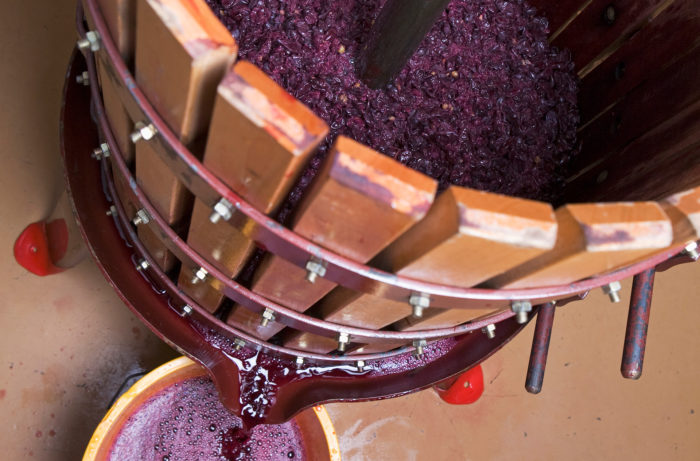
Wineries make red wine today much the same way they did 6,000 years ago in Greece and Persia. Dark-colored grapes are harvested, crushed, fermented, stirred and separated from the skins by a press. Voila! Red wine.
Better containers, presses and cellars have increased quality and efficiency of red wine production many times over, but it’s still essentially a simple process. Red wine production requires no cooking or ingredients besides grapes, yeast and, usually, sulfur dioxide as a preservative.
Red wine is made on the skins
Red wine is made like white wine, but with one major difference. Generally, it ferments with the grape skins and juice combined in a tank or vat. White wines are pressed before fermentation, separating the juice from the skins.
The skin contact in red wine production allows color, flavor and textural compounds to be integrated into the juice, while the yeast converts sugar to alcohol. The skins contain most of the good stuff that gives red wine its color, while the pulp mostly provides the juice.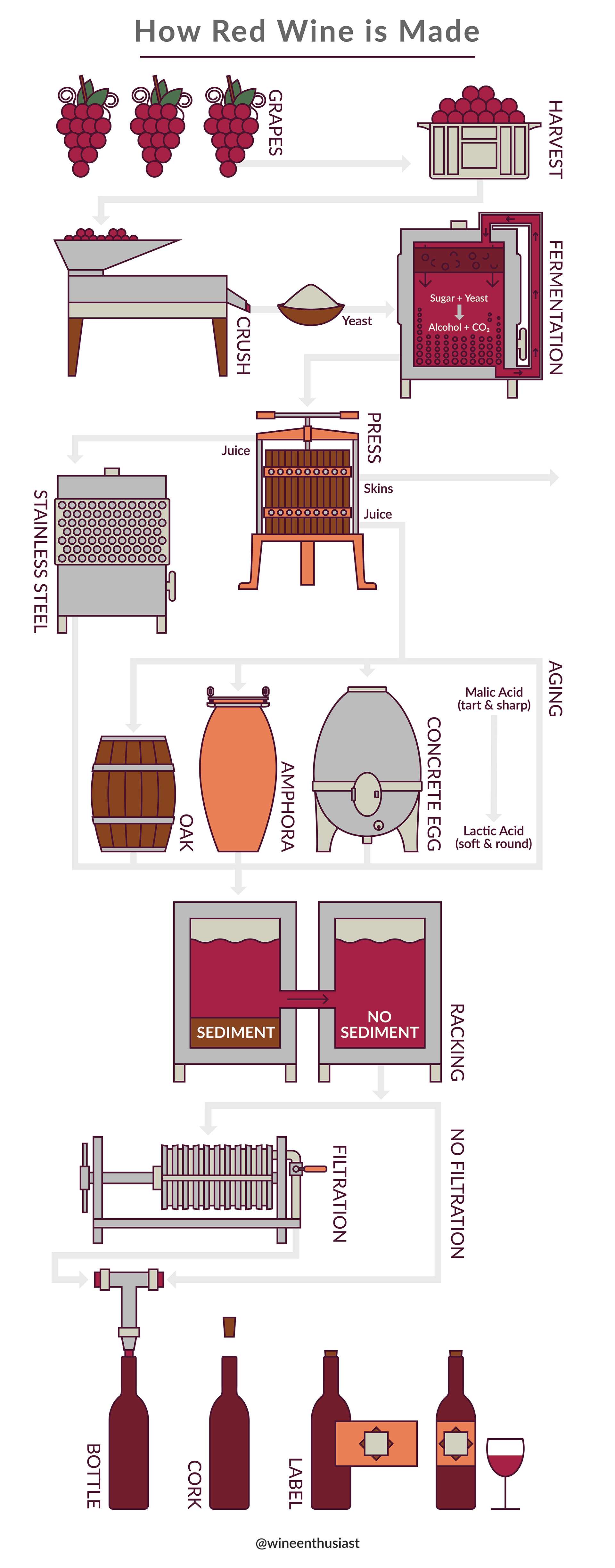
Harvesting red-wine grapes and the crush
Red wine grapes are ready to harvest in late summer to early fall, several weeks after the initial green color of the grapes has turned to dark red or blue-black, a period called veraison.
Vineyard crews cut the grape bunches or clusters from the vines. That’s either done by hand or a self-propelled machine that shakes or slaps the grapes off their stems and collects the individual berries and juice.
Delivered to the winery, winemakers can also sort out mildewed grapes, unwanted raisins, leaves and debris. Clusters then go through a destemmer/crusher that removes the whole grape berries from the stems and may squeeze them slightly to get the juice flowing. Any juice created at these stages prior to pressing is known as free run. Machine-harvested grapes are already ready to ferment. Continue reading “How Red Wine is Made “
 Pas De Merde