

The Paris traffic jam was caused by the consecutive transport strikes that have been happening for the past three weeks to protest a governmental pension overhaul.
Cooking the French classics in Mallorca
I actually believe that coq au vin is the ultimate in classic comfort food.
As we head into the middle of December and the colder nights start to draw in, I think it’s a good excuse to cook some illustrious dishes that have become true French classics.
Esteemed, time-honoured recipes that have stood the test time and that are still as relevant today as they ever were. Classics like Tournados Rossini, Cassoulet, Boeuf Bourguignon or a simple coq au vin. I actually believe that coq au vin is the ultimate in classic comfort food. It’s a fairly quick and easy chicken recipe to cook at home for all the family. It embodies the true spirit of French cuisine – a delicious rustic dish that gathers everyone around the table to enjoy hearty food and a good glass of red wine. The classic version of the dish calls for red wine, specifically Burgundy, but different areas of France have their own versions; for example, coq au vin jaune (Jura), coq au Riesling (Alsace), and coq au Champagne.
While the recipe is simple, there are a few tricks that can take your coq au vin to the next level. Marinating the chicken in the wine overnight helps to impregnate the meat with more flavour. Choose a wine that you would be happy to drink—you can use a cheap one, but better, richer-flavoured wines will add more to the finished dish.
Traditionally, this recipe was made with older roosters that had outstayed their welcome on the farm and needed long, slow cooking to become even remotely edible but my recipe calls for a an organic or free-range chicken, hopefully corn-fed and full of flavour. Should you prefer a richer, more powerful sauce, drain it through a colander and, on a high heat, boil the sauce until it has reduced by one third. It should have acquired more body and become a rich, deeper colour. Then pour the sauce back over the chicken and vegetables.
Coq au vin continues to inspire respect and delight gourmets but braising a chicken at low temperatures can never be done in a hurry. Cooking temperatures should be just high enough to kill micro organisms, yet not so high that the meat toughens. So take your time and be patient. In a world where instant gratification is sought and often encouraged, lingering over a saucepan in a warm kitchen, as you gently add a few more vegetables or aromatic herbs has its benefits. You will also be richly rewarded with tender, succulent chicken, deep flavours and some amazing aromas that are guaranteed to restore good humour on a dark day.
Coq Au Vin
INGREDIENTS
Serves 4
· A large organic or free-range chicken, jointed into 8-10 pieces
· 150g pancetta or un-smoked bacon, diced
· 30g butter
· 1 tbsp tomato puree
· 2 medium onions, finely chopped Continue reading “Cooking the French classics in Mallorca”
NPR: Paris is at a standstill
Paris has been brought to a near standstill by a wave of strikes and protest marches aimed at the French government’s plans to restructure the nation’s retirement system.
LULU GARCIA-NAVARRO, HOST:
In Paris, life has ground to a halt. A general strike there is in its 11th day. And there are daily protests, too. Unions are upset about Emmanuel Macron’s changes to the country’s retirement system. And they are threatening to continue striking through Christmas. Here’s NPR’s Eleanor Beardsley.
ELEANOR BEARDSLEY, BYLINE: It’s not the protests that are the problem. If you’re not on the march route, they don’t really affect you. But the transport strike is killing everyone. [ Listen below ]
Louise Jallu Quartet “Sur” at Café De la Danse
French new wave star Anna Karina dies aged 79
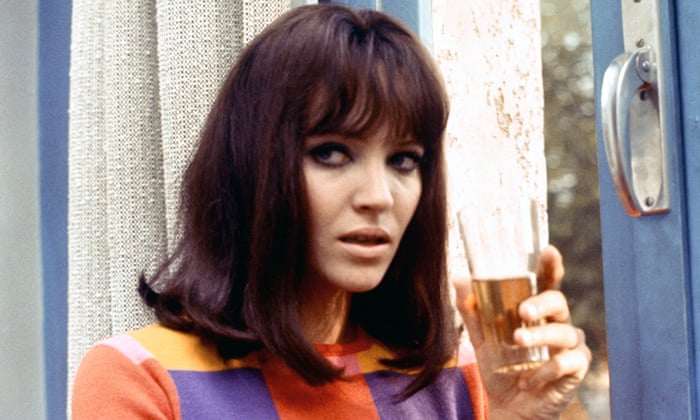
Karina was best known for the string of films she made with Jean-Luc Godard, including A Woman Is a Woman and Pierrot le Fou
Danish-French actor Anna Karina, star of Bande à Part and Pierrot le Fou and collaborator with New Wave director Jean-Luc Godard, has died of cancer at the age of 79, her agent said.
Karina, who epitomised 1960s chic with her elfin features and big kohl-rimmed blue eyes, starred in seven films made by her ex-husband Godard, including Alphaville.
“Anna died yesterday in a Paris hospital of the effects of cancer,” her agent Laurent Balandras told AFP, adding that she passed away in the company of her fourth husband, American director Dennis Berry.
“Today, French cinema has been orphaned. It has lost one of its legends,” culture minister Franck Riester tweeted.
Karina was still a teenager when she hitchhiked to Paris from her native Denmark to try to become an actress. She developed a successful modelling career before being spotted by Godard while walking along the Champs-Elysees. Godard offered her a nude scene in Breathless, his first film, but she refused.
They were a couple when, at barely 21, she won best actress at the Berlin film festival for his 1961 film A Woman is a Woman. They divorced in 1965. “We loved each other a lot,” Karina told AFP in an interview in Paris in March 2018. “But it was complicated to live with him,” she added.
“He was someone who could say to you, ‘I am going to get some cigarettes’ and come back three weeks later.”
She later went behind the camera to make Vivre Ensemble, a romance between a history teacher and a free spirited young woman that ends in drugs and domestic violence.
Karina also had some success as a singer, recording Sous Le Soleil Exactement with Serge Gainsbourg.
Source: French new wave star Anna Karina dies aged 79 | Film | The Guardian
L ‘Épée: “Last picture Show” live for Quotidien – Quotidien with Yann Barthès
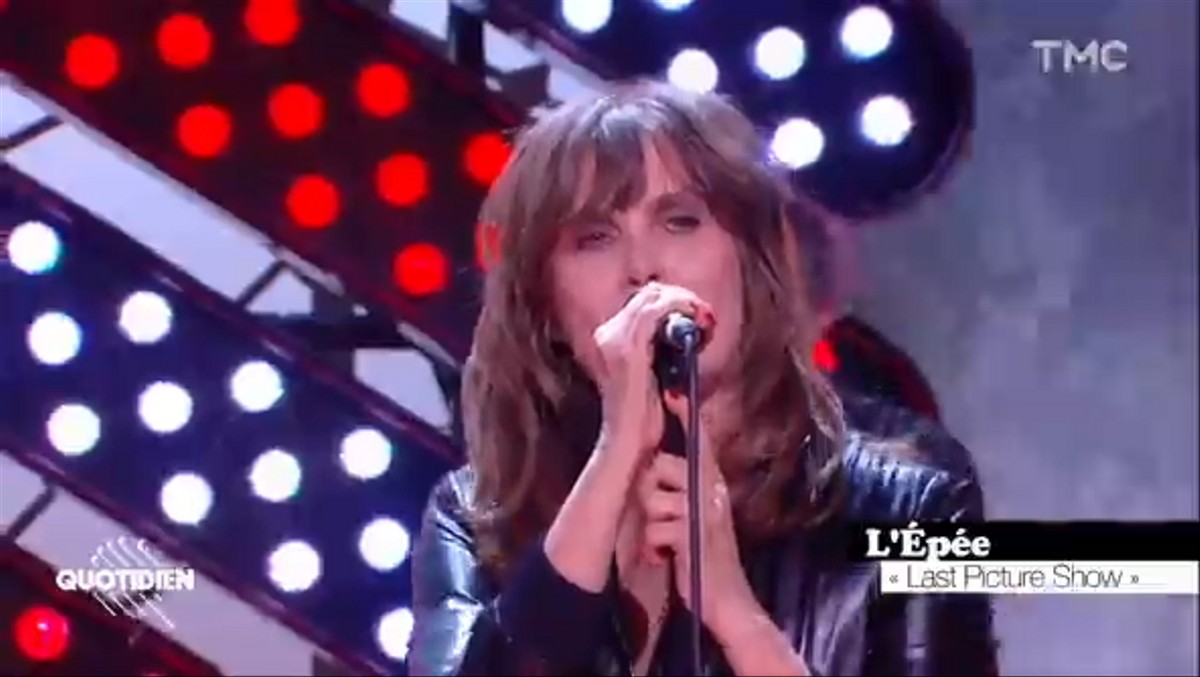
Vintage psychedelic rock 2019 has a name: The Sword. Meeting of the French of The Liminanas, the American Anton Newcombe and the actress Emmanuelle Seigner. They are all on the Daily stage performing “Last Picture Show”.
Watch the music performance video at : L ‘Épée: “Last picture Show” live for Quotidien – Quotidien with Yann Barthès | TMC
 Pas De Merde