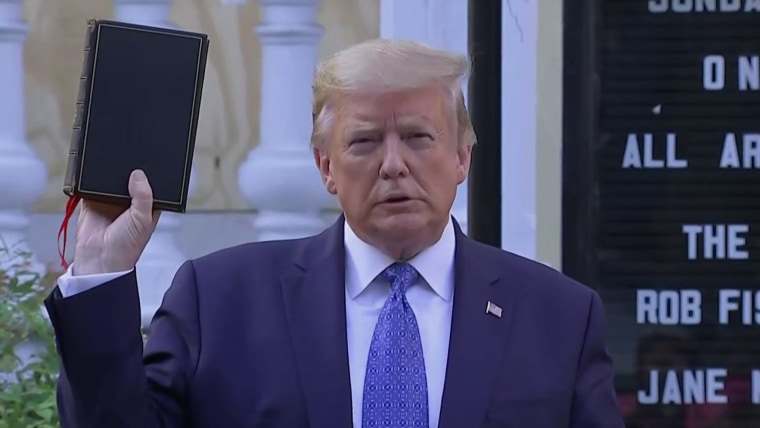
The Malignant Cruelty of Donald Trump

Peter Wehner
Contributing writer at The Atlantic and senior fellow at EPPC

The president is defaming the memory of a woman who died nearly 20 years ago—and inflicting pain upon her family today.

“I’m asking you to intervene in this instance because the President of the United States has taken something that does not belong to him—the memory of my dead wife—and perverted it for perceived political gain.”

There may be a more damning thing that’s been said about an American president, but none immediately comes to mind.

Continue reading “The Malignant Cruelty of Donald Trump”

The Psychopath in Chief

I spent hundreds of hours with Donald Trump to ghost-write ‘The Art of the Deal.’ I now see a deeper meaning behind his behavior.

By: Tony Schwartz

“Imagine — if you can — not having a conscience, none at all, no feelings of guilt or remorse no matter what you do, no limiting sense of concern for the well-being of strangers, friends, or even family members. Imagine no struggles with shame, not a single one in your whole life, no matter what kind of selfish, lazy, harmful, or immoral action you had taken … You can do anything at all, and still your strange advantage over the majority of people, who are kept in line by their consciences, will most likely remain undiscovered. How will you live your life? What will you do with your huge and secret advantage?”

— Martha Stout, The Sociopath Next Door

Among the accomplishments Donald Trump parades most proudly is that he has won 18 golf club championships. Like so many of his claims, this one is pure fiction. When the sportswriter Rick Reilly investigated for his book Commander in Cheat: How Golf Explains Trump, he found that 16 of the claims were transparently false, and no evidence existed to support the other two. In one instance, Trump said he had won a championship at the Bedminster, New Jersey, club he owns, even though he was in Philadelphia on the day the event was held.

When Trump does play, Reilly reported, he takes “mulligans” (extra strokes that aren’t counted in one’s score ), throws opponent’s balls off the greens and into the bunkers, and kicks his own errant shots back onto the fairway so often that one of his caddies nicknamed him Pele, after the soccer star. “Trump doesn’t just cheat at golf,” Reilly concluded. “He cheats like a three-card Monty dealer. He throws it, boots it and moves it. He lies about his lies. He fudges and foozles and fluffs.”

How do we deal with a person whose core impulse in every part of his life is to deny, deceive, deflect, disparage, and double-down every time he is challenged? And what precisely is the danger such a person poses if he also happens to be the leader of the free world, during a crisis in which thousands of people are dying every day, with no letup in sight?

The first answer is that we must understand exactly who we’re dealing with, and we have not, because what motivates Trump’s behavior is so far from our own inner experience that it leaves us feeling forever flummoxed.

The trait that most distinguishes psychopaths is the utter absence of conscience — the capacity to lie, cheat, steal, and inflict pain to achieve their ends without a scintilla of guilt or shame, as Trump so demonstrably does.

In July 2016, shortly before Trump became the Republican nominee for president, I was interviewed by Jane Mayer for an article in The New Yorker that was eventually titled “Donald Trump’s Ghostwriter Tells All.” Mayer described my experience with Trump over the 18 months it took me to write The Art of the Deal. During that time, I spent hundreds of hours with him.

Continue reading “The Psychopath in Chief”

The 16 French proverbs to drop into any conversation

La fête passée, adieu le saint

From howling with the wolves to spotting grey cats – sooner or later in French conversation proverbs will rear their head. Here French language coach Llyane Stanfield introduces some of the most common.

French proverbs are usually recognised primarily by their form: they are short, quick, and most importantly, they have rhythm, like a free-form poem.

Their feel is musical, which makes them easy to remember and they are full of lexicons and cliché, built into the language as phrases or jingles. Most proverbs have a long history but they are far from being ruins and frequently pop up in everyday conversation.

Here are some of the most popular proverbs that live to this day in French.

Après la pluie, le beau temps – after the rain, the good weather.  In other words the cheering sentiment that happy times usually follows a period of misfortune.

La fête passée, adieu le saint – the festival ends and goodbye to the saint. The timely reminder that we quickly forget to whom we owe a happy moment.

Chacun voit midi à sa porte – everyone sees noon at his door. You’re basically saying that each person may have a different perspective on something, so it’s a handy one to wheel out if you’re desperately trying not to get bogged down in a controversial topic.

You will notice that quite  a few French proverbs involve animals. Here is a few examples of commonly used ones.

Wolves are frequently the bad guys in French proverbs

Quand on parle du loup on en voit la queue – speak of the wolf and you’ll see his tail. This means that when you’re talking about someone (usually speaking ill), that person suddenly shows up and is similar to the English phrase ‘speak of the devil’.

Les loups ne se mangent pas entre eux – wolves don’t eat each other. The evil people sympathise and support each other, again this one has a devil equivalent in English – the devil takes care of his own.

Il faut hurler avec les loups – we must howl with the wolves. Finally a wolf saying in which wolves are not the bad guys – this simply means that you must adapt to the customs of the people you hang out with.

Petit à petit l’oiseau fait son nid – little by little the bird makes its nest.  Alternatively, we must have patience and perseverance if we want to get results.

La nuit tous les chats sont gris – all cats are grey in the night. In certain circumstances, everything looks the same. It basically means that in a complicated situation, it is difficult to judge so is handy if you want to express a non-committal opinion on Benjamin Griveaux or any other French sex scandal.

But there are plenty of more general proverbs on the subject of relationships and human behaviour.

Too much kissing is bad for your productivity, who knew?

Qui trop embrasse mal étreint – He who kisses too much is badly hugged. Not specific to kissing, this means that a person who undertakes too many things at the same time ends up succeeding at nothing.

Il ne faut jamais dire ‘Fontaine, je ne boirai jamais de ton eau’ – Never say ‘fountain, I will never drink your water’ or more generally we can’t say we’ll never need someone’s help.

Il faut laver son linge sale en famille – dirty linen should be washed in the family, very similar to the English phrase about not washing dirty laundry in public, it means that domestic issues should not be dealt with in public.

Ce que femme veut, Dieu le veut – what woman wants, God wants. Slightly sexist perhaps, it means that it is hard to resist women’s desires.

Prudence est mère de sûreté  Care is the mother of safety, so we must act cautiously even when we feel confident.

La parole est d’argent, le silence est d’or – speech is silver, silence is golden. Another familiar sentiment in English – silence is safer than words.

Les murs ont des oreilles – the walls have ears. Familiar from spy movies, the phrase means you have to talk quietly because someone may always hear what you say.

Il vaut mieux parler à Dieu qu’à ses saints – it’s better to talk to God than his saints, or for more secular times it is best to talk directly to the most important person.

Source: The Local