Sen. Sheldon Whitehouse schools the nation on “dark money” and the Supreme Court

Sen. Sheldon Whitehouse, D-R.I., did not pose any questions to Judge Amy Coney Barrett. Using poster board displays, Whitehouse argued that Barrett’s nomination reflects a pattern by conservative special interest groups of using “dark money” to influence who sits on the court. It’s the second day of the Senate Judiciary Committee’s Supreme Court confirmation hearing. The Oct. 13 hearing comes three weeks before Election Day. The second of four days of scheduled testimony gave senators an opportunity to ask Barrett about her record and approach to the law.

Carla Bruni’s Self-Titled Album is about Comfort, not Confinement 

“Music is even more important now that we’re going through hard times, [but] I’m optimistic.”

“We have to look for love, it’s the least we can do/There’s nothing else in the world, that’s true,” sings model-turned-musician Carla Bruni, on the song, “Un grand amour.” This sentiment (though it sounds better in the original French) about sums up the M.O. behind Bruni’s new self-titled album, released October 9: Bruni is looking for old-school romance, and she’s not letting anyone (or any global pandemic) get in her way.

Carla Bruni was started at the end of 2019, but the recording took place in a whirlwind week in June, after France’s confinement lifted. Bruni wrote most of the album while quarantined in the South of France with her husband, former French president Nicolas Sarkozy, and their children. It’s her first album of original songs since 2013’s Little French Songs, which contained popular singles like “Chez Keith et Anita” and “Mon Raymond.” 2017 brought French Touch, an album of covers that ranged from standards like “Moon River” to more surprising cuts, like AC/DC’s “Highway to Hell,” and ABBA’s “The Winner Takes It All.”

Bruni was born in Italy, to a concert pianist and a classical composer. He sister, actress and movie director Valeria Bruni Tedeschi, is also musical, and sang with Bruni on her recent song “Voglio l’amore.” Bruni grew up in France from the age of 7, and started working as a model in Paris at 19. She became one of the first people to be dubbed a “supermodel,” working for fashion houses like Dior, Chanel, Givenchy, and Yves Saint-Laurent. She quit modeling in her late 20s to pursue a career in music, with her debut album, Quelqu’un m’a dit (2002), becoming a surprise hit.

Bruni cemented her role as a French icon in 2008, when she married then-president of France, Nicolas Sarkozy. Though occasionally and unpredictably political, Bruni’s public presence went the way of most First Ladies’: towards charity work. But she never stopped making music.

“I hope when people listen they feel cuddly and on holiday,” Bruni said of the new album. “I hope they feel warm. Music is even more important now that we’re going through hard times, [but] I’m optimistic.” Continue reading “Carla Bruni’s Self-Titled Album is about Comfort, not Confinement “

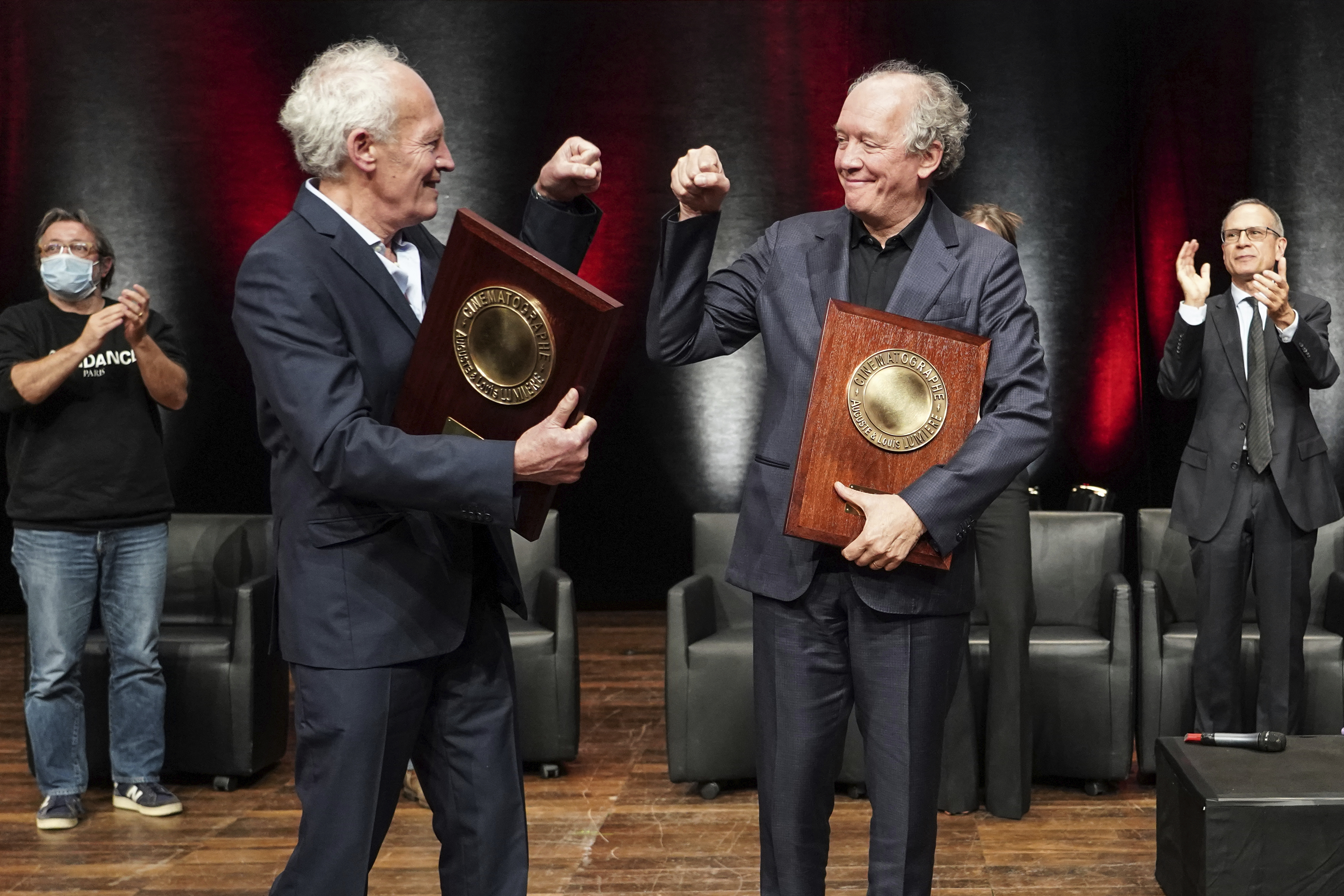
Jean-Luc and Pierre Dardenne: A Portrait of 2020’s Lumiere Awardees

When Jean-Luc and Pierre Dardenne gained the Palme d’Or for “Rosetta” in 1999 — upending such hotly fancied contenders as Pedro Almodovar’s “All About My Mom” — it wasn’t precisely an out-of-nowhere arrival. The Belgian brothers have been already of their mid-forties, having begun their profession in documentary filmmaking 20 years earlier than, and had already loved a fiction breakthrough with 1996’s award-winning “La Promesse.”

However it felt like an invigorating new wave all the identical. Towards the tip of a decade marked by auteurist flash and swagger, the empathetic, unvarnished realism of their working-class survival story gave world cinema a clean-scrubbed human face: intent on making audiences focus extra on the lives being introduced than the administrators’ fashion of presentation.

In a career-making efficiency, the 18-year-old Emelie Dequenne performed a teen struggling to help herself and her alcoholic mom with fleeting, fragile jobs: Although by the way a damning examine of Belgian labour legislation and social welfare, the movie was no political screed. With the sort of grainy on a regular basis element that solely comes by way of acute human curiosity and statement — all the way down to its wince-inducing depiction of interval ache amid poverty — the brothers plainly distinguished themselves from the filmmakers to whom they drew instant crucial comparisons, together with Ken Loach and Robert Bresson. Continue reading “Jean-Luc and Pierre Dardenne: A Portrait of 2020’s Lumiere Awardees”

In conversation: A French and American take on Emily in Paris

Emily in Paris is everywhere: causing people to rage on social media, making us dream of booking tix to Paris again (someday!) and paused on TV screens, as people WhatsApp their friends to moan about how unrealistic Emily’s (Lily Collins’) stratospheric social media success is – who gets 200 new followers after posting a photo of baked goods? – and then swooning over how gorgeous Frenchie Lucas Bravo (Emily’s neighbour, Gabriel), is.

Critics – in the US, UK and France – have complained that it’s clichéd, ridiculous, lacks diversity and is deeply culturally offensive. However, it’s also totally addictive, even if people are hate-watching it, with a viewership that includes teens, their parents, and every Sex and the City fan who was excited about the premise of sex – and Pat Field styling – in another city.

For those who haven’t seen it, Emily in Paris centres around Chicagoan Emily, who gets sent to Paris to work for a top French marketing agency when her boss falls pregnant. Clueless about the language and culture, she makes a series of faux pas that sees her branded a plouc (a hick) and ringarde (basic). But Paris is soooo beautiful and Emily’s boss, Sylvie (Philippine Leroy-Beaulieu) and friend, Camille (Camille Razat), are soooo stylish, and the men are soooo dreamy…

One reason that Emily’s got everyone talking is that it touches on the big cultural divide between France and America. Who better to discuss the show then a Frenchwoman (CW founder Eleonore Dresch) and an American, kids’ editor, Jennifer Barton.
Continue reading “In conversation: A French and American take on Emily in Paris”

Les confidences de Francis Cabrel : “Appartenir aux autres m’embarrasse toujours”


By Yannick Delneste | Google translation

Four years after “In extremis”, the artist released a new album “At the coming dawn”. 13 new songs combining gravity and irony, impeccable ballads and blues-folk. Meeting in Astaffort, on its Lot-et-Garonnaises lands.

The rooms and the courtyard of the former Astaffort school, today the stronghold of the Voix du Sud association that it created, are deserted on October 5. Francis Cabrel came down from his house not far from the village of Lot-et-Garonnais. Before the Parisian promo, first confidences from his biotope on his last baby, “At the coming dawn” which will be released on Friday, October 16.

Francis Cabrel. My meeting with Claude Sicre . He gave me several books on troubadours, “medieval rockstars”. I first said thank you for the nice phrase and read, started working on an entire album on the theme. After five songs, I was no longer moving forward so I gave up the idea of ​​a “Troubadours Project”. There are four left on the disc.

Continue atSource: Les confidences de Francis Cabrel : “Appartenir aux autres m’embarrasse toujours” – Sud Ouest.fr

Thomas Chaline’s “Cabrel: Une Vie En Chansons”

Cabrel book

Thomas Chaline has just published a unique book on Francis Cabrel. His bet? Tell the man through his songs. He tells us about his admiration for the Astaffort artist.

“Me, I feel like I told everything inside my songs. They just had to listen!” A phrase launched by Francis Cabrel to Michel Drucker in 1983 which marked Thomas Chaline, guitarist, music fan and author of several books on French singers. In “Cabrel, a life in songs”, it is the texts of the author from Lot-et-Garonnais that he goes through with a fine comb, to better pierce … the man.

Why write about Francis Cabrel? 

Thomas Chaline: 

“It’s simple, he’s been my idol since adolescence. When I had all the problems in the world like any self-respecting teenager, his reassuring face soothed me. The first time I heard one of his songs, it blew me away. I knew I would write about him one day or another, as a personal tribute. ”

You mention in the foreword of the book the work of investigating song by song: is it more complicated with a personality like Cabrel?

“It’s the same approach in all my books, but this time I knew the artist’s work very well, I only had the pieces of the puzzle to put together, by interviewing his relatives, like Philippe Sella and others. But it is true that he is a mysterious personality. ”

How did Francis Cabrel react?

“He didn’t want to get involved but was curious to see how I was going to get out of it. He even confided to relatives that he had forgotten some stories!”

You have, it seems to me, met, can you tell us about this episode?

“It was completely by chance, one summer in Hossegor in 1998. We talked about music, he’s really a guitar lover. He was everything I imagined about him. He was on vacation, he would have completely could tell me to go and show myself, but he didn’t… ”

Have you come here, to its Astaffort lands?

“I’ve been to his village before, yes, and when you see him, you understand everything. You understand how he lives, and why he releases an album every five years.”

You talk about his attachment to his roots …

“Yes, it’s something very important to him, he always assumed that” redneck “side, portrayed in some shows like” Guignols de l’Info “. In fact, he doesn’t care. J he likes that he is not in the seraglio, in show business and that he has always kept his values. He has never had to fit into the mold, to be round back. ”

The man does not confide much in the media but says everything in his songs?

“He brings up many personal themes, and often takes a stand, you really have to take the time to pay attention to his words. As a guitarist, that’s what interested me, to see what triggers the desire to to write.”

You also talk about the influences of Francis Cabrel, especially blues and American folk.

“Yes, that’s a point in common that we have, he admires artists like Jackson Browne or Bob Dylan. We also have other points in common, we were both born at the end of November and we have a strong link with Vietnam , country of her adopted daughter and one of my grandmothers. ”

Will you come to Agen or Astaffort to present your work “Cabrel, a life in songs”?

“I would have liked a lot, but the Covid-19 crisis is depriving me of it, it’s very annoying!”

“Cabrel, a life in songs”, by Thomas Chaline published by Hugo Publishing. Released September 24

Source: Small survey on the songs of Francis Cabrel – petitbleu.fr