
White House pushes back on Pope Leo’s statement that immigrants are subject to ‘inhuman treatment’ in the US

It’s not the first time the bishop of Rome has criticized the Trump administration’s immigration policies.
By Irie Sentner
The Trump administration has again found itself tussling with a pope.
Press secretary Karoline Leavitt on Wednesday pushed back on Pope Leo XIV’s suggestion Tuesday that people who support the “inhuman treatment of immigrants in the United States” may not be “pro life.”
“Someone who says I’m against abortion but is in favor of the death penalty is not really pro-life,” added the American-born pope. The pontiff’s comments came in response to reporters’ questions about the Chicago Archdiocese’s plan to give a lifetime achievement award to Sen. Dick Durbin, a Democrat who supports abortion rights and represents Leo’s home state of Illinois.
Leavitt said she “would reject there was inhumane treatment of illegal immigrants in the United States under this administration,” then criticized former President Joe Biden’s immigration policies and highlighted some of the violent crimes committed by undocumented immigrants.
“This administration is trying to enforce our nation’s laws in the most humane way possible, and we are upholding the law,” she said during Wednesday’s press briefing. “We are doing that on behalf of the people of our country who live here.”
The press secretary — who is devoutly Catholic and regularly prays with her staff before her press briefings — did not mention the pope.
It’s not the first time the White House — which has displayed its religious, and specifically Christian and Catholic, fervor via policy — has disagreed with the Vatican. Earlier this year, Vice President JD Vance, another staunch Catholic, sparred with the late Pope Francis over the administration’s hardline immigration policies.
A spokesperson for Vance declined to comment on Leo’s remarks.
President Donald Trump in his second term has sought to deliver on the massive border crackdown he promised on the campaign trail, dispatching federal immigration agents to conduct massive and highly publicized raids across the country. The White House posted an ASMR video of detainees in chains, and on Valentine’s Day posted the message: “Roses are red, violets are blue, come here illegally, and we’ll deport you.”
During the briefing, Vance pushed back on Democrats’ demand to renew expiring health insurance subsidies in order to fund the government, claiming that immigrants are responsible for longer wait times in emergency rooms.
“Very often someone in the emergency room waiting is an illegal alien, very often it’s a person who can’t speak English,” he said. “Why do those people get health care benefits at hospitals paid for by American citizens?”
Showgirls: Before Taylor Swift, there was Mistinguett
In this edition of Entre Nous, we take a look at Taylor Swift’s new album “The Life of a Showgirl” and how, long before her stardom, it was French showgirls who stole the show. We also find out if, indeed, Swift is a showgirl or not.
Pope Leo signs first exhortation, ‘Dilexi te,’ focused on love for the poor
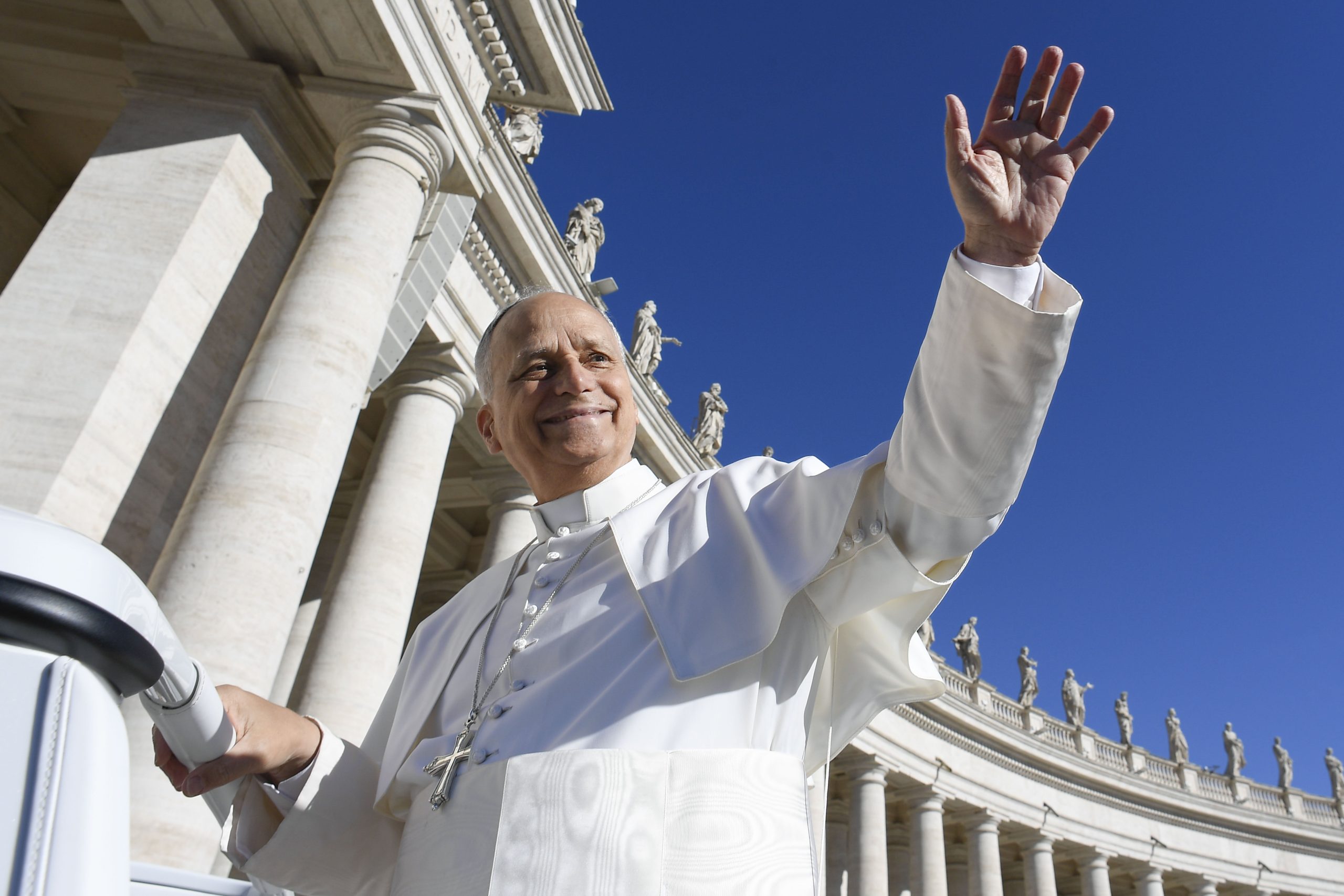
The document, which will be issued Oct. 9, can be seen as a companion document to “Dilexit nos,” the fourth and final encyclical issued by Pope Francis.
By Gerard ‘Connell
Pope Leo XIV this morning, Oct. 4, signed his first major document, an apostolic exhortation called “Dilexi te” (“I have loved you”), which will focus on love for the poor. The Vatican said it will be published next Thursday, Oct. 9, and emphasized that Leo signed it on the feast of St. Francis of Assisi, whose embrace of poverty is well known.
The title of the exhortation comes from Revelation 3:9, the last book of the bible. It can be seen as a companion document to “Dilexit nos” (“He loved us”), the fourth and final encyclical issued by Pope Francis on “the human and divine love of the heart of Jesus Christ,” published on Oct. 24, 2024. While that encyclical called believers to focus on the love of Jesus, this new document, begun under Francis and completed by Leo, emphasizes the call to believers to love the poor as Jesus did.
It is hardly surprising that Pope Leo should devote his first major document to the poor. Since his ordination in 1982 he has spent almost half of his priestly life, some 20 years, working as a missionary among the poor in Peru. Moreover, the fact that an early draft of the exhortation had been prepared during the last part of Francis’ pontificate, opened the path for Leo to complete it. Pope Francis also completed a document begun by his predecessor, Benedict XVI: “Lumen Fidei” was published on June 29, 2013.
Leo’s exhortation is expected to show his continuity with Francis in relation to the poor and the reality of poverty in today’s world. The first Jesuit pope had time and again emphasized that “the poor are at the heart of the Gospel,” and he showed not just in words but in multiple concrete ways his love for the poor, including ensuring that people in need were present at his funeral.
Leo, his Augustinian successor, has built on that original draft to produce his first apostolic exhortation. The document is about 40 pages (some 20,000 words) and is rooted in what scripture and church teaching say about the poor, and highlights the need for justice in today’s world.
Already, during his first five months as pope, Leo has spoken frequently about the poor, poverty in the world, and the impact of war and climate change in many countries across the globe. In his interview with Elise Ann Allen, senior correspondent for Crux, for her biography of him, for example, Leo significantly emphasized that “the continuously wider gap between the income levels of the working class and the money that the wealthiest receive” is contributing to the polarization in today’s world. He cited the fact that “C.E.O.s that 60 years ago might have been making four to six times more than what the workers are receiving, the last figure I saw, it’s 600 times more than what average workers are receiving. Yesterday the news [said] that Elon Musk is going to be the first trillionaire in the world. What does that mean and what’s that about? If that is the only thing that has value anymore, then we’re in big trouble.”
Pope Leo believes the church offers a different approach to inequality, as he explained in his homily to Caritas workers during Mass in Albano on Aug. 17, when he said: “I encourage you not to distinguish between those who assist and those who are assisted, between those who seem to give and those who seem to receive, between those who appear poor and those who feel they are offering their time, skills, and help. We are the church of the Lord, a church of the poor, all precious, all subjects, each bearer of a singular Word of God. Everyone is a gift to others.”
At the Jubilee audience this morning, Oct. 4, the American missionary pope again returned to the theme of poverty when he commented on the Gospel (Lk 16:13–14) that speaks about the challenge of serving God rather than wealth. He noted that some listeners mocked Jesus’ teaching on poverty because “his discourse on poverty seemed absurd to them. More precisely, they felt personally affected because of their attachment to money.”
He recalled how St. Francis of Assisi, a follower of Jesus, embraced evangelical poverty even at the cost of breaking with his family but, he said, St. Clare’s decision was “even more striking; a young woman who wanted to be like Francis, who wanted to live, as a woman, free like those brothers.”
He described Clare as “a courageous and countercultural young woman,” who lived in a city that considered itself Christian but whose radical embrace of the Gospel appeared revolutionary. “Then, as today, one must choose! Clare chose, and this gives us great hope,” he said.
He concluded, “Let us pray to be a church that does not serve money or itself, but the Kingdom of God and his justice. A church that, like Saint Clare, has the courage to inhabit the city in a different way.” In this Jubilee Year, he said, “we must choose whom we will serve: justice or injustice, God or money.”
The Vatican said Pope Leo’s exhortation will be presented at a press conference on the morning of Oct. 9 by Cardinals Michael Czerny, prefect of the Dicastery for the Service of Integral Human Development, and Konrad Krajewski, the papal almoner. They will be assisted by Frédéric-Marie Le Méhauté, the provincial of the Friars Minor for France and Belgium, who will join the conversation by video call, and by Sr. Clémence, of the Little Sisters of Jesus, from the Tre Fontane community in Rome
Source: Pope Leo signs first exhortation, ‘Dilexi te,’ focused on love for the poor – America Magazine
Marion Cotillard’s favorite films
Born on this date: Brigitte Bardot, September 28, 1934, in Paris, France.
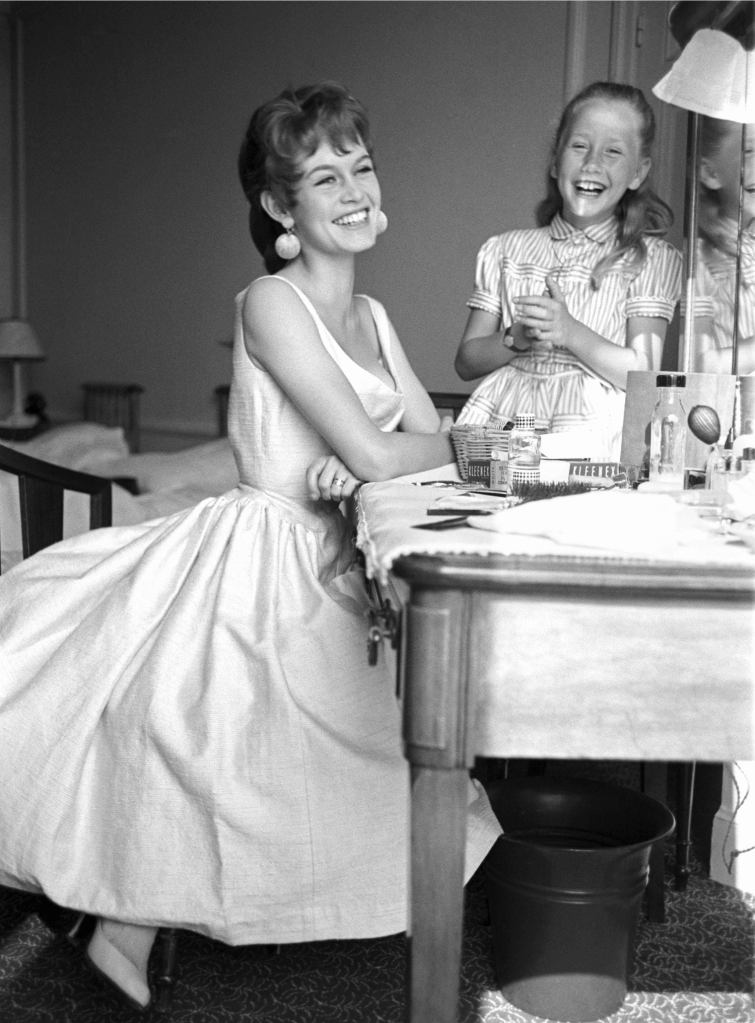
Magnifique anniversaire Brigitte Bardot !
Brigitte Bardot et Brigitte Fossey photographiées par Jack Garofalo au Festival de Cannes, 1955
 Pas De Merde