12 French Words and Phrases You Should Know

Sometimes updating your French is as easy as just learning a few new words and phrases.

1. C’est mort

If you absolutely don’t want to do something and it’s simply not possible, “c’est mort” [say more]. You’re basically saying that something is dead or like death. If you had all-you-can-eat sushi for lunch and your friend suggests you get all-you-can-eat Korean barbecue for dinner, tell him, “non, c’est mort,” then suggest you go to a place that serves salads.

2. Dans le rush

“Dans le rush” [don le rush] is Frenglish at its finest. It means to do something ASAP, or as a rush-job. If you want the guy in your Paris office you’re working on a project with to get you that sales report ASAP, message him, “On est dans le rush, donc il faut que tu m’envoies le rapport très vite.

3. Sur place

A basic yet important pair of words to know, “sur place” [soor plahss] means “here.” This is essential for when in a pâtisserie and the girl behind the counter asks if you’d like your pastry “à emporter ou sur place?” To best enjoy the atmosphere, you’ll of course respond, “sur place, s’il vous plaît.”

4. Direction [location]!

When you want to say “let’s go!” but also specify where you’re going, say “direction [location]!” [dee-recsheeon]. For example, if you’ve been given the task of choosing the bar you and your coworkers are going to for un afterwork, as you’re leading them out of the office, you can say, “Direction le Perchoir!”

5. Une envie pressante

A fun and easy expression, “une envie pressante” [ewn ahnvee preh-sawnt] means “a need to pee.” (It can also mean the other reason you need to visit the bathroom, but mostly it’s a need to pee.) If your friend wants to run home from the Métro to her apartment after a night out of drinking and dancing, she might explain her behavior by saying, “j’ai une envie pressante!”

6. Chômage technique

“Chômage technique” [show-mahj tek-neek] is a handy expression to know because it gets you out of work; it means to be forced to not work. It can be used seriously (as a company would use it) or jokingly. So if there’s a fire in the break room at your office, you might get a few days off while they repair the damage, in which case you can seriously tell people, “je suis au chômage technique.” You can also use it in a funny way, like if the internet is incredibly slow, you might say “chômage technique” to your colleague and start a game of solitaire on your iPhone.

7. J’ai piscine

Swimming is such a common activity in France that the phrase “j’ai piscine” [jhay peeseen], or “I have swimming,” has become the de facto generic excuse that everyone knows is a fake excuse. Or when your coworkers want to go out after work and all you want to do is go home and watch Netflix, tell them “je peux pas, j’ai piscine” on your way out the door (they’ll know you don’t have swimming, but it’s an endearing way to get out of something!).

8. Être un(e) touche à tout / toucher à tout

This noun, “un(e) touche à tout” [toosh ah to] is the equivalent of a Jack-of-all-trades, meaning someone who is good at everything. For example, a job interviewer may ask what your current responsibilities are, and after you rattle off about 10 things, you could say “je suis une touche à tout.” There’s also a verb form of the word, “toucher à tout,” which means to be good at everything. For example, you could be in the middle of a discussion about Elton John, how he’s a singer, songwriter, pianist, philanthropist, and AA sponsor of Eminem, and say “il touche à tout.”

9. Franco-français

Because it isn’t enough just to be French, we have the word “franco-français” [franco-frahnsay] which translates to “French French.” It’s an adjective used to say something is very French. A business started by a French person in France is franco-français. The debate about whether headscarfs and veils should be allowed in public is franco-français. A U.S. Open tennis match between two French players is franco-français. A girl whose family has been in France for five generations is franco-française.

10. Coup de cœur

This is a useful noun you’ll see a lot in women’s magazines, “coup de cœur” [coo duh cur]. It means “favorite”; it’s basically something that you’re loving right now. Visualize: a page in a magazine’s February issue, titled “Nos Coups de Cœur” that includes images of lemongrass candles, grandma sweaters, a vinyl of Angèle’s album, AirPods, and other trendy things.

11. Michto

Okay so maybe you don’t need this word, but it’s good to know. “Michto” [meeshtoe] means “gold digger,” and it is unfortunately only used to describe women. It’s short for “michtonneuse” and it used to be another word for a prostitute, but the word has evolved to mean women who date men for their money. If your very wealthy friend Laurent is being pursued by a woman who only wants to do expensive activities together then push the bill his way, you might consider gently telling him, “c’est difficile à dire, mais vraiment, c’est une michto.”

12. Quelle histoire

This one comes in handy in everyday conversation. “Quelle histoire” [kell eestoir] means a crazy — in a good or bad way — or funny story (it’s literal translation is “what a story”). You can use it to respond to your coworker’s funny story about he lost and recovered his ID during a wild night out: “Quelle histoire!”

Source: 12 French Words and Phrases You Should Know

Nowadays, Paris is for lovers of beer as well as wine. Check out these locations

BrasserieBrasserie might mean brewery, but only recently are Parisian establishments getting back to ale.

In Paris, you’re never far from a glass of wine. Step into a classic bistro and there will be good-value reds from the valleys of Rhone and Loire. Higher-end restaurants will inevitably point you in the direction of first-growth Bordeaux. New-wave wine bars are bursting with biodynamic Beaujolais. And a glass of Alsace riesling is de rigueur at a brasserie.

For a drinker interested in quality and value, wine can sometimes seem like the only option in this city. Every street, it seems, has its own cave à vin, complete with regional focus and invariably helpful staff, if you speak French. My favorites include Les Caves Saint-Martin on Rue du Faubourg Saint-Martin, where I once bought two bottles of an excellent grower champagne on the recommendation of the shop owner, and Trois Fois Vin on Rue Notre Dame de Nazareth.

The great food halls devote huge amounts of space to France’s most famous wine regions. I remember wandering into the recently reopened Galeries Lafayette food hall (“Lafayette Gourmet”) in 2014 to find acre upon acre of wine, the vast majority of it French (including 1,200 options from Bordeaux alone!). There were a few desultory shelves of beer.

It hasn’t always been like this: Brasserie, after all, means brewery. When Alsatians founded these palaces of gustatory gratification in the late 19th century, there was often brewing on-site. There still is at Brasserie Georges, which reinstalled a brewery in 2004, but that’s in Lyon. Paris’s mightiest brasseries long ago gave up grain for grape.

Beer is flowing in establishments with a young, energetic vibe

Testing beer at the Gallia brewery. Heineken has bought a minority share. (Gallia)

But things are changing. Breweries and bars are popping up throughout the city. It’s a young, energetic scene, exemplified by the annual Paris Beer Festival (formerly Paris Beer Week). That the name is in English rather than French is telling; much of Paris’s modern beer culture has more than a hint of Anglo-Saxon influence. That said, there’s a definite Gallic edge to places such as La Fine Mousse, an elegant bar and restaurant in the Marais, or breweries such as La Goutte d’Or, which uses ingredients reflecting the rich diversity of the local neighborhood.

The heart of this nascent Beervana can be found in northeast Paris, where rents are lower and the population younger. Around the Bassin de la Villette, a half-mile-long artificial lake in the 19th arrondissement, you’ll find Paname Brewing, a brewpub where the New England IPA is called Brexiteer (an example of how the French occasionally conflate “Anglo-Saxon” countries), and L’Atalante, with a huge outdoor terrace that fills up with young Parisians on summer evenings.

One of the most interesting breweries is Gallia: Originally founded in 1890, it was reestablished as a brand at the end of 2009. At first, the resurrected brand’s founders, Guillaume Roy and Jacques Ferté, focused on conservative pale lagers — but under head brewer Rémy Maurin, the range has expanded to encompass an impressive variety of flavors and styles.

It hasn’t gone unnoticed; in September, Heineken bought a minority share. Most bars in this city are tied to big brands such as Heineken or Kronenbourg. If they start offering customers the likes of Gallia, it’ll be a genuine game-changer.

It’s about time. Paris sits on the dividing line between northern Europe, where beer has traditionally held sway, and the wine-drinking south. Only Champagne, of France’s great wine regions, is further north, and it has (or had, until global warming) a fairly marginal grape-growing climate. This is natural beer country; it’s only right that Beaujolais, Bordeaux and the rest make room for la bière artisanale.

Will Hawkes is a freelance travel and drinks writer based in London.

Source: Nowadays, Paris is for lovers of beer as well as wine. Check out these locations. – The Washington Post

Jura, the French Wine Region You’ve (Probably) Never Heard of 

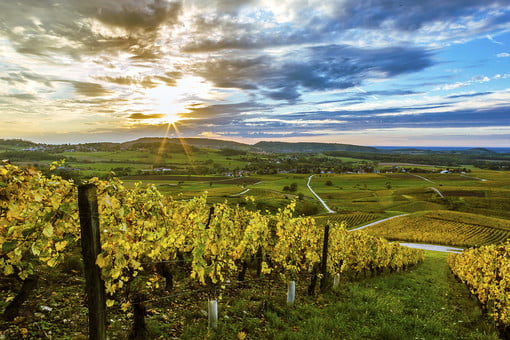
For a few years now, the wines of a small pocket of France have been the toast of the sommelier and wine shop owner community. But for most, Jura means very little (and no, we’re not talking about the Scotch whisky). It’s almost as though industry types have been trying to keep the secret, safeguarding a small but delicious supply of funky French wine just for themselves

Jura rests in the north of France, between the exalted vineyards of Burgundy and the Swiss border. Expectedly, it’s a bit chillier here, and there’s a nice mix of clay soils down low and sought-after limestone soils higher up. The “jura” name comes from a Celtic word for forest and there’s even a resident mountain range sporting the name. Continue reading “Jura, the French Wine Region You’ve (Probably) Never Heard of “

Sour notes for Macron from striking Paris Opera musicians

French President Emmanuel Macron has called for a compromise between his government and unions over plans to change the pension system that have led to sustained strikes — including from Paris Opera musicians who staged a street concert in rebellion.

PARIS – French President Emmanuel Macron has called for a compromise between his government and unions over plans to change the pension system that have led to sustained strikes — including from Paris Opera musicians who staged a street concert in rebellion.

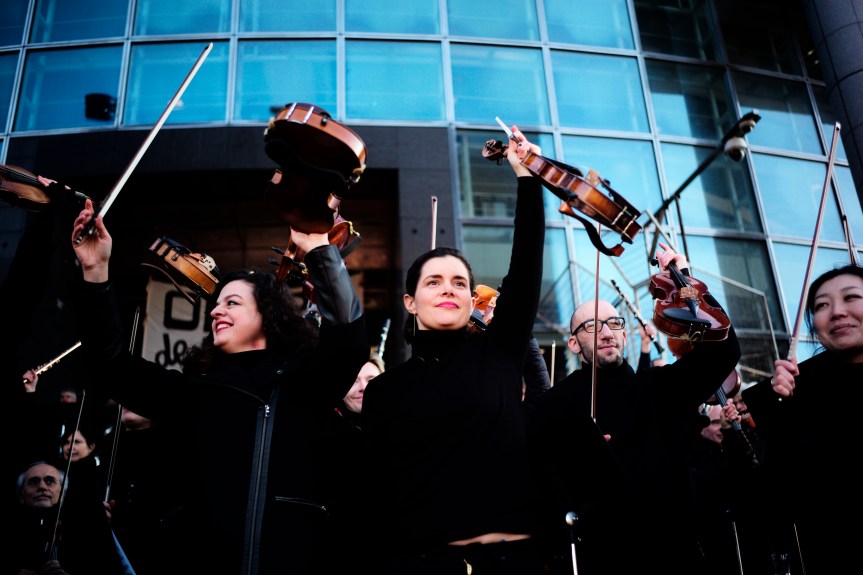
In a spirited, makeshift performance, Paris Opera musicians played excerpts Tuesday from “Carmen” and “Romeo and Juliet” on the front steps of the Opera Bastille, which served as a dramatic reminder of the rocky start to 2020 that awaits Macron.

Tuesday marked the 27th consecutive day of transport strikes. The Versailles Palace, usually a huge tourist draw, said it was closed Tuesday because of strikes, too.

In his televised New Year’s address, Macron said the pension overhaul “will be carried out” but called on his government to “find the path of a quick compromise” as negotiations with unions resume in early January.

Seeking to ease tensions, he suggested people with painful work will be allowed early retirement.

Yet Macron stayed firm on the principles of the reform, including its most decried measure: raising the eligibility age for full pensions from 62 to 64. He insisted that the new system will be fairer and financially sustainable.

“My only compass is our country’s interest,” he said.

Musicians who have put down their instruments since open-ended strikes started Dec. 5 reveled in the chance to play for the crowd that gathered to hear them on Paris’ Place de la Bastille, the site of an infamous prison stormed by a revolutionary mob on July 14, 1789, and then demolished.

“We’re all at the bottom of a deep hole being unable to play since Dec. 5,” said violinist Emilie Belaud.

But, she added, orchestra members are determined to hold firm. The Paris Opera has had to cancel all its scheduled ballets and operas since Dec. 5 — 63 performances in all.

“If the government persists in being stubborn and refusing to negotiate in good conditions, we’ll carry on,” Belaud vowed.

The crowd chanted for the abandonment of the retirement overhaul. They also cried, “We’re united! General strike!”

Macron wants to unify France’s 42 different pension plans into a single one, giving all workers the same general rights. [ . . . ]

Source: Sour notes for Macron from striking Paris Opera musicians

Hiking the Calanques: Port Pin and d’En-Vau 

This hike is probably the most popular and most accessible hike in the Calanques region, visiting the two closest inlets to Cassis. The first at Port Pin is relatively easy for non-hikers and families with small children. The second inlet at d’En-Vau is a bit more work with a slippery, rocky trail. Both very beautiful and give you a good taste of the region. This area is also very crowded, so expect full trails and lots of people crammed into the small beaches.Note: In summer, this area is often closed to hikers for fire risk. Check the trail status here the day before your visit. Sometimes they close the trail after a certain number of guests enter the park, so best to go early or visit in early spring or late fall. [ . . . ]

Source: Hiking the Calanques: Port Pin and d’En-Vau • Swiss Family Fun

How the Moulin Rouge Became the Most Famous Cabaret in the World  

One hundred and thirty years ago on October 6, 1889, the Moulin Rouge opened, and Paris hasn’t been the same since.

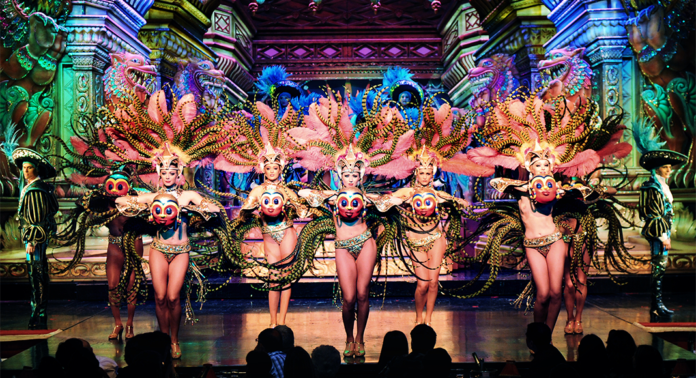
It’s made dances and dancers famous, been extensively depicted in art — paintings, films, music — more than any other cabaret, and brought smiles to the faces of the tens of millions who have passed through its doors. The Moulin Rouge boasts an international reputation, a rich history, and top-notch performances; how did it become the most famous cabaret in the world?

The Moulin Rouge began with an audacious bet that it would become “the palace of dance and women” that was “more luxurious, bigger and more elegant” than any other location at the time. Success came fast thanks to a dance that debuted on opening night: the French cancan, previously known as the quadrille. Revolutionary movements, screams, boisterous rhythms decorated by frills and flowing skirts that were scandalously lifted to show the young dancers’ legs — and their underwear. Continue reading “How the Moulin Rouge Became the Most Famous Cabaret in the World  “