Mastering the Art of Making a French Omelette

An American omelette can be ordered with just about everything inside. The French omelette is quite simple by comparison.


A few years ago, when I was a student at l’Institut Paul Bocuse, one of the premier cooking colleges in France, I watched an omelette-making class through a glass partition. I was in a hallway, in the school’s zone culinaire, which is reserved for lessons in making food; theory courses are held on another floor, in small rooms with desks. This particular class was on French kitchen basics. I’d been exempted, on the grounds that I’d worked in restaurants. (The confidence the exemption implied in my skills would, alas, turn out to be spectacularly misplaced.)

A student presented his omelette. The instructor poked it and shook his head. He didn’t bother to taste it; he just tipped it into the trash. An omelette must be soft in the middle, pillowy to the touch. It should have bounce. This one was hard.

The next student’s omelette was too voluminous. The instructor admonished him. It was like watching a movie without sound. His gestures said, “Why did you use a whisk?” Un fouet. “I told you a fork.” Une fourchette. A whisk aerates the protein. It is what you use to make a soufflé or a meringue. An omelette gets its tenderness by being mixed, not whipped. You want the egg whites quiet and small. The omelette went into the trash.

Hervé Raphanel, a member of the faculty, joined me by the partition. “How old do you think those students are?” he asked. Continue reading “Mastering the Art of Making a French Omelette”

Products to Help You Master French Cooking

It’s time to get your arms around that chocolate soufflé

There’s no question about it: Cooking French food is labor intensive, time-consuming, demanding, and often for busy Americans, impractical. At the pace of today’s society, one in which TikTok recipes comprising only instant coffee, sugar, and water are considered cooking, it’s a wonder people still bother with dishes as extravagant as sole meunière, gougėres, galettes, or lobster thermidor. But they do. Because there’s nothing like them. French food is buttery, eggy, saucy, timeless, and always delicious. Here are the ingredients, books, tools, and accessories you need to foray into French cooking. [ . . . ]

Source: Products to Help You Master French Cooking – Condé Nast Traveler

What to Drink With Spicy Foods: Champagne, Riesling, Pinot Noir & More

A running list of grape varietals that can bring out the full flavor of my favorite fiery food choices

As a product of Galveston, Texas, I’m convinced that my love for spicy foods is embedded within my DNA. I can remember at a very young age (let’s say, around seven or eight years old) enjoying bowls of my Granny’s gumbo with dabs of hot sauce; smoked ribs and sausage links hot off the barbeque pit courtesy of my dad in the summertime; and of course, cracking and sucking the head from many small mounds of crawfish. And as I got older, my tolerance for spice only increased. From bags of Flamin’ Hot Cheetos through middle school lunches to adding one too many jalapenos on nachos at high school football games, I couldn’t shake the need for spicy foods if I tried. 

Now that I’m old enough to enjoy wine with a meal on a regular basis, I’ve been keeping a running list of grape varietals that can bring out the full flavor of my favorite fiery food choices. From a bowl of spicy Thai noodles to a basket of buffalo wings, I’ve discovered that wine – compared to beer or other beverages – has the ability to go toe-to-toe with some of the most succulent dishes.

Hot Tip

Something to note about pairing wine with spicy foods: it’s important to be mindful of the amount of alcohol present. In food, chili heat tends to create a warming or burning sensation on our palate. The higher the level of alcohol in a wine, the more astringent (and uncomfortable) spicy food it will feel on your tongue. To avoid that, it’s important to choose wines that are light, dry, fruit-forward, and high in acidity.

Recommendations

Sparkling wine or Champagne  
Bubbly may not be your first choice when it comes to enjoying spicy foods, but it should definitely be a consideration moving forward. If you’re a seafood lover like me, the fizz in a Brut Champagne (which means, it will have very little sugar added) is a great option to help bring out the freshness of fish that has been elevated with spice. 
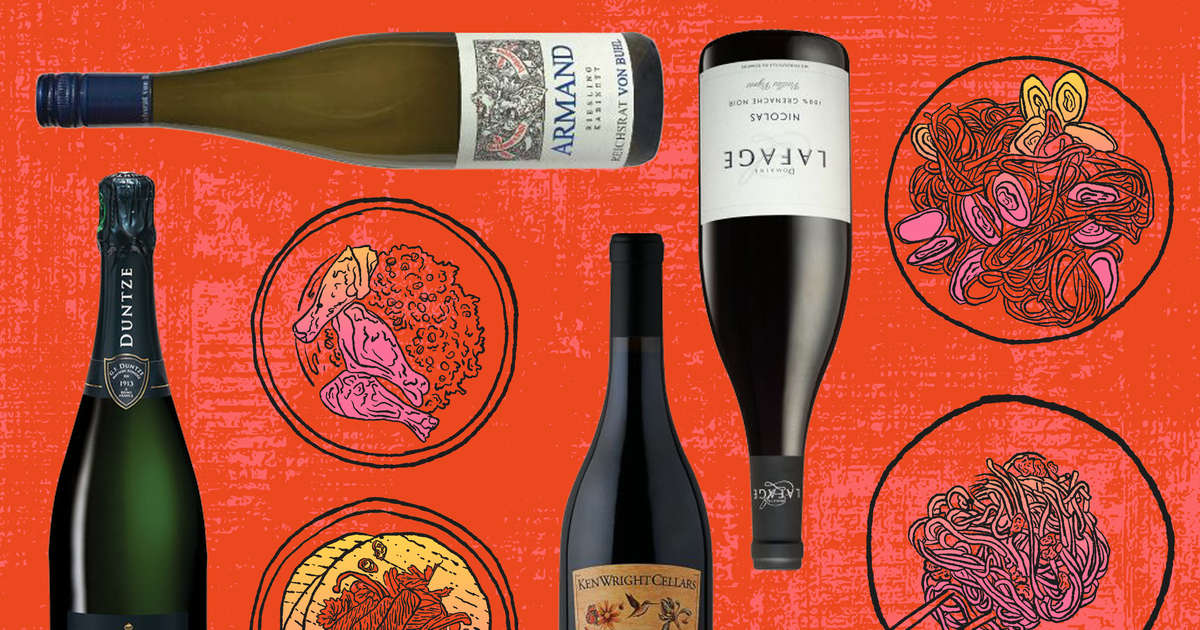
My Bottle: G.F. Duntze NV Brut Réserve (Champagne)
Dish: Spicy seafood pasta

Riesling
A white wine that is naturally high in acidity and sweetness, Riesling is versatile and can accompany any meal. Because of its natural sugars, a light German Riesling — which can have notes of green apple and lime — is an ideal option to pair with spicy Thai dishes because it can provide a cooling sensation to your palate. 
My bottle: Von Buhl Armand Riesling Kabinett 2015
Dish: Massaman Curry

Albariño 
If you like Pinot Grigio, then you’ll totally enjoy a glass of Albarino. Hailing from northwest Spain, Albarino is the white wine of Spain. While often compared to its Italian cousin, this dry, medium-bodied, high acidic wine is crisp, refreshing, and has notes of peach and apricot that would be great for the next Taco Tuesday. 
My bottle: Bilbao Albarino 2018
Dish: Spicy Pork Carnitas 

Gewurztraminer
While this French wine may be a little bit tricky to pronounce, it is one of the most fragrant white wines you’ll find, and ranges from dry to sweet. For the sake of accompanying our quest for spicy culinary satisfaction, an aromatic dry or off-dry Gewurztraminer from Alsace will have medium acidity with fruity notes of grapefruit, pineapple or peach. This will pair incredibly with the rich spices of Caribbean food. 
My bottle: Geil Gewurztraminer Kabinett
Dish: Jerk chicken 

Pinot Noir
As one of the beloved noble red grapes, Pinot Noir’s fresh red fruit flavors (think strawberry, raspberry, red cherry) allow for it to be enjoyed when it is fairly young.  Pinot Noir is a personal favorite of mine, simply because it is easy drinking and goes with almost everything. A quick suggestion when choosing a bottle: Pinot Noirs from Oregon aren’t cheap, but you are going to get your money’s worth. 
My bottle: Ken Wright Pinot Noir Willamette 2017
Dish: Dan Dan noodles

Gamay
This French wine is particularly unique because it solely focuses on grapes from Beaujolais, a region that is immediately south of Burgundy. The wines produced from this region have light tannins, fresh fruit flavor, and should be served (lightly) chilled to highlight their acidity. 
My bottle: Beaujolais Nouveau
Dish: Fajitas 

Grenache
Finally, another French wine (that also goes by the Spanish name, Garnacha) is another red wine that can be enjoyed chilled. Putting a little chill on a bottle of Grenache in this instance is important because unlike the other wines listed above, Grenache tends to be low in acidity and high in alcohol. The pepper spice in Grenache uniquely brings out the spice in Indian cuisine. 
My bottle: Domaine Lafage Cuvee Nicolas 2017
Dish: Chicken Chettinad

Source: What to Drink With Spicy Foods: Champagne, Riesling, Pinot Noir & More – Thrillist

The Impact of Coronavirus on Paris Restaurants

Coronavirus is changing the lives of people and businesses all around the globe. The hospitality industry, with its razor-thin margins, will be particularly impacted. Nowhere is that more true than in Paris, which has already suffered through a year of “yellow vest” and pension reform strikes and has been relying on the hope of a robust spring and summer in order to survive. After an already challenging year, few have any remaining buffer or savings to help them survive the period of mandatory (and necessary) closure.

The motto of Paris – Fluctuat nec mergitur “tossed by the waves but not sunk” – will be mightily tested in the coming months. We will be sharing the ways in which restaurants and their clients are innovating and trying to stay afloat, showing generosity in the face of uncertainty, and otherwise keeping hope alive. We may also be documenting and mourning some restaurant closures.

Visit this page for daily updates or sign up for our newsletter, which will synthesize the news every two weeks. We’ll also be reposting from the restaurants we follow on our Instagram and Facebook accounts.

Source: The Impact of Coronavirus on Paris Restaurants – Paris by Mouth

7 Foods To Mail Order For A Gastronomic Staycation

While gastronomic traveling is curtailed at the moment, you can still order specialties from different U.S. regions and European countries to enjoy at home.

Culinary travel has been on the rise in recent years as not just pleasure for the food obsessed but as a window into a destination’s culture.  With the worldwide coronavirus pandemic postponing nonessential travel, gastronomic excursions are on hold as well. But through the wonder of long distance delivery, iconic foods can come to the hunkered down at home as well. Some are offering free shipping now as well.

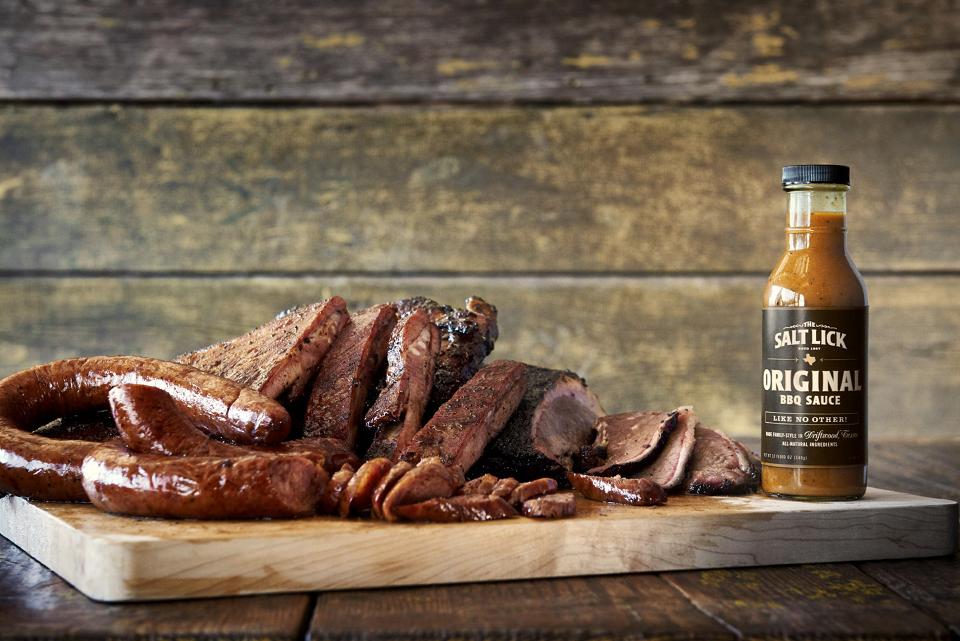
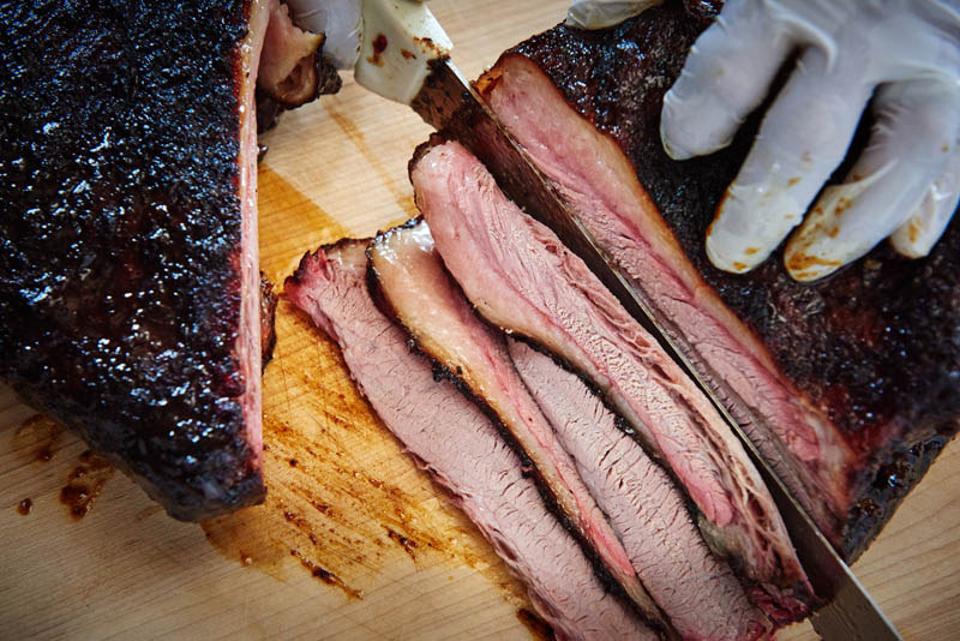
One of the great pleasures of a visit to the various U.S. states in the south is barbecue which varies in specialty/the primary meat used/sauce preparation by state. In Texas, it’s largely about beef and one of the most revered places to get it is The Salt Lick BBQ in Driftwood, Texas, a second generation operation known for its seared then smoked over coals brisket. But they also offer pork and beef ribs along with their vinegar based, cayenne and chili power spiced sauce. Available in the lower 48 U.S. states and the barbecue with arrive cryovaced and frozen with instructions for reheating. [ . . . ]

Continue at FORBES: 7 Foods To Mail Order For A Gastronomic Staycation