To ban or not to ban? What future for pesticides and GMOs in the EU?

PART ONE

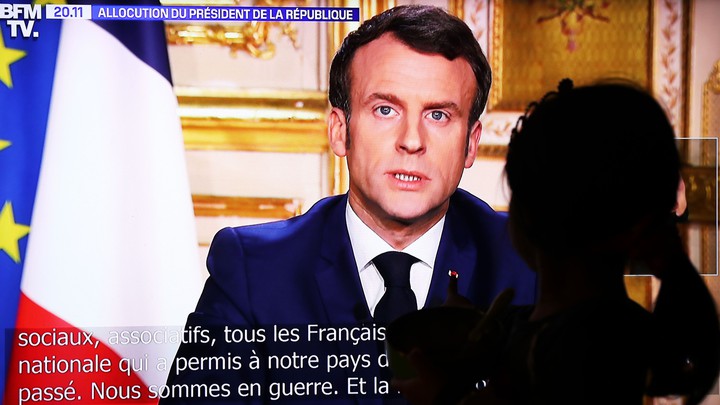
French Agriculture Minister Didier Guillaume tells Catherine Nicholson why he believes a transition to lower-chemical farming is essential and how he thinks it can be achieved.

Meanwhile, Green MEP – and organic farmer himself – Benoît Biteau tells us why what he learnt converting his father’s farm to greener practices can be replicated.

In our reports, we meet some of the mayors who have banned pesticides around their towns and find out more about the conflict with the farming community. We also meet French farmers who are testing how to reduce their dependence on chemical pesticides

PART TWO

Source: To ban or not to ban? What future for pesticides and GMOs in the EU? (part 1) – Talking Europe

Trump’s proposed wine tariffs will hurt Americans, not the French

cheese

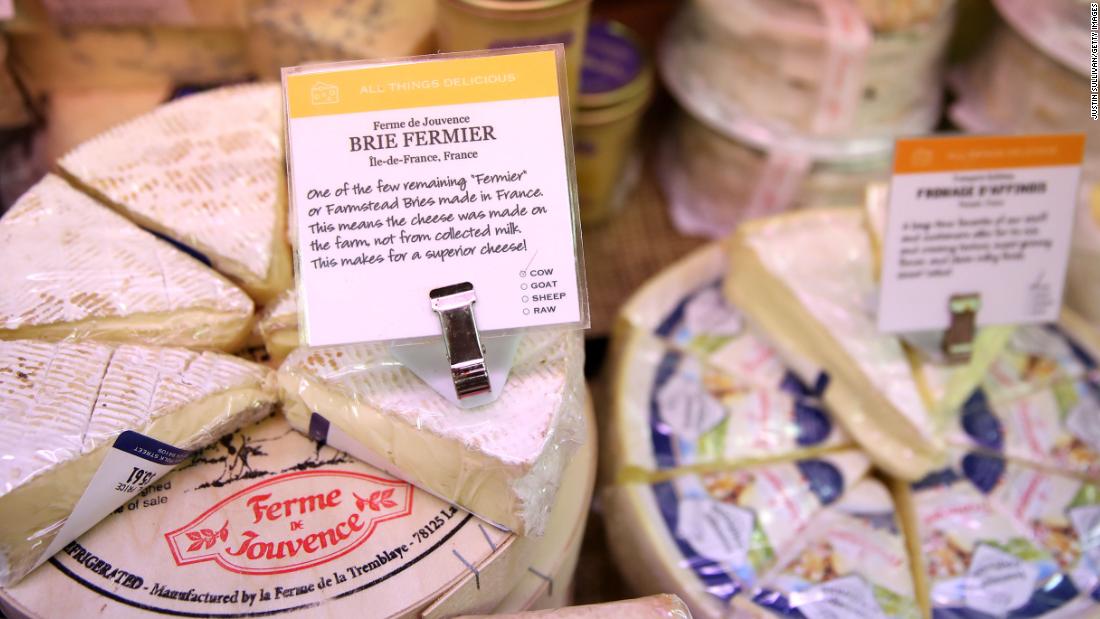
Jon Bonné writes that Trump’s proposed 100 percent tariffs on French wine and cheese won’t help American wine producers nor harm French ones, while simultaneously hurting the American economy [ . . . ]

Read full story at CNN: Trump’s proposed wine tariffs will hurt Americans, not the French (opinion) – CNN

The Entwined Lives of Françoise Gilot and Pablo Picasso

Understanding Picasso’s art, Gilot’s memoir shows, is inseparable from understanding both his genius and monstrousness.

Early on in their relationship, the painter and writer Françoise Gilot almost left Pablo Picasso. It was 1946, and the pair had gone from Paris to the South of France for the summer. It sounds romantic and likely would have been, if Picasso hadn’t insisted that they stay in the house he had given to the photographer Dora Maar, his partner before Gilot. Maar wasn’t around, but soon after they arrived, Picasso began receiving devoted daily letters from yet another former lover, Marie-Thérèse Walter, which he would read aloud every morning. As if that weren’t enough, the place was overrun with scorpions. Suddenly, Gilot found herself stuck in a “hostile environment,” as she writes in her memoir, Life With Picasso, which was originally published in 1964 and recently rereleased by New York Review Books Continue reading “The Entwined Lives of Françoise Gilot and Pablo Picasso”

France becomes first country in Europe to ban all five pesticides killing bees 

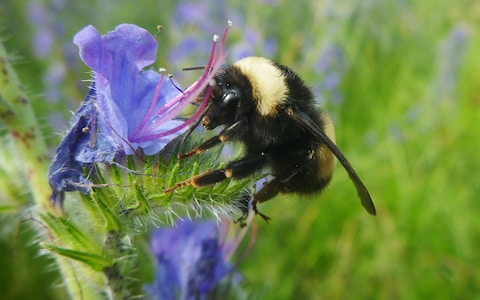
France will take a radical step towards protecting its dwindling bee population on Saturday by becoming the first country in Europe to ban all five pesticides researchers believe are killing off the insects [ . . . ]

Source: France becomes first country in Europe to ban all five pesticides killing bees 

Les Misérables: Why are the French, who seem to have much, so quick to protest?

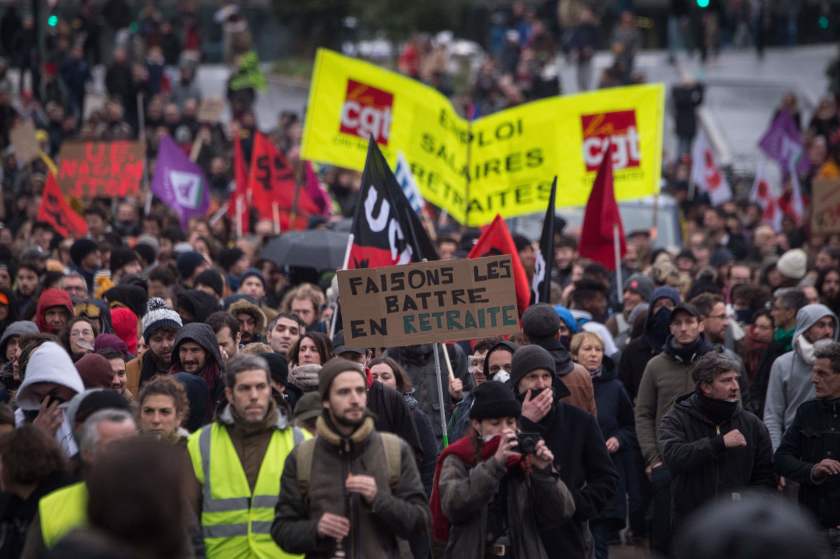
Puzzling as it may seem in a country that appears to have so much going for it — fine wines, haute cuisine, high fashion and roughly 1,000 different cheeses — the French are Les Misérables. As author Sylvain Tesson told France Inter radio recently: “France is a paradise inhabited by people who believe they’re in hell.”

Economist Claudia Senik, a professor at the famous Sorbonne University, has studied the French malaise and believes it dates to the 1970s and the end of the “Trente Glorieuses,” the 30 postwar years when France boomed.

“It’s linked to the way the French view the world and their place in it. They have high expectations about the quality of life, freedoms and many values driven by the French Revolution and this sets a high benchmark for satisfaction,” Senik says. “They look back at a golden age when France made the rules of the game, and now we are just another smallish country forced to accept and adapt to rules.”

In her research paper, “The French Unhappiness Puzzle,” Senik found that even when they leave France to live elsewhere in the world, they take their gloominess with them, suggesting it is not France but being French that makes people unhappy.

“I was surprised to discover that since the 1970s the French have been less happy than others in European countries, much less happy than you’d have thought, given their standard of living, lifestyle, life expectancy and wealth,” Senik says. “It’s a problem of culture, not circumstance. It’s the way they feel, their mentality.”

On paper, the French have few reasons to be gloomy: They enjoy free and universal access to an enviable health system ranked first by the World Health Organization, free schools and universities, a maximum 35-hour workweek, six weeks’ annual vacation, paid parental leave and an enviable welfare safety net. Continue reading “Les Misérables: Why are the French, who seem to have much, so quick to protest?”

French nationality ranked ‘best in world’ again

passport

The French nationality has been ranked the best in the world for the eighth consecutive time, according to the latest ranking (2018) of the global Quality of Nationality Index.

The index defines nationality as “legal statuses of attachment to states”.

It takes into account nationality qualities such as home-country economics, peace, stability, citizens’ opportunities for development, ease of visa-free travel, and opportunities to work and live abroad.

These “make one nationality better than another in terms of a legal status through which to develop your talents and business”, the index – full name full name Kälin and Kochenov’s Quality of Nationality Index (QNI) – says.

The QNI ranks the world’s nationalities by a strict set of criteria (Map: Quality of Nationality Index (QNI) / nationalityindex.com)

France came out on top of the ranking, with a score of 83.5 out of 100. This was closely followed by Germany and the Netherlands (both 82.8); Denmark (81.7); and Sweden and Norway (81.5).

France won out due to its place as the world’s sixth largest economy, but also for its place in the European Union, the list said, with all EU members listed at the top of the table due to their freedom of movement.

France was especially praised for its qualities in helping citizens to travel, live and work abroad. A French passport allows the holder to travel in almost 165 countries without a visa.

The top 10 was rounded out by Finland (81.2), Italy (80.7), the United Kingdom (80.3), Ireland (80.2) and Spain (80.0)

(Table: Quality of Nationality Index (QNI) / nationalityindex.com / LaDepeche.fr)

At the bottom of the top 25 were the United States (70.0), with Croatia (73.8), Bulgaria (75.0), Romania (75.2), Cyprus (75.3), Poland, Latvia and Lithuania (all 77.0) coming just ahead.

The bottom three nationalities were South Sudan (157th), Afghanistan (158th), and Somalia (159th), with respective scores of 15.9, 15.4, and 13.8.

Risks of a ‘hard Brexit’

But the UK could see its ranking fall to 56th globally in the next list “if it pursues a ‘hard Brexit'”, the researchers have suggested, putting it on a par with China (currently 56th) and Russia (currently 62nd).

The index is named after its creators, Dr. Christian H. Kälin and Professor Dr. Dimitry Kochenov.

Dr. Kälin is a law professor and chairman of law firm Henley & Partners, and is considered an expert in investment migration.

Prof. Kochenov is a Chair of EU Constitutional Law at the University of Groningen in the Netherlands, and writes widely on comparative and European citizenship law and migration regulation.

In a statement, Prof. Kochenov said: “The UK may be about to establish a world record in terms of profoundly undermining the quality of its nationality without going through any violent conflict.

“Depending on the still-to-be determined outcome of Brexit, the UK could see itself falling from the elite group of ‘very high quality’ nationalities into the ‘high quality’ bracket.

“A truly ‘hard’ Brexit would result in the UK having a nationality that does not grant Britons settlement or work rights in any of the EU jurisdictions or Switzerland, Norway, and Iceland: a collection of the most highly developed places on earth, greatly diminishing the quality of its own nationality in an irrevocable manner: either you have such rights, or not – and in such a scenario UK citizens won’t have them.”

Prof. Kochenov added: “The QNI is a clear illustration of the simple fact that speaking of the different nationalities of the world as equal, or even comparable, is misleading.

“We see that some nationalities offer bundles of rights, while others, quite clearly, are painful liabilities, dragging down the holders.”

Read more at source: French nationality ranked ‘best in world’ again