
Category: Culture
France’s ‘Deconfinement’ Plan
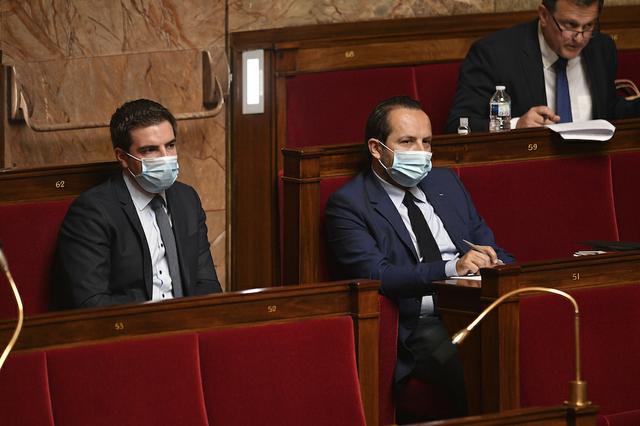
France has announced a carefully phased plan for easing the severe restrictions imposed in mid-March. The strategy is far more coherent, cautious and realistic than the miraculous ‘reopening’ envisioned by U.S. authorities.
On Tuesday, April 28, Prime Minister Édouard Philippe appeared before the French National Assembly to announce his government’s plan for releasing the French people from the confinement imposed on them since mid-March, when the severity of France’s COVID-19 problem first became apparent. The plan offers a tentative, reasonably detailed blueprint for rebuilding French social and economic life one step at a time.
The disruptive love of Amélie Poulain
The romance of ‘Amélie’ feels like an afterthought because it demands doing – which is the aftermath of thinking
Rahul Desai | The Hindu
I was 21 when I first watched Jean-Pierre Jeunet’s Amélie, a French film about a 23-year-old Parisian waitress. As an introvert, I felt represented: the vivid primary colour palette, Yann Tiersen’s melancholic music, the quirky characters and eccentric vignettes. Amélie had canonised the language of isolation. The portrait of a sad and dreamy frog in a well wore the vibrant energy of a happy beast in the wild. A gaze was reinvented: Mundanity became an adventure of repetition, ordinariness became a playground of possibility, and fantasy became both ailment and cure. Loneliness felt hopeful – more like an acquired superpower than a hereditary disease. For once, silence sung a voice.
Amélie’s infatuation with a strange young man felt like an afterthought. It looked like a token insert, reiterating the long-standing cinematic misconception that a losing protagonist can only be rescued by the emergence of a soulmate. Over time, however, as I’ve struggled with the paradoxical pitfalls of adult companionship, my personal focus has shifted to Amélie Poulain’s love story. Over time, I’ve learned that the madness lies in the failed method of this romance.
Magically make-believe
Introverts are essentially people disappointed with the concept of people. Amélie grew up with neurotic and distant parents. By the time she moved away, she had already taken refuge in a make-believe world where every moment has a feeling. As a waitress working at a cafe, Amélie’s disenchantment with people – their puerile predictability, their wasteful routine – reaches its peak. She is tired of viewing them as bullet points of likes and dislikes. When she finds a box of someone’s old souvenirs, Amélie chooses to rebrand fact as the escapist fiction that kept her adolescence afloat. To inject life with her grammar of imagination, Amélie elevates humanity from noun to adjective. She reunites a reclusive man with memories from his childhood. She plays cupid by triggering an improbable romance between her fragile co-worker and a difficult customer. She fools the bitter concierge into believing that her cheating husband had sent her a conciliatory letter before his death. She inspires her mournful father to travel the world. She even teaches her rude neighbourhood grocer a lesson.
Amélie executes these forged deceptions of destiny like an artist weaving hidden symbols into complex artwork. She affects people, indirectly, in creative ways that marry her introverted spirit of seclusion with her extroverted affection for escapade. And in a manner that renews their faith in fate. She doesn’t simply deliver the souvenirs to the stranger; he is unsuspectingly lured into a phonebooth only to ‘discover’ the box there. She slyly incepts ideas into her colleague and father’s heads with well-timed gossip and globe-trotting gnomes. She painstakingly designs a handwritten letter for her concierge, and rigs her grocer’s house Home Alone-style. By resorting to stunts, Amélie reveals destiny as the domino effect of deflated dreams.
Enter romance
But Nino is the glitch in Amélie’s matrix of little pleasures. Amélie has the power to transform the everydayness of life into an exciting obstacle course of gestures. But that power disappears during her cat-and-mouse search for a soulmate. Her scenes with Nino never play out according to plan. The carefully constructed mystery of their meetings is punctured by the primal spontaneity of the heart. Despite her valiant efforts to choreograph the perfect union, Nino recognizes her at the cafe before she reveals her identity. Another time, Amélie misreads his contact with another waitress. At the photo booth, he is too preoccupied to notice her. And when Nino appears at her doorstep, she hesitates, and bumps into him after a tragedy of errors. The moment is awkward, undesigned, and she seals it with a smattering of tender pecks instead of an all-consuming kiss.
The romance of Amélie feels like an afterthought because it demands doing – which is the aftermath of thinking. For most people, finding love is a dream come true. For introverts, it’s the alarm clock that disrupts their dream. It defies every fibre of their being. It isn’t so much about falling in love as it is about making peace with the disappointment of falling in love. The pursuit rarely matches up to the grandiose visions of pursuit. This chasm is addressed in a wonderful scene towards the end of the film: A dejected Amélie returns to her flat and imagines the life she’s always wanted: She is baking a plumcake, Nino buys some yeast, sprints back upstairs and covertly caresses the bead curtains of her kitchen. But when she actually turns to look, it’s her cat brushing the beads – an image that snaps her back to her lonesome truth. Her lips quiver with dashed desire. Amélie has spent so long dreaming about her reality that she has forgotten to realise her dreams.
Moments later, Nino knocks on her door. Minutes later, she clutches onto his waist as they barrel down the street on his scooter. Amélie gets her happily ever after. Credits roll. It looks rushed, surreal, but for good reason. Now, if this were the final shot of Inception, the frame would cut to black just as the totem begins to wobble on her kitchen table.
Pandemic Shakes France’s Faith in a Cornerstone: Strong Central Government
SCEAUX, France — A couple of baguettes tucked under her arm, Maha Rambousek fiddled with a face mask that kept sliding off her nose. After a local decree made masks mandatory in public, she had quickly stitched it together, but was left confused when the policy was overturned two days later by the central government.
“We have some of the highest taxes and biggest public spending in the world, and the French people accept that because, implicitly, their protection was guaranteed by the state,’’ said Mr. Vermeren, who teaches at the University Paris 1 Panthéon-Sorbonne.
NY Times
“I don’t know who’s wrong or who’s right,’’ Ms. Rambousek said. “And I can’t turn to anybody for certainties.’’
The measure in Sceaux, a well-to-do suburb just south of Paris, was one of an increasing number of exceptional local challenges to the government’s handling of the coronavirus outbreak, which has shaken confidence in a cornerstone of French society: the primal authority of the centralized state.
The city of Perpignan lodged contagious patients in a hotel after the central government told people to self-isolate at home. Officials in the city of Marseille carried out widespread testing of both the sick and healthy even as the government ordered that only the seriously ill be tested. The city of Paris tightened a national lockdown by banning daytime jogging.
While France’s vaunted health care system has staved off disaster, France has suffered the world’s fourth-biggest death toll — now at 23,660 official deaths, behind the United States, Italy and Spain — a consequence, critics say, of the central government’s failure to anticipate the onslaught of the contagion.
That failure and a critical shortage of masks and testing kits — also resulting from gaps in state policies — led to the virus’s rapid early spread, prompting France to impose one of the word’s strictest nationwide lockdowns, now in its seventh week. [ . . . ]
Continue story at NY TIMES
Lockdown in Nice, France: What life is like for visitors to France during the coronavirus pandemic
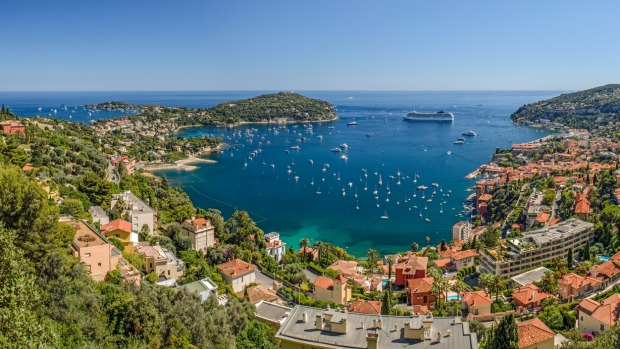
Stuck in a rented apartment 23 hours a day, a father and his teenagers cope with confinement in a beautiful hot spot.
Nice, France, is a city on hold. Its hotels are boarded up, its restaurants are shuttered, and its residents are confined to their homes 23 hours a day.
I detoured here on my way to Italy in mid-March, hoping to avoid a full lockdown. But a few days later, covid-19 slammed France with unexpected ferocity, and the entire country turned into a red zone.
Today my rented apartment is a cage. French police and military patrol the streets. My three teenage kids and I are only allowed out of the house for an hour a day. Curfew starts at 8pm. [ . . . ]
Continue at source: Lockdown in Nice, France: What life is like for visitors to France during the coronavirus pandemic
Go for Rhône — the classic French wine that’s also great value

Given that 2018 is the fourth great rhône vintage in a row, it’s time we all stocked up on what is the best-value classic French wine region. What’s weird about the Rhône, despite its stellar whites and reds, is just how few of us put it on a par with Bordeaux and Burgundy.Perhaps what confuses drinkers are the dozens of wine styles made along the Rhône valley, from Lyons in the north to Provence in the south. They broadly divide into two camps: the cooler northern Rhône’s steep, granite, terraced slopes produce peppery, syrah-spiced reds, while the sunbaked south is known for heady, herby grenache-led gems. As so often, the 2018 vintage is a game of two halves [ . . . ]
Read full story at THE SUNDAY TIMES: Go for Rhône — the classic French wine that’s also great value | Weekend | The Times
 Pas De Merde