Pandemic Shakes France’s Faith in a Cornerstone: Strong Central Government

SCEAUX, France — A couple of baguettes tucked under her arm, Maha Rambousek fiddled with a face mask that kept sliding off her nose. After a local decree made masks mandatory in public, she had quickly stitched it together, but was left confused when the policy was overturned two days later by the central government.

“We have some of the highest taxes and biggest public spending in the world, and the French people accept that because, implicitly, their protection was guaranteed by the state,’’ said Mr. Vermeren, who teaches at the University Paris 1 Panthéon-Sorbonne.

NY Times

“I don’t know who’s wrong or who’s right,’’ Ms. Rambousek said. “And I can’t turn to anybody for certainties.’’

The measure in Sceaux, a well-to-do suburb just south of Paris, was one of an increasing number of exceptional local challenges to the government’s handling of the coronavirus outbreak, which has shaken confidence in a cornerstone of French society: the primal authority of the centralized state.

The city of Perpignan lodged contagious patients in a hotel after the central government told people to self-isolate at home. Officials in the city of Marseille carried out widespread testing of both the sick and healthy even as the government ordered that only the seriously ill be tested. The city of Paris tightened a national lockdown by banning daytime jogging.

While France’s vaunted health care system has staved off disaster, France has suffered the world’s fourth-biggest death toll — now at 23,660 official deaths, behind the United States, Italy and Spain — a consequence, critics say, of the central government’s failure to anticipate the onslaught of the contagion.

That failure and a critical shortage of masks and testing kits — also resulting from gaps in state policies — led to the virus’s rapid early spread, prompting France to impose one of the word’s strictest nationwide lockdowns, now in its seventh week. [ . . . ]

Continue story at NY TIMES
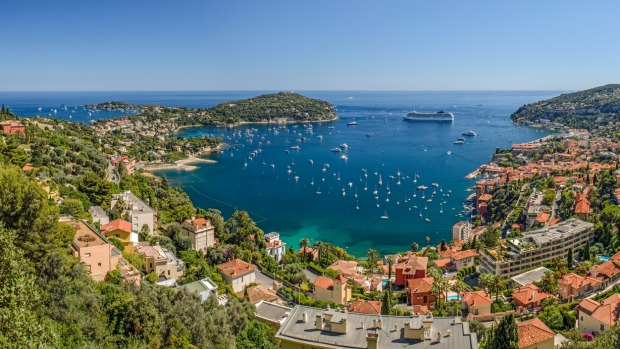
Lockdown in Nice, France: What life is like for visitors to France during the coronavirus pandemic


Stuck in a rented apartment 23 hours a day, a father and his teenagers cope with confinement in a beautiful hot spot.

Nice, France, is a city on hold. Its hotels are boarded up, its restaurants are shuttered, and its residents are confined to their homes 23 hours a day.

I detoured here on my way to Italy in mid-March, hoping to avoid a full lockdown. But a few days later, covid-19 slammed France with unexpected ferocity, and the entire country turned into a red zone.

Today my rented apartment is a cage. French police and military patrol the streets. My three teenage kids and I are only allowed out of the house for an hour a day. Curfew starts at 8pm. [ . . . ]

Continue at source: Lockdown in Nice, France: What life is like for visitors to France during the coronavirus pandemic

Go for Rhône — the classic French wine that’s also great value

Given that 2018 is the fourth great rhône vintage in a row, it’s time we all stocked up on what is the best-value classic French wine region. What’s weird about the Rhône, despite its stellar whites and reds, is just how few of us put it on a par with Bordeaux and Burgundy.Perhaps what confuses drinkers are the dozens of wine styles made along the Rhône valley, from Lyons in the north to Provence in the south. They broadly divide into two camps: the cooler northern Rhône’s steep, granite, terraced slopes produce peppery, syrah-spiced reds, while the sunbaked south is known for heady, herby grenache-led gems. As so often, the 2018 vintage is a game of two halves [ . . . ]

Read full story at THE SUNDAY TIMES: Go for Rhône — the classic French wine that’s also great value | Weekend | The Times

10 (very beautiful) French author films from the 2010s on Netflix

The life of Adèle

Three memories of my youth by Arnaud Desplechin (2015)

As Paul Dédalus leaves Tajikistan to return to Paris, memories of his childhood in Roubaix, of his trip to the USSR when he was a teenager and, above all, of his love for Esther, come back. Paul, whom we follow as a little boy, teenager and adult, never ceases in Three memories of my youth to remember his past, his three bodies – and the story – then becoming one.

His adventures, which oscillate from humor to tragedy, thrill the viewer, constantly brought back, by a game of mirror, to his own previous life. Rewarded at the Directors’ Fortnight in Cannes in 2015 as well as at the César the following year, Desplechin takes us through his art of dialogues and his staging, transfiguring our own memories to make it a labyrinth, between fascination and destruction.

Un amour de jeunesse by Mia Hansen-Løve (2011) and Eden (2014)

Still on the theme of torments of youth, Netflix offers two films by director Mia Hansen-Løve: Eden and Un amour de jeunesse . The second succeeds, through its delicacy and restraint, in telling a love affair, from adolescence to the edge of adulthood, all without ever falling into pompous emotional scenes. Eden , him, signs the virtuoso portrait of a DJ brought to the summit of success in the middle of the French Touch period, a musical movement which, for him, will only be fleeting.

>> Read also: Jean-Baptiste Morain’s criticism

The unknown from Alain Guiraudie’s lake (2013)

Considered a “masterpiece” by the Inrocks , L’inconnu du lac  by Alain Guiraudie is an open-air camera, surrounded by love, sex and death. It is therefore impossible to miss this jewel of French auteur cinema, which, beyond its brilliant staging, explores all possible themes, registers and metaphors.

The recipe is clear and modest: “A lake, a beach, groves, parking, an R25, a few nudist men and three characters” (including Pierre Deladonchamps, wonderful). And if that still does not seem convincing to you, here is the trailer below.

>> Read also: Serge Kaganski’s criticism

The life of Adèle by Abdellatif Kechiche (2013)

Palme d’Or at the Cannes Festival in 2013, La vie d’Adèle , adapted from the comic strip Blue is a warm color  by Julie Maroh. At 15, Adèle is a serious student who questions her sexuality when she first meets the eyes of Emma, ​​a mysterious young woman with blue hair.  A great work of the seventh art, bringing to life the idea that literature can lead to self-acceptance, La Vie d’Adèle , a sensual film which borrows all the codes of the learning novel, is part of it ( despite the controversies surrounding its shooting ) of the most beautiful films of French author cinema of the decade.

>> Read also: Jean-Marc Lalanne’s criticism

Continue reading “10 (very beautiful) French author films from the 2010s on Netflix” →

Trending on Twitter: Republicans for Rule of Law

Ultracrepidarians – know any?

by Simon Leyland

I was in the pub having a quiet pint and as you do, caught the end of a most peculiar conversation. Man (a) was talking to man (b). Man (b) was attempting to reply but with some of the most bizarre replies possible. No offence to the fellow involved but it led me to consider the word ultracrepidarianism

Ultracrepidarianism is giving opinions on subjects that you know nothing about, and is thus a terribly useful word. Ultracrepidarian was introduced into English by the essayist William Hazlitt, but it goes back to an ancient story about the great Greek painter Apelles.

The story goes that Apelles used to leave his new paintings out on public display and then hide behind a pillar to hear people’s reactions. One day he overheard a cobbler pointing out that Apelles had painted a shoe all wrong. So he took the painting away, corrected the shoe and put it out on display again.

The cobbler came back, saw that Apelles had taken his advice and was so proud and puffed up with conceit that he had made the great painter change a detail that he started talking loudly about what was wrong with the leg; at which point Apelles jumped out from his hiding place and shouted: ne sutor ultra crepidam, which approximately translates as the cobbler should go no further than the shoe. Thus ultracrepidiarian is beyond-the-shoe.

Source: Ultracrepidarianism……. | Simon Leyland