What Questions Do You Ask At A Wine Tasting?

“Can I have a straw,” “That costs how much,” “Does it come in green” and other important questions along with a few serious ones.

Here are a few questions I would suggest asking if you want to learn more about the wines you’re tasting. But again, please feel free to ask any question that pops into your head. Wine and wine tastings should be fun, not a chore.

DIFFERENT TYPES OF WINE TASTINGS

But before we get to a few suggested questions, I thought it might be important to distinguish between different types of wine tastings. Because where you are – and who you’re with – could make a dramatic difference in the questions you might ask about the wine.

In my experience, there are five types of wine tastings.

1) Wine tasting often hosted by a wine store featuring a wide variety of wines – This is a very common wine tasting, often hosted by many wine stores, sometimes once a week. Hopefully, the person serving the wines knows something about them. But that might not always be the case. If so, trust your own instincts and your taste buds.

2) Wine tasting often hosted by a wine store featuring on particular type of wine – A slightly less common wine tasting, but one that can be fascinating to discover the subtle differences between different wines from the same wine region. Here, the people serving these wines often know a fair bit about them. Ask them questions. I’m sure they’ll love to talk about wines they’re clearly passionate about.

3) Wine tasting at a winery – This is a great way to learn about wine, especially if the wine maker is there to talk about their wines. You’ll also get to see where the grapes are grown, which can greatly enhance your understanding of the wine. Definitely ask the people questions, especially the winemaker. Most winemakers love talking about their wines.

4) Wine tasting hosted by a friend – Feel free to ask your friend questions. But please, also remember to have fun. You’re there to enjoy the wines hopefully, not quiz your friend about their wine knowledge.

5) Professional wine tasting hosted by a wine association – Imagine hundreds of different wines and only a two or three hours to taste all of them. Be prepared to taste fast, move quickly and often ask questions later. Do the math. If you only have 30 seconds to taste each wine, trust yourself and focus on how the wine tastes.

You can also find more tips on how to tackle a wine tasting in a wine column I wrote last year about this exact subject.

But that’s another topic for another day. Let’s get to the questions.

QUESTIONS TO ASK AT A WINE TASTING

“Where is this wine from?”

This question might not be necessary depending on the type of wine tasting. If you’re at the winery, you obviously know the origin of the wine. But even if you know that the wine is from California or France – or even somewhere more specific like Napa Valley or Burgundy – feel free to dig a little deeper. Ask what part of Napa or Burgundy or even what vineyard the wine’s from there. If the person answering your questions knows a lot about wine, feel free to ask them a few more questions. Continue reading “What Questions Do You Ask At A Wine Tasting?” →
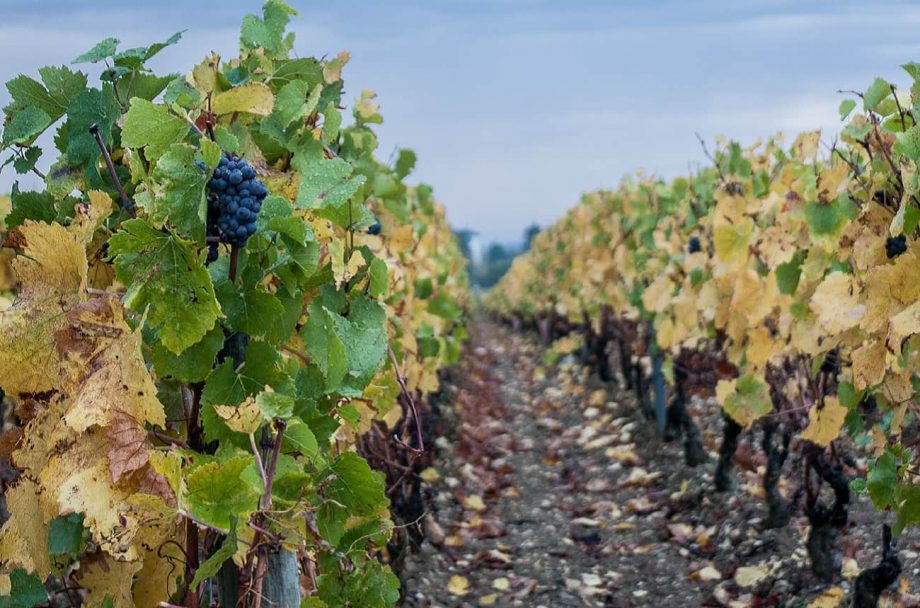
How much does a French vineyard cost?

vineyard

A single hectare of Burgundy grand cru vineyard cost €6.5m euros on average in 2019, which is up by 4% versus 2018, according to French land agency Safer.

That’s if you can find anything to buy, of course; if vines change hands within top Burgundy climats then buyers often deal in values of less than one hectare.

Safer figures show that average prices for Burgundy grand cru vines have risen by 71% since 2012.

If that you think that sounds prohibitive, then some winemakers in the Côte d’Or would likely agree. Safer cited ongoing concerns among producers about rising land costs and the difficulties this poses for wineries within France’s inheritance laws.

Elsewhere in France, it will come as no surprise to see the best-known appellations topping the vineyard price charts.

A single hectare in Bordeaux’s Pauillac appellation cost €2.3m per hectare on average in 2019, up by 5% on 2018, while Pomerol rose by 6% to €1.9m per hectare.

In the Côte des Blancs area of Champagne, vineyards cost a little more than €1.6m per hectare last year, up by 2% versus 2018.

However, there is a huge disparity in vineyard prices in France – as you might expect, given the size of the country’s wine industry.

Across France, appellation controlée (AOP) vineyards cost €148,000 per hectare on average in 2019, up by 0.5% versus 2018, said Safer.

Prices for AOP vineyards have more than doubled since 1997, but some were still well below the average.

A single hectare of Faugères vineyard in Languedoc (now Occitanie) cost €16,000 per hectare on average in 2019, having not changed since 2018.

Prices can vary significantly within some areas for different plots, depending upon their quality potential.

Outside of the AOP zones, French vineyard prices rose by 1.5% on average in 2019, to €14,400 per hectare.

It’s worth noting that buying a vineyard is just one step in a winemaking dream that is likely to involve significant up-front costs in general. Seek professional advice before making any decisions, of course.

Source: How much does a French vineyard cost? – Decanter

Donald Trump Degrades George Floyd’s Memory

Every day is a new low for Donald Trump as a member of the human race. On Friday, he dragged George Floyd’s memory down into the gutter, too.

Democratic and Republican party politicians alike don’t only represent and defend something horrible — our racist, exploitative system — but they sometimes say really horrendous things that reveal their true aspirations for capitalism and imperialism and how deeply flawed they are as human beings. In the bourgeois media, these moments are often referred to as “saying the quiet part out loud” — so named because they express what the speaker really thinks and the actions that speaker would really like to take. They often happen when the speaker doesn’t realize the microphone is on.

There are many famous “hot mic” moments. In 1984, President Ronald Reagan — doing a sound check just before a radio address while the Cold War still raged — said, “My fellow Americans, I’m pleased to tell you today that I’ve signed legislation that will outlaw Russia forever. We begin bombing in five minutes.”

There are also many examples of saying the quiet part out loud. In 2013, the state’s Republican Party chairman, Robert Gleason, admitted that the photo ID requirement that had recently been pushed through the legislature effectively suppressed voter turnout and that this had been the objective all along, thus exposing as a lie the claims about fighting “fraud.” He said it had “helped a bit” to lower Obama’s margin over Romney, cutting it to half of what it had been over McCain four years earlier. The Republican leader in the state’s House of Representatives, Mike Turzai, had already predicted during the campaign that the voter ID measure would “allow Governor Romney to win the state of Pennsylvania, done.”

Politicians typically try to walk back these moments. But not Donald Trump. There’s no such thing as a “hot mic” for this president. He even brushed off the infamous “Access Hollywood” tape, claiming at one point that it wasn’t him speaking. And he doesn’t just say the quiet part out loud routinely; he memorializes it in writing in his Twitter feed.

Even his closest advisers expect this from him. You can see it in their faces.

In that context, consider what Trump said on Friday when trumpeting a surprising decline in official U.S. unemployment that the Boston Globe generously characterized as based on “iffy” data. Speaking in the Rose Garden, Trump revelled in how the analysts seem to have been proven wrong. His own economic adviser Kevin Hassett had warned of an impending 20 percent unemployment rate in June. Referring to the TV shows he spends most of his time watching, Trump said, “I think it was one of the greatest miscalculations in the history of business shows, business shows talking about Wall Street,” he said.

Reading from a prepared statement, Trump then managed to make some unremarkable but at least coherent points. For instance, he said:

Equal justice under the law must mean that every American receives equal treatment in every encounter with law enforcement regardless of race, color, gender, or creed. They have to receive fair treatment from law enforcement.

But the moment he strayed from the paper in front of him, the real Trump came out:

We all saw what happened last week. We can’t let that happen. Hopefully George is looking down and saying this is a great thing that’s happening for our country. It’s a great day for him. It’s a great day for everybody. This is a great, great day in terms of equality.

Trump then declared the economic figures were great “for African Americans, for Hispanic Americans, and for Asian Americans, and for everybody.”

Donald Trump is incapable of even pretending to have any empathy for a murder victim and his family. He also seems to be mocking the very idea of racial equality. He is a malignant narcissist who must make everything about himself — either by pointing to pseudo-accomplishments or playing the victim of the “worst attacks” in history. And so, Trump’s “tone-deafness” — as the mainstream media likes to call it — once again provoked the denunciations of other capitalist politicians and their media spokespeople.

CNN’s Maeve Reston said that this comment showed Trump’s “breathtaking disconnect from the pain and tumult that has unfolded in this country after George Floyd’s death. Speaking later in the day, Joe Biden criticized Trump: “George Floyd’s last words, ‘I can’t breathe, I can’t breathe,’ echoed all across this nation and, quite frankly, around the world. For the president to try to put any other words in the mouth of George Floyd I frankly think is despicable.”

These are strong words, but what about the crime bill that Biden wrote? Isn’t that despicable too, given that it led to the United States becoming the world’s leader in locking people up — especially people of color?

Trump will be Trump. Every time the political talking heads on TV think he’s hit a “new low,” he shows that he has no low. But don’t let his particular brand of “despicable” confuse you. What is most despicable is the system Trump, Biden, and all the Democrats and Republicans represent — a system they are working overtime these days to keep from unraveling as people stream into the streets and say “enough.”

Democrats and Republicans sometimes hide their real agenda behind pretty words and phrases. Biden does this a lot. Trump doesn’t really. What ultimately matters is their actions. Democrats and Republicans alike actively perpetuate racism, violence, and oppression. Our job is to help turn the rage that is exploding everywhere into a political movement that puts Trump, Biden, and the rest of them in the dustbin of history.

Source: Donald Trump Degrades George Floyd’s Memory | Left Voice

Pope Francis on the death of George Floyd: We cannot tolerate racism and claim to defend life

“We cannot tolerate or turn a blind eye to racism and exclusion in any form and yet claim to defend the sacredness of every human life.”

Pope Francis this morning spoke of his “great concern” at “the disturbing social unrest” in the United States following “the tragic death of George Floyd,” which he attributed to “the sin of racism.”

“We cannot tolerate or turn a blind eye to racism and exclusion in any form and yet claim to defend the sacredness of every human life,” the pope said.

He did so in a message addressed to his “dear brothers and sisters in the United States,” meaning the entire nation and not just its 70 million Catholics, a senior Vatican source told America. He spoke to them during his virtual public audience from the library of the apostolic palace on June 3, which was carried by Vatican Media.

Continue reading “Pope Francis on the death of George Floyd: We cannot tolerate racism and claim to defend life” →