Molière Remembered as ‘Greatest Artist in History of French Theater’, Google Doodle Pays Tribute to French Actor and Playwright

Molière’s contribution is eternal in the sense that his work inspired future generations of comedians, in fearlessly calling out hypocrisy and making razor-sharp observations about the society and people in power. Molière Remembered as ‘Greatest Artist in History of French Theater’, Google Doodle Pays Tribute to French Actor and Playwright.

Molière is widely regarded as one of the greatest writers in the French language and literature of any language. The writer’s works include comedies, farces, tragicomedies, comédie-ballets, and much more

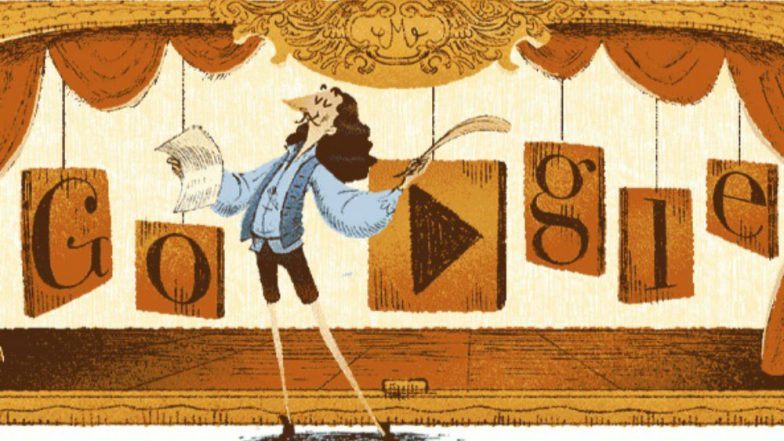
Google Doodle description made a special mention of his satirical plays and wrote in tribute: “His satirical plays fearlessly lampooned human folly and blended ballet, music, and comedy into a new genre that transformed buffoonery into witty social critique.”

The reason why the doodle has been dedicated to the artist today is because on this day in 1673, Molière premiered his final play, Le Malade Imaginaire (The Imaginary Invalid), a three-act comédie-ballet satirizing the medical profession.

“Molière starred in the title role of Argan, a severe hypochondriac who tries to convince his daughter to forsake her true love and marry his doctor’s son, so as to save on medical bills. In classic Molière fashion, the play’s dialogue pushes his characters’ vices and pretensions to the point of absurdity,” mentioned the description.

The doodle is special considering that it gives a view into Molière’s most memorable scenes from The Imaginary Invalid and other classics like School for Wives, Don Juan, and The Miser. Molière’s contribution is eternal in the sense that his work inspired future generations of comedians, in fearlessly calling out hypocrisy and making razor-sharp observations about the society and people in power.
Source: Molière Remembered as ‘Greatest Artist in History of French Theater’, Google Doodle Pays Tribute to French Actor and Playwright | LatestLY

A photographer from Caen wants to show the true face of the homeless

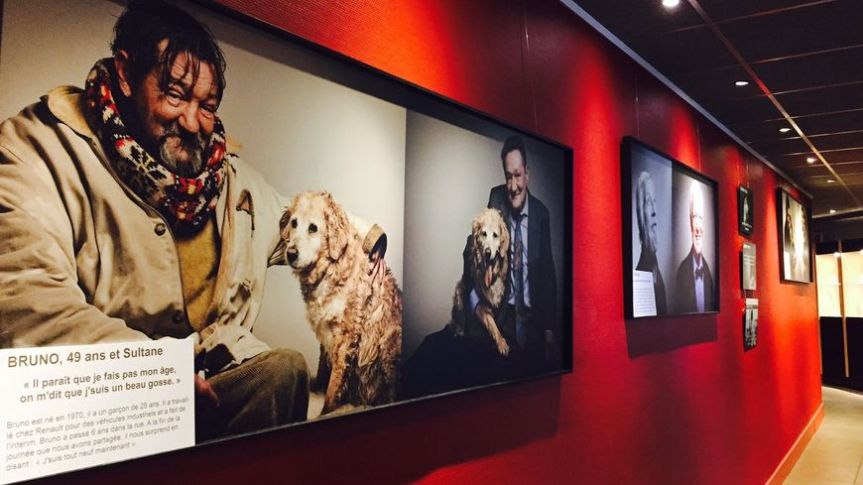
The photographer Florence Grall is currently exhibiting her portraits of SDF at Lux cinema, a pose before and after a makeover to change the look of these people that we sometimes meet every day in Caen.

Homeless Fixed to both faces is what wanted to show Florence Grall, photographer, she invited the homeless she met every day in the streets of Caen to pose for her before and after a day of makeover 

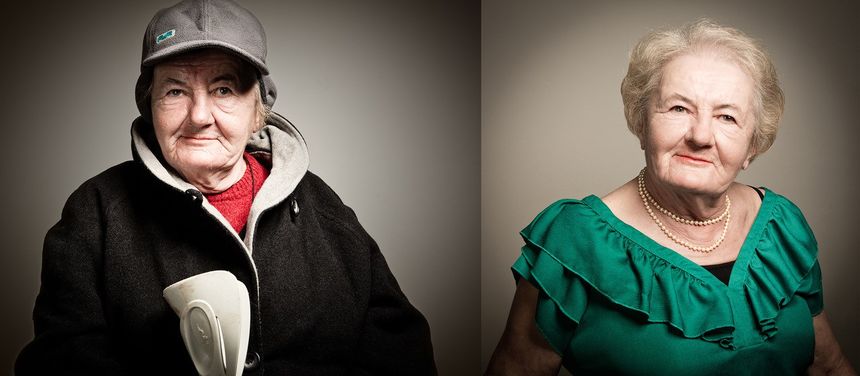
On the left, a woman with a hollow face, hidden under a cap and layers of big dark sweaters, ” there we are in front of Michelle , explains Florence Grall who visits us, Michelle is a little our mascot! the oldest she is 71 years old, when we offered her to spend the day with us she did not want and then we discovered that it was the day of her birthday “. In the picture on the right, Michelle is transformed into her green top , lipstick and pearl necklace, “Catherine the hairdresser really did a little grandmother’s hairstyle, with a styling we did makeup too. Michelle cried at the end of the day, adds Florence Grall, we all felt Michelle’s children during that day! 

Michelle - None
Michelle – Florence Grall – rights reserved

The idea of ​​the project was to show this dignity in everyone – Florence Grall, photographer

This day, Bruno, Guy, Cindy or Alain also participated. Fourteen men and women to whom Florence Grall the Caen photographer and her friends Continue reading “A photographer from Caen wants to show the true face of the homeless”

France honours its most provocative author 

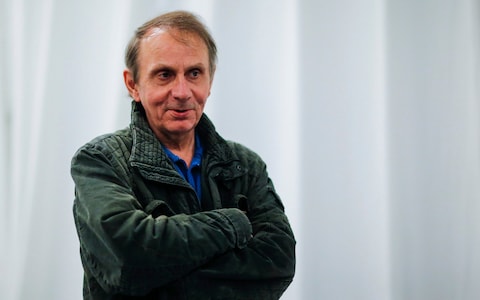
Michel Houellebecq, the enfant terrible of French literature, was awarded the Legion of Honour, France’s highest civilian distinction, in the New Year honours list on Tuesday.

A forthcoming novel by the celebrated but controversial author predicts the doom of western civilisation. Seratonin, due out on Friday, focuses on the festering rage in provincial France that has exploded into the “yellow vest” protests.

Like his previous books, it is set to become an instant bestseller and is already being hailed as the biggest literary event of 2019. It is also likely to enrage those who object to the views that have made Houellebecq, 62, an iconic figure for the nationalist, eurosceptic Right.

The title of the novel, to appear in English in the autumn, refers to the main ingredient of an anti-depressant that causes its anti-hero, Florent-Claude Labrouste, to suffer impotence and nausea. Like most of Houellebecq’s protagonists, he is a thinly disguised version of the author himself.

At 46, fed up with his Japanese girlfriend and his job, Labrouste returns to his native Normandy, where he meets suicidal farmers, prevented from making ends meet by EU dairy quotas. Out of despair and fury, they take to the streets and stop traffic in “yellow vest” style.

Houellebecq’s bleak view of France and Europe is much in evidence. “No one in the West will ever be happy again,” he writes. “This is how a civilisation dies, without danger or drama and with very little carnage.” [ . . . ]

Continue at THE TELEGRAPH: France honours its most provocative author 

Rodin’s paper cuttings exhibited for the first time, in Paris

Rodin would it be a precursor of the papers glued, announcing the modernity of Matisse? A new facet of the work of the master of sculpture is to be discovered at the Musée Rodin: one realizes that all his life he cut figures, variations of his drawings that he glued, assembled, with a great freedom (until 24 February 2019).

Auguste Rodin (1840-1917) is a bit like Picasso, his inventiveness seems limitless and we always discover new aspects of his work. Beyond his drawings, full-fledged works that are not preparatory studies for his sculptures, Rodin has always cut and pasted figures.

The Musée Rodin retains some 7,500 drawings. “I have a great weakness for these little sheets of paper,” said Rodin. 250 are presented in the exhibition, including a hundred or so cut papers. “I have exposed almost all the paper cut, all that we have, and there is almost no outside (of the museum),” says Sophie Biass-Fabiani, heritage curator in charge of drawings at the museum Rodin and Commissioner of the [ . . . ]

Source: Rodin’s paper cuttings exhibited for the first time, in Paris