
Tag: wine
What Really Happens as Wine Ages?
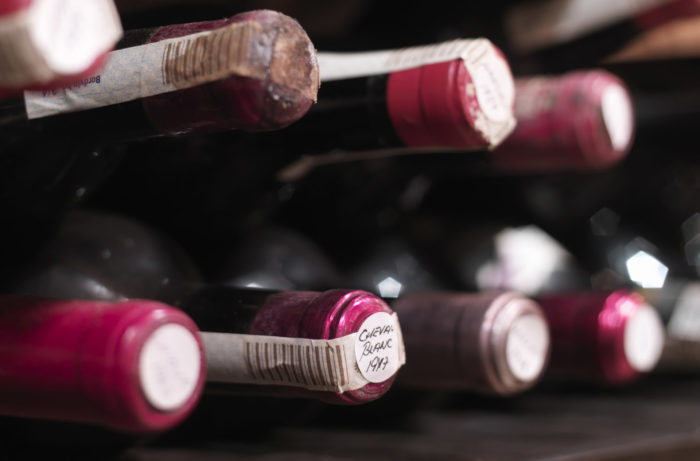
Most wines sold in the U.S. are made for immediate consumption without the need for cellaring. Some wine lovers, however, prefer to “lay wine down,”—or store bottles for a few years in order to enjoy them when the flavors have evolved.So what happens as wine ages, and how do its flavors change? Which wines should be aged? And, most importantly, why do we age wines at all? Here’s what you need to know.
What happens to wine’s flavor as it ages?
When wines are young, we taste their primary flavors, like grassiness in Sauvignon Blanc, plum in Merlot, apricot in Viognier or citrus in Riesling. We may also notice some secondary notes associated with winemaking techniques, like the vanilla flavor of oak or buttery nuances from malolactic fermentation.When wines age, we start speaking about tertiary notes, or flavors that come from development. This could mean young, bold notions of fresh fruit that become gradually more subdued and reminiscent of dried fruit. Other flavors, previously hidden by bold primary notes, come to the fore, like honey, herbal notes, hay, mushroom, stone and earth.
What causes these changes?
in wine is ever static. Acids and alcohols react to form new compounds. Other compounds can dissolve, only to combine again in another fashion. These processes happen constantly and at different rates. Every time you open a bottle, you catch the wine at another stage in its development, with new and different nuances. While the proportion of alcohol, acids and sugars stay the same, the flavors continue to change.

How texture develops in wine
Texturally, the wines also change. Dry, aged white wines can become almost viscous and oily, while reds tend to feel smoother. This is due to phenolic compounds like tannins falling out as sediment over time [ . . . ]
Continue at WINE ENTHUSIAST: What Really Happens as Wine Ages? | Wine Enthusiast Magazine
Why Old World French Winemakers are Choosing to Grow in Napa Valley
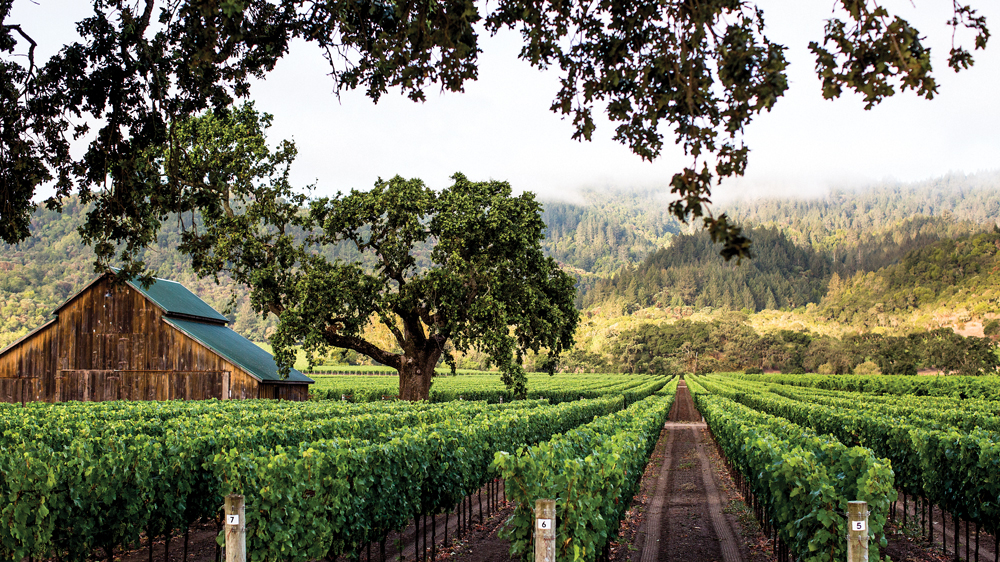 The trend of French winemakers relocating to the New World – why Napa is their new home, and what it means for the future of wine.
Drill down into a vintner’s experience these days and you’ll find an internship in Bordeaux, a harvest in Australia, a year in Argentina, a progressive stint in California. The movement of winemakers around the globe resembles nothing so much as an in-flight magazine’s map of airline routes.
One path, though, has become more heavily grooved in recent years. More and more winemakers (many representing major houses back home) are traveling on a one-way ticket—from France to the West Coast of the United States. It’s a commitment to concentrate on land lesser known than the great domaines and châteaux of Burgundy or Bordeaux; to raise families an ocean and a continent apart from grandparents; and to risk entire careers on early promise and a hunch [ . . . ]
Continue Reading at ROBB REPORT: Why Old World French Winemakers are Choosing to Grow in Napa Valley – Robb Report
Want To Work In A Vineyard? French Wine Growers Seek 2018 Harvest Labor

If working a wine grape harvest is on your bucket list, 2018 may be the year you realize the dream if you are eligible for employment in France. Due in part to an exceptionally hot summer in regions such as Jura and Alsace, the harvest date has crept up, leaving many growers in search of seasonal workers. As in other parts of the world, an agricultural labor shortage has become more common in recent years. In 2018, the early harvest in some parts of France has presented additional scheduling issues. Experienced pickers expect the work to begin a bit later in the year, and many of them are tied up with other jobs or are on leave.
Vineyard owners also say there seem to be fewer applicants as seasonal jobs appear less lucrative than in the past when some producers even held a waiting list for volunteers eager for the experience. Now some growers are prepared to provide bonuses, wine and small gifts to entice workers to choose their vineyards. Elise Bathelier is the human resources manager for Domaine Faiveley in Burgundy.
Employers realize the need to broadcast job openings via social media in addition to job fairs and personal networking. In late July, Alsace producer Domaine Allimant-Laugner posted on Facebook, “Harvest is approaching! Festivities launch on 8/24 or 8/27 with eight days of crémant harvest. Who wants to join our team?” Responses were met with personal messages regarding next steps. Soélis Défi, a provider of rural job matching services, has published an easy-to-use application form on Facebook.
The 2018 harvest in France is expected to produce a significant improvement on the yields of record-breakingly low 2017. According to July 2018 reports from the French Ministry of Agriculture, estimates are up double digits over last year. This is good news for the growers, but all those grapes must be picked at the perfect time.
Harvest is a flurry of urgent activity, with bands of laborers streaming down the rows with clippers. Harvested grapes are placed into bins that are carried or held on one’s back — when the bins are full they go into larger containers to be taken into the winery. This continues for days to weeks, depending on the size of the vineyard and the pattern of grapes being harvested.

Because grapes are harvested when they are perfectly ripe, certain portions of a single vineyard could be picked in their own time. Having a mobile team of workers on hand makes this process much easier. As vineyards blush closer to that magic moment, growers hope that plenty of eligible people answer the call.
Source: Want To Work In A Vineyard? French Wine Growers Seek 2018 Harvest Labor
Three classic French whites that go perfectly with seafood
Domaine Félines-Jourdan Picpoul de Pinet, Languedoc, France 2017 (£8.50, The Wine Society) Picpoul de Pinet is never going to come off well in a comparison with some of the bigger French wine hitters. The dry, unoaked white wine from the western end of the Languedoc isn’t the kind of thing anyone would buy to put in a cellar, or make a flashy fuss of ordering at a restaurant. The gap between the best and the worst examples isn’t especially wide: a friend in the trade likes to say it all comes from one big tank. And yet, all of the above is somehow part of its attraction. It’s there to do a job – match the seafood from the nearby Med and the Thau lagoon – without too much fuss. The picpoul grape variety’s natural acid nip and breeziness combining with lemon, touches of leafy herb and, in the impeccable production from Félines-Jourdan, a swell of stone-fruity richness.
Pierre Luneau-Papin Folle Blanche, Pays Nantais, France 2017 (£9.95, Joseph Barnes)
The affinity with seafood has meant Picpoul de Pinet has inevitably drawn comparisons with the original French fruits de mer favourite made further north around the Loire estuary: Muscadet. For the most part, wines in this area are made from melon de bourgogne, and it is to the whites made from chardonnay in Burgundy’s Chablis that the locals prefer their wines to be compared. Certainly that’s a relevant point of departure with the family domaine Pierre Luneau Papin’s classically steely Domaine de Verger Muscadet Sèvre et Maine Sur Lie 2016 (£12.99, Buon Vino). Curiously, however, the folle blanche takes us back to picpoul, the titular grape variety being a relation of the southern variety, although here making a much sharper but equally oyster-compatible dry white.
Château Lestrille Entre Deux Mers Blanc, Bordeaux, France 2017 (£12.12, Corking Wines)
There’s a touch of the 1970s bistro wine list about muscadet. If you set that retro charm alongside its ability to stand in for chablis when smaller vintages in burgundy have led to shortages in supply, then you can begin to understand why muscadet has become a firm favourite for sommeliers working in some of the country’s trendier restaurants. The same hasn’t quite come to pass for another dry white favourite of yesteryear, Entre-Deux-Mers, although I have begun to see a few merchants giving this Bordeaux region’s brisk spin on the sauvignon blanc-led blend another chance. Château Lestrille’s version is super-clean and cleansing; Château Sainte-Marie Entre Deux Mers 2017 (£10.95, Great Western Wine) has a touch of custard-richness and tropical fruit to go with the zinginess.
Source: Three classic French whites that go perfectly with seafood | Food | The Guardian
Fantastique Wine Restaurants in Paris
There’s so much to fall in love with in Paris: the history, the architecture, and of course, the cuisine. The 13 Wine Spectator Restaurant Award winners below enhance the magic of French dining with stellar wine programs that deliver experiences to match the grandeur of the city. From a family-owned bistro to high-end hotel eateries, these wine restaurants shine bright in the city of lights.

Epicure
Epicure is housed in the opulent Le Bristol Paris hotel, which first opened in 1925.
EPICURE
A fine-dining staple in a longstanding hotel
Le Bristol Paris, 112 Rue du Faubourg Saint-Honoré
(33) 1-53-43-43-40
www.lebristolparis.com
Open for lunch and dinner, daily
Grand Award
Wine list selections 3,000
Inventory 95,000
Wine strengths Head sommelier Bernard Neveu manages the wine list, which is entirely French except for a few pages of international labels. Burgundy is the strongest region, with nearly 200 grand cru reds alone. Additional highlights include Champagne, Bordeaux and the Rhône.
Above and beyond The team takes extra steps to ensure the best possible wine experience at Epicure. Each of the hotel’s dining outlets has its own cellar to avoid disturbing the wines with excess movement, and every selection on Epicure’s list is sourced from Neveau’s personal connections with winemakers.
Cuisine Chef Eric Frechon puts a modern spin on dishes firmly grounded in French cuisine, stuffing macaroni with black truffle, artichoke and foie gras, and serving lemon-thyme langoustines with an onion-mango condiment.
Noteworthy neighbors Le Bristol shares the block with the Elysée Palace, the official home of French presidents since 1848, as well as other cultural landmarks like Boutique Pierre Cardin and Christian Lacroix.

Le Taillevent
At Le Taillevent, a seasonal menu complements a world-class collection of French wines.
LE TAILLEVENT
A Parisian institution since 1946
15 Rue Lamennais
(33) 1-44-95-15-01
www.taillevent.com
Open for lunch and dinner, Monday to Friday
Grand Award
Wine list selections 2,300
Inventory 300,000
Going strong André Vrinat opened the restaurant in 1946, and his family maintained ownership until the Gardinier family purchased it in 2011. Seventy-two years after opening, Le Taillevent remains at the top of its food and wine game. It has maintained a Restaurant Award since 1984, longer than any other winner in Paris.
Wine strengths Antoine Pétrus is the general manager and wine director of the overwhelmingly French cellar. The Bordeaux and Burgundy sections are exceptional, with 12 vintages of Château Latour and more than two dozen labels from Domaine de la Romanée-Conti. Picks in Champagne, the Rhône, the Loire and Alsace are also outstanding.
Cuisine Chef Alain Solivérès serves seasonal French dishes with creative touches, like tomato jelly with lobster, and garlic flowers atop turbot cooked in butter. Occasionally, Solivérès will create a special tasting menu, like a recent one with a focus on black truffles.
Restaurant Award–winning sibling Le Taillevent’s sister restaurant, Les 110 de Taillevent in London, holds a Best of Award of Excellence for its 1,300-label wine list and 110 wines by the glass. Continue reading “Fantastique Wine Restaurants in Paris”
 Pas De Merde