How To Pair Bordeaux Red Wines With Food

Food Pairing for Red Bordeaux Wines allows for a number of different dishes that serve to compliment and enhance both the food and wine. We take a look at both Left Bank and Right Bank Red Bordeaux Pairings, in addition to the recipes needed to make these delicious and savory dishes.

The Bordeaux region of France is one of the most noteworthy winemaking regions in the entire world.  It’s prized by both wine aficionados and newcomers alike due to its rich flavor, complexity, and refined characteristics.

While both red and white wines are produced in Bordeaux, it’s typically the red blends that are most prized by consumers.

Bordeaux red wines are complex, with rich mineral flavors, earthy tones, and refined red, black & blue fruit. Today, we’ll be looking at the best Bordeaux food pairings & recipes for various styles of Red Bordeaux Wine.

A “Bordeaux” red blend (also called a Claret) is typically made from at least two grape varieties, however, there are up to 5 grape varieties that are approved to be utilized when making red wine in the Bordeaux region. Those grape varieties include Cabernet Sauvignon, Merlot, Cabernet Franc, Petit Verdot, and Malbec.

The Best Food Pairing for Bordeaux Red Wines – Left & Right Bank Red Blends

Also worth noting is that there are several sub-regions within the Bordeaux winemaking region of France.  Depending on location, some red wines may be more Cabernet Sauvignon heavy, while others may be more Merlot dominant.  For simplicity’s sake, we’re going to split Bordeaux in two and discuss two typical winemaking styles in the region that most commonly utilized

Continue reading “How To Pair Bordeaux Red Wines With Food”

Why French Winemakers Are Welcoming Bats to Their Vineyards

Bats in the vineyardThe winged creatures may help the wine industry salvage a terrible year

It’s not such a batty idea: Bordeaux wine producers are building bat-friendly habitats on their vineyards to help eradicate the issue of grapevine moth and grape berry moth infestation.

And in doing so, they’re hoping to salvage a beleaguered French wine industry that’s suffering not only from pests but high tariffs, climate change and the on-going COVID-19 pandemic, all of which is decimating sales of high-end wine bottles.

As Forbes reports, wine producers in France are creating strips of grass between the vines and building bat boxes; the hope is that the insect-eating mammals will eradicate the moths that cause botrytis, a gray mold that’s seriously hurt the industry before, particularly Champagne.

A Bordeaux-based scientist has been catching bats in nets and testing for the moths in their digestive systems; unfortunately, even their presence can’t prove if the yields will increase, as there are too many factors (such as climate) that change every year.

Source: Why French Winemakers Are Welcoming Bats to Their Vineyards – InsideHook

French warm to ‘impossible’ wine from Calvados country

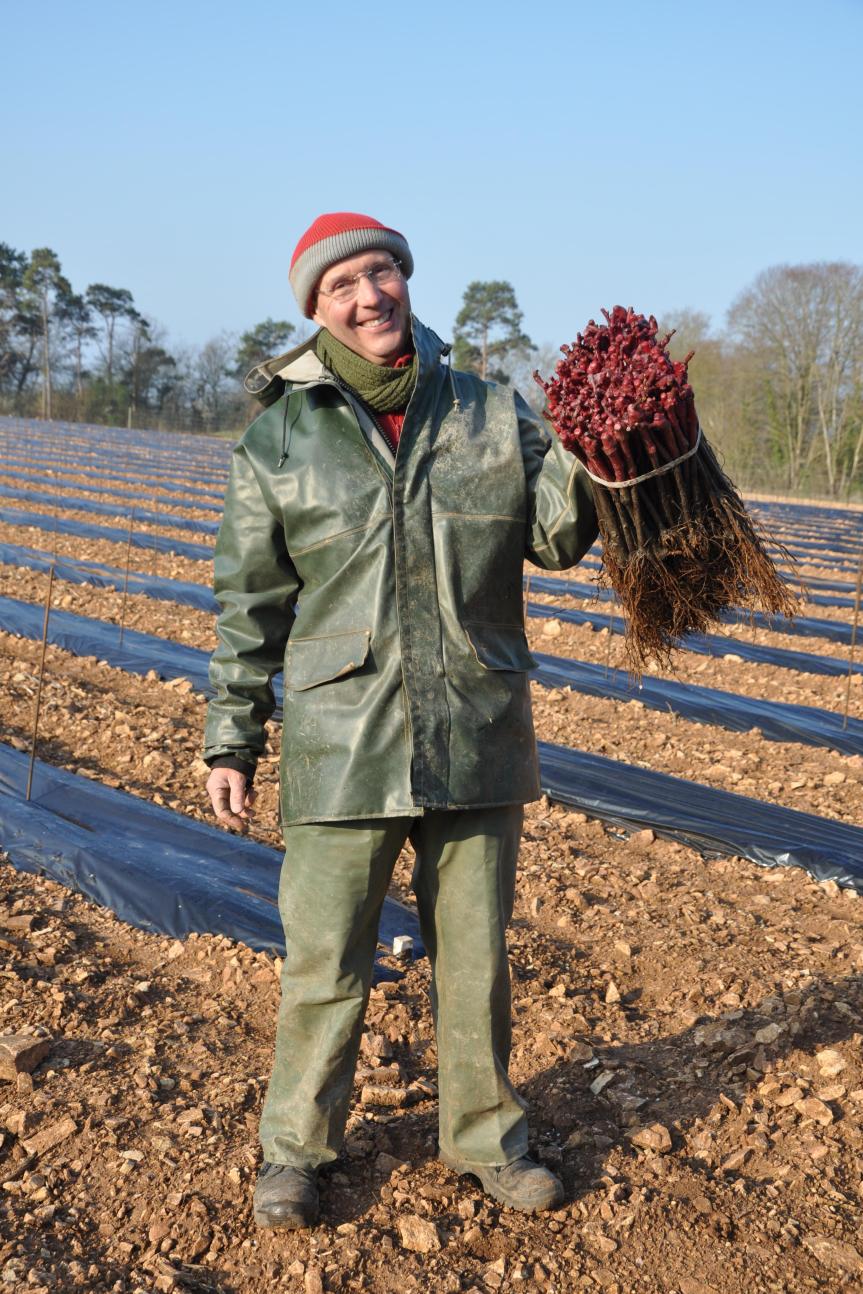
When a solicitor from Normandy announced plans to make wine in his home region, connoisseurs were incredulous. “It seemed totally incongruous to them,” Gérard Samson, 62, said. “It wasn’t just that they thought the wine would be bad. They thought the idea was impossible.”

It has taken Mr Samson more than 20 years to overcome the deeply held belief that only a fool would create a vineyard so close to England, but, at last, he appears to have beaten the prejudice.

Sales of reds and whites from his Arpents du Soleil vineyard in the Calvados area have risen by about 20 per cent compared with 2019, and the demeanour of customers arriving for tastings has changed completely.

The French former lawyer Gérard Samson has found success with his Normandy vineyard
The French former lawyer Gérard Samson has found success with his Normandy vineyard [ . . . ]

Continue at The Times: French warm to ‘impossible’ wine from Calvados country | World | The Times

Bright and vivid, it’s hard to beat Beaujolais for ‘gluggable’ wines


Caves de Juliénas-Chaintré Villages Cuvée Six, Beaujolais-Villages, France 2018 (from £9.95, nywines.co.ukeynshamcellars.combutlers-winecellar.co.uk) It would be very hard to find a red wine region in the world offering better value for money than Beaujolais at the moment. I don’t just mean that the land north of Lyon provides some of the most reliably drinkable red wines you can find for not much more than a fiver. Wines that are relatively light and, with their soft to non-existent tannin and bright berry thirst-quenching juiciness, are the ideal incarnation of that onomatopoeic wine adjective, gluggable. Chillable, wines such as Tesco Beaujolais Rouge or Sainsbury’s House Beaujolais (both exactly £5). The region also regularly hits a thirst-quenching, prettily-scented spot for a couple of quid more, with “villages” wines, from superior vineyards, such as Morrisons The Best Beaujolais Villages (£6.50 until 4 October), Waitrose Blueprint Beaujolais-Villages 2018 (£7.99) or, in super-succulent, vivid, finger-staining, fresh-off-the-bush style, the Cuvée Six made by a 170-strong co-operative of local growers.

Continue reading “Bright and vivid, it’s hard to beat Beaujolais for ‘gluggable’ wines”

Beaujolais Wine Is Back: What to Look For and How to Drink it

The French wine varietal Beaujolais is making a comeback after decades in the shadow of Burgundy. Here’s what to look for and pairing ideas.

Years ago, while I was tasting exquisite Bordeaux vintages with a high-flying collector, he described Beaujolais in a memorable way: “Sadly stuck in the shadow of Burgundy.” He dismissed it with a wave of his hand. The way he said it, referring to its neighbor to the north, you’d think the region was a sickly Dickensian orphan with no hope.

Until recently, the region struggled mightily from a bad rap—and for good reason. In the 1970s and ’80s, the late, legendary wine merchant Georges Duboeuf created a whole November festival around the release of Beaujolais Nouveau, the entry-level wine named for its being bottled and distributed so soon after harvest.

It succeeded but also created a “crisis,” says Sonja Geoffroy, who works on the winemaking team at the wonderful family-owned Chateau Thivin, in the town of Brouilly (try their Cote de Brouilly). “People didn’t know there was anything beyond Nouveau.” The success created such a demand that many producers planted new versions of Gamay vines that delivered on yield but not quality.

By the late 1990s, Beaujolais was the wine that dared not be sipped in some circles—even though great stuff was still being made by the top producers in the region’s best vineyards. Critics and collectors wouldn’t touch it with a 10-foot wine stem.

Fast-forward to today, when the crus of Beaujolais—the wines from 10 areas in the northern part of the region officially designated as producing the highest quality—are some of the most talked-about bottlings among wine lovers in the know. They can age very well, but most are not made to cellar for more than a decade. We still need something to drink tonight with dinner, right?