
Trump is using an executive order to take aim at social media companies after Twitter fact-checked his recent posts — this ACLU lawyer is breaking down how enforceable it really is pic.twitter.com/enxNzimUpG
— NowThis (@nowthisnews) May 29, 2020
Tag: Trump Crime Family
The Psychopath in Chief
I spent hundreds of hours with Donald Trump to ghost-write ‘The Art of the Deal.’ I now see a deeper meaning behind his behavior.

By: Tony Schwartz
“Imagine — if you can — not having a conscience, none at all, no feelings of guilt or remorse no matter what you do, no limiting sense of concern for the well-being of strangers, friends, or even family members. Imagine no struggles with shame, not a single one in your whole life, no matter what kind of selfish, lazy, harmful, or immoral action you had taken … You can do anything at all, and still your strange advantage over the majority of people, who are kept in line by their consciences, will most likely remain undiscovered. How will you live your life? What will you do with your huge and secret advantage?”
— Martha Stout, The Sociopath Next Door
Among the accomplishments Donald Trump parades most proudly is that he has won 18 golf club championships. Like so many of his claims, this one is pure fiction. When the sportswriter Rick Reilly investigated for his book Commander in Cheat: How Golf Explains Trump, he found that 16 of the claims were transparently false, and no evidence existed to support the other two. In one instance, Trump said he had won a championship at the Bedminster, New Jersey, club he owns, even though he was in Philadelphia on the day the event was held.
When Trump does play, Reilly reported, he takes “mulligans” (extra strokes that aren’t counted in one’s score ), throws opponent’s balls off the greens and into the bunkers, and kicks his own errant shots back onto the fairway so often that one of his caddies nicknamed him Pele, after the soccer star. “Trump doesn’t just cheat at golf,” Reilly concluded. “He cheats like a three-card Monty dealer. He throws it, boots it and moves it. He lies about his lies. He fudges and foozles and fluffs.”
How do we deal with a person whose core impulse in every part of his life is to deny, deceive, deflect, disparage, and double-down every time he is challenged? And what precisely is the danger such a person poses if he also happens to be the leader of the free world, during a crisis in which thousands of people are dying every day, with no letup in sight?
The first answer is that we must understand exactly who we’re dealing with, and we have not, because what motivates Trump’s behavior is so far from our own inner experience that it leaves us feeling forever flummoxed.
The trait that most distinguishes psychopaths is the utter absence of conscience — the capacity to lie, cheat, steal, and inflict pain to achieve their ends without a scintilla of guilt or shame, as Trump so demonstrably does.
In July 2016, shortly before Trump became the Republican nominee for president, I was interviewed by Jane Mayer for an article in The New Yorker that was eventually titled “Donald Trump’s Ghostwriter Tells All.” Mayer described my experience with Trump over the 18 months it took me to write The Art of the Deal. During that time, I spent hundreds of hours with him.
Continue reading “The Psychopath in Chief”France bans use of hydroxychloroquine, drug touted by Trump, to treat coronavirus

Hydroxychloroquine had been approved for use in seriously ill patients, but the latest large-scale research shows it could do more harm than good.
Paris — France has banned the use of the controversial anti-malarial drug hydroxychloroquine to treat people with COVID-19, the diseased caused by the new coronavirus. The move follows the publication of initial findings from a large-scale study that found the drug offered no benefit to patients, and could in fact be harmful.
The Lancet medical journal reported on May 22 that the observational study on nearly 100,000 patients from multiple countries found a higher mortality rate and an increased frequency of irregular heartbeats in patients who were given hydroxychloroquine.
France’s health minister responded to the findings the next day by asking the French High Council for Public Health (HCSP) to review the situation, and it recommended halting the use of the drug
Source: France bans use of hydroxychloroquine, drug touted by Trump, to treat coronavirus – CBS News
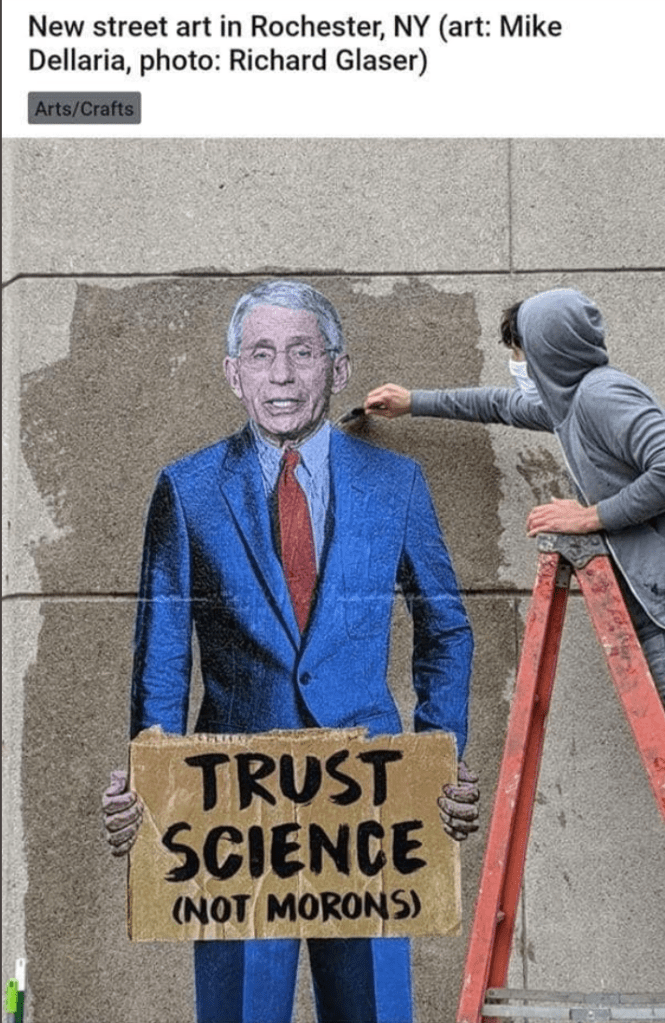
Trust science, not morons
- Jane Godall on apes and Trump’s grooming Macron – Read
- This anti-Trump ad is paid for by Republicans. Watch!
- If you’re British – check out our sister site, The Hobbledehoy
Chris Hedges on Covid-19 and the Collapse of American Capitalism
Chris Hedges is a Pulitzer Prize-winning journalist who spent nearly two decades as a foreign correspondent in Central America, West Asia, Africa, the Middle East, and the Balkans. He is host of the Emmy Award–winning RT America show On Contact. Chris Hedges is the author of several bestseller books such as American Fascists, Days of Destruction, Days of Revolt. His latest is America: The Farewell Tour.
Hosted by Mitch Jeserich.
Letters & Politics seeks to explore the history behind today’s major global and national news stories.
How a disdain for government undermined U.S. pandemic response
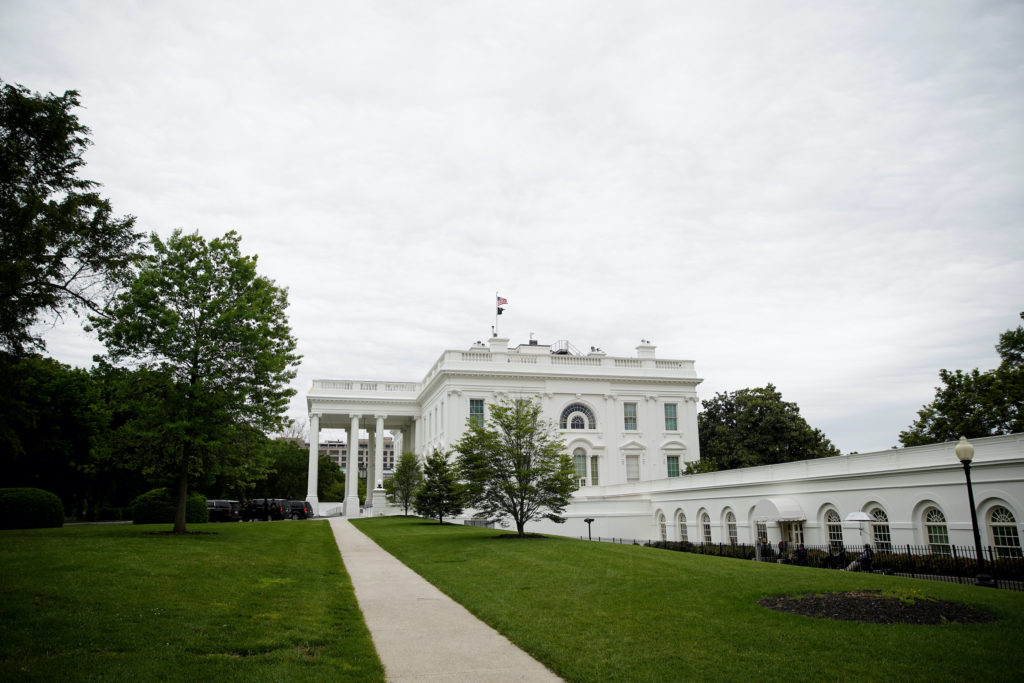
Throughout the coronavirus pandemic, questions have been raised about why the U.S. federal government was not better prepared for such a crisis. Scrutiny of President Trump has been intense, but questions extend beyond him to the efficacy of government and civil service more broadly. William Brangham talks to the American Enterprise Institute’s Yuval Levin and The Atlantic’s George Packer.
Full Transcript courtesy PBS
-
Judy Woodruff:
Throughout this entire crisis, questions continue to be raised about why the U.S. government was not better prepared for such a challenge.
As William Brangham tells us, those questions include how the Trump administration views the role of government and civil service broadly.
-
William Brangham:
That’s right, Judy.
Most people would agree that the scale and speed of this pandemic would have taxed the resources and abilities of any administration and of any president. But the Trump administration’s response has certainly come under some intense scrutiny.
Let’s turn now to two writers who have looked at this response closely.
Yuval Levin is the director of social, cultural and constitutional studies at the American Enterprise Institute. He’s the author of “A Time to Build: From Family and Community to Congress and the Campus, How Recommitting to Our Institutions Can Revive the American Dream.”
And George Packer’s recent articles in “The Atlantic” look at the Trump administration’s response to this crisis. He is also author of a recent book on the diplomat Richard Holbrooke and, before that, author of “The Unwinding: An Inner History of the New America,” among other books.
Gentlemen, thank you both very much for being here.
George Packer, to you first.
You have written that the seeds of the administration’s response were in some ways predictable, given the way the administration viewed the role of the government preceding this crisis.
Can you explain that a little bit more?
-
George Packer:
I think Trump spent the first three years of his administration almost in combat with his own government, his own bureaucracy, rooting out people he perceived as disloyal, placing cronies and sycophants in key political jobs, and creating an atmosphere of fear and of chill among the career civil service, so that, by the time the pandemic came, there was a kind of passivity and even absenteeism in big, important areas of the federal government that Trump had seen as serving no purpose, beyond his own personal political interests.
And so once he needed a bureaucracy to do things in order to keep the country safe, to protect us, it wasn’t there. Either people — jobs were unfilled or people were, in a sense, hiding under their desks because they knew that, if they said something Trump didn’t like, he would come after them. And that’s been happening throughout the pandemic.
-
William Brangham:
Yuval Levin, the same question to you.
You have written also that there has been certainly a denigration of expertise and a somewhat chaotic decision-making process within the White House.
Do you think that that has also affected the pandemic response?
-
Yuval Levin:
I do.
I agree with what George has said. And I think the way that he’s it in his recent pieces in “The Atlantic” has been quite right.
But I would focus particularly on the White House staff and the team around the president, which expresses the president’s own attitude about the relationship he should have to the rest of the government.
The White House staff is there to enable the president to receive information in the form of decisions to be made and to process it, to listen to expertise, to make decisions.
And the fact is, that process has never existed in this White House. There has never been a functional structure of decision-making. That’s a problem at any time, but it becomes an enormous problem at a moment of crisis, when you have to have a reliable chain of command, you have to have a reliable process for making decisions, you have to have distinctions between what’s said in public and what is said in private, and how the president thinks about his task of communicating to the public in a reassuring way.
None of that, none, is happening in an effective way in this administration. And what you’re finding is a president whose understanding of the job has not been formed by any experience at any level in government.
For the first time in our history, we have a president who has not served either as a senior military officer or as a senior public official before becoming president. Instead, he comes into the job as a performer, and he sees himself in the job as a public performer putting on a show.
And the fact is, in a crisis, the president has to be an inside player, where he has to be making decisions and operating the arms of the government from within. This president just has no conception of how that is supposed to work, no trust in the rest of the system. And in a time of pressure and crisis, it shows.
-
William Brangham:
George, you and Yuval are making this same point, but devil’s advocate here.
We have seen other crises affect other administrations where they have been caught flat-footed. We saw it in Katrina, after 9/11, even in the initial stages of the housing crisis.
Isn’t some flat-footedness, isn’t some initial chaos and confusion to be expected, especially when this virus really does, in some ways, trump the severity of those other crises?
-
George Packer:
Yes, that’s true.
And in other countries that we look to as examples of well-functioning democracies in Europe and in Asia, even the ones that seem to have done well, Germany, South Korea, they have made mistakes. Others, Spain and Italy, have seen results that have been as bad as or worse than ours.
I think the difference is what you Yuval was just describing, which is that these are the kind of unavoidable blunders of big, unwieldy governments faced with something that very few governments plan for, anticipate and are ready for. And very few politicians have the courage and foresight to get out ahead of facts and listen to their scientists and their experts, and do things the public may not like even before the public knows they’re doing them.
What we see in this case, in Trump’s case, is a White House that has continually undermined its own administration’s response at every step of the way. It’s as if at every moment when the question was, what is the best way to get out ahead of this and minimize suffering and death, Trump has done the opposite.
And that’s — I don’t know if that’s true in any other country in the world, and that’s a direct result of his idea of what it means to be president, which I think, in his case, is — that means to use power to serve his own interests, not to lead the country, not to solve the country’s problems, certainly not to bring the country together, instead, to divide us in his own interests.
-
William Brangham:
Yuval, picking up on George’s point here, it has been brought up several times that, if the president really does see this as primarily a political issue to solve, not a public health one, one could argue that the president should have used all the levers at his power in the federal government to ramp up testing, to deal with the shortages of protective supplies.
Why do you think that the president seemingly was reluctant to use the levers of government, if one could argue those might have saved lives and those might have then strengthened his electoral chances in November?
-
Yuval Levin:
Yes, I think reluctance ends up just not being quite the right term here.
I think the president has turned out to be incapable of using the levers of power in an effective way. There’s no question, as you suggest, and as George says, that this is a crisis that would have overwhelmed any government and that has overwhelmed many governments.
The question is, how do you learn from mistakes in your response? How do you mobilize over time? That our government wasn’t prepared for this in advance is not an indictment. But that we have not learned from mistakes over two and three months, that we are still basically in the same place we were in terms of our capacity to establish a process for decision-making that helps us improve over time is the fault of the senior executives in the Trump administration.
There’s no way around it. Our country has done some things very well. I think the health system handled this OK. The American public has been willing to make tremendous sacrifices. Many governors have stepped up. Some federal officials have stepped up.
But the president has a distinct role here, a coordinating and reassuring role, that he has simply failed to perform. And I don’t think that that’s a decision he’s made.
I think that’s just an incapacity that’s been revealed and which, of course, was evident in some respects before, but becomes especially problematic in a moment of crisis like this.
-
William Brangham:
All right, really interesting conversation.
Yuval Levin, George Packer, thank you both very much for being here.
Source: How a disdain for government undermined U.S. pandemic response | PBS NewsHour
 Pas De Merde