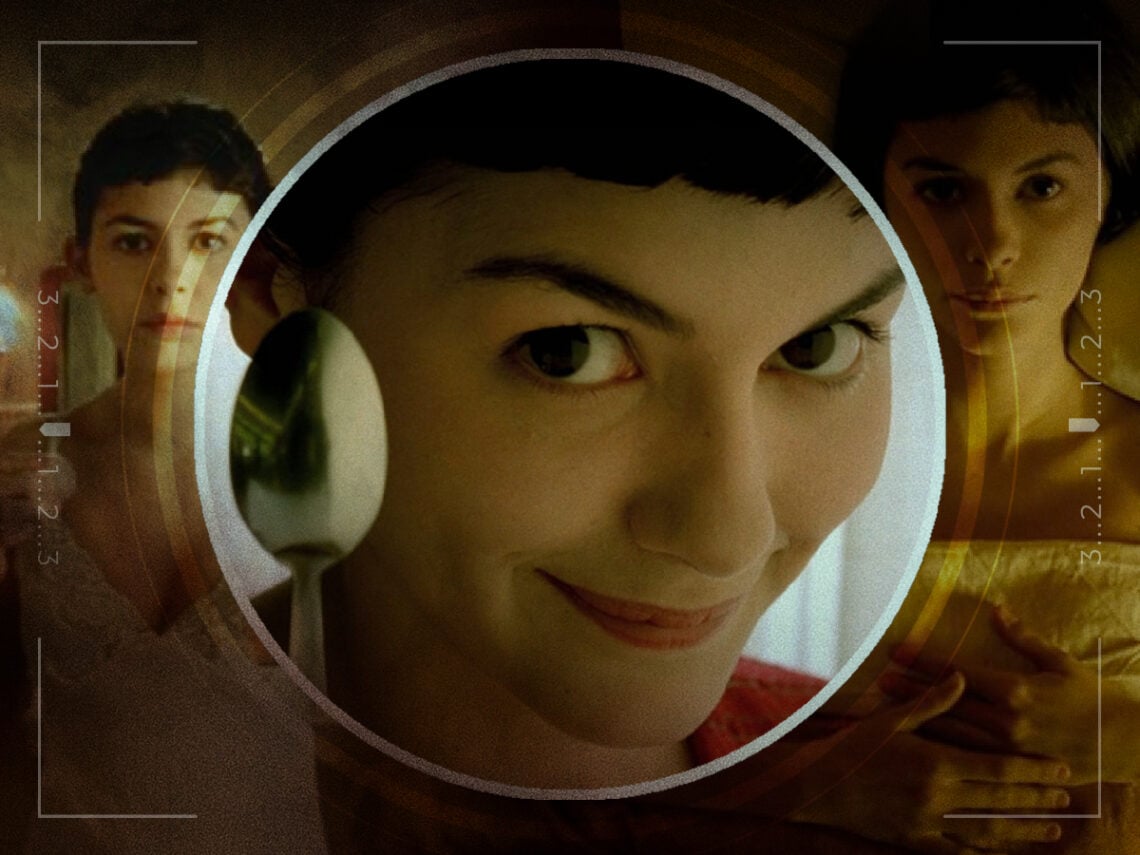
 25 years on, Jean-Pierre Jeunet’s movie ‘Amélie’ is still just as fresh and enjoyable as it was in 2001, led by a brilliant performance from Audrey Tautou.
Source: 25 years of ‘Amélie’: the movie that changed my life
This April, Jean-Pierre Jeunet’s Amélie turns 25, and in a few months’ time, so do I, becoming the same age as one of my most beloved films, and just a year or two older than the protagonist, who was played so charmingly by Audrey Tautou.
I’ve long felt a deep connection to the film, although that’s hardly a unique experience, as millions of people love Amélie, and it’s perhaps one of the most famous French movies ever made, rivalling French New Wave classics like Breathless when the question ‘name a French film’ is asked. You don’t have to be into foreign or arthouse cinema to have seen the 2001 film, and for many, it’s a gateway; it certainly was for me.
But while we often discard these gateway films in favour of weirder, more obscure ones as we delve into a specific niche, I could never forget how perfect Amélie is, and while some might see it as a little saccharine, I would simply argue against that conception. Sure, it has its moments, but the film is aware of these, and it asks us to lean into the whimsy, to appreciate the more wholesome parts of life.
You can take it from me, as I’m not one to enjoy a saccharine movie and much rather watch something a bit depressing, to be honest, but Amélie Poulain just steals my heart every time, and makes me wish I worked in a Parisian café, distracting myself from my own world by getting stuck into the lives of others, while buoyed by perhaps the most French-sounding score of all-time courtesy of Yann Tiersen.
Amélie is illuminated in a warm and nostalgic palette of reds, greens and yellows, making me yearn for my world to actually look as vibrant and fantastical as that, even when everything is a little too green, and I love that there are little moments of magic that colour the everyday, like when the titular character lies in bed, and the lamp by her side momentarily comes to life, the ceramic pig attached to the stand pulling the cord and turning out the light.
I love her desire to help others and to see the best in people, although she never gets too good for a bit of playful revenge, like when she sabotages Collignon’s routine because of his treatment of the mentally-disabled Lucien, and I definitely enjoy her strange friendship with the glass man, Raymond, who carefully paints reproductions of Luncheon of the Boating Party and soon unlocks the key to Amélie’s desire for romance with a young man named Nino.
What I love most, though, is how romance plays a central role in the film without being its sole defining factor, as regardless of the fact that Amélie is pretty lonely, when she realises that she fancies Nino, she enacts a cat-and-mouse game with him, all the while playing matchmaker for others and meddling in their lives for the sake of helping people for the better.
Her interest in Nino is playful and ultimately rewarding because she finds her match in a man who is similarly a little odd, his quirk being collecting disused photobooth strips and compiling them into a photo album, while Amélie has a whole host of peculiarities which the film so adoringly celebrates, like hearing the cracking of a crème brûlée, with the montage of her favourite little moments, and those of her friends and family, never failing to elicit a smile.
The film highlights those intense moments of fancying someone, with Amélie’s heart literally thumping out of her chest at one point when she sees Nino, and while she gets her happy ending with him, the film doesn’t ever make this romance its only conceit, which remains focused on the tale of a dreaming introvert who finds her own ways of communicating and connecting with others, of imagining the world around her, like when she observes others in the cinema with a smile or contemplates how many people are having sex across Paris in that very moment, and never before had I seen a film with a character quite like her.
Watching Amélie as a teenager for the first time was a turning point, giving me someone I could relate to, who was quiet but never subservient, who found happiness in her own determined and fun way. And what’s more, it opened me up to a world of cinema I didn’t quite know existed; I’d certainly seen a few foreign films before, but this one was so vibrant, so artistically-driven without sacrificing plot or character development, that it was witty and stylish, and an utterly addictive gateway.
I fell in love with the movie and subsequently immersed myself in the kinds of cinema that further depicted a world so real yet larger-than-life, with Amélie becoming the cinematic embodiment of possibility and pure magic to me, and years later, that magic is still there, flickering through every frame.