Where to Eat in Paris: The Best 13 New Restaurants to Try Right Now

To make choosing where to eat in Paris as painless as possible, we’ve done the “hard” graft for you by testing out 13 of the newest, most talked-about places in the city. From creative cuisine hailing from Israel to the chef that’s shaking things up at the Eiffel Tower, we’ve got you covered.

1. Shabour, A (Michelin) Star In The Making

Every dish here is testimony to the chefs’ inexhaustible inspiration. And teamed with hospitality that’s rarely seen in trendy Paris restaurants of this caliber, Shabour certainly packs one mighty punch.

With several restaurants under their belt in Jerusalem and Tel Aviv, London and Paris, Shabour, meaning ‘hangover’ in Hebrew, is the clan’s third restaurant and first independent endeavor in the French capital.  Alongside the enigmatic Assaf Granit is his clan, Dan Yosha and Uri Navon in the kitchen, and Tomer Lanzmann as head host and all-round ambiance-setter en salle.

As far as the décor goes, it’s simple. And that’s the way they wanted it. A former jazz club, the space is entirely candlelit. The stone walls and waxed cement floors provide the backdrop for an open kitchen encased in a marvelous jade-green marble counter for diners to perch at, giving the restaurant a perfectly achieved result.

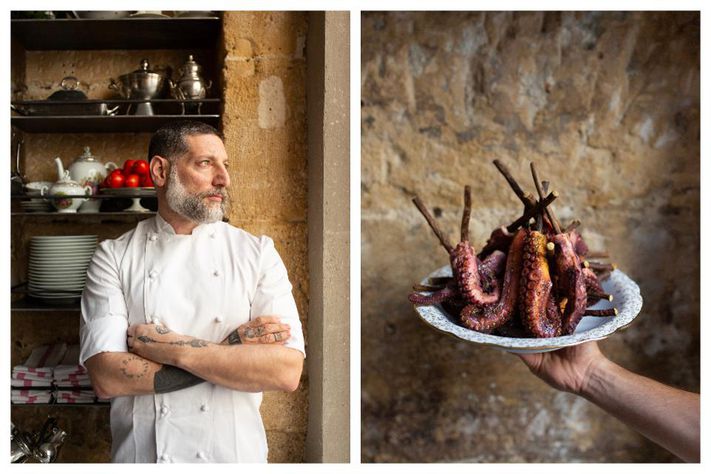
In a silent ritual of swift movements and the occasional hint of a smile in his icy blue eyes, lead maestro Assaf deposits utensils in front of diners in preparation for each dish, his hands, covered in cryptic black tattoos, sporadically emerging from the shadows.

He lays dinky forks on the counter. An oyster appears adorned with zata herbs (similar to wild oregano), apple and shallot juice, all laid on top of a wooden stand like an artwork, ready to be blowtorched before we swallow it, reeling from the burst of flavor as it slowly imparts its notes in our mouths.

Another stand-out dish includes scorched leek plunged in vegetable stock and filled with labanais (yoghurt-like drink) and porcini mushrooms accompanied by a halloumi crumble and stock that’s meant to recall a journey through the woods. And what a journey it is, each dish pulling us deeper into a world unknown where flavor becomes all that matters.

Next up, Assaf lays out a porcelain egg cup, ready to be filled by Dan with four types of egg: poached, marinated for 48 hours in black tea with ginger, relish of carrots and onions, raisins, tahini, Egyptian spinach, salmon eggs, and poutarde. Explosive. As is Uri’s exceptional amuse bouche of escargot-shaped apple roasted with olive oil and arak, and pickled pink and white beetroot stuffed with brie and plum purée, prepped like a “small tower of Babylon,” as he describes it while he rolls it into shape behind the counter in front of us.

A flurry of dishes, each one more sophisticated than the next and interwoven with accents from a faraway land; the genius behind each mouthful is the scattered positioning of the ingredients on the colorful mismatched porcelain plates. The result is that no mouthful is ever the same.

Here, time stalls as the experience takes you to places you’ve never wandered before. When we left some hours later, we were floating – merry from the wine (which flowed) and not uncomfortably bloated from the food. The next morning however, starting the day proved a little less smooth, but then again, we were warned – the restaurant isn’t called Shabour for nothing.

Shabour – 19 Rue Saint-Sauveur, 75002 Paris Continue reading “Where to Eat in Paris: The Best 13 New Restaurants to Try Right Now”
August Is When Uptight Paris Unbuttons a Few More Buttons

The French capital empties out in August, but still has energy—just a different sort.

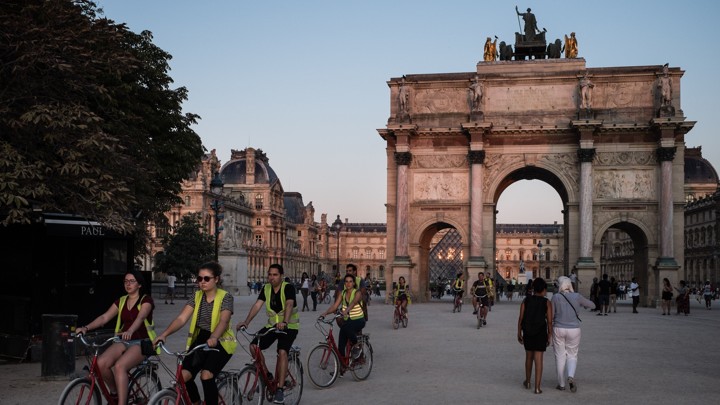
August in Paris is over, and I miss it already. The deadest month, the most quiet, the month when Parisians leave on their endless holidays and the city empties out like a resort in the off season, only less melancholy. Traffic thins; shops close, sometimes for the entire month; restaurants shut; there are seats to be found on the metro; and in the evening, stragglers (not everyone can afford to go away) emerge from their stuffy, un-air-conditioned apartments and gather along the banks of the Seine.

In August, this uptight city unbuttons a few more buttons.

One warm evening, I walked a good stretch of riverfront promenade, and the scene was joyous. Families out for a walk; kids climbing on climbing walls; couples embracing; friends at picnic tables eating from Tupperware; tourists taking pictures of wounded Notre-Dame, without her spire, encased in scaffolding; South Asian men selling bottles of beer and chilled rosé from backpacks—“Du vin, madame?”—people of all ages and colors dancing with abandon to Michael Jackson’s Thriller on a makeshift dance floor near the Pont Neuf, like wild teenagers letting it loose while their parents are out of town.

The bakery near my apartment was closed for the first three weeks of August. Three weeks! For a while, when I looked out my apartment windows in the evenings, nary a light was on in the building across the street. Even Google knows it is August in Paris. Gmail recently offered some canned responses to an invitation I’d received. Its options: “I’ll be there!” “I’ll come!” and “I’m on vacation!” I managed to get a table, without waiting, at one of the best restaurants in Paris

The French government shuts down in August, too. It is not uncommon for high-level officials with sensitive dossiers in important ministries to take three or four weeks off, without checking email. The entire country operates on what’s basically an academic schedule. In May and June, people start making appointments for after the rentrée—that is, September. Employees have seven weeks of paid holiday time (albeit with lower pay than their counterparts elsewhere).

Continue reading “August Is When Uptight Paris Unbuttons a Few More Buttons”

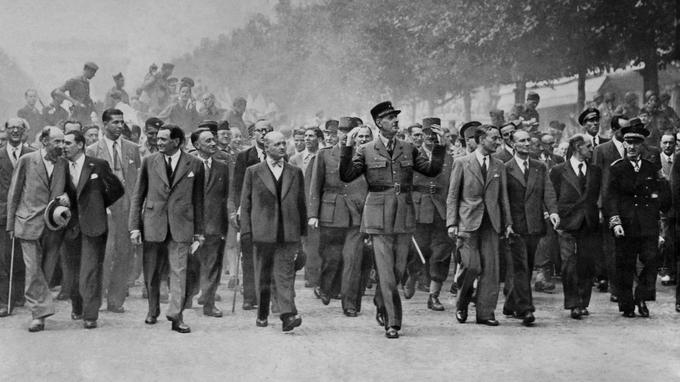
August 25, 1944, the liberation of Paris: “the greatest day since the storming of the Bastille” 

75 years ago, the capital was finally free from the German yoke. This historic day will remain, in the eyes of the whole world, the symbol of the renewal of France and democracy.

“There are minutes there, we all feel it, which exceed each of our poor lives.” This August 25, 1944, late afternoon, the atmosphere is solemn at the City Hall of Paris. General de Gaulle, who has just arrived suddenly in this high place of republican declarations, is received by the communist Georges Marrane, on behalf of the Paris committee of the Liberation, and by the Catholic Georges Bidault, president of the National Council of the Resistance (CNR), the successor of Jean Moulin. Paris has just been released in the middle of the afternoon from the Nazi yoke. Everything was done in haste. [ . . . ]

Continue at: August 25, 1944, the liberation of Paris: “the greatest day since the storming of the Bastille” 

Moriarty at Shakespeare & Company

Moriarty is a musical collective made up of five artists of French, American, Swiss and Vietnamese origin. The members were mainly born in France to American parents. The group was named Moriarty in reference to Dean Moriarty, the hero of On the Road by Jack Kerouac.

Initially, the group consisted of eight members: singer Charlène Dupuy, drummer Médéric de Vanssay, and saxophonist Davide Woods have since left the group. Rosemary Standley joined in 1999. Moriarty went from performing traditional blues to rock’n’roll. Successive departures from the group reduced them to five members (Rosemary, Arthur, Thomas, Charles and Stephan), and forced them to play acoustically.
[per Wikipedia | See more]

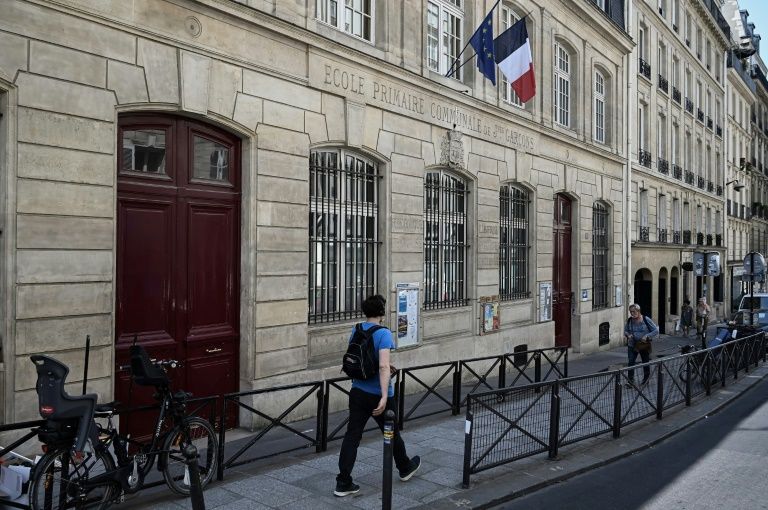
As families flee Paris, fingers point at Airbnb

Paris (AFP) – The bells will ring for the last time this week at Vaugirard elementary school in central Paris, the latest school in the city to close as spiralling property prices drive families out of the capital.

Just 51 students were enrolled this year at Vaugirard, a stark illustration of the steady decline in numbers at many schools in central Paris which some parents and teachers blame on the surge of home-renting giant Airbnb.

“The centre of Paris is basically becoming a vast Airbnb hotel, and there are fewer and fewer residents,” Jean-Jacques Renard, vice president of the FCPE parents’ association, told AFP. Continue reading “As families flee Paris, fingers point at Airbnb”