“Let’s play with sound, forget all knowledge and instrumental skills, and just use instinct – the same way Punk did” – Yann Tiersen
PICTURE THIS – FILM MUSIC ON THE RADIO : WRIU 90.3 FM 9/21/25
Georges Auric (1899–1983)
Auric was a versatile and significant figure in 20th-century French music and culture.
A member of Les Six: As one of the prominent members of the group of avant-garde composers known as Les Six, he rebelled against late-Romanticism and Impressionism, advocating for a more modern, populist, and distinctively French style.
Major film scores: He composed over 100 film scores, many for prominent directors, including his longtime collaborator Jean Cocteau. His famous film scores include:
Beauty and the Beast (1946)
Moulin Rouge (1952), which produced the popular song “Where Is Your Heart?”
The Wages of Fear (1953)
Roman Holiday (1953)
Administrator of French music: Auric also held significant administrative positions, including director of the Paris Opéra and chairman of the French performing rights society, SACEM.
Georges Delerue (1925–1992)
Dubbed “The Mozart of Cinema” by the newspaper Le Figaro, Delerue was one of the most prolific and influential film composers of his generation.
Prolific career: He wrote more than 350 scores for film and television, with his signature style blending classical orchestration with romantic, lyrical melodies.
French New Wave collaborator: His distinctive style shaped the sound of the French New Wave, notably through his collaborations with director François Truffaut on films such as Jules and Jim (1962) and Day for Night (1973).
Hollywood success: His success extended to Hollywood, where he scored notable films, including:
A Little Romance (1979), for which he won an Academy Award
Platoon (1986)
Steel Magnolias (1989)
Francis Lai (1932–2018)
Lai was an Oscar-winning composer whose work helped define the “easy listening” and popular instrumental music of his era.
Popular melodies: He was a gifted melodist known for his emotionally expressive themes. His music gained massive global recognition through his collaboration with director Claude Lelouch, for whom he scored almost 40 films.
Global hits: His most famous and influential works include:
The romantic theme from A Man and a Woman (1966), which earned him a Golden Globe nomination.
The iconic, Oscar-winning score for Love Story (1970). The theme, “Where Do I Begin?”, became an international pop standard.
Classical crossover influence: Lai’s success demonstrated that a film score could become a hit in its own right, influencing the popular music charts and inspiring a new generation of “classical crossover” artists
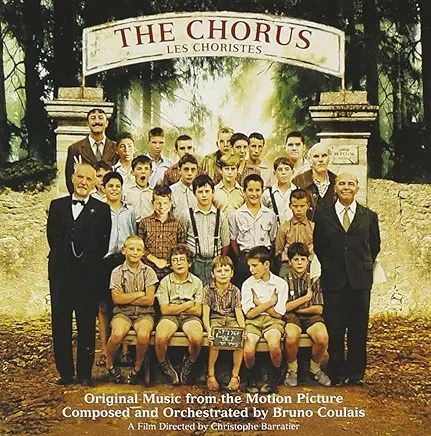
This Sunday’s FRENCH CONNECTION on WRIU 90.3 FM celebrates the musical scores from four wonderful French films: Les Choristes from 2011, Amelie from 2001, Ascenseur pour L’échafaud from 1957, and Black Orpheus, from 1959.
( This program originally aired on WRIU, Kingston, 90.3 FM on Sunday, August 17 )
The French Connection 8-17-25
Notes:
Our guest in studio is mon ami Wayne Cresser, host of Picture This: Film Music on the Radio.
FIRST SET: from “Les Choristes” (2011) | Composed by Bruno Coulais; Performed by the Bulgarian Symphony Orchestra, with the boys choir Les Petits Chanteurs de Saint-Marc.
– “Les Avions En Papier” – “Vois Sur Ton Chemin (Les Choristes)” – “La Nuit” – “Compère Guilleri” – “Lueur D’été” – “Cerf-Volanther notables”
The story of Les Choristes was inspired by the origin of an actual boys’ choir The Little Singers of Paris.
At the 77th Academy Awards, Les Choristes was nominated for Best Foreign Language Film and Best Original Song (the latter for “Vois sur ton chemin“)
Notably, Les Choristes was director Christophe Barratier’s first feature film.
SECOND SET: from “Amelie” (2001) | Composed and performed by Yann Tiersen
– “La valse d’Amélie”
-“Comptine d’un autre été : L’Après-midi”
-“Les Jours tristes”
-“L’Autre valse d’Amélie”
Amélie is rated #37 among the “50 Greatest Romantic Comedies of All Time” by Rolling Stone magazine, and in 2025, the film ranked number 41 on The New York Times‘ list of “The 100 Best Movies of the 21st Century.”
Yann Tiersen is a French- Breton musician and composer. In just two weeks, he composed nineteen pieces for ”Amelie.”
Tiersen just recently released an introspective new album called Rathlin from a Distance | The Liquid Hour.
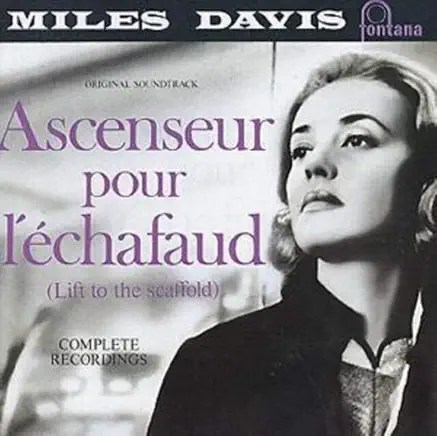
THIRD SET: “Ascenseur pour l’échafaud” (1957) | Composed and performed by Miles Davis
– “Sur L’autoroute”
The soundtrack for Ascenseur pour Léchafaud, scored by American trumpeter Miles Davis, became an instant jazz classic, known for its atmospheric, moody, and improvisational style – perfectly complementing the film noir mood of Louis Malle’s movie.
On December 4,1 957, Davis brought his four sidemen to a French recording studio without any practice or preparation. Once the plot of the film was explained, Miles and his band improvised what would become the classic soundtrack.
The musical ideas explored on Ascenseur pour L’échafaud paved the way for Miles Davis’s later masterpiece, “Kind of Blue”.
FOURTH SET: “Black Orpheus” (1959) | Composed by Antonio Carlos Jobim & Luis Bonfa
-“Manhã de Carnaval”
-“Manhã de Carnaval / La Chanson d’Orphée” performed by Pauline Croze
-“Samba de Orfeu”
Black Orpheus is a 1959 romantic tragedy film directed by French filmmaker Marcel Camus.
The film is particularly notable for its soundtrack by two Brazilian composers: Antônio Carlos Jobim, whose “Manhã de Carnaval” and “Samba de Orfeu” have become classics of bossa nova.
Black Orpheus won the 1960 Academy Award for Best Foreign Language Film.
CLOSING SONG: Sidney Bechet “Si Tu Vois Ma Mere” (1952)
This Sunday’s FRENCH CONNECTION on WRIU 90.3 FM began with a set of avant-garde French pop with electronic textures; We then played songs from a great rock band from Cabestany, Pyrénées-Orientales – The Limiñanas; ending with a set celebrating the French poet/anarchist Georges Brassens.
( This program originally aired on WRIU, Kingston, 90.3 FM on Sunday, August 10 )
Play to listen
Notes from the August 10, 2025, Episode 6
By Michael Stevenson
• Up top, we heard The Masons doing their song “Bottle of Love.” (1998). The Masons are a creation of Kraig Jordan, the Rhode Island-based musician/songwriter/producer who has collaborated with Tanya Donnelly (Throwing Muses, Belly), Mark Cutler (The Schemers, Raindogs), Bob Kendall (Blood Oranges), and other notables.
• Next, we heard Bertrand Belin performing “Hypernuit”. A brilliant storyteller, Bertrand Belin’s lyrics depict a character seeking vengeance on a village that wronged him.
“He surrounds the house – the one aptly named the Beast…”.
“Hypernuit” is from Belin’s third album, of the same name. Belin is currently touring in support of his latest album, Tambour Vision with upcoming concerts in France and Switzerland.
• Camille Hardouin , also known by the stage name “Demoiselle Inconnue”, is a French musician and illustrator. Her song “J’veux Pas” (“I Don’t Want To”) from her 2017 album Mille Bouches..
• Next, we heard Rodolphe Burger with “Les Danses Anglaises” – fromhis collection of remote concerts recorded by Burger and his musician friends from their homes during the Covid confinement.
Guitarist/singer/songwriter , Rodolphe Burger has been performing music for 30 years, as a solo artist, and also fronting the band Kat Onoma. As summer comes to a close, Burger is busy with his role as the artistic director of the annual Festival C’est Dans la Vallée, which takes place each October in a geographical triangular region—where France, Germany, and Switzerland meet.
Burger’s friend, Bertrand Belin, begins the spoken song, with Sarah Murcia contributing additional backup vocals later on. Burger’s guitar work utilizes fuzz effects to create that gritty texture. He was greatly influenced by Lou Reed and the Velvet Underground, and has recorded a tribute album to that band.
• Next, we heard the song “Pas Dupe” (“Not Fooled”) from Jeanne Balibar 2006 album Paramour. Again, that’s the well-traveled sessionman Rodolphe Burger on lead guitar. Balibar was born in Paris, raised in an intellectually stimulating environment. (She’s the daughter of a prominent Marxist philosopher and a mother a physicist.)
Balibar has recorded two excellent solo albums of music, but she’s best known for her work in movies, having some 87 acting credits in films. Her latest is in Let Me Go, a drama about self-discovery set in the Swiss Alps.
• The Limiñanas are a French rock band from Cabestany, Pyrénées-Orientales, in the southwest of France. The couple have been making records since 2009. Lionel and Marie Limiñana met during high school, fell in love, opened up a record store, and eventually formed a band. He plays guitar, she drums. The ghost of Serge Gainsbourg and ’60s era Yé-Yé music is felt most keenly intheir first song “Votre côté yé-yé m’emmerde”, a softly spoken-word litany of cultural icons and celebrities. Not hero worship, but more of an eye-roll, the title translates to something like, “Your yé-yé views really annoy me”.
We next heard Lionel and Marie perform “Migas 2000” from the band’s album Trouble In Mind.
The Limiñanas are currently promoting their latest album, Faded, which features collaborations with artists like Bobby Gillespie (The Jesus and Mary Chain) and Bertrand Belin.
• Georges Brassens is widely considered to be one of the most important voices in post-war France.
He was a self-proclaimed anarchist who used his songs to express anti-authoritarian sentiments, often criticizing hypocrisy in society, including religious figures, the wealthy, and all those in power.
First, we heard Brassens singing “Mavaise Réputation” (1952) with lyrics that confirm his image as a rebel against societal norms.
• After that, we heard two versions of a classic Brassens’ song “Lovers on Public Benches”– first sung in French by Montreal singer Elizabeth Sheperd, and then with an English translation, performed by Pierre de Gaillande.
Brassens
In an interview with NPR’s Scott Simon, Gaillande (born in France, now living in Brooklyn) says Brassens’ message is simple:
“It’s not about money,” he said. “It’s not that ‘God told me to do this’, it’s not about ‘I’m stronger than you.’ (The real message is ) We’re all in it together; let’s eat a great meal and have a bottle of wine.”
• Next : two songs that display the “joie de vie” side of Brassens, we heard “Les Prénoms Effaces” followed by “J’ai Connu de Veux.” The two songs are from the album Chante les Chansons de sa Jeunesse. Released in 1982, it is a nostalgic look back at Brassens’ musical influences, including the great Charles Trenet, who wrote “J’ai Connu de Veux”.
• Finally, we hear one of Brassens’ most famous songs, “Gorriile,” in this LIVE concert version by the French duo who call themselves “Mountain Men.”
The song “Gorille” tells the story of a gorilla who escapes a local zoo, and once on the “outside” mistakes a judge for a female gorilla and rapes him, leading to the memorable refrain, “Gare au gorille!” (Beware the gorilla!). The concert-goers recorded on the track were clearly rooting for the gorilla, not the judge.
• Closing our episode numero six of THE FRENCH CONNECTION, we leave with mon homme, Francis Cabrel singing the country-tinged “Quand j’aime une fois j’aime Pour Toujours,” from the singer’s classic Double Live album (1999.) The song was written by the Québécois folk singer and film director Richard Desjardin.
I’ve always loved the hilariously desperate song “It Must Be Him” performed by Vikki Carr. The song sold over 1 million copies in 1967 and millions more since.
Vikki Carr remains a very under-appreciated vocalist, one who gets unfairly lumped-in with her white bread contemporaries dominating that woeful/golden era of 1960s MOR (Middle of the Road) radio.
On trips in the Stevenson family station wagon, my dad would play this musical spam on the car radio, punching in the dreaded WLKW button, while we kids in the back seat begged for DJ Joe Thomas playing Beatles, Beach Boys and Motown on WICE. But alas – this was elevator music without doors that open and let you out.
It was in the back seat of the Pontiac Tempest, that I learned Vicki Carr sang ‘grown-up” music that I actually liked. Eventually I saw her perform on TV with Merv, Johnny and Mike, where she was always beautiful, charming, and singing brilliantly. Still later, I became the odd used record customer who purchased both Vikki’s Greatest Hits album AND Moby Grape’s groovy debut (sans “flipping the bird”) while shopping at In Your Ear. Has anyone else ever purchased these two records together? No? Hooray for me.
Born Florencia Bisenta de Casillas-Martinez Cardona before opting for the anglicized stage name, Vikki Carr eventually enjoyed great success in the Latin music world, winning Grammy Awards for Best Mexican-American Performance in 1986.
This version of her hit song “It Must Be Him” is performed in Spanish, but the original song was sung in neither English nor Spanish, but in French – a reworking of Gilbert Becaud’s “Seul Sur Son Etoile.”
In 1971, she established the Vikki Carr Scholarship Foundation, dedicated to offering college scholarships to Hispanic students in California and Texas. To date, the Foundation has awarded more than 280 scholarships totaling over a quarter of a million dollars.
Such a lovely woman.
Though the lyrics to this song are quite dated (“Hello? Hello?…my dear God!”) when this tune is performed, let it not be sung by Jerry Vale, Jack Jones or Edie Gorme. Let it please be Vikki Carr!





 Pas De Merde