Listen to “The French Connection” Ep. 7

This Sunday’s FRENCH CONNECTION on WRIU 90.3 FM celebrates the musical scores from four wonderful French films: Les Choristes from 2011, Amelie from 2001, Ascenseur pour L’échafaud from 1957, and Black Orpheus, from 1959.


( This program originally aired on WRIU, Kingston, 90.3 FM on Sunday, August 17 )

The French Connection 8-17-25

Notes:

Our guest in studio is mon ami Wayne Cresser, host of Picture This: Film Music on the Radio.

FIRST SET: from “Les Choristes” (2011) | Composed by Bruno Coulais; Performed by the Bulgarian Symphony Orchestra, with the boys choir Les Petits Chanteurs de Saint-Marc.


– “Les Avions En Papier”
– “Vois Sur Ton Chemin (Les Choristes)”
– “La Nuit”
– “Compère Guilleri”
– “Lueur D’été”
– “Cerf-Volanther notables”
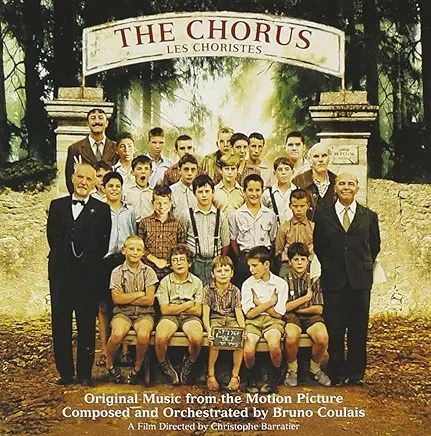
The story of Les Choristes was inspired by the origin of an actual boys’ choir The Little Singers of Paris.

At the 77th Academy Awards, Les Choristes was nominated for Best Foreign Language Film and Best Original Song (the latter for “Vois sur ton chemin“)

Notably, Les Choristes was director Christophe Barratier’s first feature film.


SECOND SET: from “Amelie” (2001) | Composed and performed by Yann Tiersen

– “La valse d’Amélie”

-“Comptine d’un autre été : L’Après-midi”

-“Les Jours tristes” 

-“L’Autre valse d’Amélie”

Amélie is rated #37 among the “50 Greatest Romantic Comedies of All Time” by Rolling Stone magazine, and in 2025, the film ranked number 41 on The New York Times‘ list of “The 100 Best Movies of the 21st Century.” 

Yann Tiersen is a  French- Breton musician and composer. In just two weeks, he composed nineteen pieces for ”Amelie.”

Tiersen just recently released an introspective new album called Rathlin from a Distance | The Liquid Hour.

THIRD SET: “Ascenseur pour l’échafaud” (1957) | Composed and performed by Miles Davis

– “Sur L’autoroute”
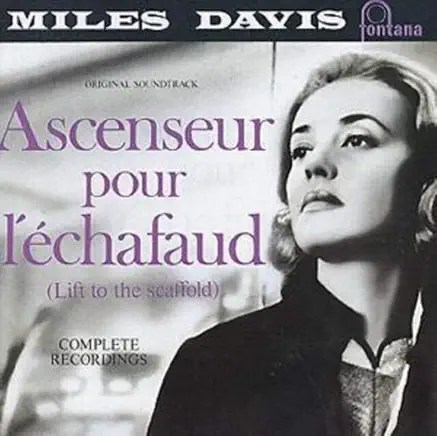
The soundtrack for Ascenseur pour Léchafaud, scored by American trumpeter Miles Davis, became an instant jazz classic, known for its atmospheric, moody, and improvisational style –  perfectly complementing the film noir mood of Louis Malle’s movie.

On December 4,1 957, Davis brought his four sidemen to a French recording studio without any practice or preparation. Once the plot of the film was explained, Miles and his band improvised what would become the classic soundtrack.

The musical ideas explored on Ascenseur pour L’échafaud paved the way for Miles Davis’s later masterpiece, “Kind of Blue”.

FOURTH SET: “Black Orpheus” (1959) | Composed by Antonio Carlos Jobim & Luis Bonfa

-“Manhã de Carnaval”

-“Manhã de Carnaval / La Chanson d’Orphée” performed by Pauline Croze

-“Samba de Orfeu”

Black Orpheus is a 1959 romantic tragedy film directed by French filmmaker Marcel Camus.

The film is particularly notable for its soundtrack by two Brazilian composers: Antônio Carlos Jobim, whose “Manhã de Carnaval” and “Samba de Orfeu” have become classics of bossa nova. 

Black Orpheus won the 1960 Academy Award for Best Foreign Language Film.

CLOSING SONG: Sidney Bechet “Si Tu Vois Ma Mere” (1952)

Listen to “The French Connection” Ep. 6

This Sunday’s FRENCH CONNECTION on WRIU 90.3 FM began with a set of avant-garde French pop with electronic textures; We then played songs from a great rock band from Cabestany, Pyrénées-Orientales – The Limiñanas; ending with a set celebrating the French poet/anarchist Georges Brassens.

( This program originally aired on WRIU, Kingston, 90.3 FM on Sunday, August 10 )

Play to listen


Notes from the August 10, 2025, Episode 6

By Michael Stevenson

Up top, we heard The Masons doing their song “Bottle of Love.” (1998). The Masons are a creation of Kraig Jordan, the Rhode Island-based musician/songwriter/producer who has collaborated with Tanya Donnelly (Throwing Muses, Belly), Mark Cutler (The Schemers, Raindogs), Bob Kendall (Blood Oranges), and other notables.


Next, we heard Bertrand Belin performing “Hypernuit”. A brilliant storyteller, Bertrand Belin’s lyrics depict a character seeking vengeance on a village that wronged him. 

“He surrounds the house – the one aptly named the Beast…”. 

“Hypernuit” is from Belin’s third album, of the same name. Belin is currently touring in support of his latest album, Tambour Vision with upcoming concerts in France and Switzerland.

• Camille Hardouin , also known by the stage name “Demoiselle Inconnue”, is a French musician and illustrator. Her song “J’veux Pas” (“I Don’t Want To”) from her 2017 album Mille Bouches.

Next, we heard Rodolphe Burger with  “Les Danses Anglaises” –  from his collection of remote concerts recorded by Burger and his musician friends from their homes during the Covid confinement.

Guitarist/singer/songwriter , Rodolphe Burger has been performing music for 30 years, as a solo artist, and also fronting the band Kat Onoma. As summer comes to a close, Burger is busy with his role as the artistic director of the annual Festival C’est Dans la Vallée, which takes place each October in a geographical triangular region—where France, Germany, and Switzerland meet. 

Burger’s friend, Bertrand Belin, begins the spoken song, with Sarah Murcia contributing additional backup vocals later on. Burger’s guitar work utilizes fuzz effects to create that gritty texture. He was greatly influenced by Lou Reed and the Velvet Underground, and has recorded a tribute album to that band.

Next, we heard the song “Pas Dupe” (“Not Fooled”) from Jeanne Balibar 2006 album Paramour. Again, that’s the well-traveled sessionman Rodolphe Burger on lead guitar. Balibar was born in Paris, raised in an intellectually stimulating environment. (She’s the daughter of a prominent Marxist philosopher and a mother a physicist.)

Balibar has recorded two excellent solo albums of music, but she’s best known for her work in movies, having some 87 acting credits in films. Her latest is in Let Me Go, a drama about self-discovery set in the Swiss Alps.

• The Limiñanas are a French rock band from Cabestany, Pyrénées-Orientales, in the southwest of France. The couple have been making records since 2009. Lionel and Marie Limiñana met during high school, fell in love, opened up a record store, and eventually formed a band. He plays guitar, she drums. The ghost of Serge Gainsbourg and ’60s era Yé-Yé music is felt most keenly in their first song “Votre côté yé-yé m’emmerde”, a softly spoken-word litany of cultural icons and celebrities. Not hero worship, but more of an eye-roll, the title translates to something like, “Your yé-yé views really annoy me”.

The Liminanas

We next heard Lionel and Marie perform “Migas 2000” from the band’s album Trouble In Mind.

 The Limiñanas are currently promoting their latest album, Faded, which features collaborations with artists like Bobby Gillespie (The Jesus and Mary Chain) and Bertrand Belin.

• Georges Brassens is widely considered to be one of the most important voices in post-war France.

He was a self-proclaimed anarchist who used his songs to express anti-authoritarian sentiments, often criticizing hypocrisy in society, including religious figures, the wealthy, and all those in power.

First, we heard Brassens singing “Mavaise Réputation” (1952) with lyrics that confirm his image as a rebel against societal norms.

After that, we heard two versions of a classic Brassens’ song “Lovers on Public Benches” – first sung in French by Montreal singer Elizabeth Sheperd, and then with an English translation, performed by Pierre de Gaillande.

Georges Brassens
Brassens

In an interview with NPR’s Scott Simon, Gaillande (born in France, now living in Brooklyn) says Brassens’ message is simple: 

“It’s not about money,” he said. “It’s not that ‘God told me to do this’, it’s not about ‘I’m stronger than you.’ (The real message is ) We’re all in it together; let’s eat a great meal and have a bottle of wine.”

Next : two songs that display the “joie de vie” side of Brassens, we heard “Les Prénoms Effaces” followed by “J’ai Connu de Veux.” The two songs are from the album Chante les Chansons de sa Jeunesse. Released in 1982, it is a nostalgic look back at Brassens’ musical influences, including the great Charles Trenet, who wrote “J’ai Connu de Veux”. 

Finally, we hear one of Brassens’ most famous songs, “Gorriile,” in this LIVE concert version by the French duo who call themselves “Mountain Men.”

The song “Gorille” tells the story of a gorilla who escapes a local zoo, and once on the “outside” mistakes a judge for a female gorilla and rapes him, leading to the memorable refrain, “Gare au gorille!” (Beware the gorilla!). The concert-goers recorded on the track were clearly rooting for the gorilla, not the judge.

Closing our episode numero six of THE FRENCH CONNECTION, we leave with mon homme, Francis Cabrel singing the country-tinged “Quand j’aime une fois j’aime Pour Toujours,” from the singer’s classic Double Live album (1999.) The song was written by the Québécois folk singer and film director Richard Desjardin.

The myth and reality of the Parisian woman

The actor Arletty, seen here in the film Hôtel du Nord, was one of many working-class French stars of the era (Credit: Alamy)

There is now a whole literary genre devoted to her mysterious allure. So what is the true essence of the Parisienne – asks Paris born-and-bred Agnès Poirier – and how did she evolve?

By Agnes Poirier

French women – Parisiennes in particular – have no idea of the fascination they inspire in foreigners – until the day they discover in a bookshop abroad the vast amount of literature dedicated to scrutinising their every move and mood. Sometimes written by Parisian women living abroad, or by foreigners living in Paris, this literary genre and lucrative niche market aims at educating its readers in Parisianisme and its many secrets.

Among them, in just the last few years: How to be a Parisian, Wherever You Are by Caroline de Maigret, Sophie Mas, Audrey Diwan and Anne Berest; Dress Like a Parisian by Aloïs Guinut; Parisian Chic by Inès de la Fressange and Sophie Gachet; and the recently published The New Parisienne by Lindsey Tramuta.

Tramuta’s interesting hybrid work – part coffee-table book with beautiful pictures and illustrations, part political pamphlet, and part guide book with addresses and tips – makes for an alluring proposal. The author wants to “lift the veil on the mythologised Parisian woman – white, lithe, ever fashionable, and recast the women of Paris as they truly are”. To do this she profiles forty Parisiennes who “don’t fit the mould”, from Paris mayor Anne Hidalgo to cookie maker Moko Hirayama, translator Poonam Chawla and many others – including political figures, entrepreneurs, influencers, designers, artists, writers and athletes.

Continue reading “The myth and reality of the Parisian woman”

The Entwined Lives of Françoise Gilot and Pablo Picasso

Understanding Picasso’s art, Gilot’s memoir shows, is inseparable from understanding both his genius and monstrousness.

Early on in their relationship, the painter and writer Françoise Gilot almost left Pablo Picasso. It was 1946, and the pair had gone from Paris to the South of France for the summer. It sounds romantic and likely would have been, if Picasso hadn’t insisted that they stay in the house he had given to the photographer Dora Maar, his partner before Gilot. Maar wasn’t around, but soon after they arrived, Picasso began receiving devoted daily letters from yet another former lover, Marie-Thérèse Walter, which he would read aloud every morning. As if that weren’t enough, the place was overrun with scorpions. Suddenly, Gilot found herself stuck in a “hostile environment,” as she writes in her memoir, Life With Picasso, which was originally published in 1964 and recently rereleased by New York Review Books Continue reading “The Entwined Lives of Françoise Gilot and Pablo Picasso”

From Miró to Basquiat and always Picasso- Exhibitions not to be missed in Paris this autumn

Beautiful harvest of major exhibitions this autumn in Paris, with Miró at the Grand Palais, cubism at the Pompidou Center, Nadar at the BnF, Basquiat and Egon Schiele at the Vuitton Foundation, and Picasso again and again: its blue and pink periods at the Museum d’Orsay and a reflection on the concept of a masterpiece at the Picasso Museum.

05 /14
Dorothea Lange at the Jeu de Paume
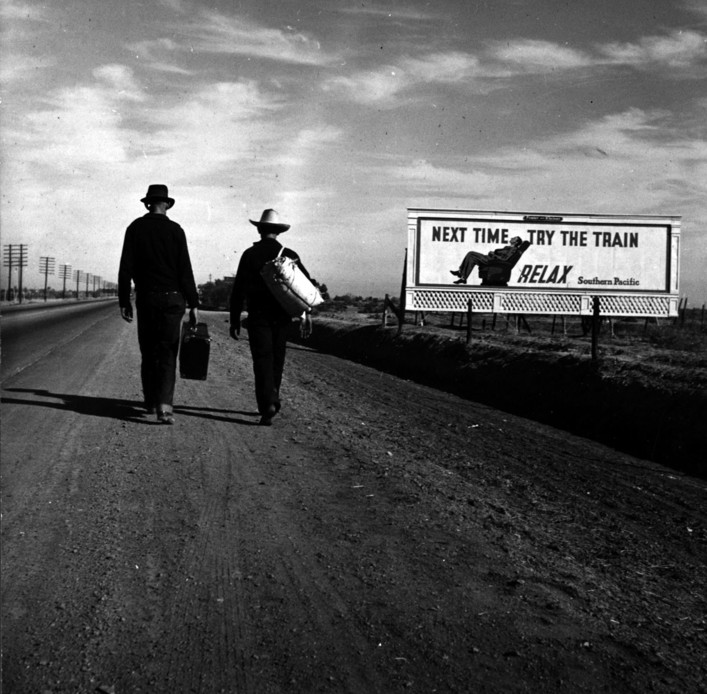
Beyond iconic images like the “Migrant Mother”, the Jeu de Paume showcases more than a hundred vintage prints by Dorothea Lange, from 1933 to 1957. An exhibition that aims to emphasize the emotional strength of the images of the one that was the first female photographer to have a solo exhibition at the MoMA in New York in 1966. Her photos of Japanese Americans interned during the Second World War are shown in France for the first time. From October 16, 2018 to January 27, 2018. Here, Dorothea Lange, “Toward Los Angeles”, 1937

© The Dorothea Lange Collection, the Oakland Museum of California

Continue Reading: From Miró to Basquiat and always Picasso … exhibitions not to be missed in Paris this autumn

Naked attraction: art and tragic tales in Modigliani’s Paris

As Tate Modern prepares a new exhibition of his work, including 12 of his famous nudes, Louise Roddon explores the artist’s haunts around Montmartre and Montparnasse

Poor Amedeo Modigliani, what a tough life he led. I’m thinking this as I climb the steps to his last studio in Montparnasse. It’s a classic artist’s garret with peeling paint and poor lighting, and climbing the countless floors on a narrow stone tread, leaves me winded. It wouldn’t have been easy for a man with advanced tuberculosis. With Tate Modern about to stage its Modigliani exhibition, I’ve come to number 8 Rue de la Grande-Chaumière, his final home before he died tragically young in 1920. At 35, he wasn’t just a victim of TB, but was suffering the toll of a lifetime’s enthusiasm for alcohol and drugs [ . . . ]

More: Naked attraction: art and tragic tales in Modigliani’s Paris