
Francis Cabrel “Presque rien”
Listen to The French Connection :: December 28, 2025
DECEMBER 28, 2025 SALUT!
- Boris Vian “J’Suis Snob”
REST IN PEACE, B.B.
“I gave my beauty and my youth to men, and now I am giving my wisdom and experience … the best of me, to animals.”
- Brigitte Bardot “La Madrague” (1963)
- Brigitte Bardot & Serge Gainsbourg “Bonnie & Clyde” (Serge Gainsbourg) (1967)
POST-WAR CHANSON
Smoky cafés, cobblestone streets, and a deep longing for a pre-war idealized Paris
- Léo Ferré “Noël” (1961)
- Catherine Sauvage “Avec Le Temps”
- Léo Ferré “Le Vampire” (Baudelaire)
- Barbara “Göttingen” (Monique Andrée Serf)
- Barbara “Les Voyages” (Monique Andrée Serf)
- Barbara “Ne Me quitte Pas (Jacques Brel)
- Jacques Brel “Quand on n’a que l’amour” (Brel)
- George Brassens “La Prière” (Francis Jammes / Brassens)
- George Brassens “Le Piere Noël et le Petit Fille” (Brassens)
- Catherine Sauvage “Black Trombone” (Serge Gainsbourg)
- Léo Ferré “Saint Germaine des Pres” (Ferré)
Source: The French Connection :: Playlist and replay – WRIU 90.3 FM
Sabine-Weiss
French actress and animal rights activist Brigitte Bardot has died : NPR

Legendary screen siren and animal rights activist Brigitte Bardot has died at age 91. The alluring former model starred in numerous movies, often playing the highly sexualized love interest.
By Elizabeth Blair
Brigitte Bardot, the international sex goddess of cinema in the 1950s and ’60s, has died aged 91. Bardot’s animal rights foundation announced her death in a statement to news agency Agence France-Presse on Sunday, without specifying the time or place of death.
Stylish and seductive, Bardot exuded a kind of free sexuality, rare in the buttoned-up 1950s. She modeled, made movies, influenced fashion around the world and recorded albums. She married four times. Her list of lovers famously included Warren Beatty, Nino Ferrer and singer-songwriter-producer Serge Gainsbourg, with whom she recorded the French hit Bonnie and Clyde.
As an actor, Bardot worked with some of France’s leading directors including Henri-Georges Clouzot in La Vérité (The Truth), Jean-Luc Godard in Le Mépris (Contempt) and Louis Malle in Viva Maria!
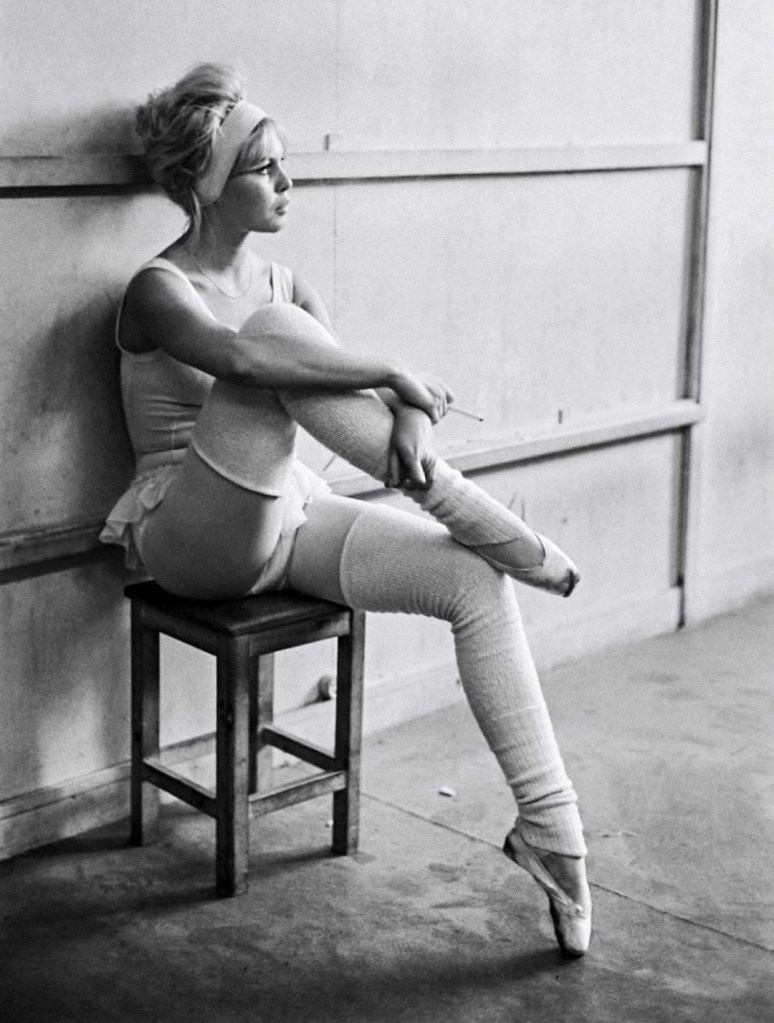
 Born Catholic to an upper-middle-class couple in Paris in 1934, Bardot studied ballet and modeled before becoming an actor. As a teenager, she appeared several times on the cover of Elle magazine, attracting the attention of Roger Vadim who was six years her senior. The two married in 1952. Bardot’s parents made them wait until she turned 18.
Vadim, an aspiring director, has been credited with turning Bardot into the iconic sex symbol she became. In his 1957 film And God Created Woman, Bardot plays a provocative young woman on a quest for sexual liberation.
Vadim wanted Bardot’s appearances in his films to shake off sexual taboos. He once said that he wanted to “kill the myth, this odd rule in Christian morality, that sex must be coupled with guilt.”
Source: French actress and animal rights activist Brigitte Bardot has died : NPR
 Pas De Merde