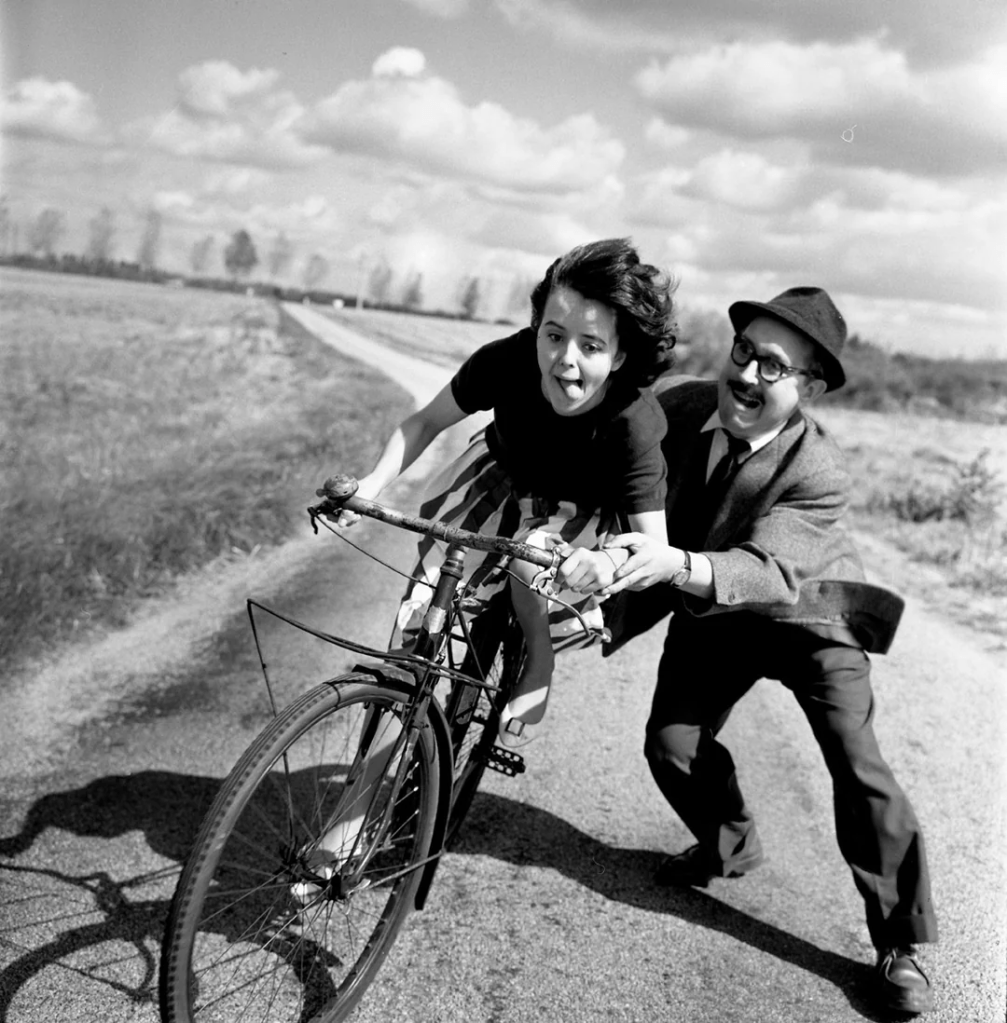
Jacques Tati, born Jacques Tatischeff in 1907 in Le Pecq, France, is widely regarded as one of the most influential French filmmakers and comedians of the 20th century. His 1958 masterpiece Mon Oncle won the Academy Award for Best Foreign Language Film in 1959.
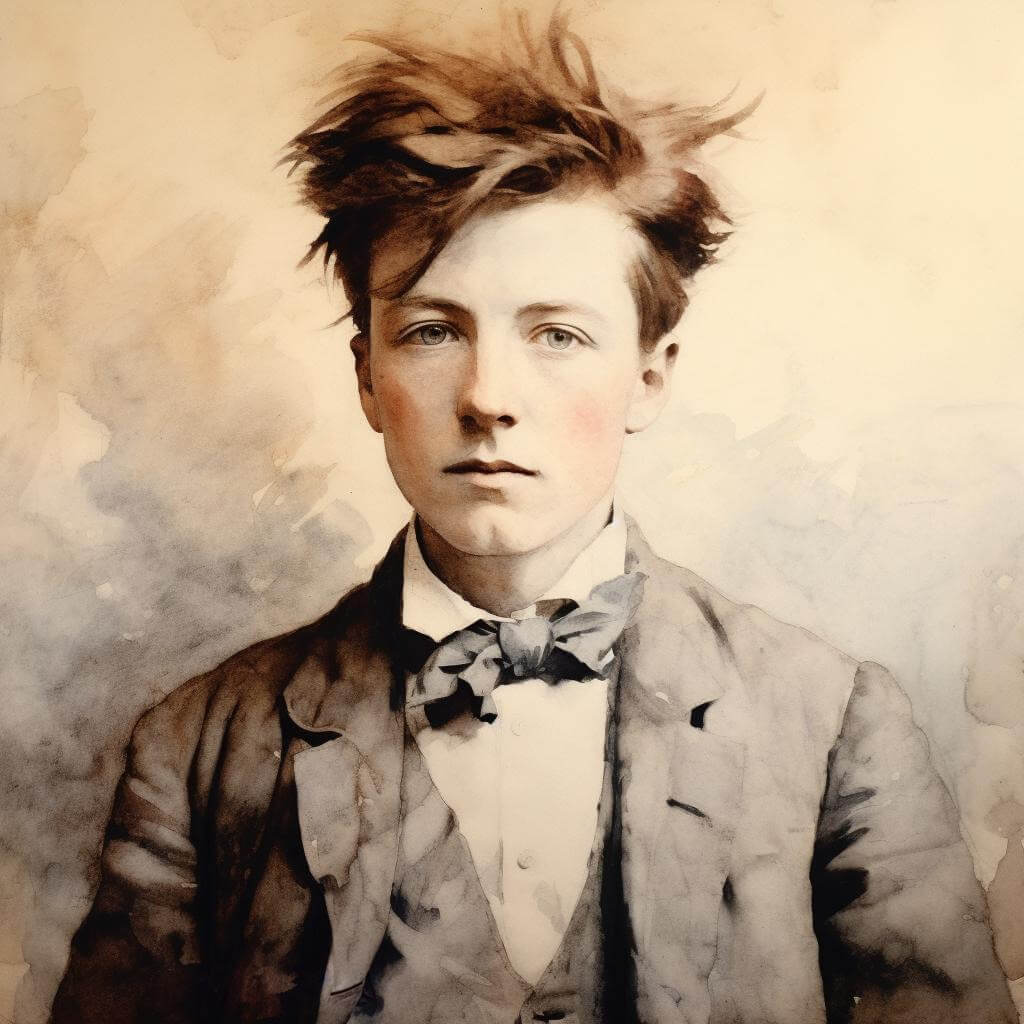
"No one's serious at seventeen.
On beautiful nights when beer and lemonade
And loud, blinding cafés are the last thing you need
You stroll beneath green lindens on the promenade.

Lindens smell fine on fine June nights!
Sometimes the air is so sweet that you close your eyes;
The wind brings sounds, the town is near—
And carries scents of vineyards and beer". . ."
- Arthur Rimbaud (20 October 1854 – 10 November 1891)
Birds on a Wire is an enchanting voice and cello duo formed by French-American singer Rosemary Standley (with multinational France-based alt-folk band Moriarty) and young Brazilian singer, songwriter and cellist Dominique Pinto aka Dom la Nena. Initiated by Rosemary Standley in 2011 as “Rosemary’s Songbook”, the project evolved into the Birds on a Wire duo when the producer of Madamelune – an independent Paris-based stage and music production company – introduced her to Dom La Nena. Touring as a live show in intimate venues from September 2012 onwards, the duo eventually went into a studio to record the songs.
Without adhering to any particular theme (love songs maybe?), focusing on a specific era or genre, Birds on a Wire is a stunning compilation of stripped-down ballads and lullabies selected by the two musicians with the cello lending a superb and consistent baroque feel to the collection.
Borrowing from the traditional, modern folk or baroque repertoires from the United States, Brazil, Argentina, Chile, Lebanon, England or Italy, covering baroque composer Stefano Landi, John Lennon or Caetano Veloso, singing in Arabic, English, Italian, Spanish, Portuguese or French creole, Rosemary Standley and Dom la Nena have assembled a wonderfully eclectic, minimalist and timeless songbook.
Apart from the sparse addition of bells, recorders or drums on a few songs, the cello and voice combination remains central and generates the most subtle musical alchemy throughout the album. Dom la Nena also contributes vocally to a few songs (including her own “Sambinha” from her 2013 début Ela) and her use of the melodic, harmonic, rhythmic and even percussive possibilities of the cello literally turn the instrument into a “third voice”.
The duo revisits Leonard Cohen’s “Bird on the wire” of course or “Blessed is the memory” which originally appeared as a bonus track on the 2007 reissue of Songs of Leonard Cohen (1967). The reprise of John Lennon’s “Oh my love” or of Henry Purcell’s much loved “Ô Solitude” are simply heart-stopping.
And the “chamber folk” treatment of such diverse songs as Tom Waits’ “All the world is green”, of “Ya Laure Hobouki” (a song composed for Lebanese singer Fairuz by the Rahbani brothers in the 1950s and recently covered in 2008 by Natasha Atlas) or of the Latin-American lullaby “Duerme Negrito” popularised by Argentine singer Atahualpa Yuapanqui is indicative of the scope and ambition of the project. Sung in French creole, “Sega Jacquot” is a wonderful homage to Luc Donat, the Sega musician and singer from the Réunion Island:
The CD also comes with a hardback booklet splendidly illustrated with a period painting for each song – the front cover itself is adapted from “Dors mon enfant” (Sleep my child), a 1788 picture by French painter Marguerite Gérard (1761 – 1837).
Birds on a Wire was released on 31st March 2014 last on Moriarty’s own label Air Rytmo. Birds on a Wire‘s album Ramages was released on 28 February 2020 last
You’re beautiful, You’re beautiful because you’re brave To look deep into the eyes Of the one who challenges you to be happy
You’re beautiful, You’re beautiful as a silent scream, Strong as a precious metal, who fights to heal its bruises, It is like an old tune, A few notes in torment, That force my heart, That force my joy, When I think of you, Now.
It is no good, It is no good saying to myself that it is better this way, Even if it still hurts, I don’t have any silent refuge.
It is beautiful, It is beautiful because it is stormy, With this weather I know very little, The words that stay at the corner of my eyes. It is like an old tune, A few notes in torment, That force my heart, That force my joy, When I think of you.
You, you’re leaving the stage Without a weapon and without hatred I’m afraid to forget, I’m afraid to accept, I’m afraid of the living, Now.