France’s love affair with cinema tested by the virus

“I am sick of Netflix. I am sick of an algorithm serving me up the same old thing,” said Anne-Sophie Duchamp as she put on her face mask to enter an arthouse cinema on Paris’ Left Bank.

“We’ve been stuck at home for months” because of the lockdown, she added, as she bought her ticket to see British director Mike Leigh’s  acerbic 1988 comedy, High Hopes.

“Why should I stay at home any longer when in Paris you can find a whole century of masterpieces showing in little cinemas every day.”

While cinema audiences across the world have been reluctant to venture back into the dark, not for the first time the French were seen as something of an exception.

As one of the most cinephile countries in the world, filmmakers and cinema owners have been counting on the French love affair with the silver screen to help save their skins.

Duchamp, who is in her 40s, insisted that going to a socially distanced cinema was “no more dangerous than going to the supermarket.”

A poll late in June just before cinemas reopened after an eight-week lockdown showed that 18.7 million people – almost a third of the population – planned to go to see a film in August.

Hollywood no-shows

But the reality has turned out to be rather more disappointing for cinemas, who are only allowed to be half full, with a free seat either side of each filmgoer.

With Hollywood delaying the release of blockbusters like Tom Cruise’s Top Gun 2 and Wonder Woman 1984 that would normally drive summer ticket sales, multiplexes in particular are suffering.

There was a further blow Thursday when Christopher Nolan’s spy drama Tenet was put back for a third time by Warner Brothers until August 12.

“It is much tougher than we imagined,” said Aurelie Delage, manager of the six-screen Cinemascop Megarama at Garat in western France.

It is so grim in fact that “I am not looking at figures,” she told AFP.

“This can’t last.”

Only small art house cinemas seemed to be bucking the trend, although there was some good news Wednesday as weekly admissions broke the 1 million mark for the first time since the end of the lockdown, helped by the success of the French comedy Divorce Club.

Encouraging as the 13 percent week-on-week rise was, it is still only a third of the business cinemas were doing this time in 2019.

“People have been stuck inside during the lockdown and now they want to be out in the air, on a bar or restaurant terrace when the weather is good,” Delage argued.

Yet the French have been far more enthusiastic than their neighbors, with German cinema entries down to just 17 percent of normal levels and the situation in Spain even more catastrophic at just 13 percent.

Chance for small films

Only the Dutch have been as phlegmatic, according to a study by Comscore.

This has given hope to independent filmmakers who see a chance of stepping into the gap, insisting that the public are hungry for new movies.

US director Michael Covino will release his cycling bromance The Climb, a big hit at 2019’s Cannes film festival, in France next week, having resisted the temptation to put it out on a streaming service.

“The best place to see a comedy is in a cinema with other people,” he said.

The clear run has also probably helped the black comedian Jean-Pascal Zadi’s broad satire Tout simplement noir (Very Simply Black) become a hit.

Some half a million people have flocked to see him take a hammer to racial stereotypes in a fortnight.

French actor-director Mathieu Kassovitz – who has a walk-on role in the comedy – is also going ahead with the 25th anniversary of the re-release of his classic, La Haine, with race and police violence once again in the spotlight.

Kassovitz is convinced there is pent-up demand “to go out to see films.”

“That is why there is a quite a lot of re-releases this summer to rekindle that desire,” he told AFP.

But what cinema owners across Europe really want, said Marc-Olivier Sebbag of the French Cinemas Federation, is for the big Hollywood studios to start releasing their new movies in Europe without waiting for cinemas on the other side of the Altantic to reopen.

“I hope we will be listened to,” he added.

In the meantime Hugo Benamozig, co-director of the French adventure flick send-up, Terrible Jungle, starring Catherine Deneuve, is gung-ho about its release next week.

If they waited till after the summer, “our film might be drowned” by the dam-bust of US blockbusters which have been held back by the coronavirus, he said.

Source: France’s love affair with cinema tested by the virus – Global Times

Birds On A Wire – Les SUDS, à Arles 2020

Interrupting the song of the cicadas under the high plane trees agitated by the wind, it is, for the moment, the voice of Rosemary Standley (ex-Moriarty) and the cello of Dom La Nena who, with their project Birds on the Wire, embark the 340 spectators (maximum capacity) in the great mixing of genres, from Gilberto Gil to Pete Seeger, from Atahualpa Yupanqui to Gabriel Fauré. 

Films on the Green Festival Available Online!

With its theme “A Summer in Paris,” the Films on the Green offered a striking portrait of the City of Lights, its urban landscape, and its cultural diversity. A selection of classic, New Wave, and contemporary films by directors such as Agnès Varda, Céline Sciamma and Luc Besson, showcased the city’s aesthetic, cultural, and cinematic history from dramatically unconventional angles. Discover stories of love, adolescence, female identity, and urban life in Paris and its surrounding suburbs!

Below you will find the curated film descriptions as well as links to watch them on U.S. streaming platforms!

#AtHome #FilmsOnTheGreenRewind
Follow Films on the Green on FacebookTwitter, and Instagram

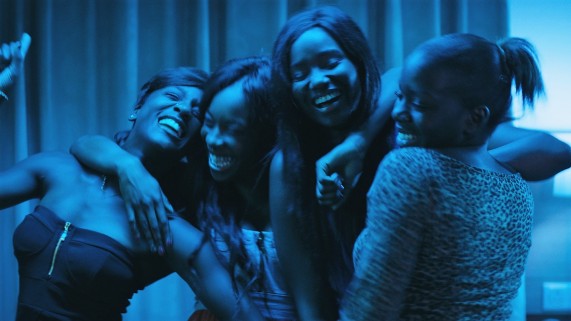
Girlhood (Bande de filles)
Directed by Céline Sciamma, 2014, 1h52

Girlhood, which opened the Directors’ Fortnight section at the 2014 Cannes Film Festival, is Céline Sciamma’s third feature film (Water LiliesTomboy) to deal with female adolescence and identity.

Fed up with her abusive family situation, lack of school prospects and the “boys’ law” in the neighborhood, Marieme (Karidja Touré) starts a new life after meeting a group of three free-spirited girls. She changes her name, her style, drops out of school and starts stealing to be accepted into the gang. When her home situation becomes unbearable, Marieme seeks solace in an older man who promises her money and protection. Realizing this sort of lifestyle will never result in the freedom and independence she truly desires; she finally decides to take matters into her own hands.

Available on Hoopla | The Criterion Collection | Kanopy | YouTube | GooglePlay | Vudu | iTunes | Amazon Video

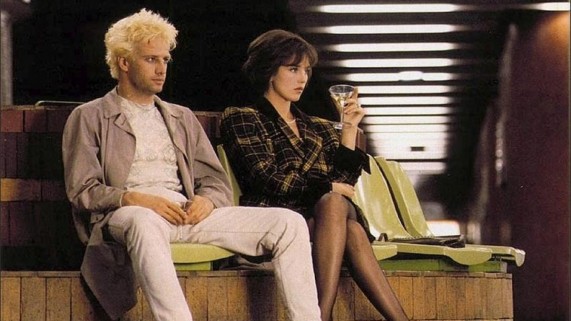
Subway
Directed by Luc Besson, R, 1985, 1h44

Subway is Luc Besson’s (LucyThe Fifth Element) ultra-cool and stylized romantic adventure which won French Award César in 1986 for Best Actor (Christophe Lambert), Best Production Design (Alexandre Trauner) and Best Sound.

Fred (Christophe Lambert) is a hipster thief who falls in love with the bored and beautiful wife of the millionaire (Isabelle Adjani) he just robbed. She wants her stolen papers back and he wants her heart. With gangsters and Metro police on their tail, the two seek refuge in the wild labyrinth beneath the subway and team up with the strange characters who inhabit the subterranean world.

Available on Vudu | Amazon Video | iTunes

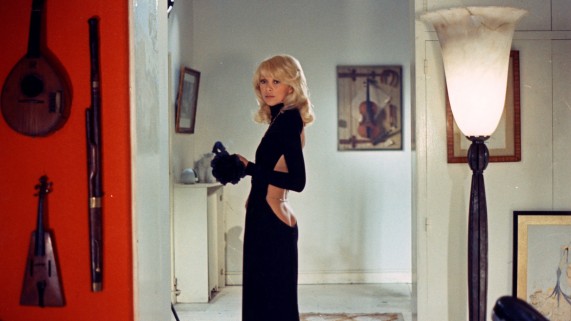
The Tall Blond Man with One Black Shoe (Le grand blond avec une chaussure noire)
Directed by Yves Robert, PG, 1972, 1h30

A frothy French farce, The Tall Blond Man with One Black Shoe is a classic madcap comedy about espionage, surveillance, and mistaken identity. When Francois (Pierre Richard), an unsuspecting violinist, is misidentified as a superspy by national intelligence, outrageous antics ensue. As everyone (including Mireille Darc, playing a knock-out henchwoman) falls over each other in their misguided attempts to discover the tall blond man’s secrets, his best friend complicates matters even further when he overhears a salacious recording of Francois with his wife. The whole merry-go-round comes crashing to a halt in one final showdown, pitting spy versus supposed spy with hilarious results. Elegantly filmed and accompanied by a memorable score, The Tall Blond Man with One Black Shoe is one of the most seminal comedies of the 1970s.

Available on Hoopla | TubiKanopy | GooglePlay | YouTube | FandangoNow | Amazon Video | iTunes | FlixFling


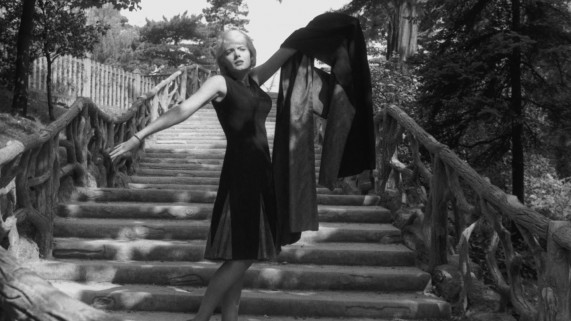
Cléo from 5 to 7 (Cléo de 5 à 7)
Directed by Agnès Varda, 1962, 1h30

Agnès Varda eloquently captures Paris in the sixties with this real-time portrait of a singer (Corinne Marchand) set adrift in the city as she awaits test results of a biopsy. A chronicle of the minutes of one woman’s life, Cleo from 5 to 7 is a spirited mix of vivid vérité and melodrama, featuring a score by Michel Legrand (The Umbrellas of Cherbourg) and cameos by Jean-Luc Godard and Anna Karina.

Available on HBO Max | The Criterion Channel | Kanopy

Continue reading “Films on the Green Festival Available Online!”

38 Movies That Will Transport You to Paris

Musicals, mysteries, and a whole lot of Audrey Hepburn.

Paris has inspired every type of artist over the years, from Impressionist painters to literary giants. But the city perhaps shines the brightest on the big screen, serving as the backdrop to countless movies over the past century. Even before French directors like Jean-Luc Godard and François Truffaut launched a cinematic movement in the 1960s, Hollywood showcased the beauty of Paris in breezy musicals and romances. And since then, we’ve seen the city shine in animated films, white-knuckle thrillers, gritty biopics, and more. Regardless of the genre, one thing’s for sure: The City of Light sure knows how to steal a scene. From Amélie to Ratatouille, here are 35 movies that will transport you to Paris—no plane ticket required

Continue reading “38 Movies That Will Transport You to Paris”

Film Review: “Summer of 85”

François Ozon revisits the romantic passions of adolescence with the accuracy and great rawness of emotion that are characteristic of his mature and masterful filmmaking approach

The exaggerated nature of desires and feelings, the sky-high intensity of the moment such that every single second assumes timeless dimensions, the clash of contradictory emotions, the shared secrets and pacts, the search for the other as a mirror of love, flirtation with risk and the electrified zone where Eros and Thanatos intermix, all set against the most banal daily life imaginable, composed of parents, high school, holidays and hesitant plans for the future. Adolescence is the age of plunging into the unknown, of nebulous transitions, of instinctive joy and deep, deep suffering; a time for romanticism par excellence Continue reading “Film Review: “Summer of 85””