On Human Nothingness and Extinction, continued – Daily Meditations with Matthew Fox

To meditate on one’s own mortality is not always an easy thing to do—but it is very necessary in order to live life fully and gratefully.  To meditate on our own species’ possible extinction is even harder to do—but probably even more necessary.

It is not an easy meditation to undertake.  But it may reap dividends.  I used to tell my students to add one year to your age and then meditate on that year, the time that preceded your existence, the time before you were born–when you were nothing.  Meditate on your pre-existence when you were not yet.

Meister Eckhart urges us to return to our “unborn selves” to recover our freedom when we were not yet and that we can do this by way of meditation and letting go.

One meditation on our extinction would be to project ahead to a time when humans are no longer on the earth.  That time will come eventually.  What can it tell us about how to live now, while we are still here and thereby prolong our time as a species?

Even if we stumble through our current crises by hook or by crook, still there will come a time eventually we know when the earth will no longer be hospitable to the animals, plants and biosphere that makes our living possible.  Five or six billion years from now and our earth will be turned to a crisp by the sun we are told.

So some might say, “well, whether we last a billion years or five billion or a million years or just a few hundred years, what’s the difference?  What’s it all about anyway?”

All those questions are worth considering in a meditation on the future nothingness of our species.  Can we look back and ask, “Might we have done things differently?  How might we have responded to the teachings of a Jesus or Buddha or Isaiah or Mohammad or Black Elk differently?  More generously?  With greater gratitude for our existence after 13.8 billion years of gestation on the part of the universe?”

Might compassion, for example, which all the spiritual traditions we have inherited urge us to practice, have been woven more deeply into the fabric of our communities and cultures, our education, law, science,  business, economics, politics, media and religion?  What if we had lived lives more committed to compassion and to justice?  How would human cultures evolved if that were the case?  Might we have prolonged the lifetime of our species?

Source: On Human Nothingness and Extinction, continued – Daily Meditations with Matthew Fox

Recommended Reading

Passion for Creation: The Earth-Honoring Spirituality of Meister Eckhart
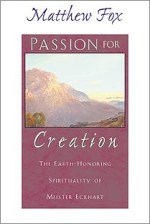
Matthew Fox’s comprehensive translation of Meister Eckhart’s sermons is a meeting of true prophets across centuries, resulting in a spirituality for the new millennium. The holiness of creation, the divine life in each person and the divine power of our creativity, our call to do justice and practice compassion–these are among Eckhart’s themes, brilliantly interpreted and explained for today’s reader.
“The most important book on mysticism in 500 years.”  — Madonna Kolbenschlag, author of Kissing Sleeping Beauty Goodbye.  

A Spirituality Named Compassion: Uniting Mystical Awareness with Social Justice

In A Spirituality Named Compassion, Matthew Fox delivers a profound exploration of the meaning and practice of compassion. Establishing a spirituality for the future that promises personal, social, and global healing, Fox marries mysticism with social justice, leading the way toward a gentler and more ecological spirituality and an acceptance of our interdependence which is the substratum of all compassionate activity. “Well worth our deepest consideration…Puts compassion into its proper focus after centuries of neglect.” –The Catholic Register

Jesus messed up

In today’s Gospel:

“Now there was a herd of many pigs feeding at a distance from them. And the demons begged Him, saying, “If You are going to cast us out, send us into the herd of pigs.” And Jesus said to them, “Go!” And they came out and went into the pigs; and behold, the whole herd rushed down the steep bank into the sea and drowned in the waters.”

Two thoughts about this:

First, why did Jesus need to send the demons into the poor little piggies? They didn’t do anything wrong. I love pigs.
Second, imagine the poor pig farmer the next day: “Who the hell drowned all my piggies? What is my poor family gonna do for money this year? I’m ruined!”

So – I think Jesus really messed up here. Uncharacteristically.

Say Amen, somebody.

A brief history of ‘O Holy Night,’ the rousing Christmas hymn that garnered mixed reviews

“It might be a good thing to discard this piece whose popularity is becoming unhealthy,” one early critic wrote.

Twenty-six years ago, George W. Hunt, S.J., then editor in chief of America, wrote that “O Holy Night” was one of his favorites among Yuletide songs, modestly adding: “I’ve sung it countless times in choir (the dull second tenor part).”

Our fond memories of “O Holy Night” are closely associated with the familiar English words translated from the original French by the Unitarian minister John Sullivan Dwight. Former director of the school at the 19th-century Brook Farm commune in Massachusetts, Dwight witnessed the conversion to Catholicism of a number of his fellow commune members, including Isaac Hecker—later a Roman Catholic priest and founder of the Paulist Fathers, the first religious community of priests created in North America. Continue reading “A brief history of ‘O Holy Night,’ the rousing Christmas hymn that garnered mixed reviews”

Christmas Eve, 2021: Eckhart on Our Birthing the Christ

By Rev. Matthew Fox 12/24/2021

Christmas is many things.  That is its power and its invitation.  It opens up avenues for archetypes galore to seize us and transform ourselves and society itself.

For example, we have been meditating during Advent on the damaged and toxic and unholy masculine that has permeated culture and history for centuries.  This has proven to be a very important and useful practice.  Advent is meant to be sort of a mini-Lent where we give up things, let go of things, in order to purify our souls and their intentions after all.

Wouldn’t it be a wonderful grace if each of us and all of humanity were to fast from patriarchal mind sets during advent and beyond in preparation for some Good News about another way to live in the world?

Meister Eckhart, himself a very balanced man who entertained both the divine feminine and the sacred masculine in his consciousness, is a special guide to understanding deeper layers of meaning to Christmas.

Consider, for example, what he tells us of Christ’s birth.  Referring to John’s Gospel, he comments that John’s statement that the Word of God was ‘in the beginning’ tells us that “it is always ‘in the beginning,’” and

if it is always ‘in the beginning’ it is always in the process of being born, of being begotten….And so it comes about that the Son in the Godhead, the word ‘in the beginning,’ is always being born, is always already born.

Indeed, “In God the Son is constantly born and will constantly be born.”  When we undergo our many births and rebirths and breakthroughs, the birth “does not take place once a year or once a month or once a day but all the time….”  And as often as this birth takes place [in us], so does “the Son of God become born.”


Adapted from Matthew Fox, Passion for Creation: The Earth-Honoring Spirituality of Meister Eckhart, pp. 330f.

To read the transcript of Matthew Fox’s video teaching, click HERE.

Banner Image: We give birth. Photo by Isaac Quesada on Unsplash.


Rev. Matthew Fox, PhD, author, theologian, and activist priest, has been calling people of spirit and conscience into the Creation Spirituality lineage for over 50 years. His 36 books (translated into 74 languages), as well as his lectures, retreats, and innovative education models, have ignited an international movement to awaken people to be mystics and prophets, contemplative activists, who honor and defend the earth and work for justice. To learn more, visit matthewfox.org

Source: Christmas Eve, 2021: Eckhart on Our Birthing the Christ – Daily Meditations with Matthew Fox

Please don’t turn Notre-Dame into a post-Vatican II cathedral to the modern world

Like many parish churches built in the 1970s and ’80s, the Notre-Dame redesign seems to take its inspiration from sensibilities unique to our own decades, rather than drawing on time-tested understandings of God.

By Doug Girardot

It was a sunny Marathon Monday in Boston in 2019 when I got a notification on my phone that the Cathedral of Notre-Dame de Paris was on fire. I watched a live video feed as flames engulfed the lead-and-wood roof of the church. As Notre-Dame’s ornate spire collapsed, I felt a sadness that must have been similar to how people reacted as they watched the Twin Towers collapse in New York in 2001, even if for different reasons.

More than two years later, the teams working on Notre-Dame’s rehabilitation have come up with new plans for its interior. The proposed redesign hardly alters the cathedral’s existing structure, but it does envision a so-called discovery trail around the church to help visitors learn the story of the Bible, as well as spaces for meditation and digital projections of Bible verses in different languages. The tentative plans—shared by the London-based paper The Telegraph on Nov. 26—have caused an uproar among tradition-minded pundits. (The details are scheduled to be revealed publicly on Dec. 9, when the National Heritage and Architecture Commission will begin reviewing them.)

The proposed changes to Notre-Dame would not make the cathedral into a “theme park” or “woke Disneyland,” as certain commentators on both sides of the Atlantic would have indignant readers believe. The restoration designers—led by a Catholic priest, the Rev. Gille Drouin—are evidently striving to reach out to nonbelievers from around the world and to educate Christians about their own faith.

All the same, I do agree that the cathedral should stay as it was. Notre-Dame, in all of its Gothic magnificence, serves as a vital reminder of God’s grandeur. I understand where the cathedral’s redesigners are coming from, and I would not dismiss any modern innovation out of hand, but there are better avenues for them to pursue the work of evangelization they are trying to do.

Ultimately, the controversy over the proposed redesign of Notre-Dame reflects a debate about how we approach God. Do we see him as a philosophical wonder, a mystery, praiseworthy above all else? Or do we seek the more personal and active God we meet in Jesus?

Although Christianity is founded on belief in the Trinity, there are a number of dualities in our faith: Jesus was both human and divine; the contents of our faith are found in both Scripture and tradition; the Eucharist comes to us in the form of bread and wine. There is also a binary of how we conceptualize God: The Lord is the unfathomable and infinite creator of the universe, but he is also the poor man from Roman-occupied Palestine who showed mercy toward sinners and healed the sick as he wandered around Galilee.

In our time, the church has emphasized this pastoral view of God embodied in Jesus—and rightly so. In the centuries before the Second Vatican Council, the institutional church had gradually separated from the community of believers, leaving some with a more abstract understanding of their faith; for many, ritual and dogma were given pride of place over a personal relationship between themselves and God. The reforms of the council can be said to have renewed the church, reminding Christians that God is close to each of us in an intensely personal way.

The proposed changes run the risk of making a timeless monument to God’s majesty into something much more pedestrian.

Vatican II might seem worlds away from discussion of a 13th-century cathedral, but the way in which the council reframed our conception of how God relates to humankind speaks to the current controversy.

While I am sympathetic to the intentions of the team working to redesign the cathedral, I am skeptical that the proposed alterations will ultimately make a substantial difference in evangelizing people from around the world. The additions may push a handful of visitors each day to reconsider the Christian faith (or to consider it for the first time), but did the splendid architecture and reverent atmosphere of the cathedral before the fire fail in this regard? And isn’t the worldwide synod that the church is currently undergoing a better (and less expensive) tool to reach out to such groups on the margins of the church in a deeper way?

Unfortunately, like many parish churches built in the 1970s and ’80s, the Notre-Dame redesign seems to take its inspiration from sensibilities unique to our own decades, rather than drawing on time-tested understandings of God, which are as old as humanity itself. The proposed changes run the risk of making a timeless monument to God’s majesty into something much more pedestrian.

Because of our human imperfection and limitations, no cathedral can ever capture the myriad of facets of God’s divinity. But Notre-Dame in its pre-2019 iteration did a more than adequate job of expressing the transcendent nature of God, and that was enough. The cathedral’s soaring turrets, vaulted ceilings and pointed arches cause us to look up toward the heavens, spiritually no less than literally.

Like many other intellectual and aesthetic products of medieval times, Notre-Dame continues to remind Catholics of how small we are next to God in all his immensity, majesty and splendor. Just because we have opened our field of view to include the Son Incarnate does not mean that we should lose sight of the Father Almighty.

***

Doug Girardot is an O’Hare Fellow at America. He graduated from Boston College in 2021 with a bachelor’s degree in history.

Source: Please don’t turn Notre-Dame into a post-Vatican II cathedral to the modern world | America Magazine

Aaron Rodgers’s Selfish Gnosticism about Covid-19

Aaron Rodgers has provided a powerful reminder that religious problems like clericalism and gnosticism are not confined to the religious world.

By Zac Davis

“Gnosticism reduced to bare narcissism,” the theologian David Bentley Hart says, “might be an apt definition of late modernity as a whole.” It certainly explains the case of Aaron Rodgers.

Rodgers, the quarterback for the Green Bay Packers and the reigning MVP of the National Football League, tested positive for Covid-19 and will not be allowed to play in a highly anticipated game this Sunday against the Kansas City Chiefs. Athletes getting placed on the Covid list is sadly a new pandemic reality, and this would only be a story for the sports pages were it not for one glaring wrinkle: Aaron Rodgers lied about his vaccination status and then ignored Covid safety protocols for unvaccinated players.

Continue reading “Aaron Rodgers’s Selfish Gnosticism about Covid-19”