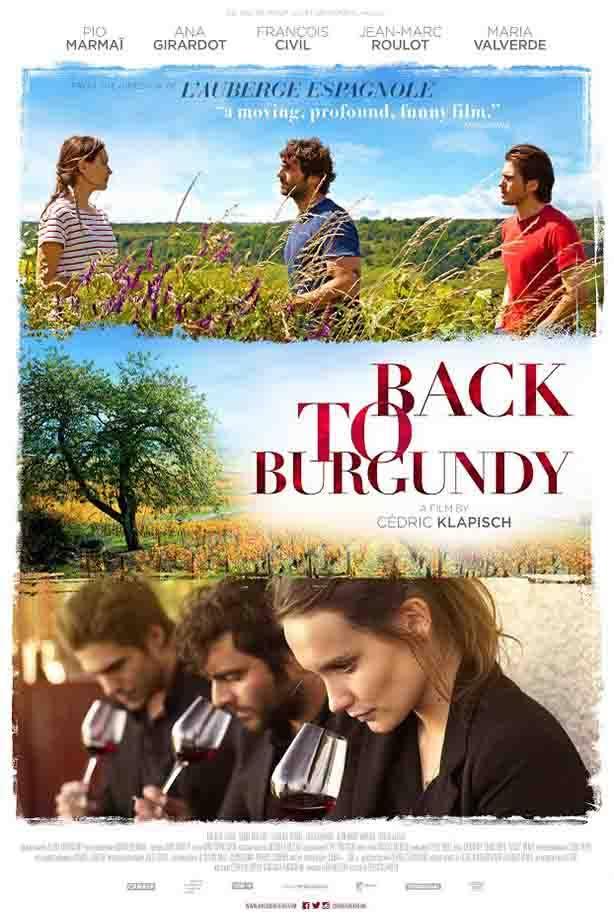
Harlan Jacobson Reviews ‘Back to Burgundy’

When you think of France, sure you think of cheese and berets, baguettes and love–or at least adultery–and what else? Wine. You think of the Bordeaux you can’t afford, snapped up by those pesky Russian oligarchs and Chinese financiers. Or the Rhones that are earthy, or the Rosés that, while not fine wines are runaway must-have now on the American Left and Right Coasts to augment their Mediterranean diets. A special spot in the heart of France is reserved for Burgundy, Southeast of Paris, where the French relate with a fanaticism to the Grand Cru Montrachets, Mersaults, and Chambertins the way we do to fantasy baseball. Where we might head to Spring Training in Tucson, French director Cedric Klapisch’s father made a bi-annual visit to his Burgundy connection to smell the earth, pinch the grapes, shmoos—they do that in French Yiddish, too—with the domain owner and, of course line up the cases they’d lay in to make sure the good times rouler, that’s French for roll.

I almost said roulot. That’s because French actor Jean-Marc Roulot is also a vintner of Burgundy, and while Klapisch didn’t cast Roulot in his first film in the early 90s, he became a client for his burgundy. That’s until Klapisch decided that instead of making another film about the slightly cracked but earnest young urban sophisticates of When the Cat’s Away, Family Resemblances, Paris, My Piece of the Pie and The Spanish Apartment. He was ready to make a film in Burgundy about winemakers. And so, he arranged to film a story with an early writing partner Santiago Amigorena at actor-vintner Jean-Marc Rolout’s vineyard and cast him in the film. Big win for Roulot, who plays Marcel, the hired master winemaker on a family vineyard, and who infused the script with a level of detail about the life and production cycles of wine that’s perhaps seen nowhere else except in a documentary about winemaking, Natural Resistance, by Jonathan Nossiter and produced by the writer here, Amigorena.

Back to Burgundy is fiction and concerns three sibling Millennials, two brothers and a sister, and how they grapple with saving the family vineyard after the death of their father. It’s somewhere between a basic text for future sommeliers and wine connoisseurs and a porn flic about the process by which an actress’ pretty feet trod the terroir and then stamps the succulent grapes in the vats, as you hear each grape pop and sigh, Oh, mon Dieu, I die for you!

Okay, back to reality here, or at least the film. It helps that the three siblings are the prettiest 30-somethings in France right now—Pio Marmai as the older Jean, who returns to the farm after a 10 year self-exile that ended in Australia on a vineyard with a wife and son, Francois Civil as the baby brother, Jeremie, the dutiful but less talented son and young family man who has married into a more prominent wine family, and Ana Girardot as Juliette, the middle sister, whose taste buds and instincts–shown in the story all the way back to childhood–make her the natural master winemaker, heralding a timely nod to feminism come to France.

Now listen up: In this clip, first we’ll hear Pio Marmai as Jean explain–in French, of course– to a beautiful African grape harvester that he’s travelled the world but now he’s come home. That’s followed by Ana Girardot as Juliette addressing the entire crew that this is a special year, the first harvest without their father. And then it ends in La Paulée, the party that celebrates the end of the harvest, and is the only party outside of the one Stanley Kubrick filmed in Eyes Wide Shut that I’m truly sorry I missed.

In all this filmed beauty by the 56-year-old Klapisch—who worked as a waiter in a French restaurant while he studied film at NYU in the mid 80s—there’s a small gap. The story’s central problem—how to pay the inheritance tax—is sort of spat out like a rogue grape skin. I guess that’s forgivable, because Back to Burgundy is a fantasy set in the four seasons of beautiful wine country, with pretty people fighting to save the vision of Old France and the French standards that make France France. The original French title is “Ce qui nous lie.” What Binds Us. That’s not only a topic that has been on the minds of French filmmakers for the last two decades, in such masterpiece films as Olivier Assayas’ Summer Hours of 2009—but the French electorate itself. How you come out on such issues that are the sharp notes just below the surface of the enjoyable Back to Burgundy can drive you to drink.

A glass of Gevry Chambertin, s’il vous plait.

Listen to audio review: Harlan Jacobson Reviews ‘Back to Burgundy’ | WBGO

The Best Defense for French Wine Growers? Bats!

Wine, for when you want to party but still feel classy about it. Like all edible alcohol, wine comes from fermentation, and for millennia artisans have honed their craft at turning humble grapes into the drink of the gods. So suffice it to say growing good grapes is crucial to making good wine.

That’s why French wine growers have such a beef with moths. These thirsty bootleg butterfly bugs love swooping down and eating grapes right off the vine. They have the nerve to get between us and our wine! But fear not, a recent wine industry study revealed that in the War For Wine we have an animal kingdom ally in the fight against moths, an animal we’re already used to associating with superheroics. It turns out bats are the best natural defense wine can get.

It’s really just the food cycle wine growers should be thankful for. Of the 22 local Bordeaux bat species, researchers observed that 19 of them specifically love to feast on moths that target wine grapes. Droppings analysis confirmed that it was these harmful moths being preyed on. Other insects were spared.

With this knowledge, wine growers could use these bats to their advantage. They could act like organic pesticides, clearing the fields of insects while not introducing harmful chemicals into the ecosystem. It would take some effort though. The bats instinctively hunt in wilder regions, so they would have to be somehow funneled towards these domesticated vineyards [ . . . ]

Read morea at GREEK.com: The Best Defense for French Wine Growers? Bats! – Geek.com

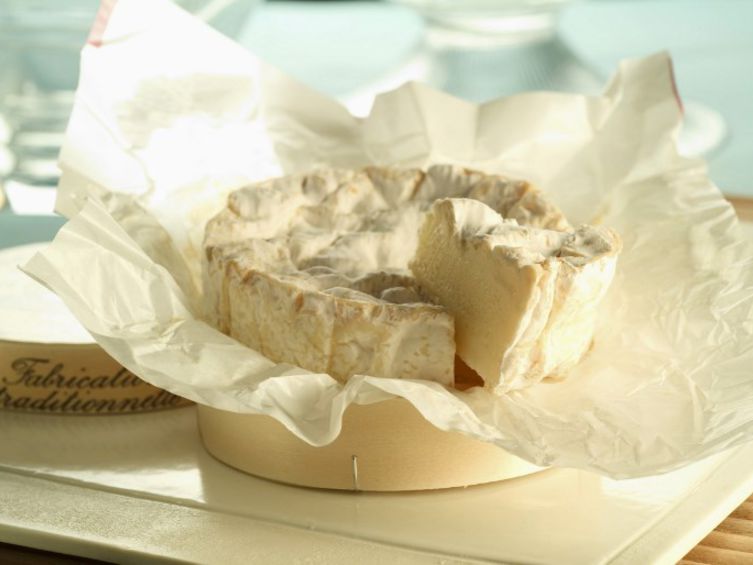
Shame The best Camembert in the world is … Quebecois!

It’s a scandal, a fraud. The jury was bought, necessarily. Or it’s a defeat, shameful and stinging.

[google translation] The World Championship Cheese contest was held March 6-8, in the United States, in the state of Wisconsin. A competition that is appreciated by cheese lovers as much as by dairy professionals, this competition has dedicated the best products in the world. Obviously, the French producers did not miss to be at the rendezvous. They even won a few rewarding medals. But it must be admitted: they have also failed … Yes, yes, almost. By letting another nation of eaters stinking dripping tricks win a category that normally should not escape us, that of camembert  [ . . . ]

Read more of this SHAMEFUL story at: Shame The best Camembert in the world is … Quebecois! – Vsd

Cheap Wine Prices in Paris Are the Final Push You Need to Book a Trip 

Enjoying a bottle of wine in Paris will do less credit card damage than drinking in other expensive cities. 

Ordering a bottle of wine for the table is a great way to share and connect with dinner companions — especially in Paris, where the average cost of table wine is significantly lower than the world’s other expensive cities.

The average cost of a bottle of table wine in Paris is $11.90, according to the Worldwide Cost of Living index, a survey released by the Economist Intelligence Unit which looks at the average costs of wine and cigarettes in the top 10 cities with the highest cost of living. The low cost of Paris’s table wine is beaten only by Geneva, which ranks an average of $8.37 for its bottles [ . . . ]

Read More at: TRAVEL-LEISURE Cheap Wine Prices in Paris Are the Final Push You Need to Book a Trip | Travel + Leisure

Robert Haas, Tablas Creek co-founder and wine pioneer, dies in California 


Robert Haas died peacefully at his California home last weekend, said Tablas Creek, the wine estate that he co-founded.Many would agree with the winery’s assertion that Haas was a ‘seminal figure in American wine for 65 years’ [ . . . ]

More at: DECANTER Robert Haas, Tablas Creek co-founder and wine pioneer, dies in California – Decanter

Massive Rhône Valley Wine Fraud Reported by French Authorities

French anti-fraud authorities allege that a Rhône Valley wine merchant mislabeled more than 5 million cases of table wine as more expensive appellations like Côtes du Rhône and Châteauneuf-du-Pape.

Between October 2013 and June 2016, Raphaël Michel, a bulk-wine merchant in France’s Rhône Valley, allegedly sold the equivalent of 13 Olympic-size swimming pools of cheap French table wine while claiming it was some of the best wine of the Southern Rhône Valley.

Those details and more emerged with the release of the annual report of the DGCCRF (Directorate General for Competition Policy, Consumer Affairs and Fraud Control), France’s powerful anti-fraud agency. While the report does not name Raphaël Michel, the details match precisely with the investigation first reported last July by Wine Spectator. Independent sources confirm that Raphaël Michel is the unnamed company in the report.

According to the DGCCRF report, between 2013 and 2016, the merchant sold around 20 million liters of table wine—the equivalent of 2.23 million cases—as more lucratively priced appellation-level wines including Côtes du Rhône, Côtes du Rhône-Villages and even 108,000 cases of Châteauneuf-du-Pape.

When investigators dug deeper, the scam grew even larger, encompassing even more kinds of wine. “In total, the fraud touched more than 48 million liters of wine,” reads the report. That is the equivalent of 5.33 million cases of fake wine, 15 percent of the Côtes du Rhône production during those years [ . . . ]

Read full story at: WINE SPECTATOR Massive Rhône Valley Wine Fraud Reported by French Authorities | News | News & Features | Wine Spectator